A Step-by-Step Guide to Transitioning Outdoor Cats to Indoor Living
A step-by-step guide for transitioning cats that roamed freely outdoors to indoor care. Includes practical explanations of stress reduction methods, litter box training, and solutions to scratching problems.
Key Takeaways
A step-by-step guide for transitioning cats that roamed freely outdoors to indoor care. Includes practical explanations of stress reduction methods, litter box training, and solutions to scratching problems.
Transitioning a cat that has freely roamed outdoors to indoor living is no easy task. For cats, "the outdoor world" is a stimulating and precious environment, and suddenly depriving them of it can lead to stress and behavioral problems. However, with the right steps, both cat and owner can adapt to the new lifestyle without strain. This guide provides a step-by-step explanation of practical procedures for transitioning outdoor cats to indoor living.
Why Switch to Indoor Living?
First, let's clarify your reasons for making this switch. Outdoor cats face far more risks than commonly realized, and are known to have significantly shorter lifespans compared to indoor cats.
- Traffic accidents
- Infectious diseases
- Conflicts with other animals
- Exposure to pesticides and toxins
There are also ecological concerns regarding impacts on wild birds and small animals.
I understand the feeling of wanting to let your cat outside because you feel sorry for it. However, by creating a safe and stimulating indoor environment, cats can live happily without needing to go outside. By clarifying your purpose for making this switch, you'll have a guiding principle when you feel uncertain.
Step 1: Gradually Reduce Outdoor Time
Making an abrupt "no more outdoors starting today" rule is a mistake. Sudden environmental changes cause significant stress in cats and can trigger behavioral problems such as:
- Constant meowing
- Aggression
- Inappropriate elimination
Start by gradually reducing outdoor time. Ideally, follow this pace to bring it to zero:
| Period | Recommended Outdoor Time |
|---|---|
| First 1–2 weeks | If your cat spent 4–5 hours outdoors daily, reduce to 3 hours |
| Next 1–2 weeks | Further reduce to 1–2 hours |
| Over 1–2 months | Bring to zero |
Using "treats" is an effective way to encourage your cat to come home. By making it a habit to reward your cat when you call it from outside, it will begin returning on its own. Success depends on patience and going at your cat's pace.
Step 2: Make the Indoor Environment "More Interesting Than Outdoors"
For cats to stay indoors, the environment needs stimulation and comfort that rival the outdoors. Arrange your space with environmental enrichment (enhancing the living environment's quality) in mind.
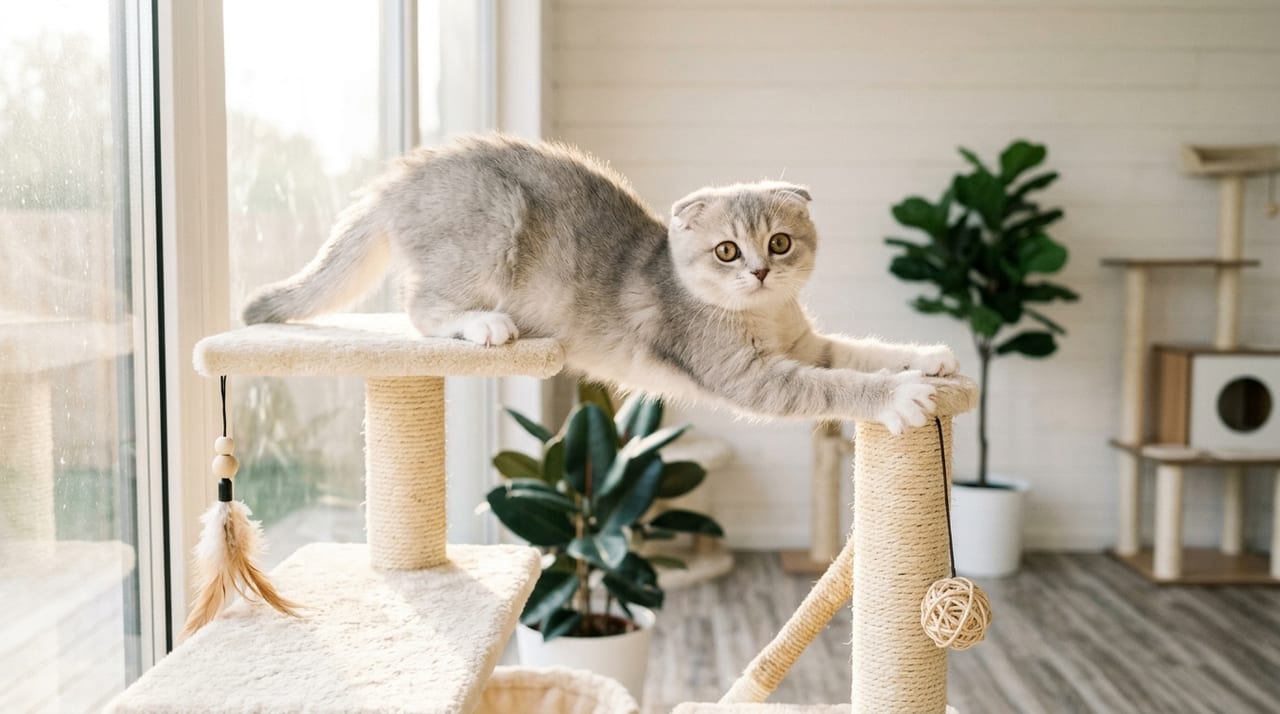
- Provide cat towers and elevated spaces: Cats love high places. Install cat towers or shelves to create an environment where they can climb and move vertically. Placing them by windows gives them a "cat TV" to watch the outdoors.
- Make good use of windows: Windows where your cat can see birds and insects are the ultimate entertainment. Place hammocks or shelves by the window to create spots where they can observe the outdoors. For safety, always use screens that lock securely.
- Increase playtime and toys: Prepare multiple toys that stimulate hunting instincts, such as wand toys, balls, and electronic toys. By dedicating 2–3 play sessions of 10–15 minutes each per day, you can help your cat burn off the energy they would normally expend outdoors.
- Create hiding spots: Cats feel secure when they have small spaces to retreat to. Provide several places where they can feel they have "their own space," such as cardboard boxes, cushions, or commercial cat houses.
Step 3: Litter Box Training
Most outdoor cats are accustomed to eliminating in yards or on soil. Many cats feel uncomfortable with indoor litter boxes at first.
- Pay attention to litter texture: Choose litter with a texture close to soil, such as fine-grained mineral-based litter. Starting by mixing a small amount of outdoor soil or sand can make the transition smoother.
- Number and placement of litter boxes: The basic rule is to provide "number of cats plus one" litter box. For one cat, that means two boxes. Place them in quiet areas away from foot traffic and away from eating areas. Start by placing them near where your cat spends most time, then gradually move them to the ideal location as they adjust.
- If accidents happen: Don't punish your cat. Punishment won't teach them "not to eliminate here"; instead, they'll become afraid of you. Thoroughly remove odors from soiled areas using enzymatic cleaners (cats are drawn back to the same spot), and reconsider the litter box environment. Often the issue is that the cat doesn't like the litter or it's not clean enough.
Step 4: Solve the Scratching Problem
Cats that sharpened their claws on trees and soil outdoors often target walls and sofas indoors. This is an instinctive behavior that cannot be stopped—the solution is to redirect it to the right places.
- Provide multiple scratching options: Try several types, including vertical and horizontal scratchers in different materials (sisal rope, cardboard, carpet). Cats have different preferences. Place scratchers near areas where your cat frequently travels or relaxes to encourage use.
- Protecting unwanted areas: Double-sided tape (cats dislike the sticky sensation) or commercial protective sheets are effective on areas you want to protect. Reward your cat with treats when they use the correct scratching spots so they learn "something good happens when I scratch here."
- Trim nails regularly: Cutting just the tips every 2–4 weeks can significantly reduce damage to furniture and walls. If you're not comfortable doing this, your veterinarian or groomer can help.
Mental Care for a Successful Transition
Environmental changes cause cats some degree of stress. Your cat may meow more, eat less, or hide frequently. While these changes are usually temporary, prolonged ones warrant attention.
- Use pheromone products: Diffusers containing calming pheromones (such as Feliway) are known to reduce stress from moves and environmental changes. Consider using them during the transition period.
- Increase interaction with your cat: Playtime, grooming, and gentle communication with you strengthen your cat's sense of security.
- Don't give up: The first few weeks may be tough on both you and your cat. If you give in to behaviors like frantically scratching at doors or meowing all night and let your cat outside, they'll learn that "if I persist, I can go outside." It's important to stay firm and see it through until things stabilize.
Transitioning to indoor living is an important step for your cat's safety and health. Take your time and progress at your cat's pace. Once the environment is set up and your cat adjusts to indoor life, the bond between you and your cat will deepen even further.