Multi-Cat Household Initial Cost Simulation | Real Cost Estimate When Welcoming a Second Cat
Simulate initial and lifetime costs when considering multi-cat households. Explains with specific numbers the cat-specific additional costs such as the "number of cats + 1" toilet rule, economies of scale, and important considerations.
Key Takeaways
Simulate initial and lifetime costs when considering multi-cat households. Explains with specific numbers the cat-specific additional costs such as the "number of cats + 1" toilet rule, economies of scale, and important considerations.
Costs for a Second Cat Should Be Thought of as "a Different Structure Than the First"
"I want to give my resident cat a playmate," "I saw information about a rescue cat and was moved"—while the reasons for considering multi-cat households vary, there is an important premise you should understand before making a decision. That is the fact that multi-cat household costs do not simply multiply by the number of cats.
Cat care costs can be divided into two main types: "variable costs" that increase in proportion to the number of cats, such as food, cat litter, and veterinary bills, and "shared fixed costs" that multiple cats can use together, such as cat towers and scratching posts. Understanding this structure correctly will greatly improve the accuracy of your cost estimate when welcoming a second cat.
If you prepare for a second cat thinking that it will cost the same amount as the first, you may find that you don't have enough necessary items, or conversely, you may incur unnecessary expenses. Understanding precisely what can be shared and what is needed for each cat is the first step toward preparation without waste.
Breakdown of Initial Costs: Comparing First and Second Cat
The initial cost of welcoming a first cat typically comes to roughly 60,000–120,000 yen when combining equipment and veterinary costs. The breakdown is as follows.
| Item | Approximate Cost |
|---|---|
| Cat tower | ¥10,000–30,000 |
| Toilet (unit + litter) | ¥5,000–12,000 |
| Bowls and food | ¥5,000–10,000 |
| Cage (for isolation/adjustment) | ¥8,000–20,000 |
| Combined vaccine (2 doses first year) | ¥10,000–20,000 |
| Health checkup and testing | ¥10,000–20,000 |
When welcoming a second cat, the key is to separate what can be shared from what is needed for each cat.
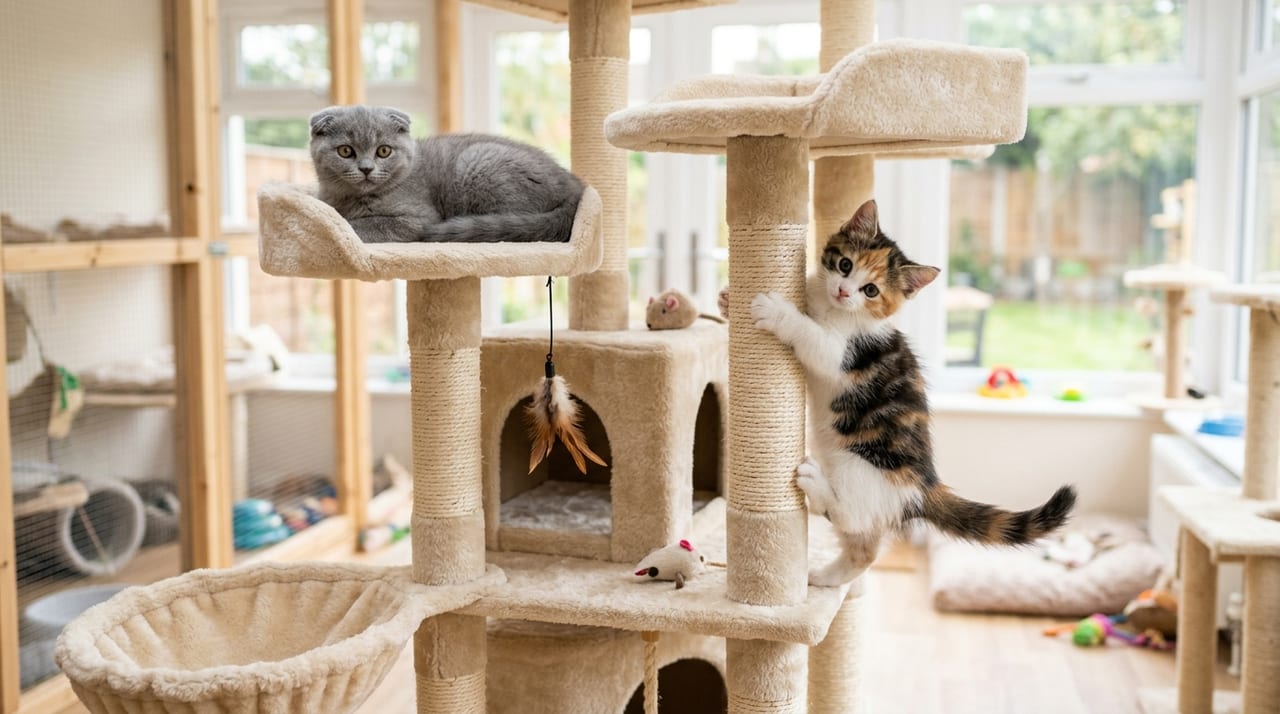
Cat towers are often shared among multiple cats, so if they are in good condition, you don't need to buy a new one. On the other hand, it is recommended to provide "number of cats + 1" toilets. For two cats, three is ideal. Cats have a strong sense of territory, and sharing a toilet can lead to stress and behavioral problems—this is a major difference from multi-dog households. Bowls also need to be separate if the cats eat different food types or have different feeding schedules.
If you spent approximately 80,000 yen on the first cat, budgeting 50,000–80,000 yen for equipment and medical costs combined is realistic for the second cat. However, the cost of equipment during the isolation period mentioned later may increase the total beyond your estimate.
Medical Costs and Vaccine Fees Are Required in Full for Each Cat
Among initial costs, veterinary expenses are not discounted for multi-cat households. Combined vaccines and health checkups are fully required for each cat.
Particular attention should be paid to testing for feline AIDS (FIV) and feline leukemia (FeLV). Since these can be transmitted through contact with infected cats, it is strongly recommended that the new cat be tested before being introduced to the resident cat. This is especially important when welcoming rescue cats or cats of unknown origin, and a period of quarantine is necessary in addition to testing costs.
During the isolation period, toilets, bowls, beds, and water bowls must be completely separated, which often results in higher-than-expected equipment costs. Keep in mind that you will need two complete sets of daily supplies in addition to an isolation cage.
Annual Running Cost Simulation
After preparing the initial costs, you should also understand the ongoing costs that accumulate monthly and annually. The focus here is on the additional costs compared to a single cat.
- Food costs: Depending on the cat's size and age, approximately ¥3,000–8,000 per cat per month is typical. When a second cat joins, you may be able to buy the same food in bulk, which can lower the per-unit cost for each cat.
- Litter and toilet supplies: As the number of toilets increases, litter consumption may rise even more than the number of cats. Plan for an additional ¥2,000–5,000 per month to be safe.
- Medical costs (vaccines and health checkups): Annual combined vaccines and health checkups are required for each cat. This typically adds ¥15,000–30,000 annually.
- Pet insurance: If you enroll, insurance premiums are required for each cat. While some insurance companies offer multi-cat discounts, the discount rates are usually modest, so we recommend comparing conditions from multiple companies before choosing.
If the running cost for the first cat is roughly ¥150,000–200,000 annually, adding a second cat typically brings the annual total to around ¥250,000–350,000. Keeping in mind the expectation that "it won't double, but it will be about 1.5–1.7 times" can be helpful for household budget reviews.
Additional Costs Unique to Multi-Cat Households and Easy-to-Overlook Expenses
While multi-cat households offer economies of scale, they also incur additional costs not present in single-cat households. Here are the main items you should be aware of in advance.
- Dealing with territorial conflicts and spraying: If the cats don't get along well, you may need pheromone products (such as Feliway) or environmental enrichment items. Such supplies can lead to ongoing monthly expenses of ¥3,000–5,000.
- Feeding separately with senior and young cats: When cohabiting cats of different ages, you may need to feed therapeutic diets or senior food separately from regular adult food. Expenses for separating bowls and feeding areas may occur.
- Carriers for veterinary visits: If you need to take multiple cats at the same time, one carrier may not be sufficient. Consider purchasing an additional carrier (¥5,000–15,000) as needed.
- Costs of moving and changing living environment: As the number of cats increases, there is a risk of violating pet number restrictions in rental properties. If you need to renegotiate updates or change properties due to a change in cat numbers, remember that such costs are not included in the cost simulation.
Checklist Before Welcoming a Second Cat
Use the following checklist to confirm that you are ready from a financial perspective.
- Your current housing is pet-friendly and does not violate any pet number restrictions (check your rental agreement)
- You have space to set up "number of cats + 1" toilets (three for two cats)
- Your resident cat's health, age, and temperament are suitable for welcoming a new cat
- You can set aside approximately ¥50,000–100,000 for initial costs including vaccines, testing, and isolation for the new cat
- Your household budget can accommodate the increase in running costs for the additional number of cats
Multi-cat households can be a choice that leads to a richer life for both cats and their owners if you understand the cost structure correctly and prepare accordingly. Rather than asking "how much more will it cost," organizing expenses with the perspective of "what will increase and what can be shared" is a shortcut to preparation without regrets. Welcoming a cat directly from a trusted breeder is also one option that makes it easier to project costs, as you can welcome the cat with knowledge of its health status and rearing environment.