Cat Multi-Cat Household Stress Management Guide | Territory Issues, Fight Prevention, and Space Design
Cats are naturally solitary animals, and multi-cat households require careful space design and introduction procedures. This guide clearly explains territorial stress signs, proper introduction steps for new cats, environment design to prevent fights, and resource placement strategies for multiple cats.
Key Takeaways
Cats are naturally solitary animals, and multi-cat households require careful space design and introduction procedures. This guide clearly explains territorial stress signs, proper introduction steps for new cats, environment design to prevent fights, and resource placement strategies for multiple cats.
Unlike dogs, cats are naturally solitary animals. They lack the instinct to form groups, so living with unfamiliar cats can cause significant stress. However, with proper environmental design and gradual introduction, multi-cat households can thrive peacefully.
Understanding Your Cat's Territorial Awareness
Understanding territorial awareness is crucial to comprehending feline social behavior. In the wild, cats maintain separate areas for feeding, resting, and elimination, using what's called "time-sharing" of territory—minimizing contact with other cats.
Indoor cats retain this instinct. They perceive each area of the home as "their space," and the sudden intrusion of an unfamiliar cat feels like a major threat.
Don't Miss the Stress Signs
Multi-cat stress manifests through the following signs. Early detection is critical.
Behavioral signs
- Hiding and refusing to come out
- Elimination outside the litter box (marking, inappropriate urination)
- Excessive grooming (leading to hair loss or baldness)
- Loss of appetite and weight loss
- Excessive chasing or threatening other cats
Physical signs
- Chronic lower urinary tract symptoms (frequent urination, blood in urine, difficulty urinating)
- Skin inflammation (from excessive grooming)
- Weakened immunity leading to infections
Lower urinary tract symptoms are a hallmark stress-related condition in cats and can develop into urethral obstruction in male cats—a life-threatening emergency. Never ignore changes in litter box frequency.
The Correct Introduction Process for a New Cat
Most multi-cat failures occur because cats are introduced "all at once." You must always follow gradual introduction (slow introduction) procedures.
Phase 1: Complete Isolation (1–2 weeks)
Keep the new cat in a separate room with no physical contact with the resident cat. During this period:
- Confirm the new cat's health status and check for contagious diseases (feline HIV, leukemia, etc.)
- Allow the new cat time to adjust to the environment
- Expose the resident cat to the "new scent"
Even just the scent flowing under the door gap is enough for the resident cat to sense "there's another cat here."
Phase 2: Scent Swapping (1 week)
Exchange blankets and toys between their sleeping areas to familiarize them with each other's scents. Placing scented items near feeding areas helps create a positive association: "good things = this cat's scent."
Phase 3: Contact Through a Barrier (Several days–1 week)
Allow visual contact through a glass door or mesh barrier. Once they show interest without threatening, move to the next phase. If threatening is intense, return to Phase 2.
Phase 4: Supervised Face-to-Face Contact (1–2 weeks)
Arrange brief (10–15 minute) face-to-face meetings under constant supervision. If threats or chasing occur, stop and try again the next day. Gradually extend the duration.
Phase 5: Cohabitation Transition
Once they can spend longer periods without problems, remove the isolation. However, don't allow complete freedom at first—ensure plenty of high places and hiding spots for escape routes.
Environmental Design for Multi-Cat Households
Most multi-cat stress stems from "resource competition." Properly placing food, water, litter boxes, sleeping areas, and play areas minimizes conflict.
The "N+1 Rule" for Resources
The fundamental rule for multi-cat households is "provide one more resource than the number of cats."
- Litter boxes: For 2 cats, 3 or more; for 3 cats, 4 or more
- Water bowls: At least one per floor
- Feeding areas: Allow each cat to eat in separate locations
- Resting spots: Provide high perches and hiding spots where each cat feels like they have "their own space"
Too few litter boxes mean dominant cats can monopolize them, preventing other cats from using them.
Utilizing Vertical Space
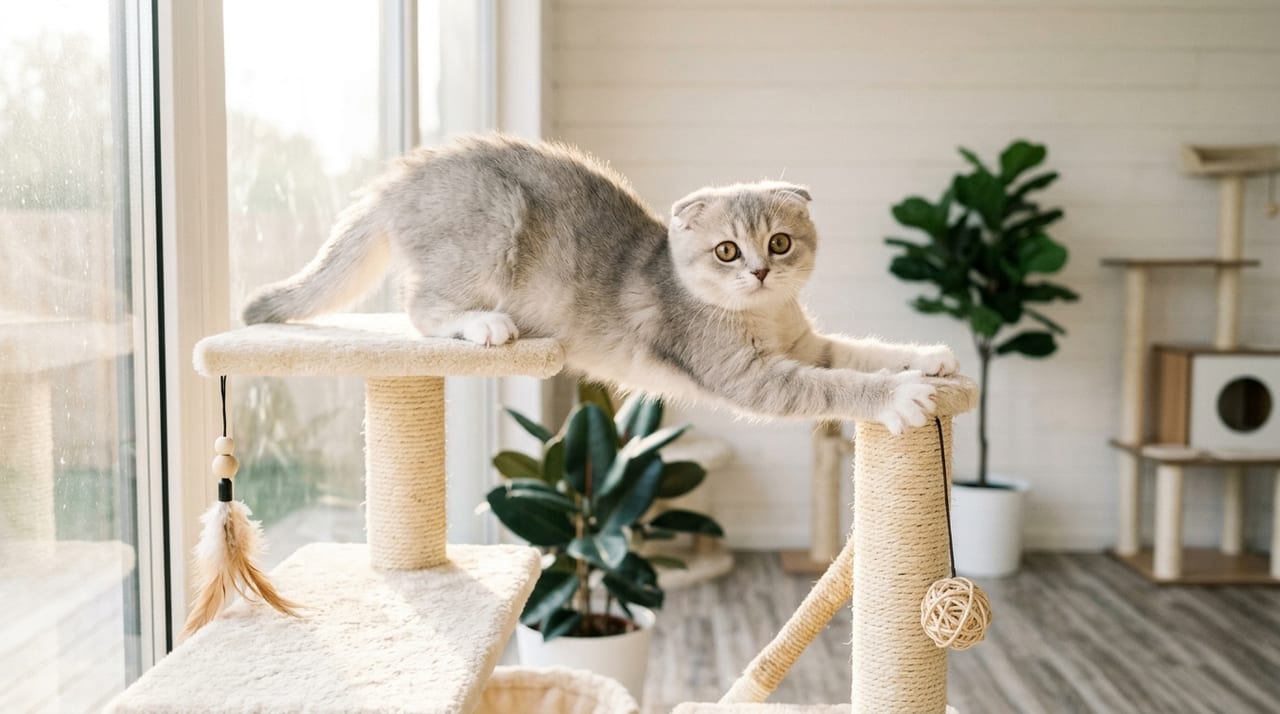
Cats instinctively flee to high places when stressed. Creating multiple vertical escape routes with cat trees, shelves, and wall steps is essential.
Higher locations tend to be claimed by socially dominant cats, so installing multiple heights and locations across different areas ensures all cats can access high-level resources.
Securing Safe Escape Routes
It's also important to intentionally maintain narrow escape spaces (cardboard boxes, areas under furniture, etc.) where chased cats can retreat. Cornered cats resort to defensive attacks, but escape routes prevent escalation.
Distinguishing Play-Chasing from Real Fights
It can be tricky to tell whether cats chasing each other are "playing" or "really fighting."
Signs of play
- The chaser and the chased switch roles
- Even during wrestling, neither makes sounds (no hisses or spitting)
- After play, they groom each other
Signs of fighting or threatening
- Hissing, spitting, or growling sounds
- Ears pinned back
- Fur standing on end
- One cat fleeing continuously while the other pursues
- Scratches or visible wounds
If a serious fight breaks out, throw a blanket between them or startle them with a loud noise to interrupt. Never physically intervene with bare hands (you risk deep bite wounds).
Summary
The keys to successful multi-cat living are "unhurried introductions" and "adequate resource placement." Respecting cats' inherent solitary nature and ensuring each cat has "their own safe space" is the best stress prevention strategy. If chronic behavioral problems or health issues persist after introduction, consider consulting an animal behaviorist or veterinarian.