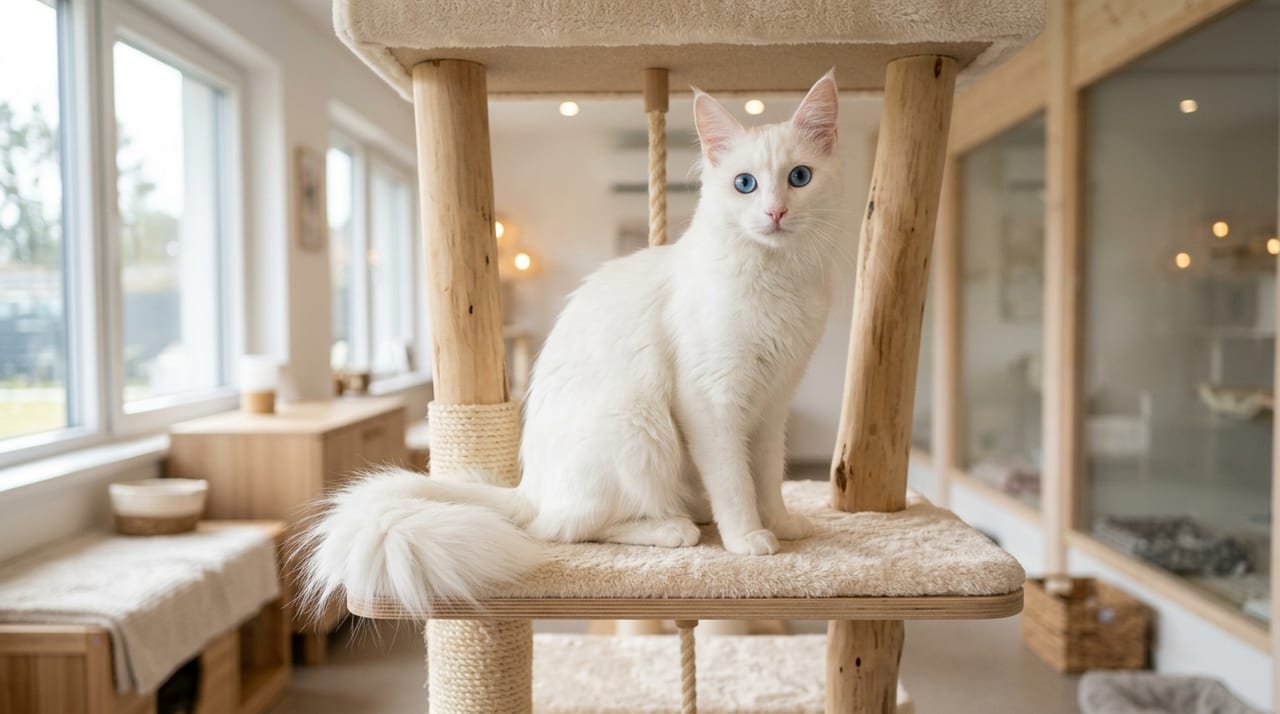
Fundamentals to Know Before Starting a Multi-Cat Household
The success rate of a multi-cat household varies greatly depending on the compatibility between cats and the introduction process. While wild wildcats are naturally solitary animals, domestic cats can coexist peacefully with proper socialization and environmental setup. However, not all cats are suited for multi-cat households.
The personality of the resident cat is the most important factor to consider. Cats that have never shown aggression toward other cats, are not shy, and are playful and active tend to accept new cats more easily. Conversely, nervous cats with strong territorial instincts, or senior cats with established routines, may experience significant stress from introducing a new cat.
The age combination is also important. The highest success rate occurs with kittens aged 3-12 months paired together. Adult cats paired with kittens also tend to work well, as adults don't perceive kittens as threats and kittens have high adaptability. Conversely, pairing senior cats (8 years and older) with young cats requires caution, as differences in activity levels and sleep patterns may cause chronic stress in the senior cat.
When it comes to gender pairings, spayed and neutered cats show little difference in compatibility, though males tend to have slightly more compatibility issues compared to females. Unspayed or unneutered cats carry higher risks of breeding and territorial disputes, so surgery should always be completed before introducing multiple cats.
Preparation Before Welcoming a New Cat
Begin preparing the resident cat's living environment 1-2 weeks before bringing home the new cat. First, prepare a dedicated isolation room for the new cat. This room should include a litter box, food and water bowls, a bed, scratching post, and toys—everything the cat needs to live. Since the isolation period may last anywhere from one week to over a month, choose a room that won't disrupt your household's daily activities.
Enhance environmental enrichment to reduce stress in the resident cat. Add extra cat trees, create additional hiding spots, and provide window perches—spaces where the resident cat can feel safe. High places are particularly important as safe refuges, so ensure each room has escape routes with varied heights.
The basic rule for litter boxes is "number of cats plus one." For two cats, three boxes are ideal; for three cats, four boxes. Litter box placement is equally important—distribute them throughout the home rather than grouping them in one area. Since cats are vulnerable during elimination, having multiple options increases their sense of security.
Using pheromone products like Feliway in advance is also effective. Install diffusers in the isolation room and shared spaces one week before bringing home the new cat to create a relaxing environment.
Step-by-Step Acclimation Process: Stage 1 (Days 1-3)
When bringing home the new cat, start by isolating it completely in the isolation room for 1-3 days. During this period, avoid any visual or physical contact. The new cat focuses on adjusting to its new environment, while the resident cat learns about this new presence through sound and scent alone.
Progress to stage 2 once the new cat is eating calmly, using the litter box, and seeking affection in the isolation room. If the cat continues hiding, refusing food, or hissing, extend the isolation period for a few more days.
What's crucial at this stage is consideration for the resident cat. While caring for the new cat, actually increase playtime and interaction with the resident cat to assure them that their status is secure. Prioritizing the resident cat at feeding and treat times also helps establish stable hierarchy.
Allow scents to gradually seep under the door of the isolation room. Since cats gather much information through smell, scent exchange alone helps them become accustomed to each other's presence.
Step-by-Step Acclimation Process: Stage 2 (Days 4-7)
At stage 2, actively exchange scents. The most effective method is swapping used bedding and blankets—place the resident cat's blanket in the new cat's room and vice versa. Cats find comfort in their own scent, so mixing scents helps them gradually accept each other.
Room swapping is also effective. Temporarily move the new cat to another room and let the resident cat explore the isolation room, or vice versa. Ensure the cats don't meet directly during this process. This allows each cat to smell the other's territory and recognize their presence more concretely.
Using mealtime for acclimation is also effective. Place food bowls on either side of the isolation room door. Start about 3 meters from the door and gradually move them closer over several days. This creates a positive association between mealtimes and the other cat's presence.
Progress to the next stage once both cats eat calmly and show awareness of each other through the door without hissing or other threatening behavior.
Step-by-Step Acclimation Process: Stage 3 (Days 8-14)
At stage 3, begin visual contact. Use baby gates or clear panels to create physical separation while allowing visual interaction. You can also slightly crack open the door for glimpses, but be careful that cats don't force it open.
Begin with short visual contact sessions (5-10 minutes). If both cats remain calm seeing each other, gradually extend the duration. If hissing or intense reactions occur, increase distance or return to the previous stage.
Playing with toys across the gate is also effective. Use wand toys that interest both cats, creating a positive association with each other's presence. Provide separate toys for each cat to avoid competition.
At this stage, accurately reading body language is crucial. Forward-facing ears, raised tail, and normal-sized pupils indicate relaxation. Conversely, flattened ears, puffed tail, growling, and dilated pupils are signs of stress—immediately end visual contact and return to the previous stage.
Step-by-Step Acclimation Process: Stage 4 (Day 15 Onward) and First Face-to-Face Meeting
Once both cats are comfortable with visual contact and remain calm seeing each other, proceed to direct face-to-face meeting. Always supervise the first meeting and be prepared to intervene.
The environment for the first meeting is crucial to success. Choose a spacious area like a living room with multiple escape routes. Arrange furniture strategically to provide hiding spots and high places, allowing each cat to look away from the other. Leave the door open so the new cat can retreat to the isolation room anytime.
Ideally, arrange the first meeting around mealtime. Offer both cats favorite foods and start eating 3-5 meters apart. If both focus on eating, their interest hasn't turned to aggression. Gradually decrease distance, but patience is key.
Observe closely for several hours after the first meeting. Light hissing and chasing are normal, but persistent pursuit, fights with blood, or stress preventing either cat from eating or using the litter box warrant re-isolation and return to the previous stage.
It may take another 1-4 weeks before the cats can move freely between spaces. Continue separating them during sleep and when away until acclimation is complete. Gradually reduce supervision over weeks to months until they can coexist fully.
Troubleshooting and Building a Long-Term Relationship
Continuous observation and environmental adjustment are needed even after introducing multi-cat households. While ideal relationships involve mutual grooming, sleeping together, and playing, not all cats reach this level. "Coexistence-type" relationships where cats peacefully ignore each other are also successful.
Early detection of trouble signs is important. Increased hiding, reduced appetite, elimination outside the litter box, and excessive grooming are signs of stress. Consider environmental adjustments or re-isolation if needed.
Competition for resources (food, water, litter boxes, and resting areas) causes long-term tension. Provide multiple feeding stations, distribute litter boxes across levels, and ensure each cat has dedicated rest spaces to avoid resource-based conflicts.
Scheduling regular one-on-one playtime also helps maintain relationships. Playing with each cat for 10-15 minutes daily strengthens your bond and reduces individual stress, even if the cats don't get along perfectly.
If compatibility remains poor, consult a veterinarian or animal behaviorist. Some cases may require medication or professional behavior modification programs. Multi-cat households should be happy for all cats involved—forcing incompatible cats together should be avoided.