Complete Guide to Creating an Indoor Cat Environment: Cat Trees, Scratching Posts, and Play Areas
Learn how to create a stress-reducing indoor environment for indoor cats. We introduce how to choose and DIY cat trees, where to place scratching posts, window-mounted hammocks, how to use puzzle toys, and room layout tips that make cats happy.
Key Takeaways
Learn how to create a stress-reducing indoor environment for indoor cats. We introduce how to choose and DIY cat trees, where to place scratching posts, window-mounted hammocks, how to use puzzle toys, and room layout tips that make cats happy.
Related Species
Cats are naturally animals that live by engaging in vertical movement, hunting behavior, and territory patrol. For indoor cats, creating an environment that fulfills these instinctual needs directly contributes to stress reduction and maintaining good health. Poor environmental conditions easily lead to behavioral problems such as scratching furniture, excessive grooming, obesity, and nighttime activity bursts. This guide breaks down each element of indoor cat environment design in detail.
How to Choose a Cat Tree
Height and Stability
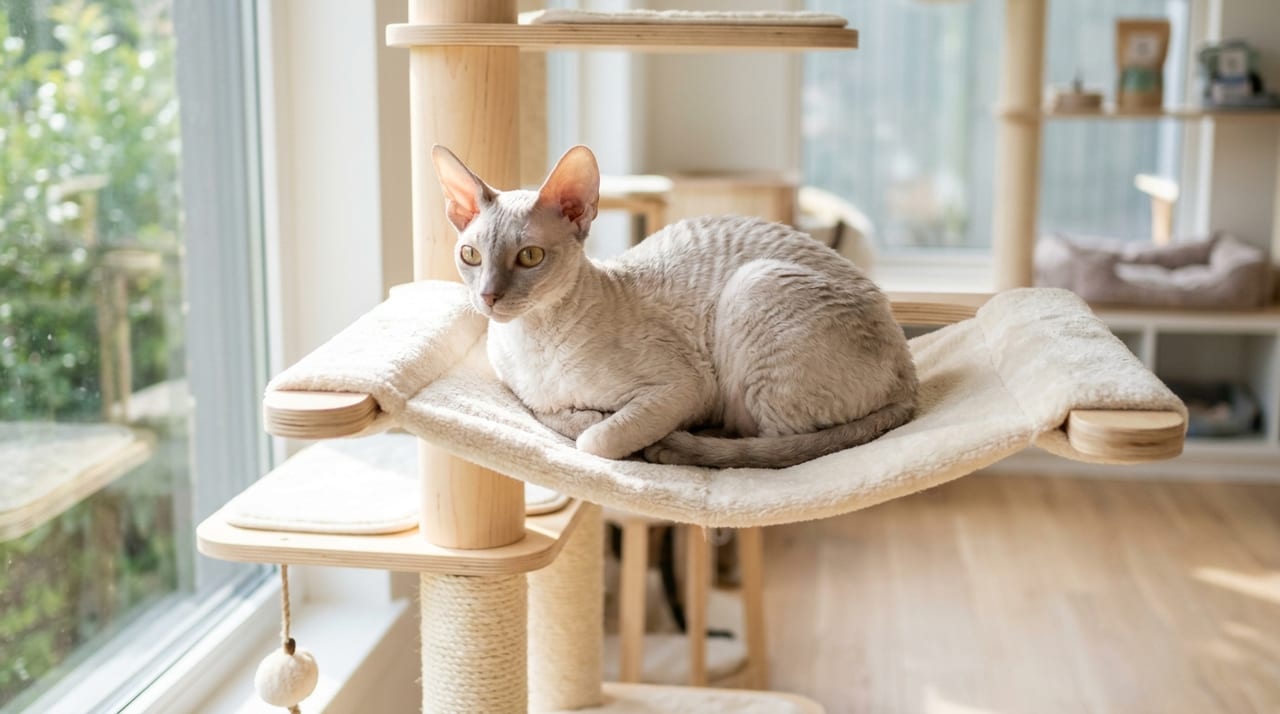
Cats prefer high places and gain a sense of security by climbing to positions where they can see around the room. A tall-type cat tree (180 cm or higher) that reaches near the ceiling is ideal. However, because of its height, stability is the top priority to prevent tipping over.
Points to check when choosing:
- Weight: The heavier the body, the more stable it is. 15 kg or more is recommended.
- Base area: Wider base areas are less likely to tip over. 60 cm on each side or larger is ideal.
- Tension pole structure: Ceiling-mounted tension poles are the most stable, but ceiling strength must be confirmed. For drywall ceilings, reinforcement plates provide extra security.
- Step spacing: Choose smaller step heights (25–30 cm apart) for kittens and senior cats.
Materials and Durability
Posts are typically wrapped with sisal rope, which also serves as a scratching surface. Natural sisal rope generally attracts cats better than polyester rope. Bases and shelves are usually made of wood or steel, with wood being better at absorbing vibrations and providing stability. Fabric-lined hammocks and boxes are popular resting spots for cats, but require regular washing.
Considerations for Cat Size and Age
- Kittens: Start with a lower tower (around 100 cm), confirm safety, then gradually allow them to try higher levels.
- Large cats (Norwegian Forest Cats, Maine Coons, etc.): Verify weight capacity of 10 kg or more and shelf width of 40 cm or larger. Cats weighing over 7 kg may find standard-sized shelves too narrow and cramped.