Cat Grooming Guide | Brushing, Nail Trimming, and Tooth Brushing Basics | ブリちょく
Cats| ✍️ BreederDirect Editorial
Cat Grooming Guide | Brushing, Nail Trimming, and Tooth Brushing Basics
Explains the basics of cat grooming. Introduces brush selection by coat type, nail trimming procedures without causing resistance, tooth brushing frequency and toothbrush techniques, the necessity of bathing, and tips for preventing hairballs in long-haired breeds.
Key Takeaways
Explains the basics of cat grooming. Introduces brush selection by coat type, nail trimming procedures without causing resistance, tooth brushing frequency and toothbrush techniques, the necessity of bathing, and tips for preventing hairballs in long-haired breeds.
Cats spend approximately 30-50% of their waking hours grooming themselves. However, without proper owner care, various health problems can arise, including matted fur accumulation, overgrown nails, and dental disease. Regular brushing, nail trimming, and tooth brushing not only protect your cat's health but also provide opportunities to detect skin abnormalities and lumps on the body early.
Brushing
Selecting Brushes by Coat Type and Frequency
✍️
BreederDirect Editorial
The BreederDirect editorial team specializes in care information for animals, covering veterinary care and breeding to deliver beginner-friendly guides.
Find Cats on BreederDirect
Buy directly from verified breeders
Browse Related Listings
Find Cats listings related to this article on BreederDirect. Buy directly from verified breeders.
Short-haired Breeds: Using a rubber or silicone brush in gentle strokes along the body effectively removes loose fur. The advantage is minimal skin irritation and cats are less likely to resist. Finishing with a natural hair brush brings shine to the coat.
Medium-haired Breeds: Run a comb from the root of the fur to check for mats. Areas behind the ears, under the armpits, and around the back legs are particularly prone to matting. Using a pin brush to gently fluff the coat also improves appearance.
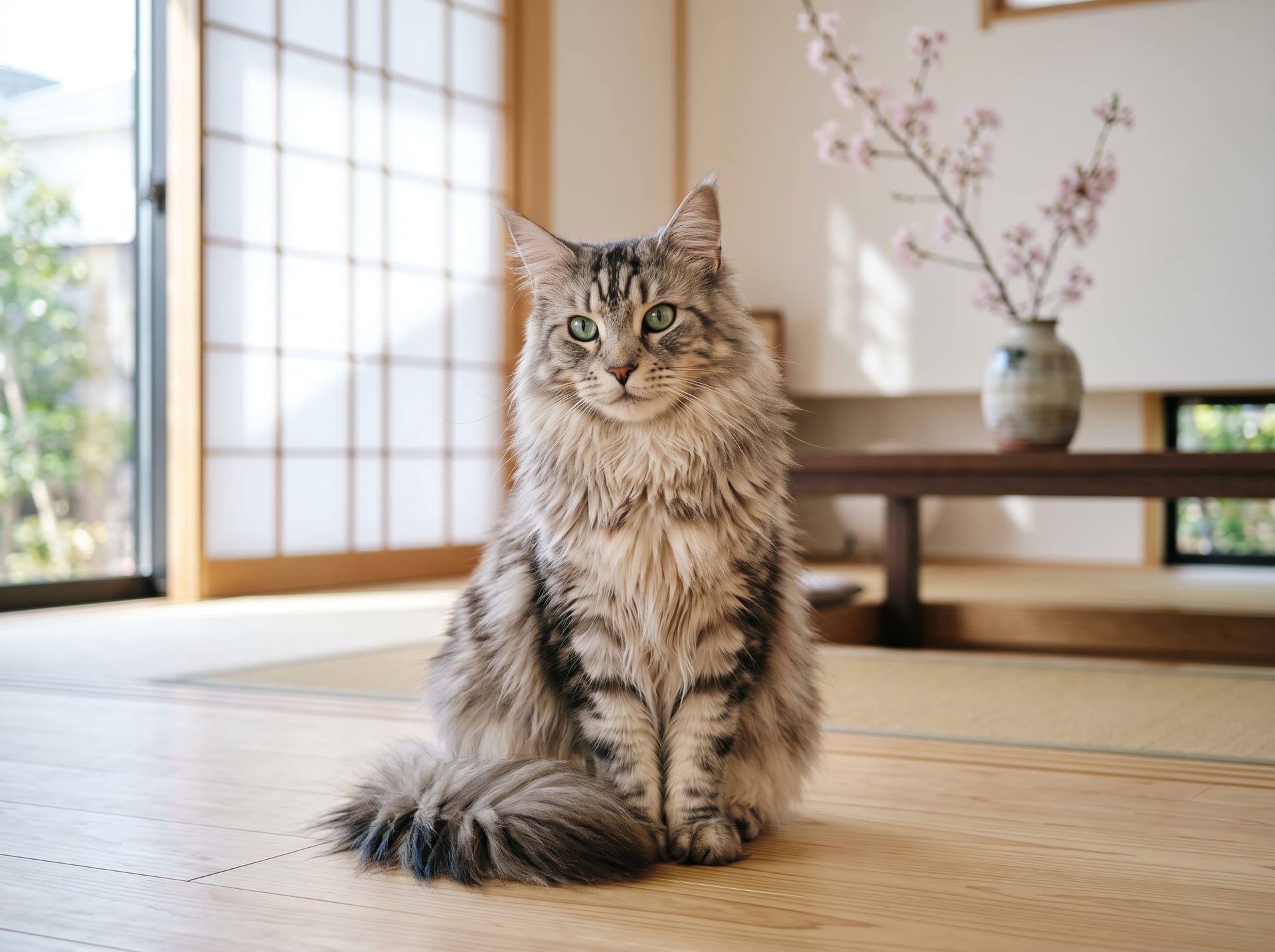
Long-haired Breeds: Use a slicker brush to detangle matted fur, but avoid applying too much pressure to prevent "brush burn" (skin abrasion). Gently loosen the fur starting from the tips without touching the skin. Neglecting daily brushing causes mats to become felted and hardened, and in the worst cases, clipping becomes necessary.
Practical Brushing Steps
Choose a time when the cat is relaxed, such as after eating or before a nap
Begin with areas the cat is comfortable being touched, such as the neck, back, and sides
Brush in the direction of hair growth. Brushing against the grain causes cats to dislike it
Be cautious with sensitive areas like the belly, inner thighs, and armpits. Don't force it if the cat resists
While checking the entire body, look for lumps, wounds, or flea dirt (black specks)
Reward with treats after brushing so the cat associates it with something positive
During shedding seasons (spring and autumn) when fur shedding increases 2-3 times, daily brushing is recommended even for short-haired breeds.
Nail Trimming
Frequency and Tools for Nail Trimming
Front nails should be trimmed every 2-3 weeks, while back nails grow more slowly and need trimming every 3-4 weeks. Indoor cats cannot keep their nails short enough by scratching alone, and overgrown curled nails can pierce the paw pad.
Use cat-specific nail clippers (scissor-type or guillotine-type). Scissor-type tends to be easier for small cats, while guillotine-type is better for larger cats. Do not use human nail clippers as they risk splitting the nail.
Nail Trimming Procedure Without Causing Resistance
Pre-conditioning (by the day before trimming)
- Regularly handle the front and back paws to acclimate your cat. Practice gently pressing the paw pads to expose the nails
- Place nail clippers in front of your cat to let them smell and become familiar with them
- Give treats every time you touch the paw pads to create a positive association
Cutting Procedure
1. Settle the cat on your lap or a stable surface (wrapping the cat in a towel is also effective)
2. Gently hold the front paw and lightly press the paw pad to extend the nail
3. Trim 1-2mm from the tip of the nail (transparent part only). Hold it up to light and you'll see the quick (blood vessel) appear red
4. Cut with at least 2mm clearance in front of the quick (blood vessel and nerve) at the base of the nail
5. Don't try to trim all nails at once; if your cat resists, take a break. Spacing it over several days is fine
6. Praise generously and give treats when finished
If Bleeding Occurs
If you accidentally cut the quick, apply pressure with clean gauze to stop the bleeding. If you have styptic powder (Quick Stop), apply it to the wound. Bleeding usually stops within a few minutes, but if it continues for more than 10 minutes, consult a veterinarian.
Tooth Brushing
Why Tooth Brushing is Necessary
Approximately 70% of cats aged 3 and older have some form of dental disease. Dental disease is not merely a mouth problem—bacteria can enter the bloodstream and negatively affect the heart, kidneys, and liver. Plaque turns into tartar in about 3 days, and tartar cannot be removed by brushing alone; professional scaling under anesthesia is required.
Tooth Brushing Frequency and Tools
Daily brushing is ideal, but brushing 2-3 times per week is also effective for prevention. Use a cat-specific toothbrush (with a small head and soft bristles) or a silicone finger brush that fits on your finger. Always choose cat-formulated toothpaste; never use human toothpaste as swallowing it can cause fluoride poisoning.
Gradual Steps for Acclimation
Week 1: Apply toothpaste to your finger and let your cat lick it. Introduce the taste
Week 2: Once acclimated, gently rub the outside of the front teeth and canines with your finger
Week 3: Start brushing with a finger brush or toothbrush, beginning with the front teeth
Week 4 onwards: Gradually extend to the back teeth. Focus on brushing the outer (cheek-facing) side of the teeth
Give treats at each step to prevent creating negative associations
For cats that resist brushing, consider using supplementary products such as dental gels, dental chews, or dental rinses mixed with water.
Hairball Prevention for Long-haired Breeds
In long-haired breeds, fur ingested during grooming can accumulate in the stomach and form "hairballs." While these are usually expelled by vomiting, if they become lodged in the intestines, they can cause "hairball obstruction," which may require surgery.
Prevention Methods
Daily brushing: Removing loose fur is the most effective hairball prevention. Be especially thorough during shedding seasons
Hairball control food: Use food rich in fiber that helps with fur elimination
Hairball remedies (such as malt paste): Administer 1-2 times per week to prevent hairball formation in the digestive tract
Adequate water intake: Water promotes intestinal movement and aids fur elimination
If your cat vomits hairballs more than 2-3 times per week or shows signs of decreased appetite, constipation, or lethargy, intestinal obstruction may be present and you should consult a veterinarian promptly.
Purchasing with Confidence at Brichoku
Ease of grooming varies greatly depending on the cat's breed and personality. At Brichoku, you can purchase directly from cat-specialist breeders and pre-confirm grooming habits and handling ease for your chosen cat. Kittens accustomed to brushing and paw handling from a young age will have smooth grooming throughout their lives. Refer to The Complete Guide to Senior Cat Care as well, and bringing home a healthy, care-adapted cat will make daily grooming an enjoyable time.