How to Build a Catio (Cat Sunroom) | Safely Enjoying Fresh Air Outdoors
Explains the design and DIY methods for a catio (cat outdoor enclosure). From window-mounted to balcony-style to garden-installed types, this guide introduces how to build a catio where cats can safely enjoy fresh air outdoors, along with important precautions.
Key Takeaways
Explains the design and DIY methods for a catio (cat outdoor enclosure). From window-mounted to balcony-style to garden-installed types, this guide introduces how to build a catio where cats can safely enjoy fresh air outdoors, along with important precautions.
For indoor cats, a catio is an ideal structure that lets them safely enjoy outdoor air and sunlight. The term "catio" combines "cat" and "patio," referring to an outdoor space exclusively for cats, enclosed with mesh or wire fencing. Here's a guide to building a catio where your cat can experience the outdoors without risk of escape or accident.
Catio Types and Selection
There are several types of catios to choose from, depending on your living space.
A window-mounted catio is the most compact option. It's a box-shaped structure attached to the window frame, allowing cats to step outside to enjoy fresh air. Since no construction work is required, it's easy to install even in rental properties. Space is limited, but it's sufficient for one or two cats to lounge in the sun.
A balcony enclosure type encloses an existing balcony with mesh or wire fencing. This provides a larger space and allows you to install cat walkways or hammocks. If you live in an apartment, check the building's regulations first.
A garden-style catio offers the most freedom. You install an independent structure in your yard with direct access from a window or pet door. Large versions can accommodate cat towers and plants, creating an ideal play area for your cat.
Catio Installation Type Comparison
| Type | Features | Estimated Cost | Rentals |
|---|---|---|---|
| Window-mounted | Compact, no construction needed | ¥30,000–80,000 (portable) | ◎ |
| Balcony enclosure | Spacious, cat walkways possible | ¥50,000–100,000 DIY | △ (check building regulations) |
| Garden-style | Maximum flexibility | ¥300,000–800,000 (contractor) | Suitable for houses |
DIY Catio Design Considerations
If you're building your own, keep these points in mind.
Frame materials are typically wood (SPF or hinoki cypress) or aluminum pipes. Wood is easy to work with and affordable, but requires weatherproofing for outdoor use. Aluminum pipes are lightweight and rust-resistant, making long-term maintenance easier.
Mesh material should be stainless steel wire mesh (0.8–1.2mm wire diameter, 25–30mm openings) for maximum durability. Plastic netting is cheaper but risks being torn by a cat's claws, so it's not recommended. File the edges of wire mesh smooth to prevent injury, and cover them with a wooden frame.
Size depends on whether you're thinking about a "minimum" or an "ideal with room to spare." The minimum is roughly 0.5 tatami mats (about 5 square feet) per cat with a height of 120cm or more (tall enough for a cat to stand and stretch), which works for space-constrained options like window-mounted or balcony enclosure types. However, if you have garden space available, 2 tatami mats (about 20 square feet) per cat with a height of 2 meters or more is ideal, allowing you to install cat walkways and branches for plenty of vertical exercise. If building at the minimum size, installing shelves at different heights to create vertical pathways can boost your cat's satisfaction even in a limited space.
Essential Equipment and Layout
Set up your catio with furnishings to keep your cat comfortable.
- Shaded area: Always install a roof or shade cover to avoid direct sunlight. Cats are sensitive to heat, and shade is essential to prevent heat stroke in summer
- High places: Create vertical pathways with shelves or cat walkways. Cats feel secure when they can survey their surroundings from above
- Scratching post: Install a log or rope-wrapped pole. Outdoor scratching helps relieve stress
- Hammocks or beds: Cozy spots for sunbathing. Mesh hammocks offer good airflow
- Water bowl: Especially essential in summer. Place it in a spot away from direct sunlight
- Winter warmth: A box with blankets in a sheltered spot. Outdoor air drains warmth faster, so provide one even in winter if your cat uses the catio year-round
Adding planters with cat grass, catnip, or silver vine creates more opportunities for natural enrichment. However, never place toxic plants (such as lilies) inside.
Safety Measures and Escape Prevention
The most critical aspect of a catio is preventing escape. Ensure there are no gaps.
Cats can escape through any gap their head fits through. An adult cat's head width is roughly 6cm, and because of their sloped shoulders, if the head fits through, the body follows. The rule is "gaps no wider than 3cm." Kittens have narrower faces (3–4cm), so households with kittens need even tighter spacing (the 25–30mm wire mesh mentioned above fits this standard). Pay special attention to mesh joints and frame corners—secure them with zip ties, but also use screws or clamps for extra reliability. If you install a door, a double-door system is safer.
Seal the floor with concrete or decking to prevent digging underneath. If installing on soil, lay mesh on the ground or bury the frame about 20cm deep.
Use pet-safe paint on any wood your cat might chew, not standard wood preservatives or paint, which may contain compounds harmful to cats.
In typhoons or high winds, don't let your cat into the catio. Inspect the frame and mesh regularly for deterioration.
Roof and Entrance Design and Construction Steps
A Roof Is Essential, Not Optional
Since your catio is outdoors, a roof that protects against both rain and direct sunlight is necessary. Polycarbonate panels are lightweight, durable, and light-transmitting, letting rain stay out while keeping brightness in. You don't need to cover the entire area—design it so your cat can choose between sun and shade, with only part of the roof transparent or half shaded. Even with a roof, summer heat can build up inside, so add ventilation at the top to keep temperatures down. However, any opening for ventilation is a potential escape route, so either cover it with mesh or keep openings within the 3cm gap standard.
The Entrance Determines Your Cat's Satisfaction
The entrance greatly affects how much your cat enjoys the catio. If you have to carry your cat in and out, they can't go outside on their own schedule. Ideally, the catio should connect directly to a window or door, with a cat flap installed so your cat can come and go freely.
- For a window-mounted type, choose one that mounts inside the frame without damaging the building
- If you have a sliding glass door, you can replace the screen with a panel and embed a flap
- If you need a separate human entrance, use a double-door system as mentioned above
For easy operation, choose a flap that locks so you can close it at night or during storms.
Construction Steps
Follow this order to avoid having to redo work:
- Check if installation is permitted: For rentals or apartments, first check the building regulations. For balconies, ensure your design doesn't block emergency exits or partition panels
- Decide type and dimensions: Measure your space precisely and choose between window-mounted, balcony-style, or garden-style
- Assemble the frame: Apply outdoor treatment to wood; ensure rigid construction with aluminum pipes and clamps
- Install mesh and finish edges: After stretching the mesh, file the cut edges smooth and cover them with molding or a wooden frame
- Attach the roof: Angle the roof so rain doesn't blow inside
- Install the entrance: Position the flap at a height where your cat naturally passes through; test it
- Final gap inspection: Walk around the perimeter and measure every gap. This is your last defense
- Arrange furnishings: Add shaded areas, water bowl, scratching post, and high places
- Set inspection schedule: Regularly check for loose mesh, deteriorating wood, and flap function
Do step 7 alone before letting your cat inside. If you discover problems after setting up furnishings, rework becomes much more difficult.
Safe Plants to Grow in Your Catio
Placing plants in your catio creates a more natural environment for your cat. However, you must avoid toxic species.
Safe Plants for Cats
- Cat grass (oats or wheat): Helps cats expel hairballs
- Catnip (Nepeta cataria): Cats love the scent; has a relaxing effect
- Cat thyme: An herb safe for cats
- Basil and parsley: Non-toxic in small amounts
- Rosemary: Some cats show interest
Plants to Avoid
All lilies (and lily family plants like tulips and hyacinths) are highly toxic to cats. Even licking a small amount of pollen or water from a lily vase can cause acute kidney failure.
Installation in Rentals and Apartments
You can still enjoy a catio in a multi-unit building.
When enclosing a balcony, first check your building's regulations. If emergency exits or partition panels cannot be blocked, design accordingly. A frame using adjustable tension rods can be installed without drilling holes and is easy to remove when you move out.
A window-mounted type works in most rental properties. If you choose one that attaches inside the frame, it won't damage the building. Use strong tension rods or clamps to ensure the wind won't blow it away.
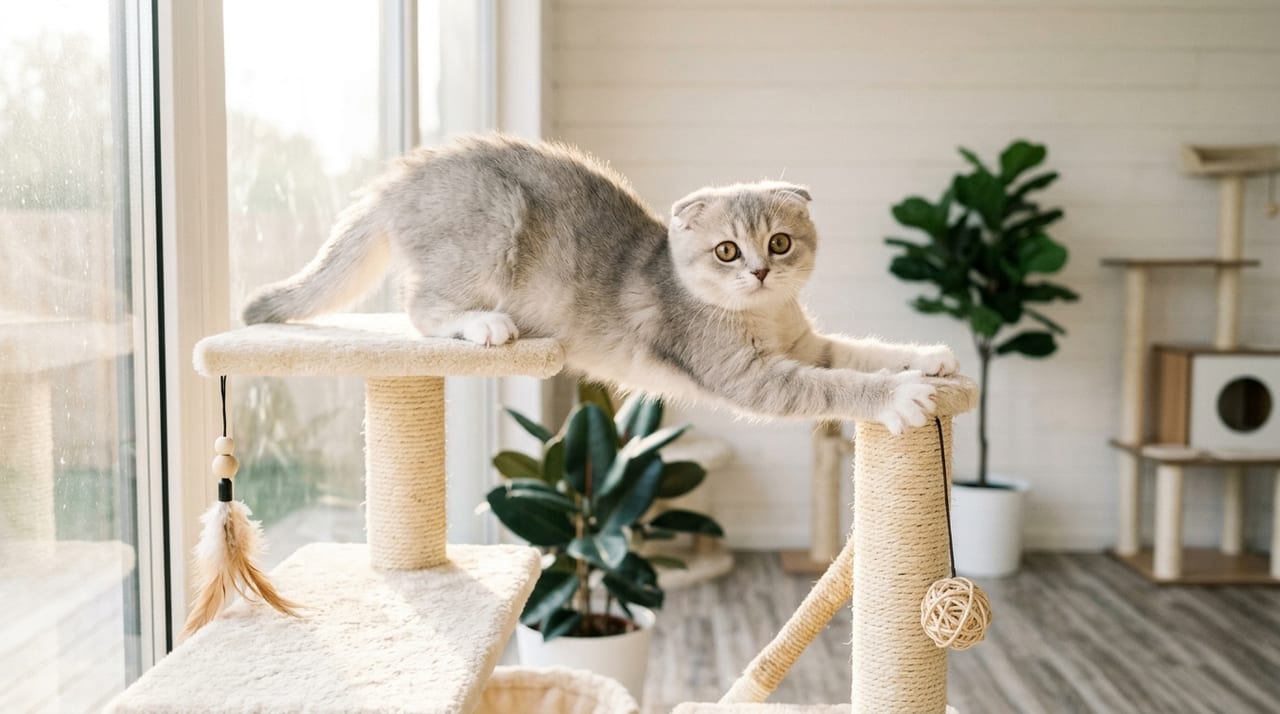
You can also recreate the catio experience indoors. Place a cat tower by the window, use a screen, and let in outdoor air. Even this provides a significant refreshment for your cat.
At BreederDirect, you can consult with breeders about cat breeds suited to indoor living or breeds with high activity levels. When planning the size of your catio, breeder expertise can be valuable in matching the setup to your cat's personality and exercise needs.