A Guide to Safely Purchasing Live Animals Online | Avoiding Fraud and Identifying Trustworthy Sellers
This article explains the risks and safety measures for purchasing live animals on the internet. It covers how to identify trustworthy sellers, safe payment methods, verification upon receipt, and how to handle disputes.
Key Takeaways
This article explains the risks and safety measures for purchasing live animals on the internet. It covers how to identify trustworthy sellers, safe payment methods, verification upon receipt, and how to handle disputes.
Risks Associated with Purchasing Live Animals Online
Purchasing live animals through the internet offers the significant benefit of being able to find rare species and well-bred individuals beyond geographic boundaries. On the other hand, it is a fact that troubles persist, such as "photos and the actual specimen being completely different," "communication ceasing after payment," and "the delivered animal already being dead."
Live animal transactions differ from general merchandise in that "returns and exchanges after delivery" are difficult to conduct. Because they are living creatures, transport stress and quarantine issues become involved, making dispute resolution extremely difficult after the sale is completed. Precisely for this reason, it is important to thoroughly eliminate risks before making a purchase.
Understanding the Typical Patterns Used by Fraudulent Sellers
First, you should be aware of the typical methods used by fraudulent sellers. If you encounter any of the following patterns, be strongly cautious.
- Pricing significantly below market rate: If rare corals or high-quality bred specimens are listed at "suspiciously low prices," you should first be skeptical. Listings at half the market price or less, or those accompanied by phrases like "I need to sell urgently," are standard fraud patterns.
- Attempting to move payment to places where no record is kept: Sellers who avoid the platform's messaging function and request transactions via social media DMs or personal email are red flags. Transactions without records leave no evidence for disputes and you cannot receive platform support mediation. While bank transfers and cash are legitimate payment methods, keep all communications and agreements on the platform.
- Response times to messages are unnaturally fast or extremely slow: If they repeatedly send auto-reply-like responses or only provide irrelevant answers to questions, they may not actually be keeping the animals.
- Reuse or unauthorized use of photos: Checking listing images with reverse image search (such as Google Lens) may reveal fraudulent listings using images sourced from other websites or foreign sites.
Five Checkpoints to Identify Trustworthy Sellers
Beyond simply avoiding fraud, cultivating the ability to actively identify "good sellers" is the essence of safe live animal purchasing.
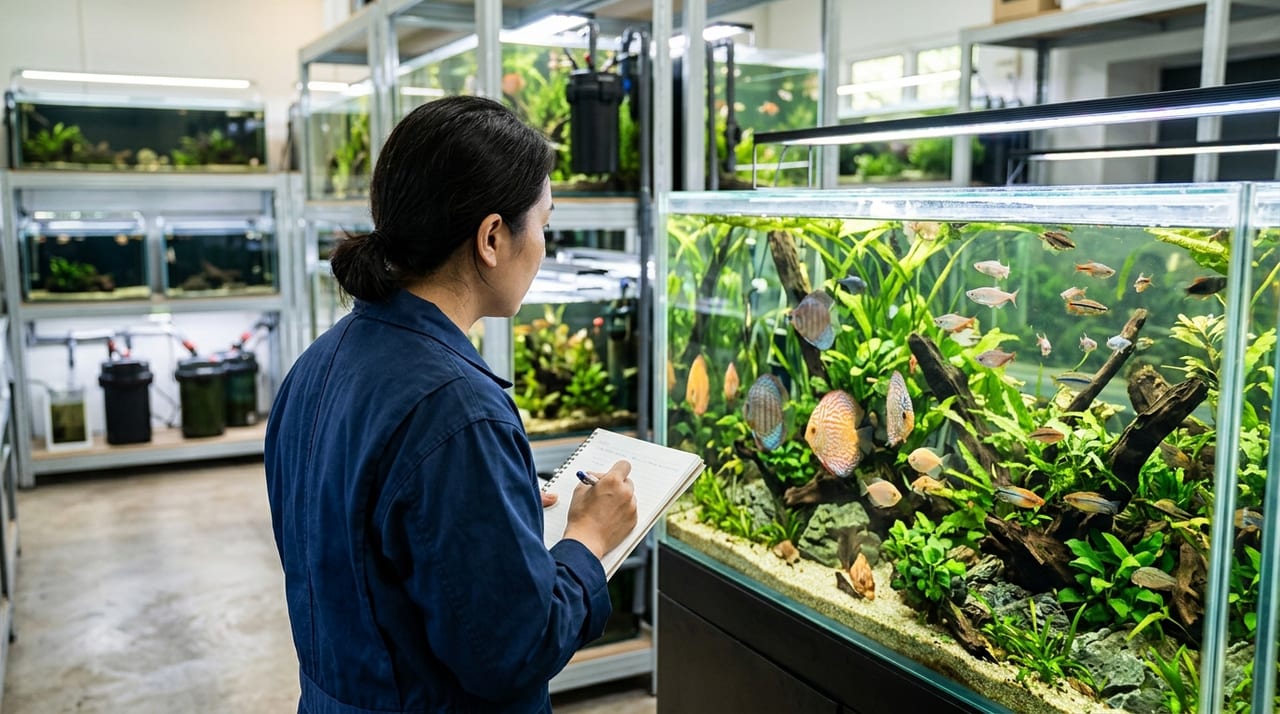
- ① Disclosure of breeding environment: Trustworthy breeders post multiple photos of tanks and enclosures and actively disclose their breeding environment. Check whether there is specific information such as "small-scale management at a private residence" or "dedicated breeding room available."
- ② Detailed description of the animal's condition: Check whether individual-specific information is carefully documented, such as length, weight, age, source of acquisition, feeding status, and last feeding date. Conversely, descriptions limited to "in good health" or "no problems" lack sufficient information.
- ③ Past transaction history and reviews: Check the platform's rating system and customer reviews. Sellers who have maintained transactions over a long period and accumulated specific feedback from buyers have high credibility.
- ④ Honest and professional response to questions: Try asking questions such as "How does this individual pair with others?" or "Can a beginner keep this?" Genuine breeders with breeding experience naturally answer with tips and precautions. If the answer is vague or they seem to avoid answering, reconsider.
- ⑤ Clear packaging and shipping policies: Proper packaging and temperature control are essential for safe live animal transport. Check whether the seller explicitly demonstrates consideration for shipping, such as "shipped with aeration," "heat packs/cool packs used," or "dead-on-arrival guarantee provided."
Important Matters to Confirm Before Purchase
Before proceeding with actual purchase, we strongly recommend confirming all of the following matters.
Compliance with Animal Protection and Management Law and Species Conservation Law: Trading in specified animals and internationally endangered species (species listed in CITES appendices) is subject to strict regulations. Confirm whether the seller holds a Class 1 Animal Handler registration, or whether the transaction falls within the legal scope of private transfer. Avoid animals with "unclear origin" or "no documentation."
Direct verification of the animal's health: If possible, request a video call or video footage beforehand to confirm the living animal in motion. Photos alone make it difficult to assess all aspects of body form, coloration, and activity.
Shared understanding of shipping risks: Live animal transport carries a risk of death. Confirm in writing beforehand whether a dead-on-arrival guarantee is provided and its conditions (such as requiring photos after arrival). Verbal promises become the source of future disputes.
Pay after confirming the animal's condition: Arranging to pay after the animal arrives and its condition is verified protects the buyer from risks such as non-delivery or discrepancy from the description. Avoid prepayment to someone you don't know.
Verification and Proper Response After Receiving the Animal
Do not let your guard down after the animal arrives. Follow these steps after receiving it.
First, before opening the package, confirm the packaging condition, box damage, and temperature, and take photos. These will serve as evidence in case of disputes. After opening, observe the animal's respiration, movement, external injuries, and coloration. If there are any abnormalities, contact the seller immediately. Communicate in writing (via messaging function, etc.) so a record is kept.
In case of dead-on-arrival, photograph the animal's condition (open mouth, color changes, etc.) and the thermometer and packs inside the packaging from multiple angles, and simultaneously report to platform support. Avoid emotional exchanges; presenting facts and evidence matter-of-factly is the quickest path to resolution.
Do not immediately place a newly acquired animal in the same tank or enclosure as existing animals. It is essential to establish a treatment period (quarantine) and observe for parasites and disease before introducing it. A minimum of two weeks is recommended for marine fish, and a month or more for reptiles.
Conclusion: Safe Live Animal Purchase Comes Down to "Preparation"
While online live animal purchasing is convenient, proceeding without adequate preparation risks developing into irreversible problems. Safe and satisfactory transactions can be realized by carefully following the entire process from identifying fraudulent listings, selecting trustworthy breeders, confirming legal matters, to handling delivery and verification.
BreederDirect, a breeder direct-sales platform, enhances transaction transparency through seller screening and evaluation systems. Welcoming a new animal is the beginning of taking responsibility for its life. Taking your time, not being rushed, and confirming details until you are satisfied is the first step toward a long and happy relationship with your pet.