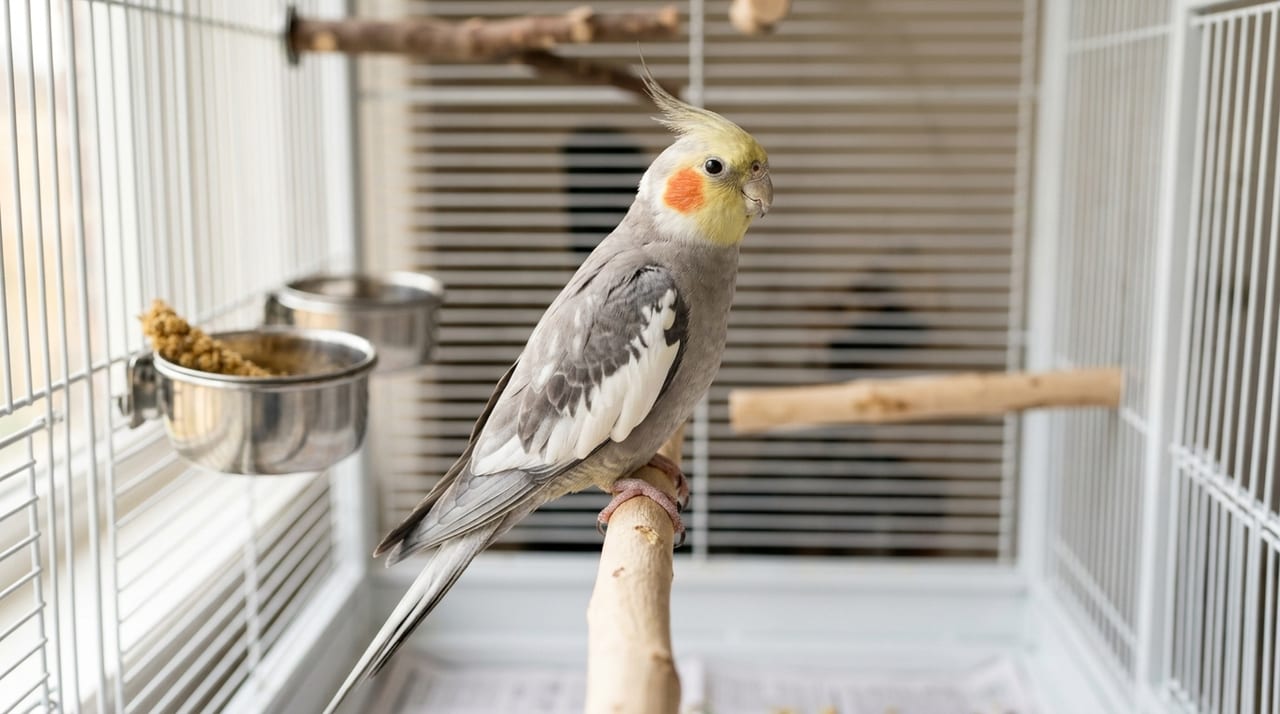
What You Need to Know Before Starting Multi-Bird Keeping
Keeping multiple birds such as parrots and Java sparrows—known as "multi-bird keeping"—offers the joy of lively interaction between birds, but careful introduction procedures are essential. Suddenly placing a new bird into an established bird's environment can trigger territorial disputes and aggressive behavior, and in the worst case, can result in life-threatening injuries to either bird.
Common Mistakes in Multi-Bird Keeping and New Bird Introduction
- Placing the new bird in the established bird's cage on the day of purchase → panic from intense attacks
- Assuming they'll get along and only allowing them together during out-of-cage time → chasing and feather damage
- Disease from the new bird spreads to the established bird → mass infection
To prevent these issues, three basic steps are essential: isolation period, gradual acclimation, and assessing individual personalities.
Step 1: Isolation and Quarantine (2–4 Weeks)
When you bring home a new bird, isolate it in a separate cage for the first 2–4 weeks. This serves the following purposes.
Health Check and Quarantine
This period prevents infectious diseases that the new bird may carry from spreading to your established bird.
Major At-Risk Diseases
| Disease | Pathogen | Symptoms |
|---|
| PDD (Proventricular Dilation Disease) | Avian Bornavirus | Vomiting, weight loss |
| PBFD (Psittacine Beak and Feather Disease) | Circovirus | Feather abnormalities, immunosuppression |
| Chlamydiosis (Psittacosis) | Chlamydia psittaci | Respiratory distress, diarrhea |
| Aspergillosis | Fungus (Mold) | Respiratory distress, loss of appetite |
During the isolation period, it is strongly recommended to take the new bird to an avian veterinarian for fecal and physical examination. PCR testing for PBFD and chlamydiosis (approximately ¥3,000–6,000) is particularly effective as insurance against introducing infection.
Placement of the Isolation Cage
- A separate room where the established bird's cage is not visible is ideal (to prevent stress to the established bird from sight and smell)
- If in the same room, block the line of sight with cloth or a partition
- Do not share equipment or food dishes during the isolation period
Step 2: Visual Acclimation (1–2 Weeks)
Once the isolation period ends and there are no health concerns, you move to the next stage of making the birds aware of each other's presence.
Meeting Through Cage Barriers
- Place both cages in the same room where they can see each other (but at a distance where they cannot directly touch)
- Initially keep them 50cm–1m apart, then gradually bring them closer each day
- Observation point: Watch for threatening behavior (wings spread wide, beak open and vocalizing)
Good Signs That the Established Bird Is Interested in the New Bird
- Moves toward the new bird's cage
- Looks curiously across the perch
- Vocalizes in a new way toward the other bird
Warning Signs Requiring Caution
- Puffs up feathers in threat, attempts to jab with beak
- The new bird cowers in fear at the back of the cage
- Either bird loses appetite or develops diarrhea (stress-related digestive distress)
Step 3: Meeting During Out-of-Cage Time (1–2 Weeks)
If there are no problems with cage-to-cage interaction, you can now attempt allowing them to interact in the same space out of their cages.
Precautions for Out-of-Cage Meetings
- Start with short periods (10–15 minutes) and gradually extend if all goes well
- Never leave them unattended: Always supervise. Return them to their cages if you must leave the room
- Provide escape routes: Set up multiple hiding places (cages, perches) where the new bird can retreat
- Separate food dishes: Competing over a single food dish can trigger fighting
Risk Varies by Species Combination
| Combination | Risk | Notes |
|---|
| Budgerigar with budgerigar | Low–Medium | Relatively safe if same size |
| Rosy-faced Lovebird + Budgerigar | High | Lovebirds have powerful beaks; be especially careful with established lovebirds |
| Cockatiel + Budgerigar | Medium | Watch for one-sided chasing due to size difference |
| Java Sparrow + Other Finches | Low–Medium | Inter-species territorial behavior is relatively weak |
What to Do If Aggression Occurs
- Separate them immediately (if you can't reach them, gently use a towel or dim the lights to calm them)
- If there are injuries, have them examined by an avian veterinarian
- Go back one step in the acclimation process and extend the timeframe
How to Arrange the Cages
Whether to ultimately house them in the same cage or keep them in separate cages depends on the individual personalities of the birds.
When Shared Housing Is Appropriate
- Same species and same sex (or a breeding pair: male + female)
- Raised together from a young age
- During out-of-cage time, they don't chase each other and are seen sitting side by side
When Separate Cage Housing Is Better
- Different species or significant size difference
- The established bird has strong territorial instincts
- Either bird was originally raised alone (accustomed to single-bird housing)
Even with separate cage housing, if they can spend time in the same space during out-of-cage time, they can function perfectly well as "companions." It's wiser to prioritize safe coexistence than to risk accidents by forcing them to share a cage.
Continued Care Points After Introduction
Individual Monitoring for Each Bird
With multiple birds, it's easy to miss changes in individual birds. Check the following through daily observation.
- Weight (weekly: monitor with a digital scale; a decrease of 10% or more is a sign to seek veterinary care)
- Fecal condition (quantity, form, color)
- Changes in appetite and activity level
- Feather condition (abnormal feather loss, self-plucking)
Updating Environmental Enrichment
With multiple birds, environmental enrichment to prevent boredom and reduce stress becomes even more important.
- Toy rotation (introduce 1–2 new toys each week)
- Provide multiple perches of different shapes and materials
- Provide chewable materials (cork, wood pieces, toys with bark)
Multi-bird keeping, when done with proper introduction procedures, is an incredibly enriching and enjoyable way to keep birds. Taking time and patience is the best approach for both your established birds and your new birds.