[2026 Edition] 10 Common Goldfish Care Mistakes and How to Fix Them
Comprehensive guide to 10 common beginner goldfish care mistakes—goldfish bowls, overfeeding, inadequate water changes—with concrete prevention strategies and preventative measures to keep your goldfish thriving for 10+ years.
Key Takeaways
Comprehensive guide to 10 common beginner goldfish care mistakes—goldfish bowls, overfeeding, inadequate water changes—with concrete prevention strategies and preventative measures to keep your goldfish thriving for 10+ years.
Related Species
Goldfish have a reputation for being easy to care for, but without proper knowledge, they often have short lifespans. With appropriate management, goldfish can live 10–15 years or longer. This article explains 10 common beginner mistakes in goldfish care and how to prevent them.
Mistake 1: Keeping Goldfish in Bowls or Containers That Are Too Small
What's the mistake? Keeping goldfish from festivals in goldfish bowls or small plastic containers.
Why is it dangerous? Goldfish bowls have very little water volume, and ammonia concentrations quickly reach lethal levels. Depending on the variety, goldfish can grow to 20–30 cm in length, making bowls unsuitable for long-term care.
Solutions
Provide at minimum a 30 cm tank (approximately 12 liters), ideally 45 cm or larger
Allocate at least 10 liters of water per goldfish
For multiple fish, a 60 cm tank (about 60 liters) is recommended
Mistake 2: Insufficient Water Changes
What's the mistake? Skipping water changes because the water appears clear.
Why is it dangerous? Ammonia and nitrite are colorless. Even if the water looks clean, harmful substances can accumulate. Goldfish are heavy eaters with high waste output, so water quality deteriorates faster than with tropical fish.
Solutions
Perform a 1/3 water change weekly as a baseline
Use a siphon to remove debris from the substrate as well
Test ammonia and nitrite levels regularly with a water test kit
Mistake 3: Overfeeding
✍️
BreederDirect Editorial
The BreederDirect editorial team specializes in care information for animals, covering veterinary care and breeding to deliver beginner-friendly guides.
Find Goldfish on BreederDirect
Buy directly from verified breeders
Browse Related Listings
Find Goldfish listings related to this article on BreederDirect. Buy directly from verified breeders.
Related Tools
Related Articles
Browse by Category
🪸Coral
🐠Marine Fish
🐟Tropical Fish
🐡Goldfish
🐟Medaka
🦎Reptiles
Share
What's the mistake? Feeding large amounts multiple times daily because the goldfish seem excited.
Why is it dangerous? Goldfish lack a satiety center, so they will eat everything offered. Overfeeding causes digestive problems and swim bladder disease (where the swim bladder malfunctions and the fish flips upside down). Uneaten food also accelerates water quality decline.
Solutions
Feed 1–2 times daily, only as much as they can consume in 2 minutes
Designate one day per week as a fasting day to rest their digestive system
Use both floating and sinking pellets to vary feeding
Reduce food amounts when water temperature drops below 15°C
Mistake 4: No Filter
What's the mistake? Believing that filters are unnecessary for goldfish bowls.
Why is it dangerous? Goldfish excrete a very large amount relative to their body size. Without a filter, ammonia accumulates rapidly, causing gill inflammation and respiratory distress.
Solutions
Corner filters (like the Suisaku Eight) are convenient and beginner-friendly
For 45 cm or larger tanks, external filters or top filters are recommended
Clean filter media in tank water only (never use tap water)
Mistake 5: Mixing Species with Different Swimming Abilities
What's the mistake? Keeping fast swimmers (wakin/commons) with slow swimmers (ryukin, ranchu) in the same tank.
Why is it dangerous? Wakin are fast swimmers while ryukin and ranchu are slower. In mixed tanks, slower species can't access food and become malnourished or stressed, leading to illness.
Solutions
Keep funa-type varieties (wakin, comets, red and white) separate from rounded varieties (ryukin, bubble-eyes, ranchu)
Bubble-eyes have poor vision and are best kept with other bubble-eyes
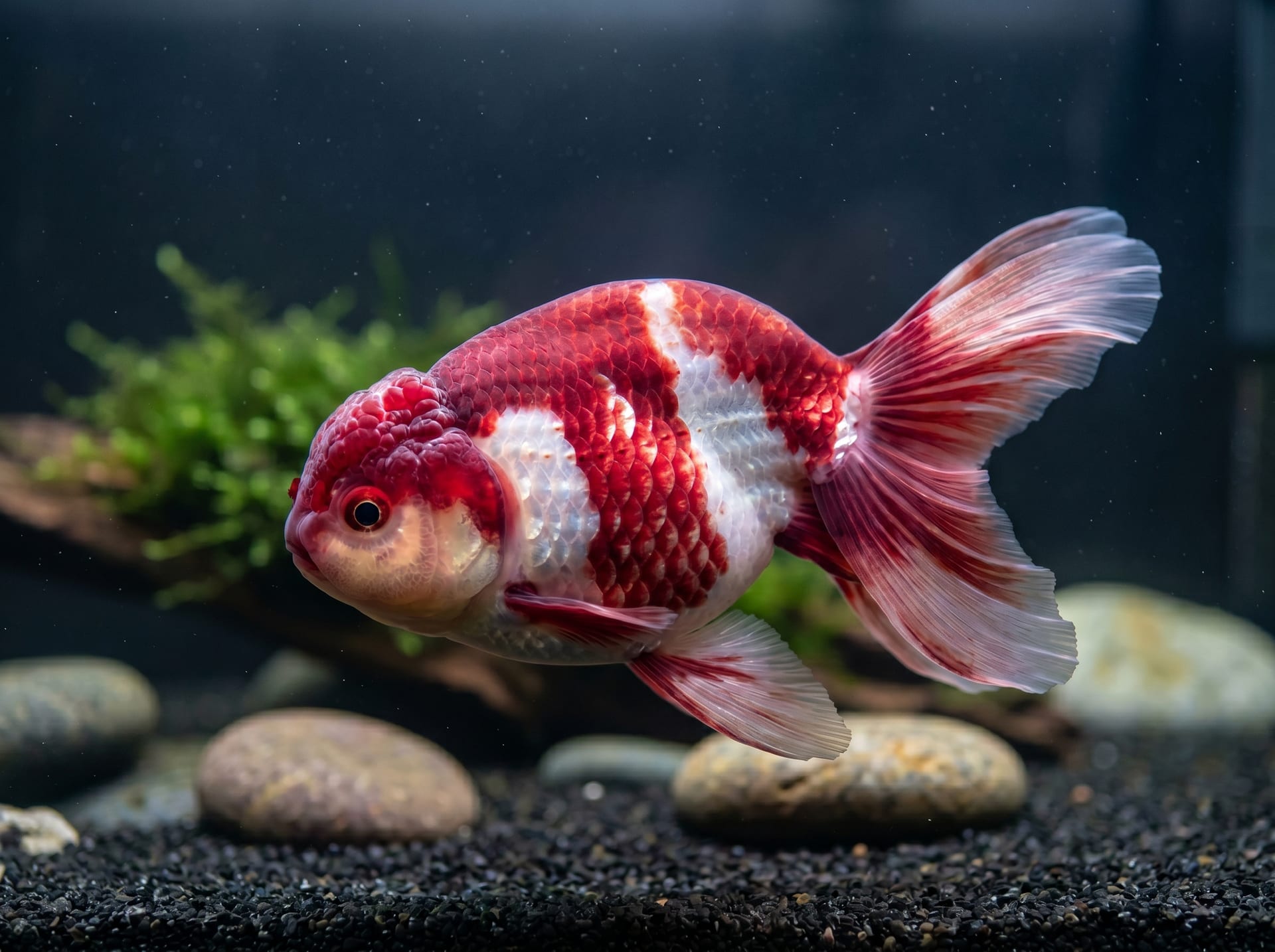
Ranchu ideally thrive in dedicated shallow plastic tubs
Mistake 6: Rapid Temperature Fluctuations
What's the mistake? Not matching water temperature during water changes, or placing the tank where air conditioning blows directly on it.
Why is it dangerous? Goldfish are sensitive to sudden temperature changes. A difference of just 2–3°C can stress them and trigger white spot disease.
Solutions
Match the temperature of new water to the tank before adding it
Goldfish tolerate 5–30°C, but gradual changes only. Keep changes to no more than 2°C per day
Avoid locations where AC air blows directly on the tank
Mistake 7: Forgetting to Dechlorinate
What's the mistake? Adding tap water directly to the tank without treatment.
Why is it dangerous? Chlorine in tap water destroys gill mucosa and severely impairs respiratory function.
Solutions
Always use dechlorinator when changing water
Alternatively, let tap water sit in sunlight for 24+ hours before use
Keep dechlorinator in stock at all times
Mistake 8: Adding New Fish Without Quarantine
What's the mistake? Introducing newly purchased goldfish directly into an established tank without acclimation or quarantine.
Why is it dangerous? New fish may carry pathogens like white spot disease or tail rot, which can then spread to your existing fish.
Solutions
Quarantine new goldfish in a separate tank for 1–2 weeks (with 0.5% salt bath)
Confirm there are no disease signs before merging with the main tank
Use the drip acclimation method when transferring fish
Mistake 9: Sharp Decorations Causing Injury
What's the mistake? Using sharp rocks or rough artificial decorations in the tank.
Why is it dangerous? Many goldfish varieties have long fins and are easily torn on sharp objects. Wounds can become infected with bacteria, leading to tail rot.
Solutions
Use smooth rocks or driftwood for décor
Real aquatic plants are the safest option
Ranchu are best kept in bare-bottom tanks for easier care
Mistake 10: Overlooking Oxygen Deficiency
What's the mistake? Running the tank without aeration and with only weak filter flow.
Why is it dangerous? Goldfish are large and consume significant amounts of oxygen. Without adequate oxygen, you'll see "nose-up" behavior, and if untreated, the fish can suffocate. This risk is especially high in summer.
Solutions
Install aeration as the most reliable solution
Use a cooling fan in summer to lower water temperature and increase oxygen levels
The more fish in the tank, the more critical aeration becomes
Summary: Three Essentials for Long-Lived Goldfish
Sufficient water volume and a proper filter to maintain stable water quality
Feed conservatively. Goldfish health depends on eating less
Disease prevention: quarantine new fish, manage water quality, maintain stable temperature
Frequently Asked Questions (FAQ)
Q. How long do goldfish live?
A. With proper care, 10–15 years. Some individuals can live 20+ years.
Q. Do goldfish need a heater?
A. Generally no. Goldfish adapt well to 5–30°C. During illness treatment, keeping the tank at 15–20°C speeds recovery.
Q. My goldfish is covered in white spots—is it white spot disease?
A. If you see tiny white grains on the body or fins, it's likely white spot disease. Raise the temperature to 28°C and perform a salt bath (0.5%). If it doesn't improve, treat with methylene blue.
Q. How many goldfish should I keep?
A. In a 60 cm tank, 3–5 fish is a good guideline. Keeping fewer fish makes water quality management easier.
At BreederDirect, you can purchase goldfish directly from specialty breeders with accurate breed information. We carry everything from championship-quality ranchu to beginner-friendly varieties. If you're keeping goldfish for the first time, be sure to check out our goldfish category as well.
![[2026 Edition] 10 Common Goldfish Care Mistakes and How to Fix Them](https://img.br-choku.com/column-images/goldfish-indoor-winter-care-guide/hero-1778783794801.jpg)