Corals are what truly bring out the charm of a saltwater aquarium. The vividly colored polyps that sway gracefully, and coral colonies spreading across live rock, provide a soothing visual experience just by watching them. However, many people hesitate to take the first step because they perceive corals as delicate and difficult to maintain.
In reality, there is a significant variation in difficulty level depending on the coral species, and there are many hardy varieties that even beginners can successfully raise. This article introduces 5 carefully selected corals with high tolerance to water quality fluctuations and ease of care without requiring special equipment. These are all perennially popular staple species even in 2026, so let's master the characteristics and care requirements of each and take your first step into coral keeping.
Basic Fundamentals of Coral Care
Before diving into specific species, let's review the fundamental care points common to all corals.
- Temperature: 24–26°C is ideal. Avoid sudden temperature changes.
- Specific Gravity (Salinity): Maintain 1.023–1.025. Measure regularly with a hydrometer or refractometer.
- Nitrate and Phosphate: Keep as low as possible. Soft corals tolerate moderate levels, but the closer to zero, the better condition they'll display.
- Lighting: Required light intensity varies by species. Soft corals generally can thrive under low to moderate light levels.
- Water Flow: Gentle water flow—not too strong, not too weak—encourages polyp extension.
For beginners, we recommend starting with soft corals. Since they lack a skeleton and are composed of soft tissue, they have high tolerance to water quality fluctuations and are less prone to failure.
1. Zoanthus|The Iconic Entry-Level Coral with Abundant Color Variations
Difficulty: ★☆☆☆☆ Price Range: ¥1,000–5,000
Zoanthus (commonly called "Zoas") are widely known in the coral-keeping world as "the species least likely to fail." However, they produce the potent toxin palytoxin, so always wear rubber gloves and protective eyewear when handling—never touch them bare-handed. Tiny polyps cluster densely, spreading across rock and substrate, swaying gently with the water flow in an endearing manner.
The abundance of color variations is their greatest appeal. They come in green, blue, orange, purple, pink, and more—like a color chart—and many enthusiasts collect them as a hobby. Arranging different-colored Zoas side by side transforms your tank into a vibrant display.
Care Tips
- Thrive under low to moderate light levels
- Hardy enough to tolerate slightly elevated nitrate levels
- Gradually expand as they attach to rock
- Be cautious of contact with other corals (they may carry toxins)
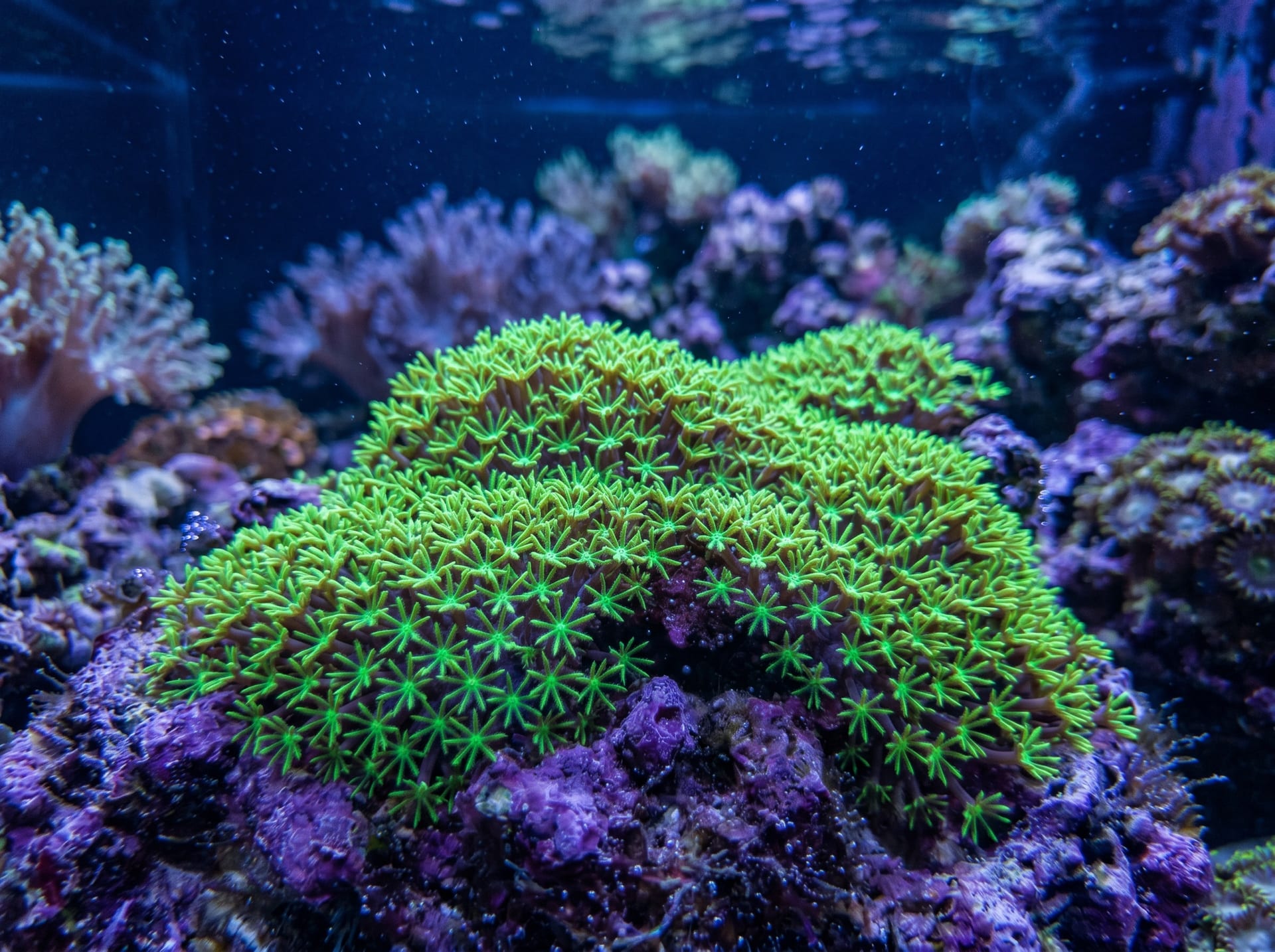
2. Star Polyps|The Satisfaction of Growth as Green Spreads Like a Carpet
Difficulty: ★☆☆☆☆ Price Range: ¥1,500–4,000
Star Polyps are named for the star-like appearance of their small green polyps when extended. They are characterized by rapid growth, quickly covering the surfaces of live rock and stone—making it easy to feel the satisfaction of "actively growing" your coral.
Watching your initial purchase expand several times its original size after just a few months brings the true joy of coral keeping into sharp focus. With their prolific reproduction, excess growth can be divided into frags and traded or sold.
Care Tips
- Prefer moderate water flow; strong current can inhibit polyp extension
- Lighting at medium intensity or higher brings out vibrant colors
- Extremely hardy—thrives on neglect if water quality is stable
- Can overtake nearby corals, so space placement generously
3. Mushroom Coral|Distinctive Soft Coral with Outstanding Presence
Difficulty: ★★☆☆☆ Price Range: ¥2,000–5,000
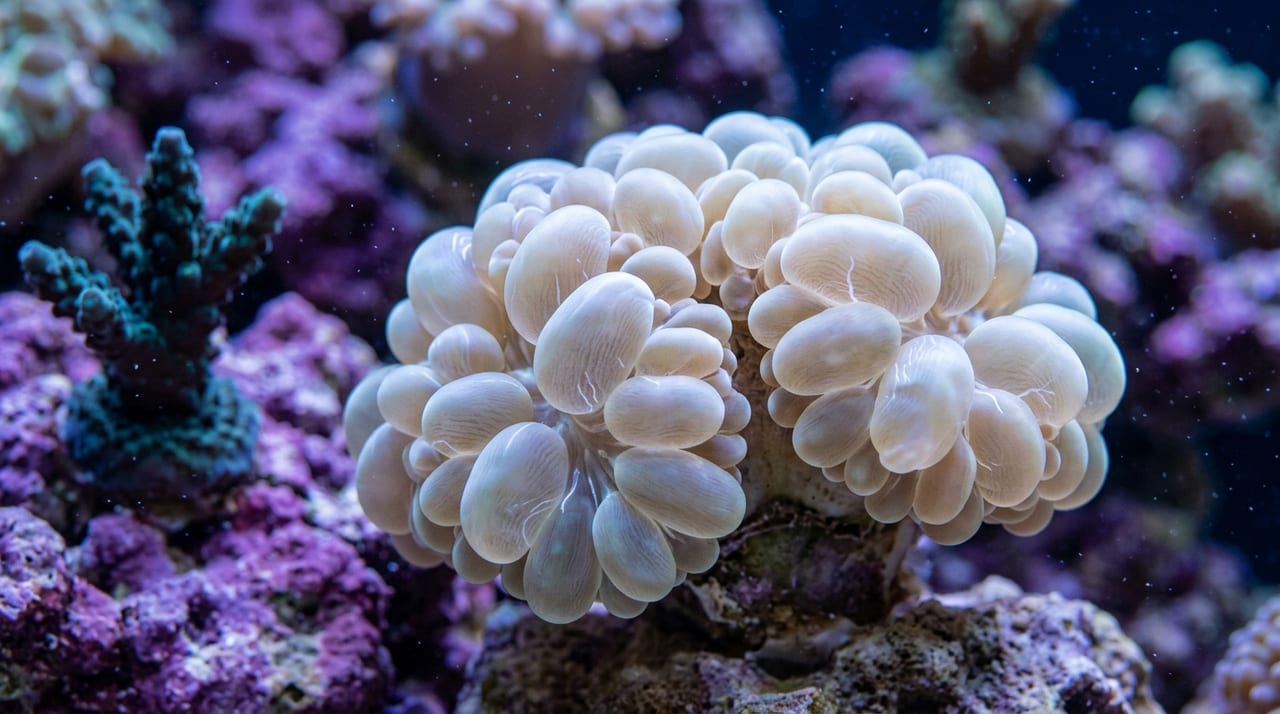
True to their name, Mushroom Corals catch the eye with their distinctive mushroom-shaped caps. Among soft corals, they have a unique appearance and serve as striking focal points or landmarks in the aquarium.
The cap's surface is covered with countless tiny polyps that sway slowly and gracefully with water flow. They typically display subdued tones—beige, green, gray—creating a natural aesthetic throughout the tank.
Care Tips
- They cyclically contract and expand as they adapt to environmental changes (a normal response)
- They may shrink and appear "melted," but usually recover within days
- Can be kept under low to moderate lighting; indirect light is often preferable
- Good polyp extension occurs with adequate water flow
4. Disk Coral|A Beginner's Ally That Thrives in Low Light
Difficulty: ★☆☆☆☆ Price Range: ¥1,000–3,000
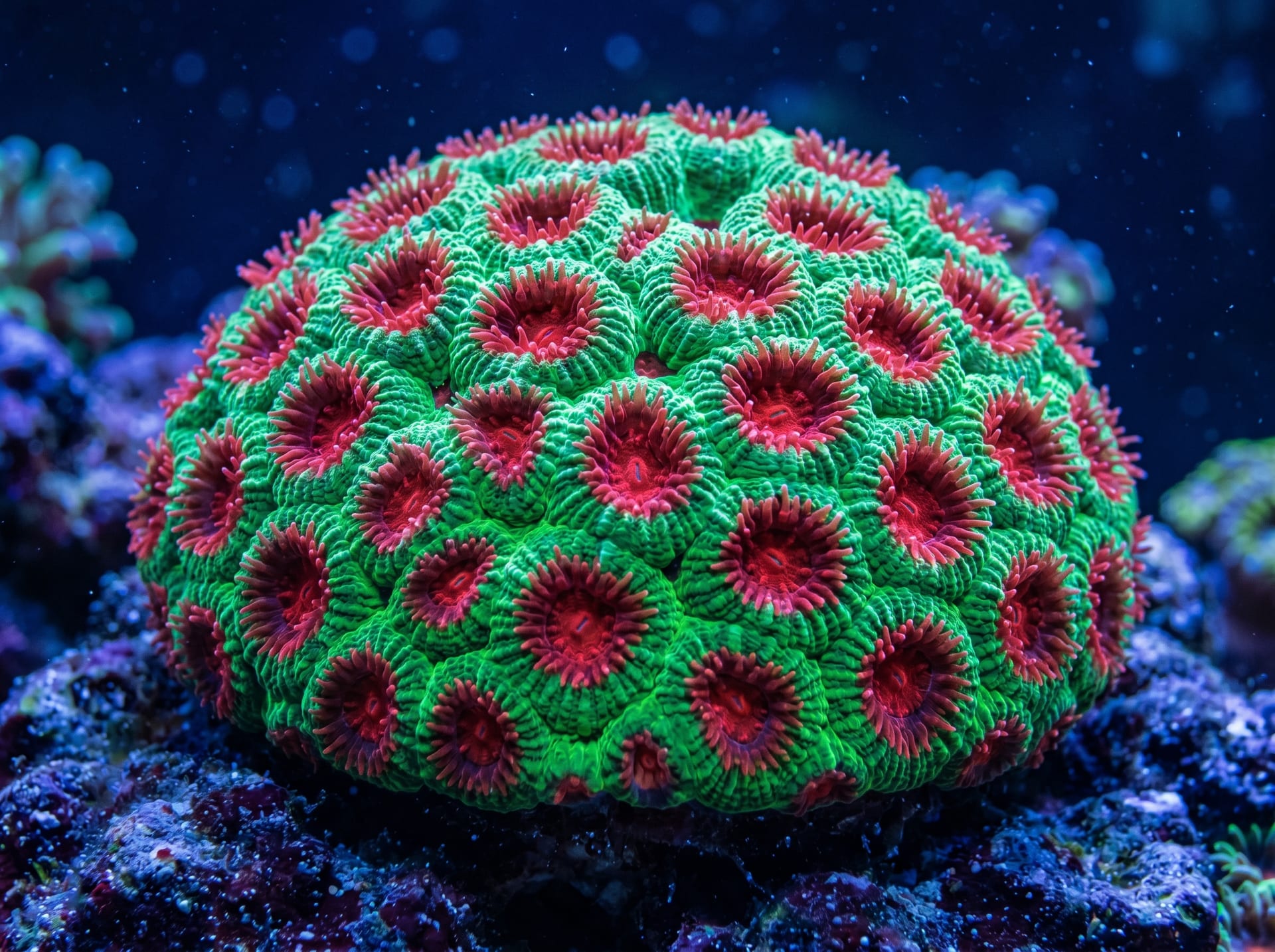
Disk Corals (Rhodactis) are characterized by their flat, disk-like form. They are among the few corals that can thrive in low-light areas such as the tank bottom or shaded areas of rock.
Many specimens display vibrant colors—neon green, red, purple, blue—and glow particularly beautifully under UV lighting. Since they can be kept without high-powered dedicated coral lighting, they are an accessible choice for beginners setting up their first saltwater tank.
Care Tips
- They tolerate low light, but coloration improves with adequate intensity
- They can attach to rock faces and shaded areas, offering high layout flexibility
- Prefer weak to moderate water flow
- Reproduce easily; they naturally divide and increase in number
5. Okinawa Starburst Coral|The Perfect LPS Introduction—A Beautiful Hard Coral
Difficulty: ★★☆☆☆ Price Range: ¥3,000–10,000
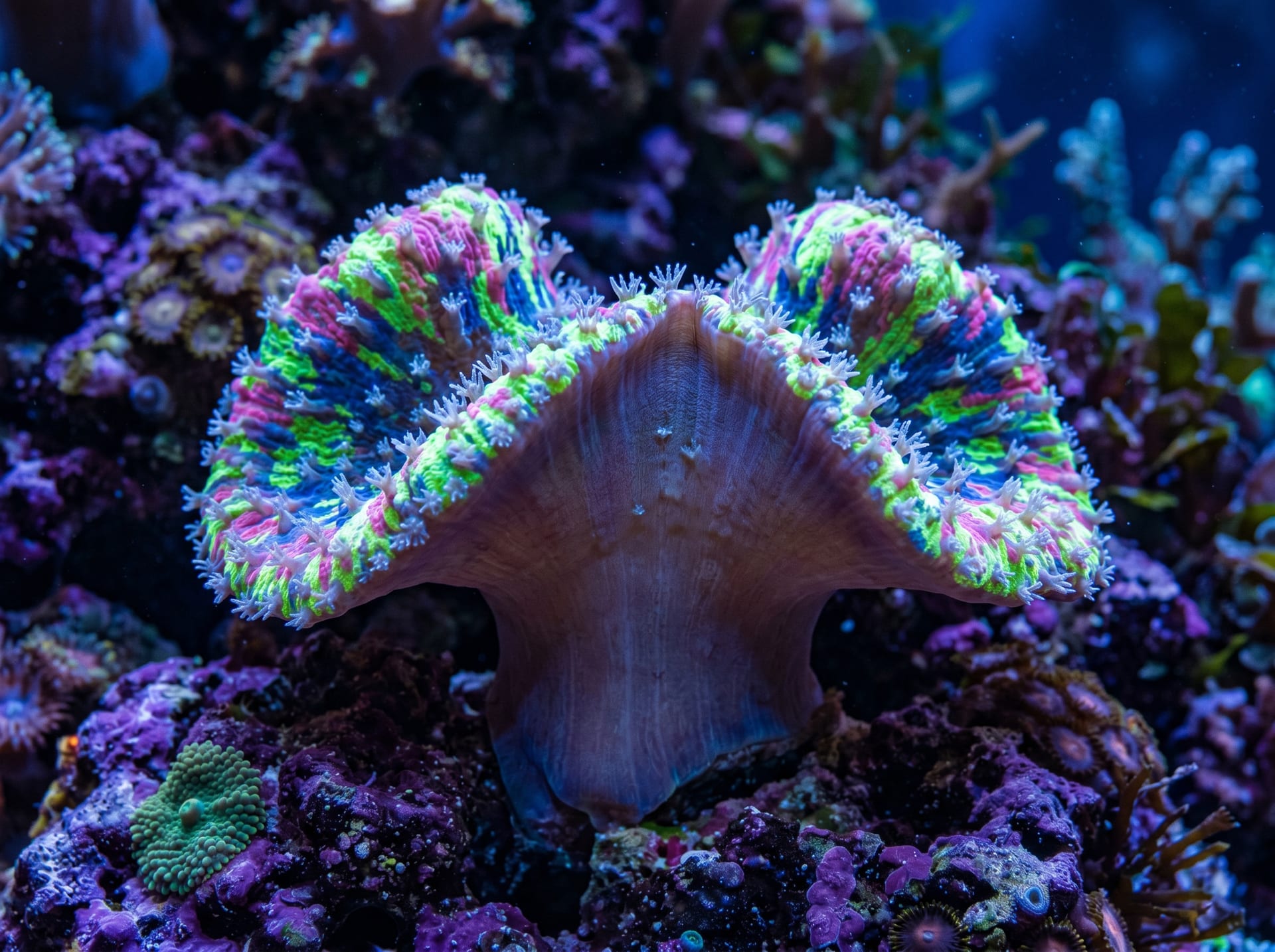
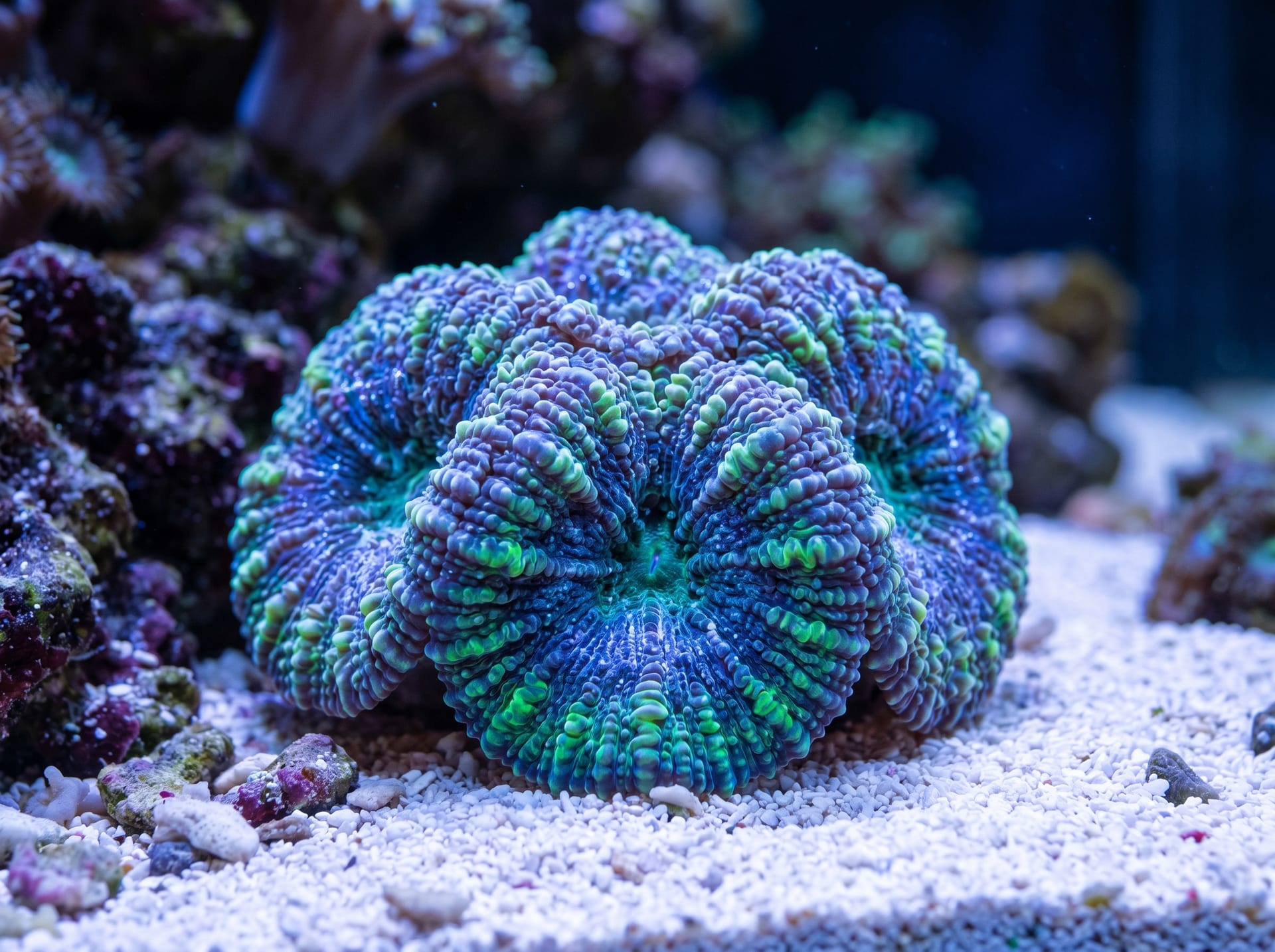
The previous four species were all soft corals, but Okinawa Starburst Coral (Acanthophyllia) is an LPS (Large Polyp Stony) coral. Despite possessing a calcareous skeleton, it has relatively broad water-quality tolerance, making it a classic entry point for those wanting to "venture into hard corals."
Their color brilliance far exceeds soft corals—vibrant green, orange, blue, and more. The sight of their greatly inflated polyps swaying in the current is spectacular, making them a powerful centerpiece for the aquarium.
Care Tips
- Ideally introduce once soft corals are thriving stably in your setup
- Require medium or higher light intensity and appropriate water flow
- Maintaining low nitrate and phosphate levels enhances coloration
- Keep adequate distance from other corals (they use sweeper tentacles to attack nearby neighbors)
Breederu Choku's Safe and Reliable System
When starting coral keeping, sourcing healthy specimens is absolutely critical to success. When purchasing from shops, concerns about transport stress and unclear management practices often arise.
Breederu Choku is a platform where you can trade directly with breeders specializing in corals. Breeders list frags and specimens they've raised themselves, allowing you to verify husbandry conditions and feeding methods before purchasing.
- See the Breeder's Face: Confirm breeder profiles and cultivation track records
- Direct Consultation Available: Ask the breeder questions before purchase—perfect for peace of mind as a beginner
- Domestically Bred Specimens: Domestic-bred specimens experience less transport stress and maintain stable condition compared to imports
- Fair Pricing: Eliminate the middleman for quality specimens at reasonable prices
Coral keeping begins with "meeting the right specimen." Please use Breederu Choku to welcome your first frag from a trustworthy breeder.