Pocillopora and Stylophora Beginner's Guide | Mastering Water Quality, Lighting, and Water Flow for Your First Branching SPS Corals
Pocillopora and Stylophora are beginner-friendly branching SPS corals that are said to be easier to manage than Acropora. This comprehensive guide covers everything beginners need to know about keeping these corals—from essential water quality parameters and lighting PAR values to water flow design, fragging tips, and common pitfalls.
Key Takeaways
Pocillopora and Stylophora are beginner-friendly branching SPS corals that are said to be easier to manage than Acropora. This comprehensive guide covers everything beginners need to know about keeping these corals—from essential water quality parameters and lighting PAR values to water flow design, fragging tips, and common pitfalls.
Related Species
What are Pocillopora and Stylophora?
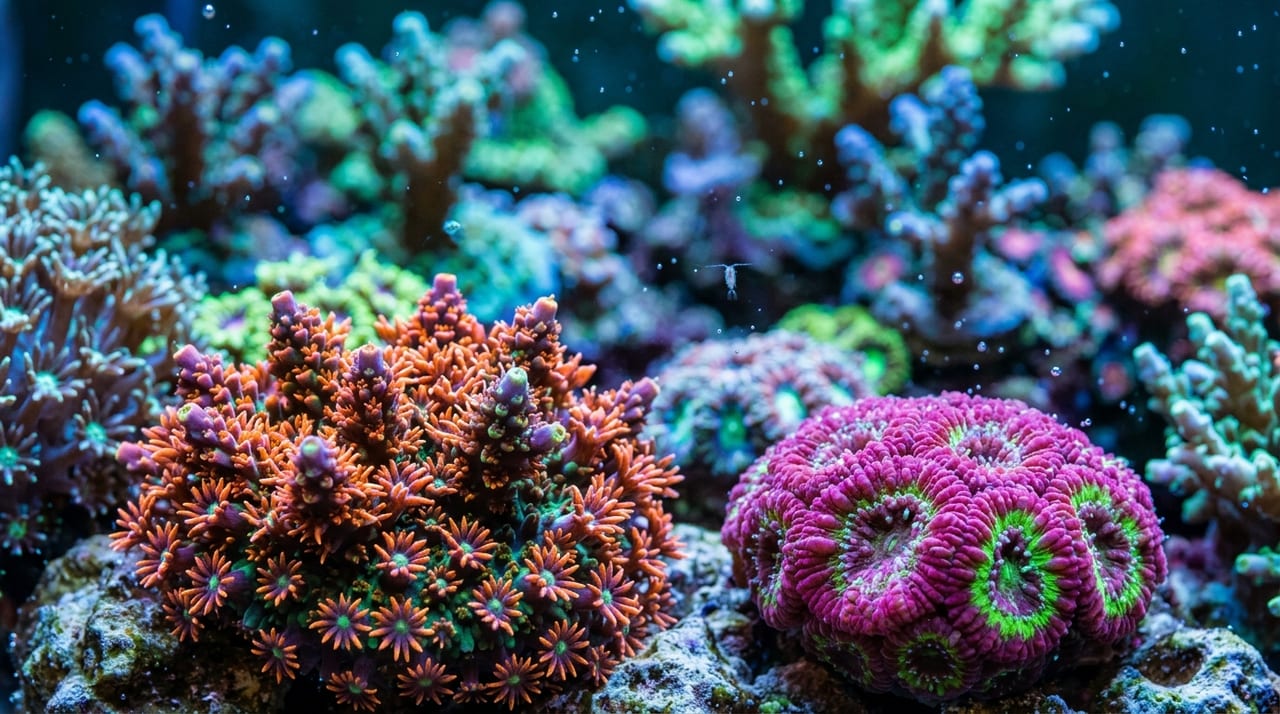
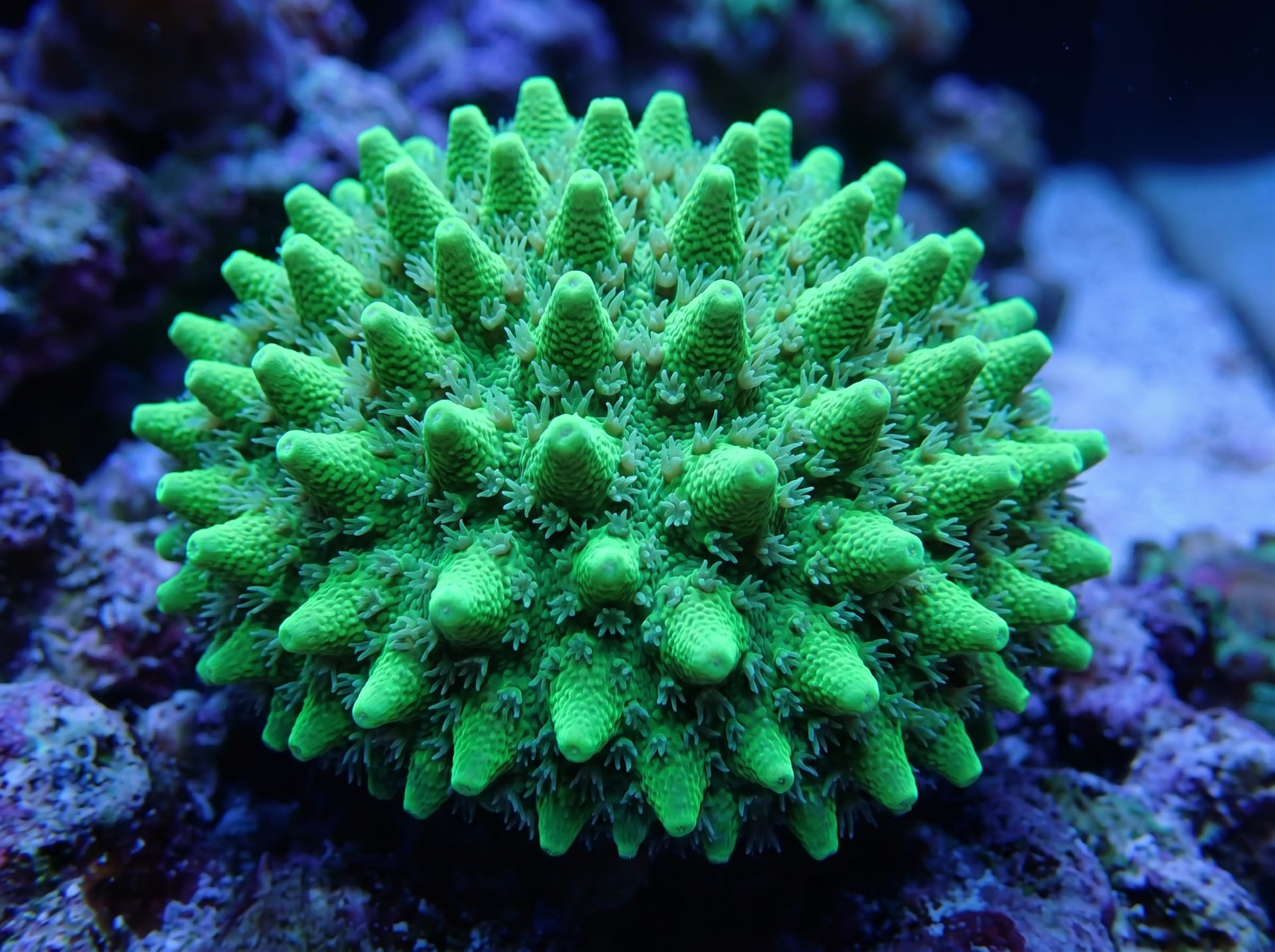
Pocillopora (Pocillopora sp.) and Stylophora (Stylophora pistillata) are both branching SPS (Small Polyp Stony) corals belonging to the family Pocilloporidae. These corals are widely distributed throughout tropical reefs in the Indian and Pacific Oceans. In natural reef environments, they are known to thrive in high-energy, surge-prone areas at the reef crest, making them relatively hardy species.
Pocillopora Characteristics: Polyps are densely clustered at the branch tips in spherical or grape-like formations, displaying vibrant fluorescent colors in pink, green, brown, purple, and other hues. The popular species P. damicornis has been a staple in aquaculture for many years.
Stylophora Characteristics: This coral features shorter, denser branches arranged in an orderly formation with club-like polyp-bearing tips. Stylophora readily displays pink, purple, green, and blue coloration, making it highly valued as a beginner-friendly SPS with relatively easy color enhancement.
Why Beginner-Friendly?
| Comparison | Pocillopora / Stylophora | Acropora (Staghorn) |
|---|---|---|
| Tolerance to water parameter changes | Relatively resilient | Sensitive |
| Required PAR | 150–350 μmol/m²/s | 200–500 μmol/m²/s |
| Growth rate | Moderate | Fast (depending on water quality) |
| RTN/STN risk | Low | High |
| Availability | High | High |
Required Water Quality Parameters
Stable water quality is essential for SPS corals, but Pocillopora and Stylophora do not require as strict management as Acropora.
| Parameter | Target |
|---|---|
| Temperature | 25–27°C (avoid sudden changes) |
| Specific Gravity / Salinity | 1.024–1.026 (SG) |
| pH | 8.1–8.3 |
| Alkalinity (KH) | 8–11 dKH |
| Calcium (Ca) | 400–450 mg/L |
| Magnesium (Mg) | 1,280–1,380 mg/L |
| Nitrate (NO₃⁻) | 1–10 ppm |
| Phosphate (PO₄³⁻) | 0.01–0.08 ppm |
Important Notes
- Rapid KH swings (>1 dKH per day) can cause polyp retraction and bleaching. When using additives, administer small amounts multiple times daily rather than in one dose.
- Even Pocillopora and Stylophora tend to lose color in ultra-low nutrient environments (ULNS). In practice, maintaining moderate nutrient levels (NO₃ 3–10 ppm, PO₄ 0.03–0.07 ppm) is easier and more sustainable.
- Use a calcium reactor or two-part dosing (Ca/KH) to maintain stable parameters.
Lighting Selection and Placement
Required PAR Values
| Tank Zone | PAR Range | Application |
|---|---|---|
| Upper zone (strong light) | 300–400 μmol/m²/s | For vibrant Stylophora blue and pink coloration |
| Mid-tank | 150–300 μmol/m²/s | Standard zone for Pocillopora and Stylophora |
| Lower zone | 100–150 μmol/m²/s | For acclimation of newly introduced corals |
Acclimation (Light Acclimatization): When introducing new corals, always start in low-light conditions and gradually move them to their final position over 2–4 weeks. Sudden exposure to intense light will cause bleaching (photoinhibition).
Recommended Lighting Equipment
- LED reef lights (AI Hydra, Radion G6, etc.): Enhancing blue spectrum boosts fluorescent coloration.
- Photoperiod: 8–10 hours per day. Complete darkness at night is important for coral health.
Water Flow Design
Since Pocillopora and Stylophora naturally inhabit high-flow reef environments, moderate to strong multidirectional random flow is ideal.
Water Flow Guidelines
- Flow should be strong enough that the colony visibly sways.
- Unidirectional strong flow causes detritus accumulation on one side of the skeleton.
- Wave-making pumps with randomized flow (Tunze Stream, Ecotech MP-series, etc.) are most effective.
Signs of Insufficient Water Flow
- Brown detritus accumulates on shaded areas where flow does not reach.
- Poor polyp extension or retraction.
- Bleaching progresses from the base of the skeleton.
Post-Introduction Acclimation Period
After introducing a new coral to the tank, leave it undisturbed for at least 2–4 weeks.
Common Post-Introduction Phenomena (Normal)
- Polyps remain closed → Normal stress response, usually resolves in days to 2 weeks.
- Excessive mucus production → Normal response to shipping stress.
- Some polyp retraction → Corals are adapting. Wait if the overall colony remains healthy.
Abnormal Signs (Immediate Action Needed)
- Rapid skeleton bleaching or tissue peeling → Possible RTN (Rapid Tissue Necrosis). Immediately isolate and attempt fragging healthy tissue.
- Foul odor or skeletal dissolution → Critical condition. Check water quality and isolate immediately.
Fragging Method
Pocillopora and Stylophora frag readily, allowing you to propagate healthy, established colonies.
Tools Required
- Mini band saw (SPS-specific) or diamond-tipped coral cutter
- Frag plugs (ceramic)
- Coral adhesive (epoxy or cyanoacrylate)
- Small isolation tank (frag tank or dedicated vessel)
Steps
- Cut branch tips 2–5 cm long (use diagonal cuts to increase glue surface area).
- Gently rinse the cut surface with RO water to remove slime.
- Secure the frag to a ceramic plug using epoxy.
- Place in a frag tank or low-light, low-flow area of the main tank.
- Skeleton adhesion begins within 2–4 weeks.
Common Mistakes and Solutions
Polyps Remain Closed (Over 1 Month)
- Cause: Excessive water flow / Excessive light intensity / Water quality issues (rapid KH swings, ammonia)
- Solution: Test water parameters, review placement and flow intensity.
Rapid Bleaching (RTN-Like)
- Cause: Shipping damage, sudden temperature fluctuation, pathogens
- Solution: Isolate immediately, remove bleached tissue and frag healthy portions, stabilize temperature and water quality.
Loss of Color / Fading to Brown
- Cause 1 Insufficient light → Move to a higher zone.
- Cause 2 Excess nutrients (NO₃ > 20 ppm) → Perform water changes, optimize protein skimming.
- Cause 3 High temperature (> 29°C) → Implement cooling measures.
Summary: The Best Choice for SPS Beginners
Pocillopora and Stylophora are the ideal stepping stone to SPS keeping for intermediate reef keepers who find Acropora challenging. By maintaining stable water quality, appropriate lighting, and good water flow—combined with proper acclimation and regular parameter testing—you will enjoy the satisfaction of watching your SPS thrive and grow.
Fragging is straightforward, opening the door to coral propagation and breeding. Start with a single healthy colony, learn your tank's unique environment, and gradually deepen your mastery of SPS cultivation.