Complete Guide to Bearded Dragon Enclosure Setup | Proper Management of UV Light, Temperature, and Humidity
Comprehensive guide to bearded dragon enclosure setup. Covers temperature gradient between basking spots (40-45°C) and cool zones, UVB light types and replacement frequency, methods to maintain 30-40% humidity, and practical substrate selection.

Key Takeaways
Comprehensive guide to bearded dragon enclosure setup. Covers temperature gradient between basking spots (40-45°C) and cool zones, UVB light types and replacement frequency, methods to maintain 30-40% humidity, and practical substrate selection.
Related Species
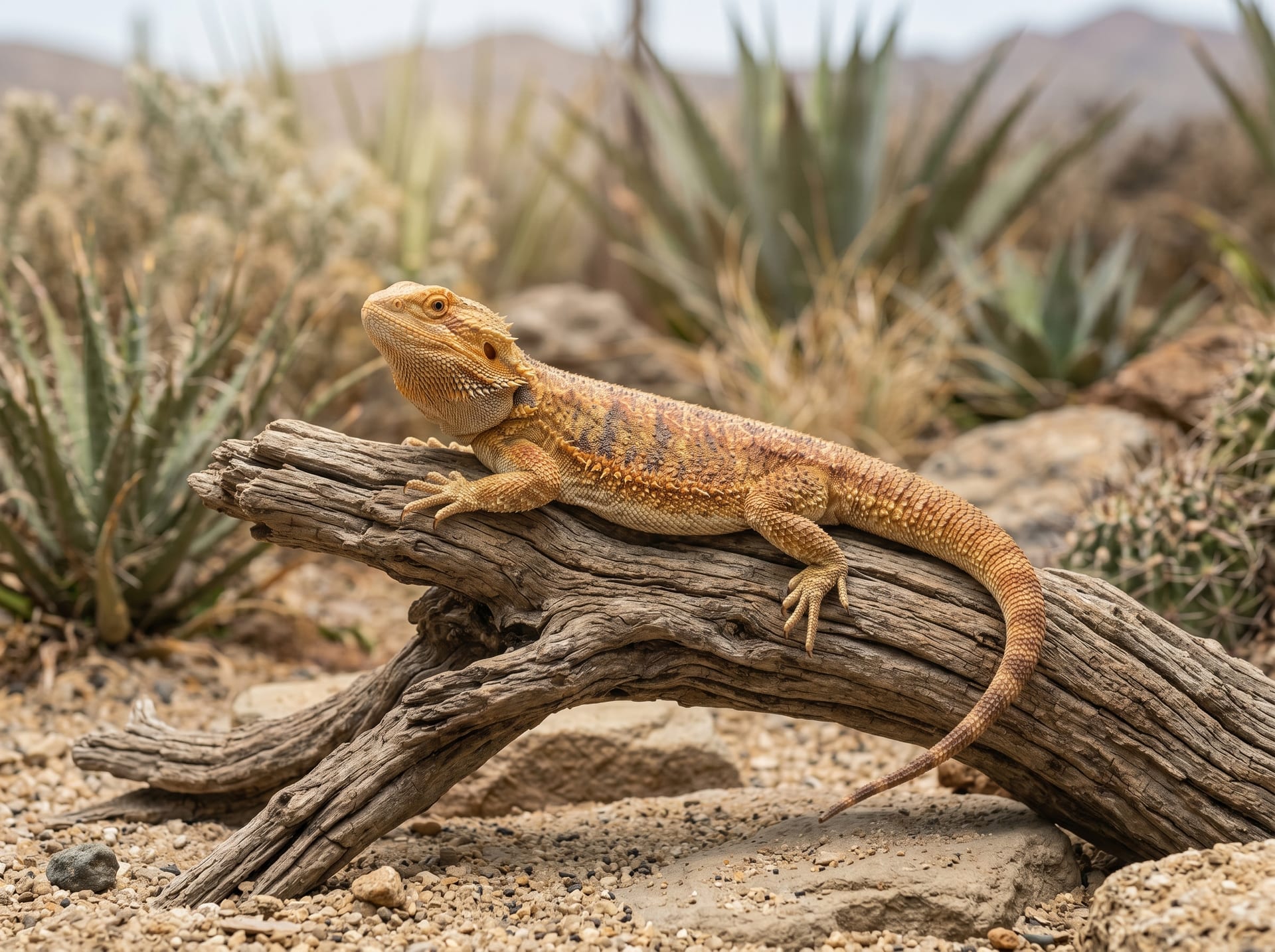
Bearded dragons are popular as relatively easy-to-keep reptiles, but this "ease of care" depends entirely on proper environmental setup. Errors in enclosure temperature gradient, UVB lighting, or humidity management can lead to serious health issues including metabolic bone disease (MBD), anorexia, and dehydration. Drawing on experience raising hundreds of bearded dragons as a breeder, I'll explain enclosure setup systematically from fundamentals to advanced techniques.
Enclosure Size Selection | Minimum Standards for Hatchlings and Adults
Bearded dragons grow rapidly, reaching 40-55cm within one year of hatching. Compromising on enclosure size leads to insufficient exercise and stress-induced immune suppression, so it's best to provide adequate space from the start.
Hatchlings (hatching to 4 months old, approximately 15-25cm total length)
- Minimum size: 60×45×45cm (length×depth×height)
- Recommended size: 90×45×45cm
- Enclosures that are too large can make it difficult for hatchlings to locate feeder insects. Starting with 60-90cm width enclosures is easier to manage.
Subadults to Adults (4 months and older, over 30cm total length)
- Minimum size: 120×60×45cm
- Recommended size: 120×60×60cm or larger
- Adults will spend their entire lives in this environment, so adequate space is essential. Commercial reptile enclosures typically follow the "4-foot (approximately 120cm)" standard.
Enclosures can be made of glass or PVC (plastic). Glass offers excellent visibility, visual weight, and good heat retention. PVC is lightweight with superior insulation properties, making it easier to handle for larger enclosures.
Temperature Gradient Design | Basking Zone and Cool Zone
Bearded dragons are ectothermic and regulate their body temperature by moving within the enclosure. Creating an intentional temperature gradient with a hot area (basking zone) and a cooler area (cool zone) is critical to enable this "behavioral thermoregulation."
Basking Spot
- Surface temperature: 40-45°C (surface of basking platform such as stone or driftwood)
- Air temperature directly under light: 38-42°C
- Use halogen bulbs or BR30/PAR38 reflector-type bulbs for spot heating
- Adjust the distance between basking platform and light to control temperature. 15-30cm is a general guideline, but always measure with a thermometer.
Cool Zone (opposite side)
- Air temperature: 25-30°C
- Maintain enclosure-wide temperature of 22-26°C at night. Temperatures below 20°C significantly reduce digestive activity.
Temperature Gauge Placement Install digital thermometers in three locations: basking zone, cool zone, and floor level. A thermal gun (infrared thermometer) is essential for measuring surface temperature. Accurate management is impossible based on feel or visual inspection alone.
Heaters are typically external models (ceramic or titanium heaters) or radiant heat panels (top-mounted). Floor-based heat mats are not recommended as sole heat sources due to bearded dragons' dull heat-sensing nerves and risk of thermal burns.
UVB Light Selection and Replacement Cycle
UVB promotes vitamin D3 synthesis, which is essential for calcium absorption. In indoor enclosures, it's difficult to ensure adequate D3 levels without UVB exposure, making UVB deficiency the primary cause of MBD (rickets).
UVB Lamp Types
| Type | Characteristics | Recommended Models |
|---|---|---|
| T5 HO Fluorescent | High output, wide coverage, most common | Arcadia 12%, Zoo Med ReptiSun 10.0 |
| T8 Fluorescent | Low output, supplementary use, affordable | Single use recommended only for small individuals |
| Mercury Vapor | Provides heat and UVA simultaneously, space-efficient | Arcadia D3+ 100W |
Bearded dragons (desert-dwelling, high-UV environment) require UVI (UV index) output of 3-5. T5 10-12% lamps with dedicated reflector fixtures placed near the basking zone (30-40cm distance) are currently the gold standard.
Replacement Frequency UV output from fluorescent tubes decreases faster than visible light output. Arcadia recommends 12-month replacement while Zoo Med recommends 6 months. A UVI meter (Solarmeter 6.5) allows numerical verification. "Lamp is on = UV is present" is incorrect. Replace exhausted tubes.
Installation Notes Glass and acrylic block UVB significantly. Mesh placement is standard. Avoid placing solid glass or other UV-blocking materials between light and enclosure.
Humidity Management | Maintaining Dryness While Supporting Shedding
Bearded dragons originate from Australia's semi-arid regions, and high-humidity environments become breeding grounds for respiratory diseases (pneumonia) and fungal infections.
Optimal Humidity
- Normal conditions: 30-40%
- Pre and post-shedding: temporarily up to 50% is acceptable (to support shedding)
- Consistent levels above 60% are a danger sign
Humidity Management in Practice
- Ensure Ventilation: Use mesh-top enclosures to prevent moisture buildup. Highly sealed enclosures tend to increase humidity.
- Misting Usage: Mist lightly on walls 1-2 times weekly in the morning for pre-shedding support and water intake assistance. Avoid evening misting as moisture won't dissipate easily.
- Water Container Management: Permanent water containers contribute to humidity increases. Instead, provide water by dripping directly into the mouth 1-2 times daily or combine with weekly warm soaking.
- Continuous Monitoring: Use a digital thermometer-hygrometer to monitor constantly. Pay special attention during rainy season and summer months.
Substrate Selection | Balancing Safety and Functionality
Substrate is a highly debated topic from the perspective of accidental ingestion and impaction risk. Recommendations vary for hatchlings, adults, and breeding individuals.
Tile (Slate or Ceramic Tile) Most safe and manageable. Retains heat and increases basking efficiency. Cleaning is just a simple wipe-down. Appearance is natural and helps prevent overgrown claws. Most preferred by breeders.
Kitchen Paper or Paper Towels Recommended for hatchlings, sick, and postpartum individuals. Easy hygiene management with zero impaction risk. Appearance is plain but functionally effective.
Calcium Sand, Walnut Shell, Vermiculite While some adults use these, use with hatchlings is strongly discouraged due to high impaction risk. Despite marketing claims that calcium sand "dissolves," large accidental ingestion can still cause blockages. Use breeding-specific substrates (vermiculite or akadama clay) only in isolated dedicated nesting areas.
Layout and Lighting Timer | Designing a Comfortable Living Space
Hiding Spots and Rock Placement Bearded dragons naturally prefer rocky areas. Use large flat stones, cork bark, or driftwood as basking platforms with hiding spaces underneath or nearby. Position hides on the cool zone side. Basking platforms should be large enough for the individual's entire body.
Use commercial reptile decorations (chiseled rock, cork tubes) or stack tiles to create functional, easy-to-maintain level changes.
Lighting Timer Setup Day-night cycles directly affect circadian rhythm, breeding cycles, and hormone secretion. Automating light on/off with timers reduces breeder management burden while minimizing individual stress.
- Summer (May-August): 12-14 hours light
- Winter (November-February): 10-12 hours light
- Breeding cooling period: reduce to 8-10 hours and set temperature slightly lower (18-22°C)
Power Management Notes Plan cabling to manage power consumption of basking lights, UVB lights, and supplemental heaters through outlet timers and power strips. Secure all cables to prevent them from hanging into the enclosure, preventing electrical shock and burns.
Summary
Bearded dragon husbandry requires more than just acquiring equipment—continuous measurement and adjustment after setup are essential. Develop the habit of numerical management using thermometers, UVI meters, and hygrometers as the foundation for health maintenance.
With proper environmental setup, bearded dragons can live healthily for 10-15+ years. Don't hesitate on initial investment—start with correct environmental setup. As a breeder, I wish for every healthy bearded dragon to live a long life with their new family.