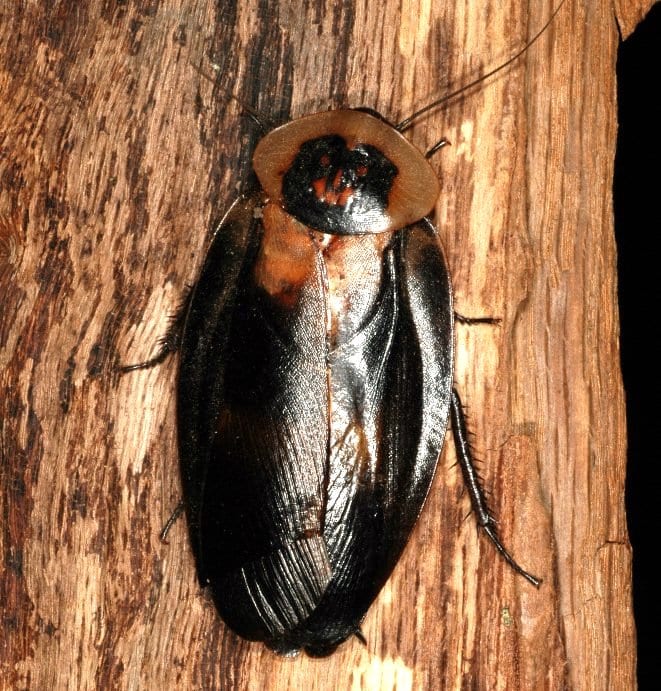
 © Acrocynus / CC BY-SA 3.0
頭骨蜚蠊
The Death's Head Cockroach is a striking mid-sized roach named for the skull-like pattern on its pronotum, paired with jet-black forewings that look like a cape. Native to Mexico, Central America, and the West Indies, it has a calm temperament that belies its dramatic looks, making it far easier to keep than its appearance suggests. Adults can't climb glass and don't fly, so escape risk is low, a reassuring trait for first-time keepers. At 5.3 to 5.7 cm as adults, they're a comfortable size to observe up close, and their bold markings make them a popular gateway species into exotic insect keeping.
View 頭骨蜚蠊 encyclopedia →成交手續費 0%!2026年9月30日前註冊,前 2 筆成交免佣金!
繁殖者 招募中!
在 BreederDirect 上架,直接銷售給全國各地的客戶!
BreederDirect 承諾的 5 個透明度要點
刊登奇蟲時,繁殖者會明示以下資訊。我們保證成長階段與繁殖配對的透明性。
- 實物照片
- 繁殖單位
- 代數明示
- 體長明示
- 原產國
查看全部249個種類
已註冊的繁殖者(搶先看)
關於頭骨蜚蠊
A mid-sized cockroach with a skull-shaped marking, native to Mexico and Central America. Unable to climb glass or fly, it's an easy, beginner-friendly exotic pet at 5.3 to 5.7 cm as an adult.
迎接頭骨蜚蠊前需要了解的7件事
1Low Escape Risk
Death's Head Cockroaches can't climb glass and don't fly as adults, so escape risk is low. As long as the enclosure lid is secure, even first-time keepers can house them with confidence.
2Calm, Easy Temperament
Despite their dramatic looks, they're a very docile species with little to no aggression. Their slow, deliberate movements also make observation and enclosure cleaning easier.
3Skull-Patterned Markings
The bone-like pattern on the pronotum, paired with jet-black, cape-like forewings, is the species' signature feature. The intensity of the markings varies between individuals, adding to the fun of comparing them.
4Prefers Warm, Humid Conditions
Native to tropical and subtropical regions, they do best in an enclosure with steady warmth and humidity. Provide substrate and hiding spots, and avoid letting conditions dry out too much.
5Easy, Omnivorous Feeding
They're omnivorous and will eat insect jelly, vegetable scraps, and prepared foods, so feeding is low-effort. Offering occasional protein, like softened pet food, helps keep them in good condition.
6Breeds Readily in Captivity
This species reproduces readily under captive conditions, and numbers can grow before you notice. If you want to keep numbers in check, it helps to pay attention to enclosure density and sex ratios.
7Nocturnal and Hides by Day
They're nocturnal and tend to stay still, tucked into substrate or shaded spots, during the day. Providing a calm hiding place helps them settle in with less stress.
頭骨蜚蠊的常見問題
- Q.Is the Death's Head Cockroach suitable for beginners?
- A.Yes, it's considered a beginner-friendly species. Since adults can't climb glass or fly, escape risk is low, and their calm temperament makes them easy to keep.
- Q.Is it aggressive, given its dramatic appearance?
- A.No, despite its striking looks, it has a calm temperament with little to no aggression. Its slow movements also make it easy to observe.
- Q.How big do they get?
- A.Adults typically reach about 5.3 to 5.7 cm, making them a mid-sized cockroach. There's some individual variation, but most fall within this range.
- Q.Are there any legal restrictions?
- A.The Death's Head Cockroach is not subject to CITES.
- Q.Is daily care and feeding difficult?
- A.They're omnivorous and eat a wide range of foods, including insect jelly and vegetable scraps, so feeding is low-effort. As long as temperature, humidity, and hiding spots are in order, day-to-day care is straightforward.
在圖鑑中詳細了解頭骨蜚蠊
查看頭骨蜚蠊的圖鑑條目 →
收錄飼養難度、壽命、體長、食性等基礎資料。