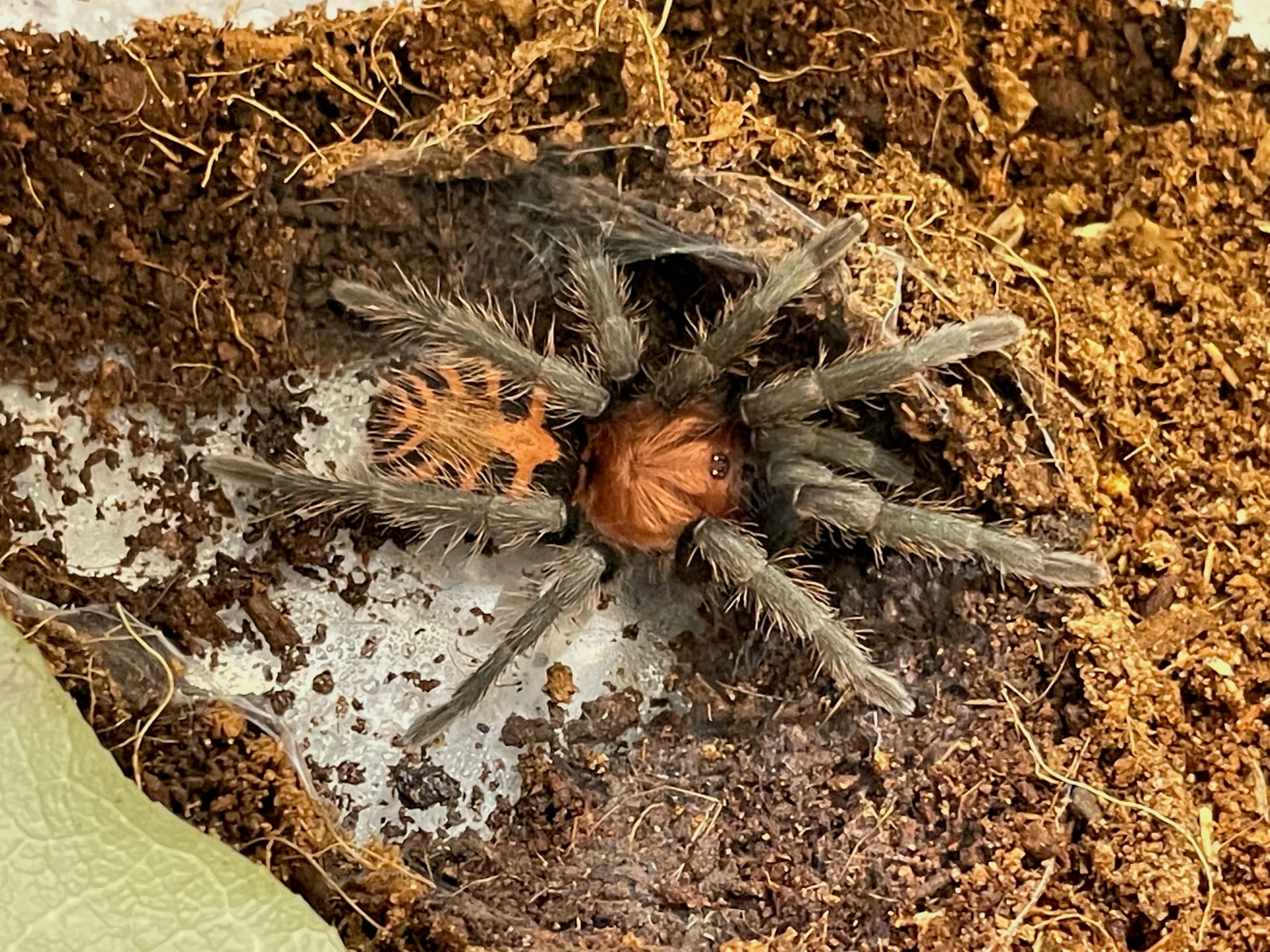
 © Fungus Guy / CC BY-SA 4.0
瓜地馬拉虎臀蜘蛛(Davus pentaloris)
The Guatemalan Tiger Rump is a ground-dwelling tarantula from Central America, known for its coppery carapace, black legs, and tiger-like orange-striped abdomen. That striking pattern gives the species its name, and it also grows noticeably faster than many other terrestrial tarantulas, so keepers get to watch it change quickly. Rather than digging deep burrows, it builds a home base by weaving thick silk around a hide, and it's fun to catch glimpses of it peeking out from behind the webbing. It can move surprisingly quickly at times, but overall it has a fairly calm temperament, making it a rewarding species for keepers who enjoy observing behavior closely.
View 瓜地馬拉虎臀蜘蛛(Davus pentaloris) encyclopedia →成交手續費 0%!2026年9月30日前註冊,前 2 筆成交免佣金!
繁殖者 招募中!
在 BreederDirect 上架,直接銷售給全國各地的客戶!
BreederDirect 承諾的 5 個透明度要點
刊登奇蟲時,繁殖者會明示以下資訊。我們保證成長階段與繁殖配對的透明性。
- 實物照片
- 繁殖單位
- 代數明示
- 體長明示
- 原產國
查看全部249個種類
奇蟲分類正在招募認證繁殖者
繁殖者正在陸續註冊,即將上架。設定上架通知,不錯過新商品。
「接收上架通知」需免費註冊會員即可設定。當有符合您儲存條件的新商品上架時,我們會以郵件和站內通知提醒您。
已註冊的繁殖者(搶先看)
關於瓜地馬拉虎臀蜘蛛(Davus pentaloris)
A ground-dwelling tarantula from Guatemala with a coppery carapace and tiger-striped orange-and-black abdomen. Growing to a 10-12cm legspan, it webs heavily around its hide and suits intermediate keepers.
迎接瓜地馬拉虎臀蜘蛛(Davus pentaloris)前需要了解的7件事
1Fast growth rate
Compared with many other terrestrial tarantulas, this species grows quickly, so keepers notice size and color changes with each molt. That makes it appealing if you enjoy watching a spider develop, but it also means the enclosure needs to be upgraded more often.
2Heavy webbing habit
Instead of digging a deep burrow, it builds its home by spinning thick silk around a hide placed on the substrate. When rearranging décor or cleaning the enclosure, work carefully from outside the webbing so you don't tear down its retreat.
3Provide a solid hide
Always include a shelter, piece of driftwood, or cork bark it can hide inside. A stable hide gives it a solid base to web around and helps keep stress levels low.
4Can move quickly
Although it's a terrestrial species, it can move quite fast at times and may dash out unexpectedly when the enclosure is opened. A secure lid and a consistent routine for opening the cage help prevent escapes.
5Temperature and humidity
Coming from Central America, it does best when extremes of dryness or dampness are avoided, so balance substrate moisture with good ventilation. Change conditions gradually, since sudden shifts can cause stress or molting problems.
6Lifespan differs by sex
Lifespan varies considerably between sexes, with females generally living much longer than males. If you're hoping for a long-term companion, it's worth keeping this difference in mind from the start.
7Before you bring one home
Since this species is generally considered suitable for intermediate keepers, having some prior tarantula-keeping experience helps things go smoothly. It's best to set up the enclosure, hide, and temperature/humidity controls before bringing one home.
瓜地馬拉虎臀蜘蛛(Davus pentaloris)的常見問題
- Q.Is this species suitable for beginners?
- A.It's generally considered a species for intermediate keepers, so some prior experience with tarantula care, like temperature and humidity management, is reassuring. Care itself isn't especially difficult, but learning its habits beforehand helps things go smoothly.
- Q.How big does it get as an adult?
- A.As an adult, it reaches a legspan of about 10-12cm with a body length of around 5cm. Among terrestrial species, it tends to grow relatively quickly.
- Q.How long can it live in captivity?
- A.Lifespan is typically around 8-11 years for females and 2-4 years for males, so it varies a lot by sex. If you're considering long-term care, it helps to keep this difference in mind.
- Q.Does it dig burrows?
- A.It's not a deep burrower; instead, it spins thick webbing around its hide to build a home. When setting up the enclosure, place the hide with the expectation that webbing will form around it.
- Q.Is it subject to any regulations?
- A.This species is not subject to CITES.
在圖鑑中詳細了解瓜地馬拉虎臀蜘蛛(Davus pentaloris)
查看瓜地馬拉虎臀蜘蛛(Davus pentaloris)的圖鑑條目 →
收錄飼養難度、壽命、體長、食性等基礎資料。