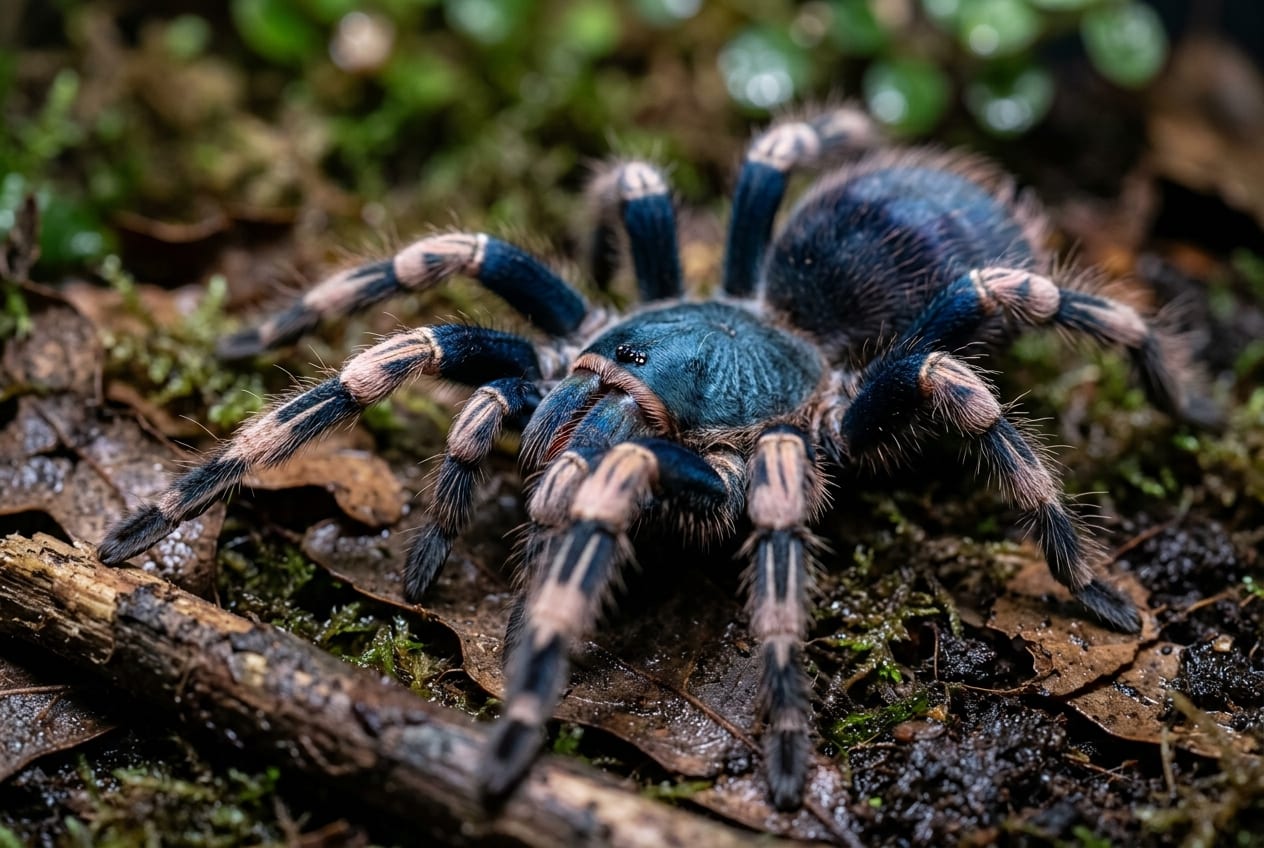
藍色短尾蛛(Homoeomma sp. "Blue")
Homoeomma sp. Blue is an undescribed species from Peru that has become a favorite among exotic invertebrate keepers for its striking color transformation. Depending on how many days have passed since its last molt, its coloration shifts from vivid blue to deep navy, while its legs carry bands of cream to pink that make the contrast even more dramatic. This is a large tarantula, with a leg span reaching up to about 20 cm, giving it real presence in any collection. Care is best suited to keepers with some prior experience, but the reward is watching this remarkable color shift unfold day by day.
View 藍色短尾蛛(Homoeomma sp. "Blue") encyclopedia →成交手續費 0%!2026年9月30日前註冊,前 2 筆成交免佣金!
繁殖者 招募中!
在 BreederDirect 上架,直接銷售給全國各地的客戶!
BreederDirect 承諾的 5 個透明度要點
刊登奇蟲時,繁殖者會明示以下資訊。我們保證成長階段與繁殖配對的透明性。
- 實物照片
- 繁殖單位
- 代數明示
- 體長明示
- 原產國
查看全部249個種類
奇蟲分類正在招募認證繁殖者
繁殖者正在陸續註冊,即將上架。設定上架通知,不錯過新商品。
「接收上架通知」需免費註冊會員即可設定。當有符合您儲存條件的新商品上架時,我們會以郵件和站內通知提醒您。
已註冊的繁殖者(搶先看)
關於藍色短尾蛛(Homoeomma sp. "Blue")
Homoeomma sp. Blue is an undescribed Peruvian tarantula whose coloration shifts from vivid blue to deep navy after molting, with cream-to-pink banded legs. This large species reaches a leg span of about 20 cm and suits intermediate keepers.
迎接藍色短尾蛛(Homoeomma sp. "Blue")前需要了解的7件事
1Color Changes Over Time
The coloration of Homoeomma sp. Blue shifts from vivid blue to deep navy depending on how long it has been since its last molt. Because the same individual can look quite different at different points in its molt cycle, daily observation becomes part of the enjoyment of keeping this species.
2Distinctive Leg Banding
The legs are marked with bands ranging from cream to pink, adding another layer of visual interest alongside the shifting body color. This distinctive look is one of the reasons the species has become so popular among enthusiasts.
3Plan for a Large Enclosure
This is a large tarantula, with a leg span reaching up to about 20 cm at maturity. Prepare a spacious enclosure with adequate floor area in advance, anticipating its eventual size.
4Best Suited to Intermediate Keepers
This species is considered suitable for intermediate-level keepers rather than complete beginners. It's a good idea to build up basic tarantula-keeping knowledge — temperature and humidity management, safe handling practices — before bringing one home.
5Limited Information as an Undescribed Species
Homoeomma sp. Blue is an undescribed species from Peru and does not yet have a formal scientific name. As a result, less husbandry and natural history information is available compared to well-established species, so keepers need to rely more on their own observation and experience.
6Set Up the Enclosure Before Arrival
Prepare the enclosure — temperature, humidity, and a hiding spot — before the tarantula arrives, rather than after. Setting things up in advance helps avoid unnecessary stress on the animal during its first days in a new home.
7Provide Deep, Burrow-Friendly Substrate
Many species in the Homoeomma genus are burrowers, and this species is thought to favor a similar substrate style. Give it a reasonably deep layer of substrate in the enclosure so it can dig and feel secure.
藍色短尾蛛(Homoeomma sp. "Blue")的常見問題
- Q.How big does Homoeomma sp. Blue get?
- A.It's a large tarantula, with a leg span reaching up to about 20 cm at full size. Beyond its size, the way its coloration shifts with each molt cycle adds another dimension to watching it grow.
- Q.Why does its color keep changing?
- A.Homoeomma sp. Blue naturally shifts in color, from vivid blue to deep navy, depending on how long it has been since its last molt. This is a normal characteristic of the species, not a sign of a problem.
- Q.Is this a good choice for a first-time tarantula keeper?
- A.This species is rated as suitable for intermediate keepers rather than complete beginners. It's best to gain some basic tarantula-keeping experience before taking one on.
- Q.Do all individuals have the banded leg pattern?
- A.Cream-to-pink banding on the legs is a characteristic feature of Homoeomma sp. Blue. Combined with its shifting body color, this banding is one of the key traits used to identify the species.
- Q.Are there any legal restrictions to be aware of?
- A.Homoeomma sp. Blue is not subject to CITES.
在圖鑑中詳細了解藍色短尾蛛(Homoeomma sp. "Blue")
查看藍色短尾蛛(Homoeomma sp. "Blue")的圖鑑條目 →
收錄飼養難度、壽命、體長、食性等基礎資料。