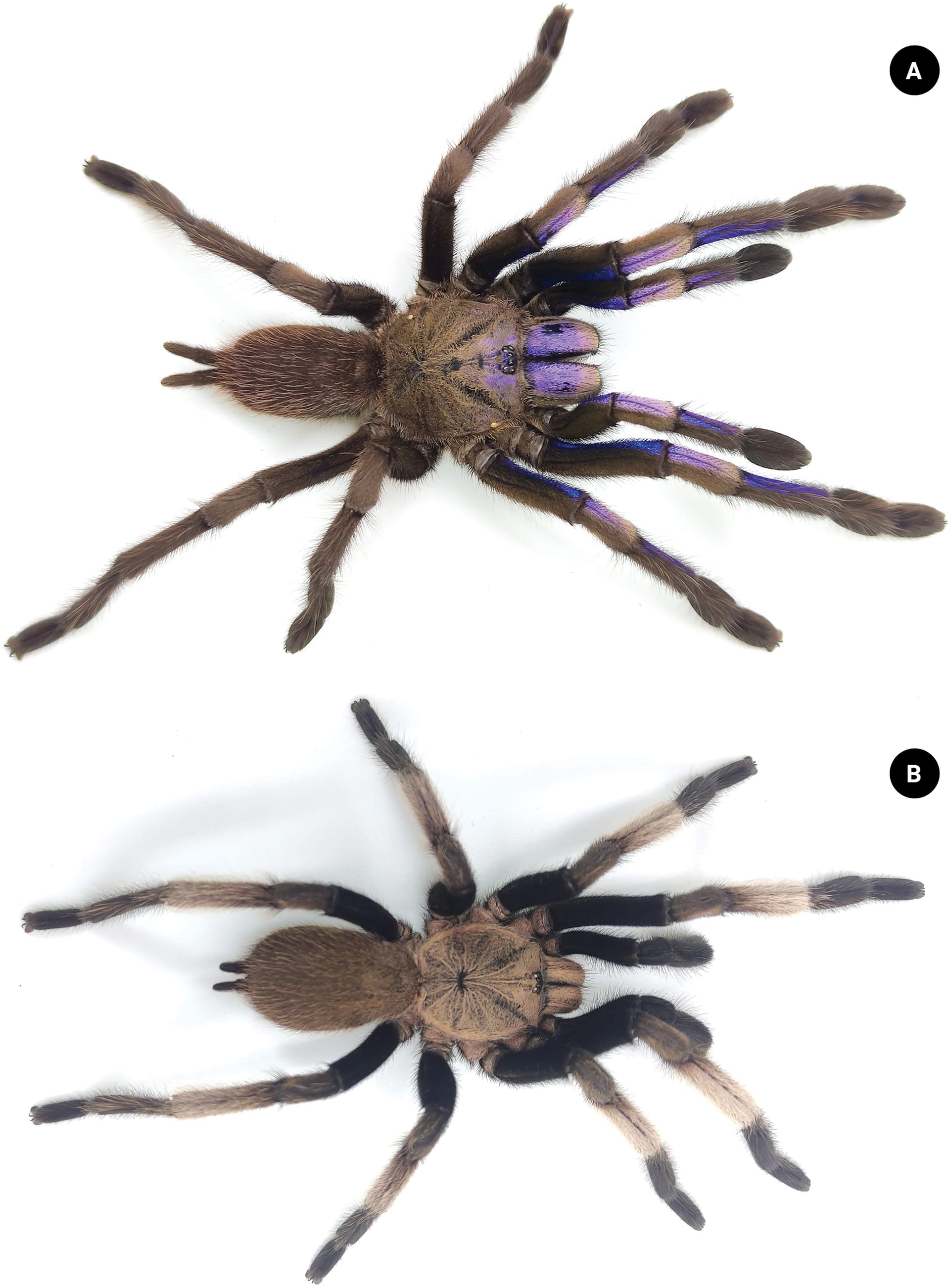
 © Narin Chomphuphuang, Zongtum Sippawat, Patipan Sriranan, Paveen Piyatrakulchai, Chaowalit Songsangchote / CC BY 4.0
電藍地棲蛛
The Electric Blue Tarantula is a fossorial species native to Thailand's mangrove forests, spending much of its life underground. Its body is a subdued brown, but around the fifth molt females develop a striking blue sheen on the underside of their legs that shifts with the light. This isn't pigment — the color comes from microscopic structures within the hairs themselves, which is why it doesn't fade over time. Quick-moving and somewhat high-strung, it needs a burrow-friendly setup, which is why it's generally regarded as a tarantula for experienced keepers rather than beginners.
View 電藍地棲蛛 encyclopedia →成交手續費 0%!2026年9月30日前註冊,前 2 筆成交免佣金!
繁殖者 招募中!
在 BreederDirect 上架,直接銷售給全國各地的客戶!
BreederDirect 承諾的 5 個透明度要點
刊登奇蟲時,繁殖者會明示以下資訊。我們保證成長階段與繁殖配對的透明性。
- 實物照片
- 繁殖單位
- 代數明示
- 體長明示
- 原產國
查看全部249個種類
奇蟲分類正在招募認證繁殖者
繁殖者正在陸續註冊,即將上架。設定上架通知,不錯過新商品。
「接收上架通知」需免費註冊會員即可設定。當有符合您儲存條件的新商品上架時,我們會以郵件和站內通知提醒您。
已註冊的繁殖者(搶先看)
關於電藍地棲蛛
A fossorial tarantula from Thailand's mangrove forests, known for the vivid structural blue that develops on females' legs through successive molts. Best suited to experienced keepers.
迎接電藍地棲蛛前需要了解的7件事
1Deep Substrate for Burrowing
Females reach a maximum body length of about 8cm — modest for a tarantula — but as a fossorial species it still needs substrate deep enough to dig a proper burrow. Adding a piece of cork bark can help it get started.
2Fast and Defensive Temperament
It's a skittish species, quick to flee or raise a threat posture when it feels threatened. As an Old World tarantula its bite is considered relatively potent, so it's best kept without unnecessary disturbance.
3Blue Hairs Develop Through Molts
Juveniles start out plain brown, and females begin developing blue hairs at the base of their legs around the fifth molt. Watching the color deepen with each subsequent molt is part of the appeal.
4Balancing Humidity and Ventilation
Coming from mangrove forest habitat, it needs a careful balance of substrate moisture and ventilation. Too much moisture invites mold and substrate breakdown, while too little can lead to molting problems.
5Feed in Moderation
Feeding live insects like crickets a few times a month is generally enough. When it's holed up in its burrow, there's no need to force feeding — just wait until it comes out on its own.
6Lifespan Differs by Sex
Females are long-lived, typically around 10 years, while males die roughly four months after their maturing molt. If you want to keep one for the long term, a female is the better choice.
7Prepare an Enclosure and Hideout First
Before bringing one home, prepare an enclosure that can hold deep substrate along with heating and humidity control. Since it likes to hide, adding cork bark or another shelter will help it settle in.
電藍地棲蛛的常見問題
- Q.Is this tarantula suitable for beginners?
- A.It's generally considered a species for experienced keepers, given how quick-moving and defensive it can be. We'd recommend building up tarantula-keeping experience before taking one on.
- Q.How big does it get?
- A.Females reach a maximum body length of about 8cm, making it a relatively compact tarantula.
- Q.How long do they live?
- A.Females can live around 10 years, making this a long-lived species. Males, however, die roughly four months after their maturing molt, so females are the better choice for long-term keeping.
- Q.When does the blue coloring appear?
- A.Juveniles are plain brown, and females start developing blue hairs at the base of their legs around the fifth molt. The blue comes from the hair's structure rather than pigment.
- Q.Is it safe to handle by hand?
- A.Handling isn't recommended, as this species is fast-moving and quick to become defensive. It's best enjoyed by observing rather than handling.
在圖鑑中詳細了解電藍地棲蛛
查看電藍地棲蛛的圖鑑條目 →
收錄飼養難度、壽命、體長、食性等基礎資料。