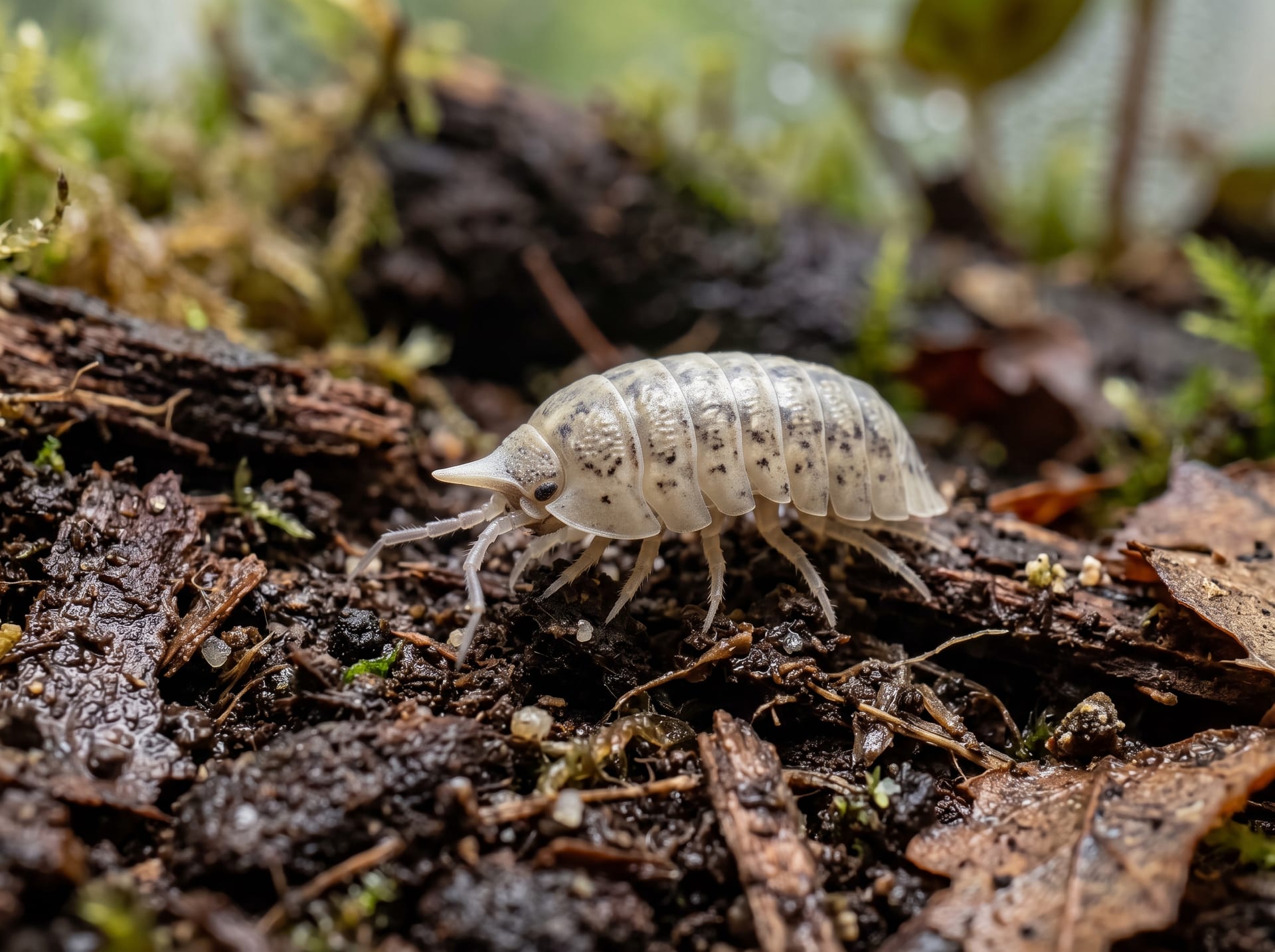
斑點球鼠婦
The Spotted Pill Isopod is known for the small ridges along the front edge of its head and its distinctive spotted, marbled pattern. When disturbed, it curls into a tight ball for protection — a charming defense behavior typical of pill bugs. It's completely harmless, with no bite and no venom, and spends its time breaking down decaying leaves and wood, making it a helpful cleanup crew member in any enclosure. Hardy and adaptable, it breeds readily in captivity, making it a great choice for anyone new to keeping invertebrates. Each individual's pattern is slightly different, so there's plenty of enjoyment in watching them roll up and go about their day.
View 斑點球鼠婦 encyclopedia →成交手續費 0%!2026年9月30日前註冊,前 2 筆成交免佣金!
繁殖者 招募中!
在 BreederDirect 上架,直接銷售給全國各地的客戶!
BreederDirect 承諾的 5 個透明度要點
刊登奇蟲時,繁殖者會明示以下資訊。我們保證成長階段與繁殖配對的透明性。
- 實物照片
- 繁殖單位
- 代數明示
- 體長明示
- 原產國
查看全部249個種類
奇蟲分類正在招募認證繁殖者
繁殖者正在陸續註冊,即將上架。設定上架通知,不錯過新商品。
「接收上架通知」需免費註冊會員即可設定。當有符合您儲存條件的新商品上架時,我們會以郵件和站內通知提醒您。
已註冊的繁殖者(搶先看)
關於斑點球鼠婦
A beginner-friendly guide to the Spotted Pill Isopod, prized for its head ridges, spotted pattern, and gentle rolling behavior. Harmless, hardy, and easy to breed.
迎接斑點球鼠婦前需要了解的7件事
1Enclosure & Substrate
Use a deep layer of insect mat or leaf-mold substrate, and add pieces of rotten wood and dead leaves for hiding spots. These isopods like humidity, so mist regularly to keep the substrate from drying out. A well-ventilated enclosure also helps prevent mold.
2Temperature & Humidity
Spotted Pill Isopods dislike high heat and excessive dryness, so keep them out of direct sunlight at room temperature or slightly cooler. Mist the substrate when it starts to dry, and leave both a damp side and a drier side in the enclosure so they can choose their preferred spot.
3Mostly Omnivorous Diet
In the wild they feed on decaying leaves, wood, and plant matter. In captivity, isopod pellets or vegetable scraps work well, and adding a calcium source like crushed eggshell or cuttlebone supports healthy shell growth.
4Rolling Into a Ball
When startled or touched, they curl up into a tight ball to protect themselves — a signature behavior of pill isopods. It's one of the most charming things to watch, but try not to provoke it too often, since it can stress the animal.
5No Bite, No Venom
This species doesn't bite and carries no venom, making it easy to handle. Direct contact is generally safe, but as with any living creature, handle it gently.
6Easy to Breed
Given stable temperature and humidity, breeding happens fairly easily, and females carry eggs and young beneath their bodies. It's worth planning extra enclosure space in advance in case the colony grows.
7Lifespan & Growth
Adults typically live around 2 to 3 years and reach about 1.5 to 2 cm in size. Juveniles are much smaller and can burrow into the substrate, so watch closely to avoid losing track of them.
斑點球鼠婦的常見問題
- Q.Does it bite or have venom?
- A.No — the Spotted Pill Isopod doesn't bite and carries no venom, making it completely harmless to handle. It's safe to touch with bare hands, which makes it a great choice even for first-time invertebrate keepers.
- Q.Is it suitable for beginners?
- A.Yes, it's considered beginner-friendly thanks to its hardiness and adaptability. As long as you maintain proper substrate humidity and feed it regularly, it's easy to keep without specialized equipment.
- Q.What does it eat?
- A.It's an omnivore that feeds on decaying leaves, rotten wood, isopod pellets, and vegetable scraps. Adding a calcium source like crushed eggshell or cuttlebone helps support healthy shell growth.
- Q.How big does it get, and how long does it live?
- A.Adults reach about 1.5 to 2 cm and typically live around 2 to 3 years. Juveniles are very small and tend to burrow into the substrate, so keep an eye out when observing them.
- Q.Is it easy to breed?
- A.Breeding is fairly straightforward when temperature and humidity stay stable, with females carrying eggs and young beneath their bodies. It's a good idea to leave extra enclosure space in case the colony grows.
在圖鑑中詳細了解斑點球鼠婦
查看斑點球鼠婦的圖鑑條目 →
收錄飼養難度、壽命、體長、食性等基礎資料。