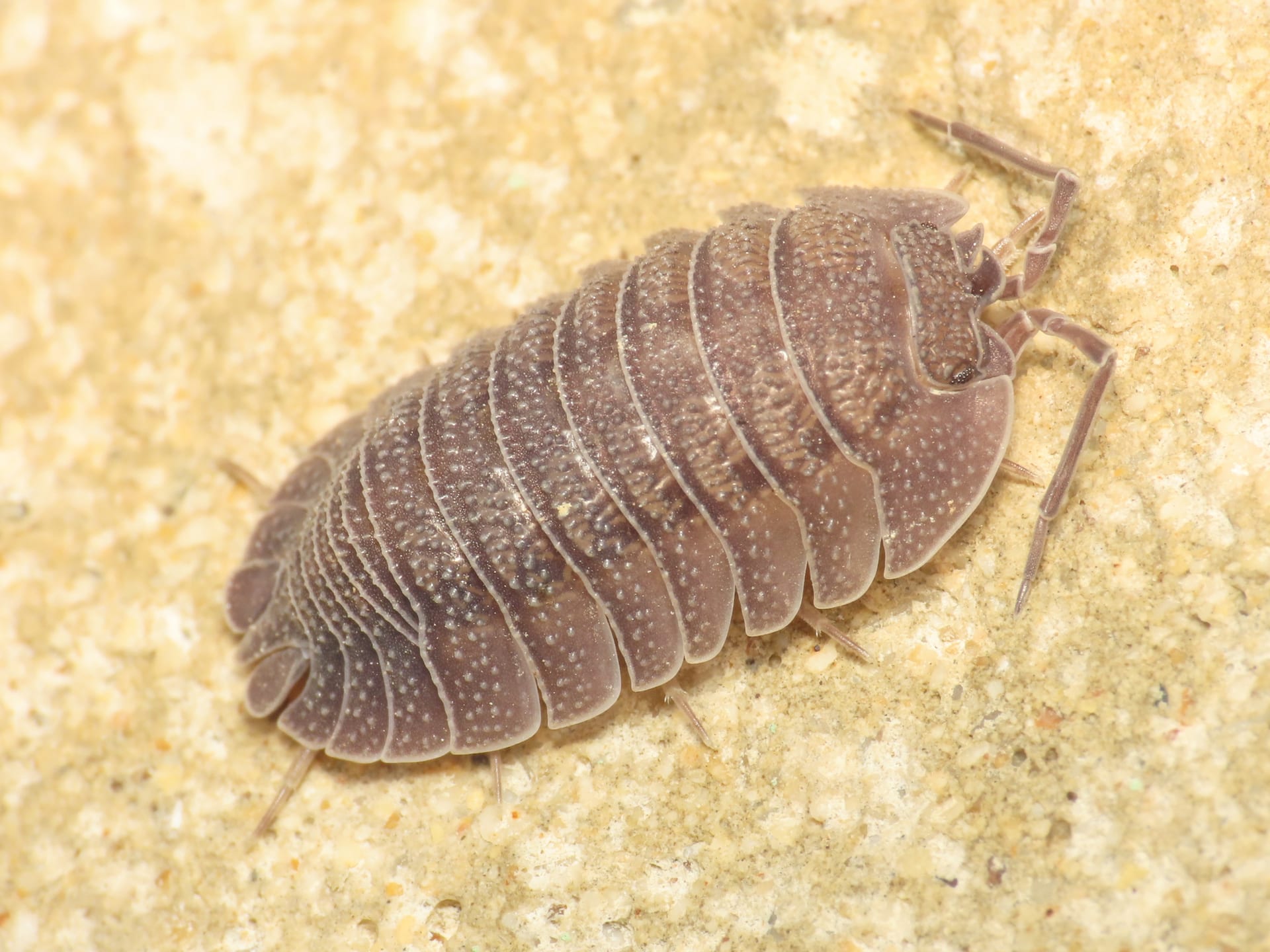
 © Emanuele Santarelli / CC BY-SA 4.0
佩拉卡鼠婦(Armadillidium peraccae)
The Peraccae Isopod is a large woodlouse native to southeastern Italy through the Aegean and into Turkey. Its blue-gray body is covered in coarse, raised granules that give it a rugged, almost trilobite-like texture unlike most other isopods. When threatened, it rolls into a tight, complete ball — an endearing defense that never fails to catch the eye. In the wild it gathers in groups beneath bark, and in captivity it proves hardy and breeds readily, making it a popular starting point for anyone new to keeping isopods.
View 佩拉卡鼠婦(Armadillidium peraccae) encyclopedia →成交手續費 0%!2026年9月30日前註冊,前 2 筆成交免佣金!
繁殖者 招募中!
在 BreederDirect 上架,直接銷售給全國各地的客戶!
BreederDirect 承諾的 5 個透明度要點
刊登奇蟲時,繁殖者會明示以下資訊。我們保證成長階段與繁殖配對的透明性。
- 實物照片
- 繁殖單位
- 代數明示
- 體長明示
- 原產國
查看全部249個種類
奇蟲分類正在招募認證繁殖者
繁殖者正在陸續註冊,即將上架。設定上架通知,不錯過新商品。
「接收上架通知」需免費註冊會員即可設定。當有符合您儲存條件的新商品上架時,我們會以郵件和站內通知提醒您。
已註冊的繁殖者(搶先看)
關於佩拉卡鼠婦(Armadillidium peraccae)
A large, hardy woodlouse from southeastern Italy and the Aegean, known for its blue-gray, trilobite-like granulated shell — an easy, beginner-friendly isopod.
迎接佩拉卡鼠婦(Armadillidium peraccae)前需要了解的7件事
1Recreating Its Habitat
In the wild it lives along the warm Mediterranean coast from southern Italy to Turkey, so captive setups should offer moderate humidity with good airflow. Since it naturally shelters under bark and leaf litter, provide plenty of hiding material to mimic that environment.
2Rolls Into a Full Ball
When disturbed, it curls its entire body into a tight ball to protect itself. This is a natural defense that shields its soft underside from predators, so it's best handled gently and not startled unnecessarily.
3A Social, Group-Living Species
In the wild it clusters in groups beneath bark, so it tends to do better kept in numbers rather than alone. In captivity you'll often see individuals gathered together under the same hide.
4Hardy and Beginner-Friendly
This species is naturally tough and tolerates minor fluctuations in its environment, which is why it's considered beginner-friendly to keep. Consistent humidity control and feeding are all it really needs to thrive long-term.
5Easy to Breed
Under stable conditions, this isopod breeds fairly readily in captivity, and colonies often grow without much intervention. If you want to keep breeding going, make sure there's enough space and food to support a growing population.
6Adult Size
Adults reach around 1.7 to 1.8 cm in length, making this a relatively large species of woodlouse. That size also makes its granulated, trilobite-like texture easy to appreciate up close.
7Plan for Its Lifespan
As a general figure for the genus, this isopod tends to live around two to three years. Before bringing one home, it's worth confirming you can keep up the enclosure care and have the space and time for that duration.
佩拉卡鼠婦(Armadillidium peraccae)的常見問題
- Q.What environment does it need?
- A.Since it's native to the warm Mediterranean coast from southern Italy to Turkey, it does best with moderate humidity and good airflow. Adding bark or leaf litter as hiding material helps it feel settled.
- Q.Is it suitable for beginners?
- A.Yes, this species is considered beginner-friendly. It's naturally hardy, and keeping up with basic humidity control and feeding is generally enough to care for it well.
- Q.How big does it grow?
- A.Adults reach about 1.7 to 1.8 cm. That's on the larger side for a woodlouse, and it's a good size for observing the coarse, granulated texture on its back.
- Q.How long does it typically live?
- A.As a general figure for the genus, this isopod lives around two to three years. It's worth confirming beforehand that you can keep up its care for that length of time.
- Q.Are there any legal restrictions?
- A.This species is not subject to CITES.
在圖鑑中詳細了解佩拉卡鼠婦(Armadillidium peraccae)
查看佩拉卡鼠婦(Armadillidium peraccae)的圖鑑條目 →
收錄飼養難度、壽命、體長、食性等基礎資料。