Kissing Wide Fin Medaka
AdvancedOryzias latipes
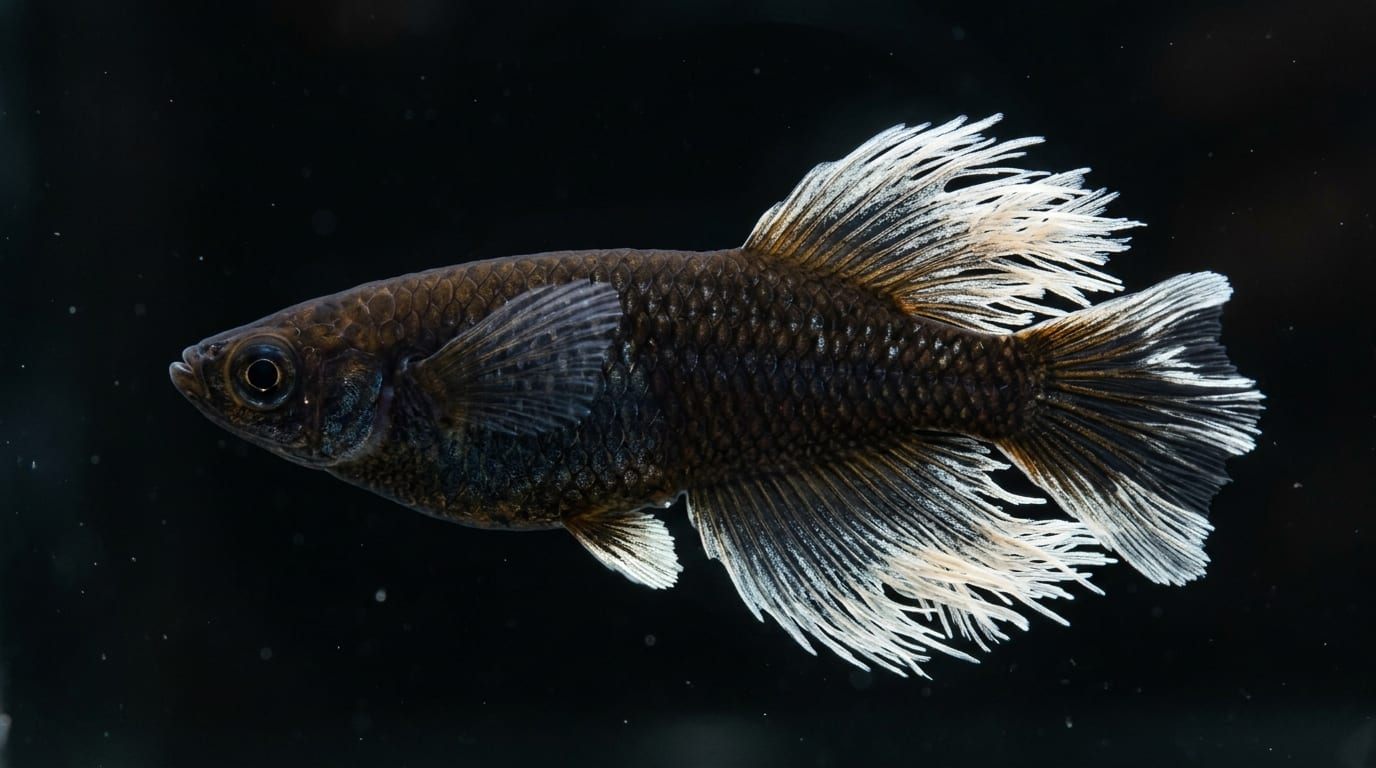
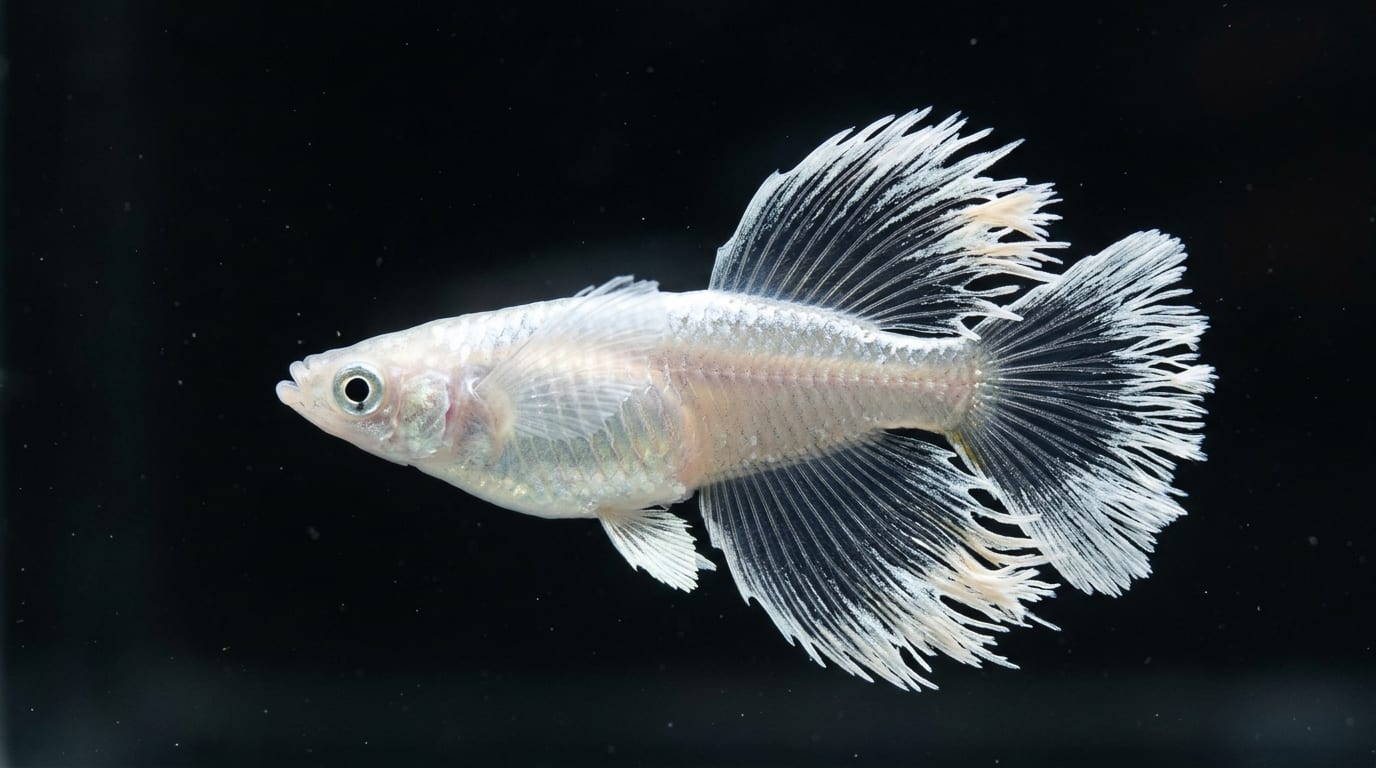
A medaka whose dorsal and anal fins run far along the body, with no notch in the male's dorsal fin and a large caudal peduncle. JMA new variety No. 36 and the origin of the wide-fin trait.
Kitatsuji Hire-Long is Japan Medaka Association new variety No. 36 (2021), bred by Kenji Yamamoto. According to the application, it was fixed from a fish found while selecting amber transparent-scaled nishiki medaka, with a fixation rate of about 100%. Its defining features are dorsal and anal fins that extend lengthwise, no notch in the male's dorsal fin and a large caudal peduncle; its dorsal fin is wider than earlier 'hire-long' fish, and this feature was later added to the classification manual as the 'wide fin' trait. Many derived lines bear the Kitatsuji name, such as Kitatsuji no Mai, a yellow-spotted long-fin form. It differs from long-fin (hire-naga) types, in which the fin rays themselves lengthen.
Source: Wikipedia (CC BY-SA 4.0)
The Kitatsuji Hire-Long Medaka lives 2-3 years.
The Kitatsuji Hire-Long Medaka grows to About 3-4 cm (wild medaka reach up to 4 cm SL: FishBase).
Origin
Japan (ornamental cultivar)
Lifespan
2-3 years
Size
About 3-4 cm (wild medaka reach up to 4 cm SL: FishBase)
Temperature
5〜30℃
Edited & verified by: BreederDirect editorial team
The taxonomic, regulatory, and husbandry data on this page are compiled and verified against the authoritative primary sources below.
Accepted name: Oryzias latipes (Temminck & Schlegel, 1846)
Synonyms: Aplocheilus latipes (Temminck & Schlegel, 1846), Poecilia latipes Temminck & Schlegel, 1846
Authority databases: GBIF · GBIF · 日本メダカ協会 品種分類マニュアル
Nomenclature follows global taxonomic authority databases.
Ornamental medaka are cultivars of Oryzias latipes. Not listed in the CITES Appendices (checked on Species+) and not regulated under Japan's Invasive Alien Species Act. Japan's wild medaka (Oryzias latipes and O. sakaizumii) are listed as Vulnerable on the Ministry of the Environment Red List and differ genetically by region. Releasing ornamental medaka into rivers, ponds or rice paddies causes genetic pollution through hybridisation with wild fish, so never release them.
Sources: Species+ (CITES) / Ministry of the Environment: list of invasive alien species / Wikipedia (Japanese): Medaka – conservation and genetic pollution
Regulations may change. Always verify the latest information with the relevant authorities.
Find listings for this species
Omnivore (floating prepared foods, live foods such as daphnia)
The fin shape is best seen from the side in a glass tank.
Fixation is said to be about 100%; choose breeders with unnotched dorsal fins and thick caudal peduncles.
Peaceful and fine with other medaka of similar size. To keep the variety's traits, do not let it breed with other varieties in the same container.
Give floating food that is eaten within 3-5 minutes: at least twice a day in summer, once a day in spring and autumn, and little or none outdoors in winter.
Never release ornamental medaka into rivers, ponds or paddies; hybridisation causes genetic pollution of wild medaka.
Beginner. This is a beginner-friendly species. No special equipment or experience is required, and it can be kept successfully with basic care setup.
The average lifespan of Kitatsuji Hire-Long Medaka is 2-3 years. With proper care and nutrition, they can live a long and healthy life.
Kitatsuji Hire-Long Medaka typically reaches About 3-4 cm (wild medaka reach up to 4 cm SL: FishBase) as an adult. Size may vary depending on care conditions and individual genetics.
Kitatsuji Hire-Long Medaka feeds on: Omnivore (floating prepared foods, live foods such as daphnia). Aim for a balanced diet with appropriate feeding frequency.
The price of Kitatsuji Hire-Long Medaka varies significantly depending on morph, size, and lineage. Check our market price page for the latest pricing information.
Last updated: September 30, 2026