Exotic Invertebrate Encyclopedia — 70 Species Directory
Encyclopedia of popular exotic invertebrates—tarantulas, scorpions, centipedes and more—with care guides, traits, and difficulty levels.
Showing 8 of 70 species
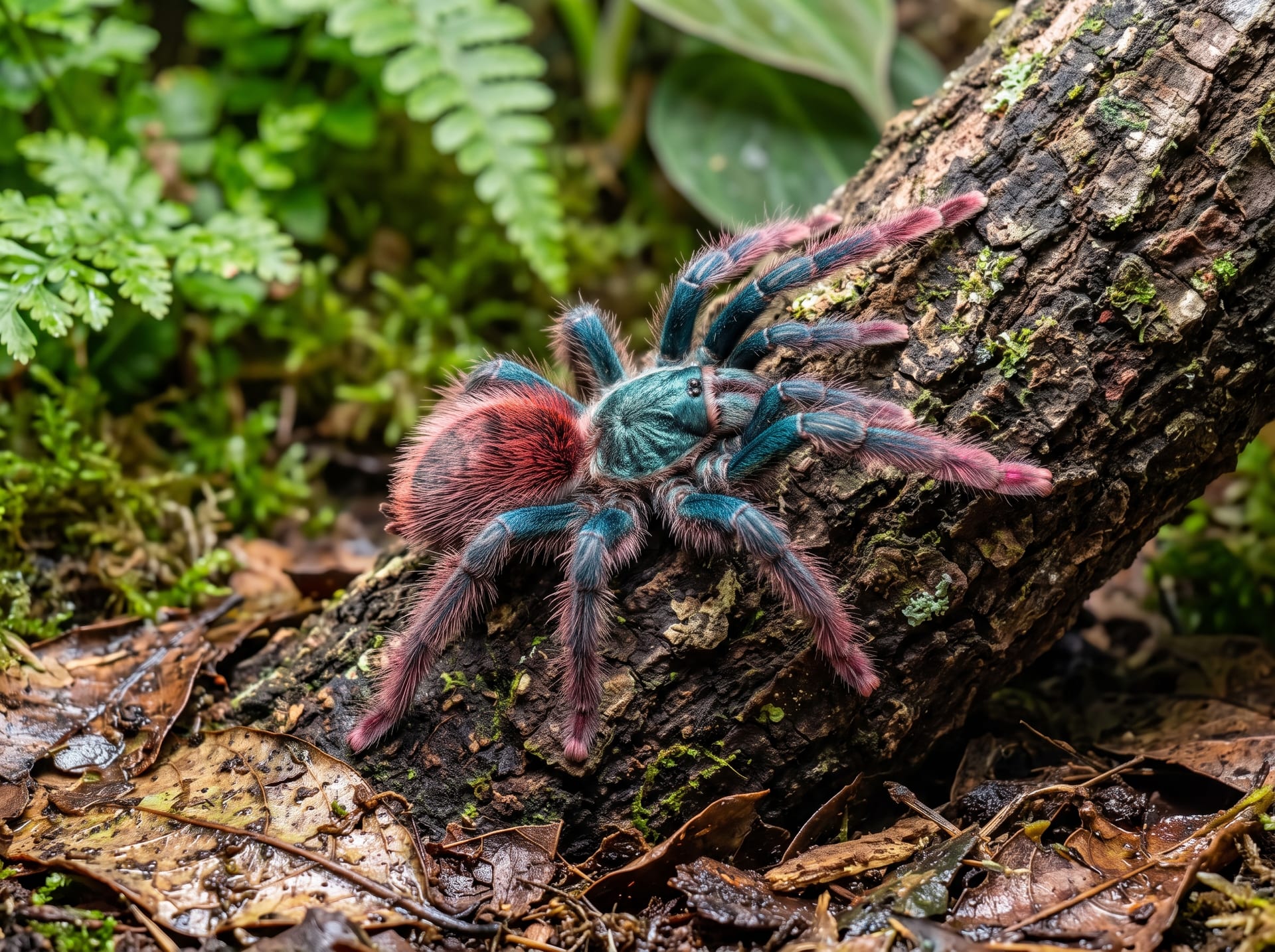
Antilles Pinktoe
Caribena versicolor
An arboreal beauty from Martinique that shifts from blue slings to an iridescent green-red-violet adult. Requires a careful balance of humidity and ventilation, making it an intermediate species.
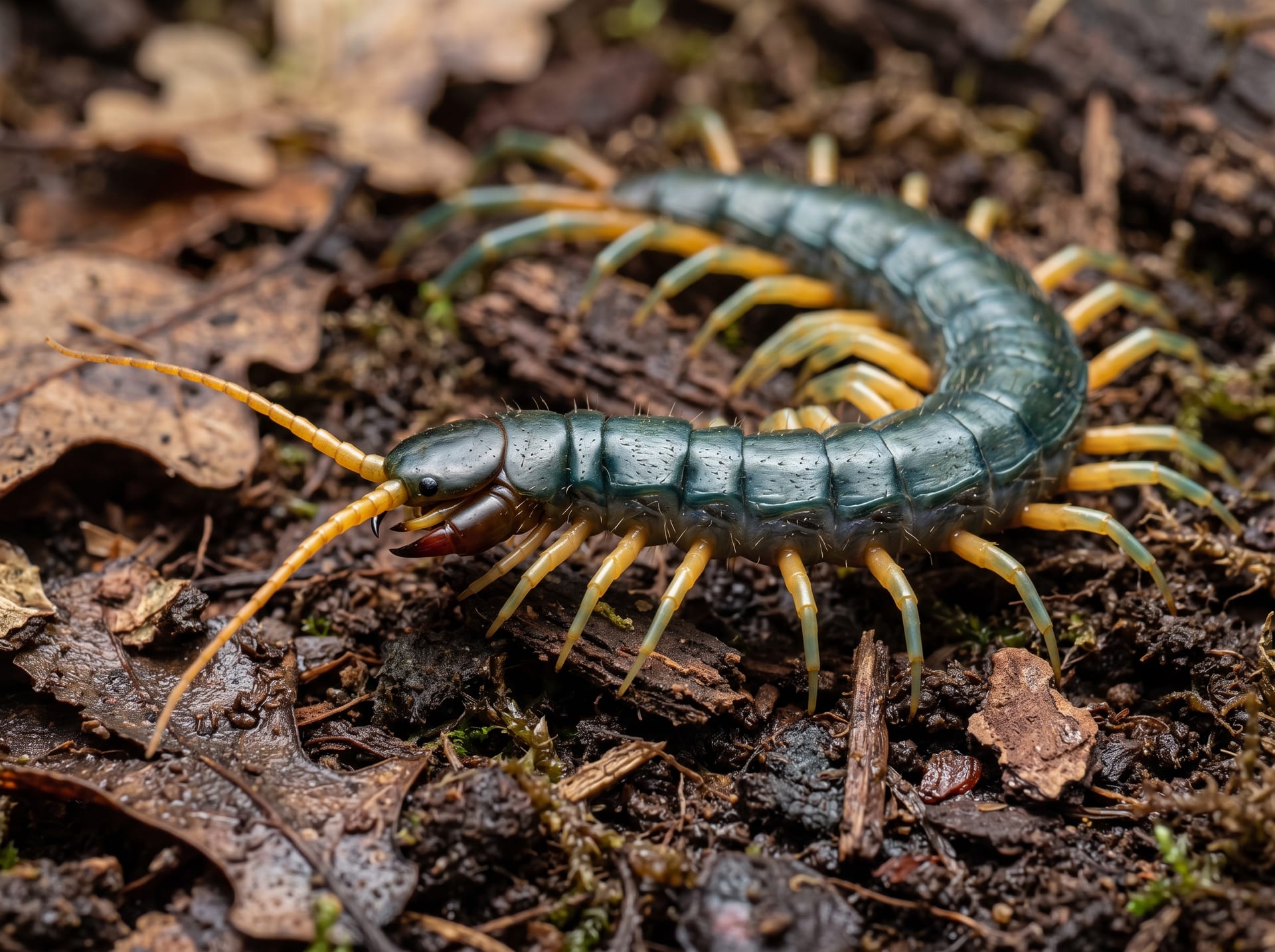
Blue Japanese Centipede
Scolopendra japonica
A Japanese centipede named for its bluish-tinged head, somewhat smaller than the Japanese giant centipede. It is quick and defensive, with a painful bite.
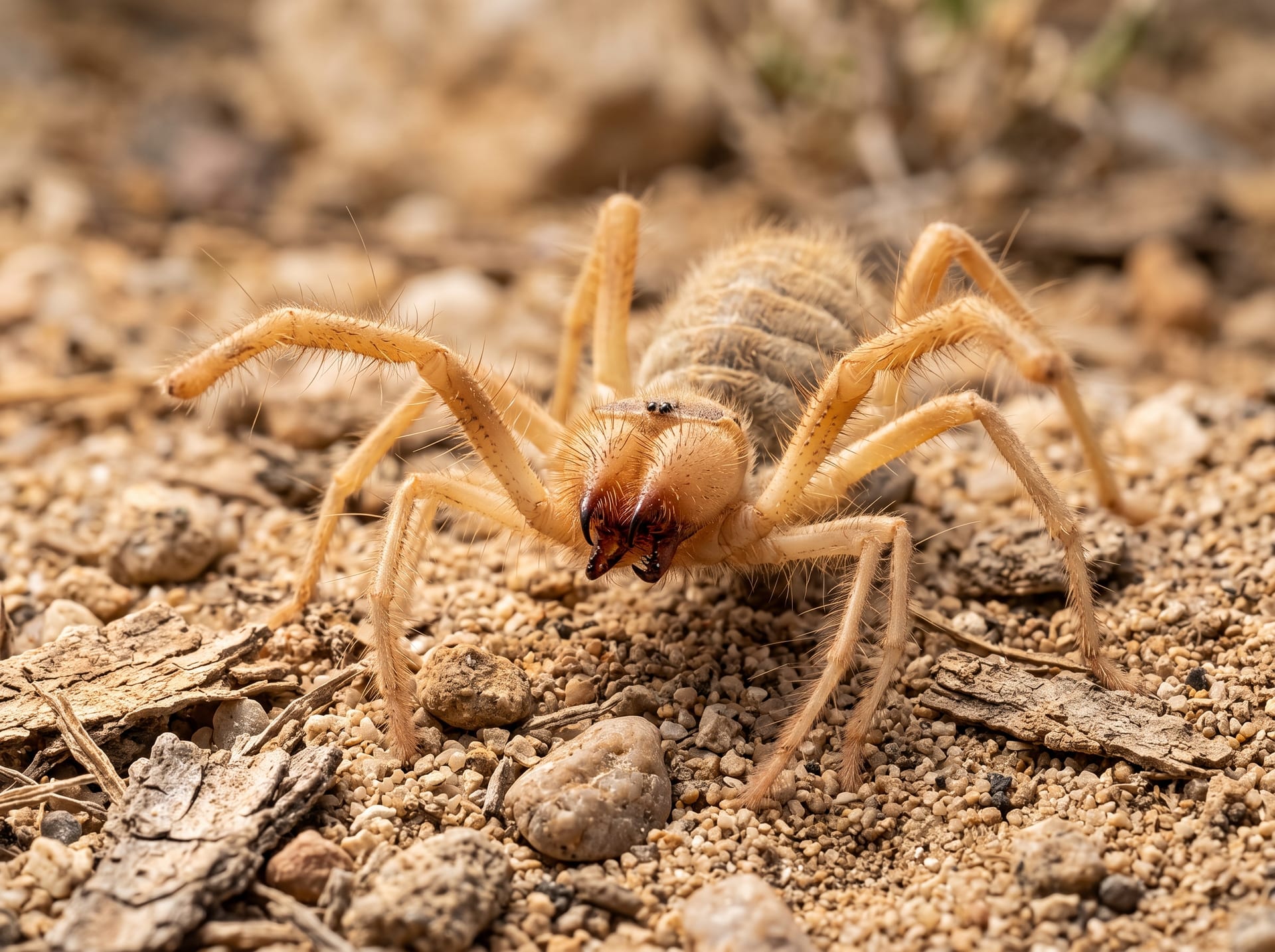
Camel Spider
Galeodes sp.
A fast desert predator belonging to its own order (Solifugae), neither spider nor scorpion. It lacks venom but has powerful chelicerae that can deliver a strong pinch; very fast and notoriously difficult to keep.
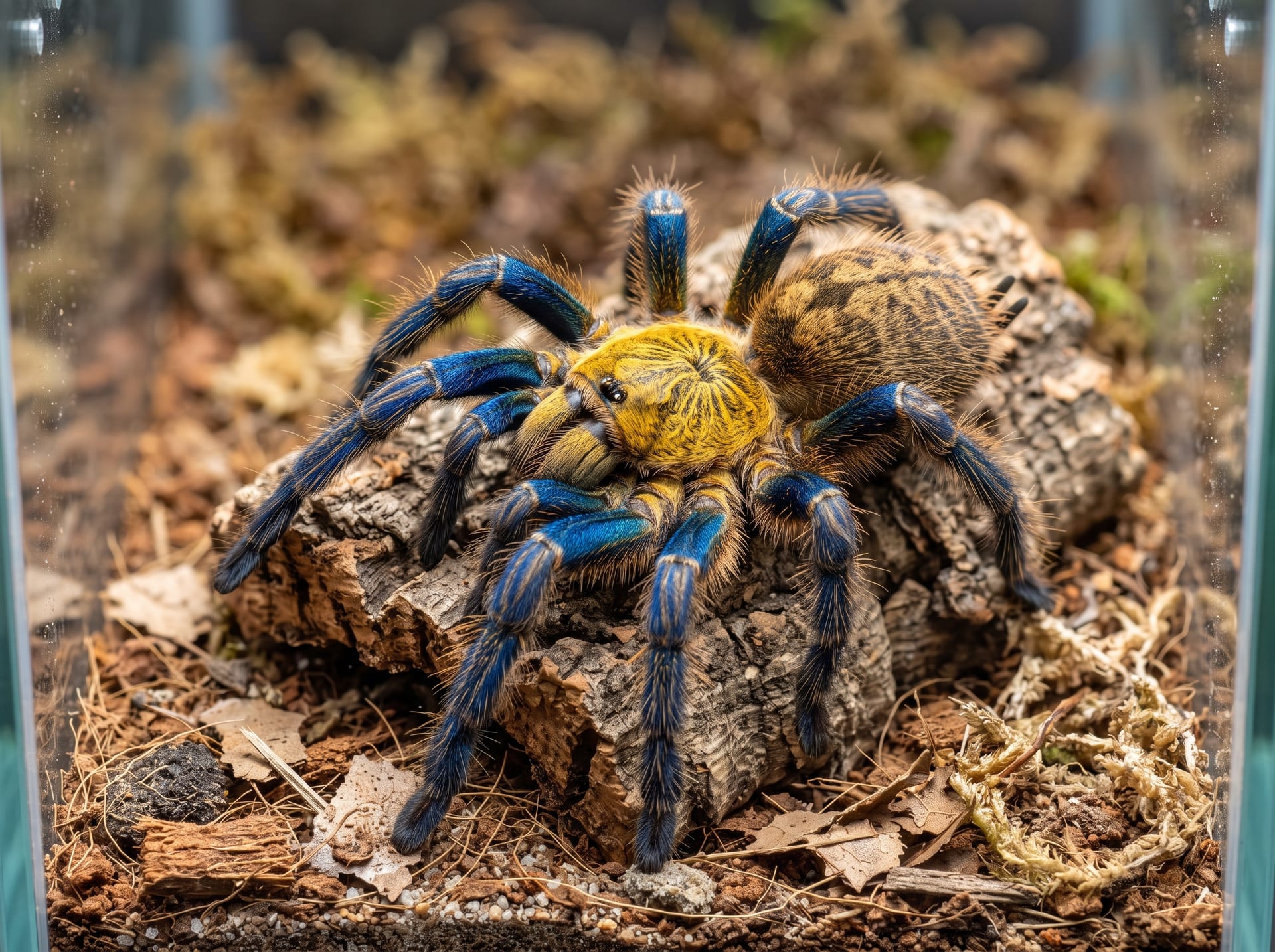
Golden Blue Leg Baboon
Harpactira pulchripes
A South African baboon spider combining a golden carapace with metallic blue legs. It lacks urticating hairs but is fast, defensive and potently venomous—an advanced Old World species.
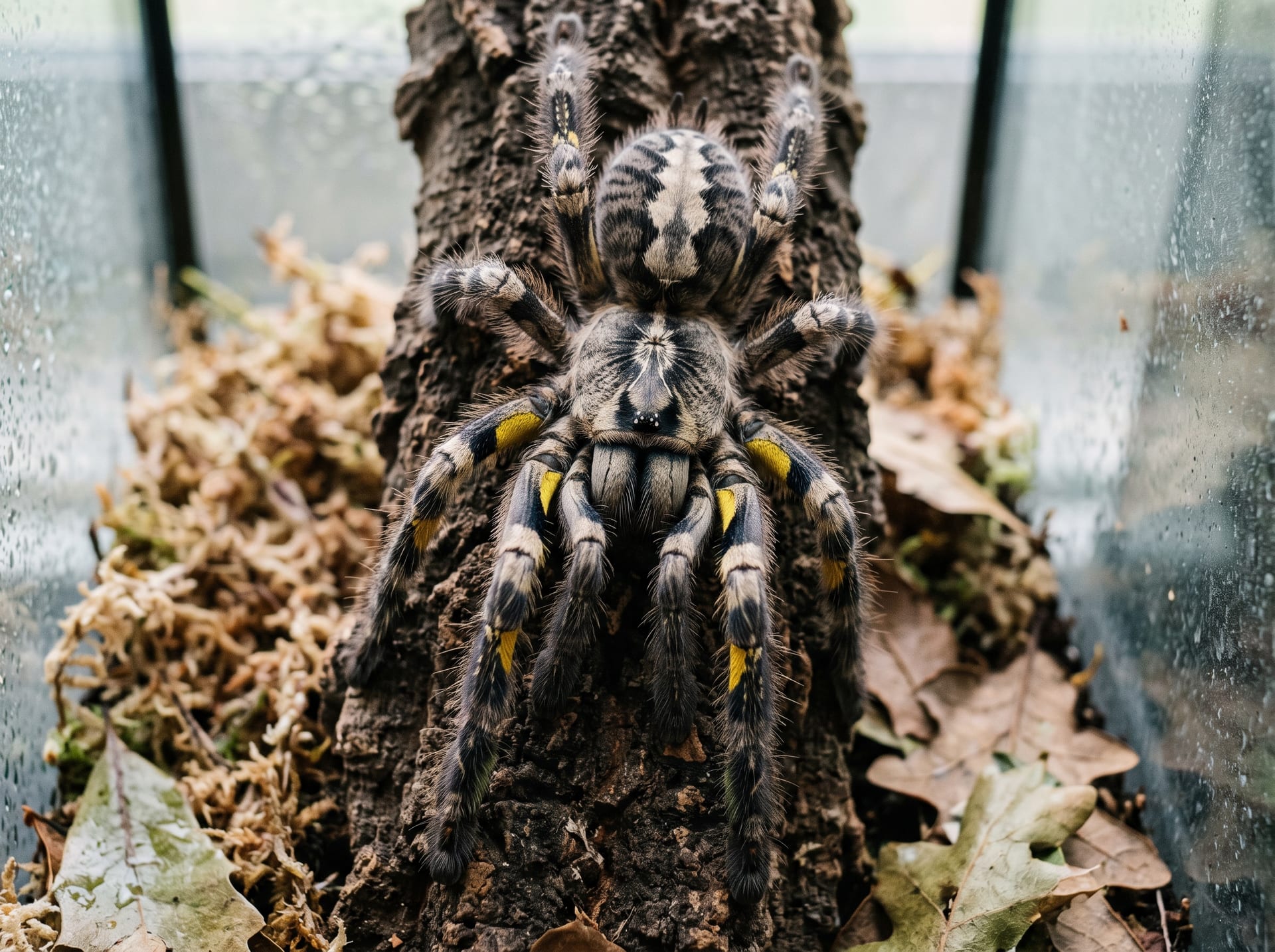
Indian Ornamental
Poecilotheria regalis
An arboreal Old World species from India with intricate camouflage and bright yellow leg undersides. Extremely fast, defensive, and medically significant venom—for experienced keepers only.
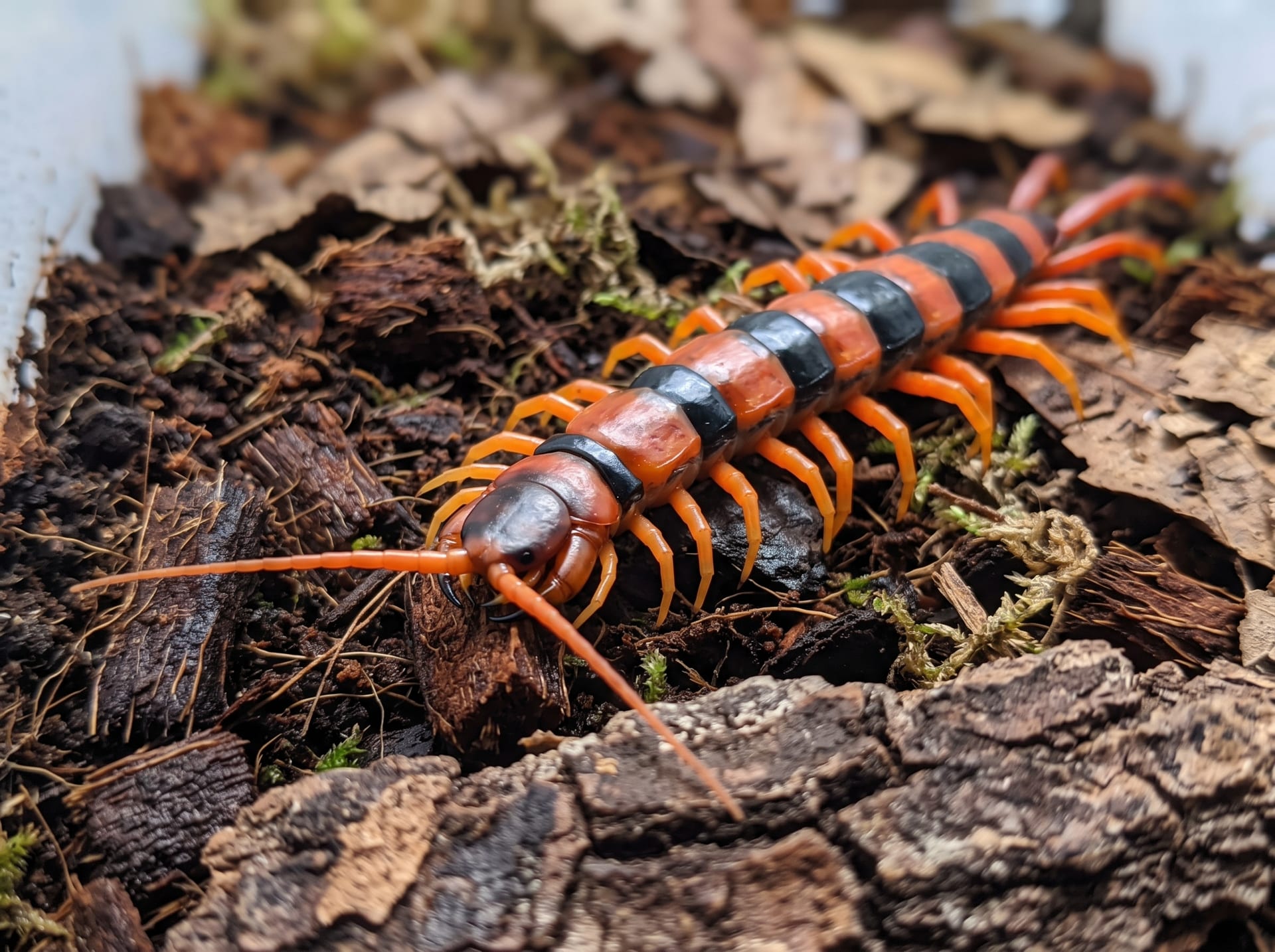
Indian Tiger Centipede
Scolopendra hardwickei
A highly prized species famous for its vivid red-and-black banding. It is nervous, fast, and bites defensively with painful venom, making it best suited to experienced keepers.
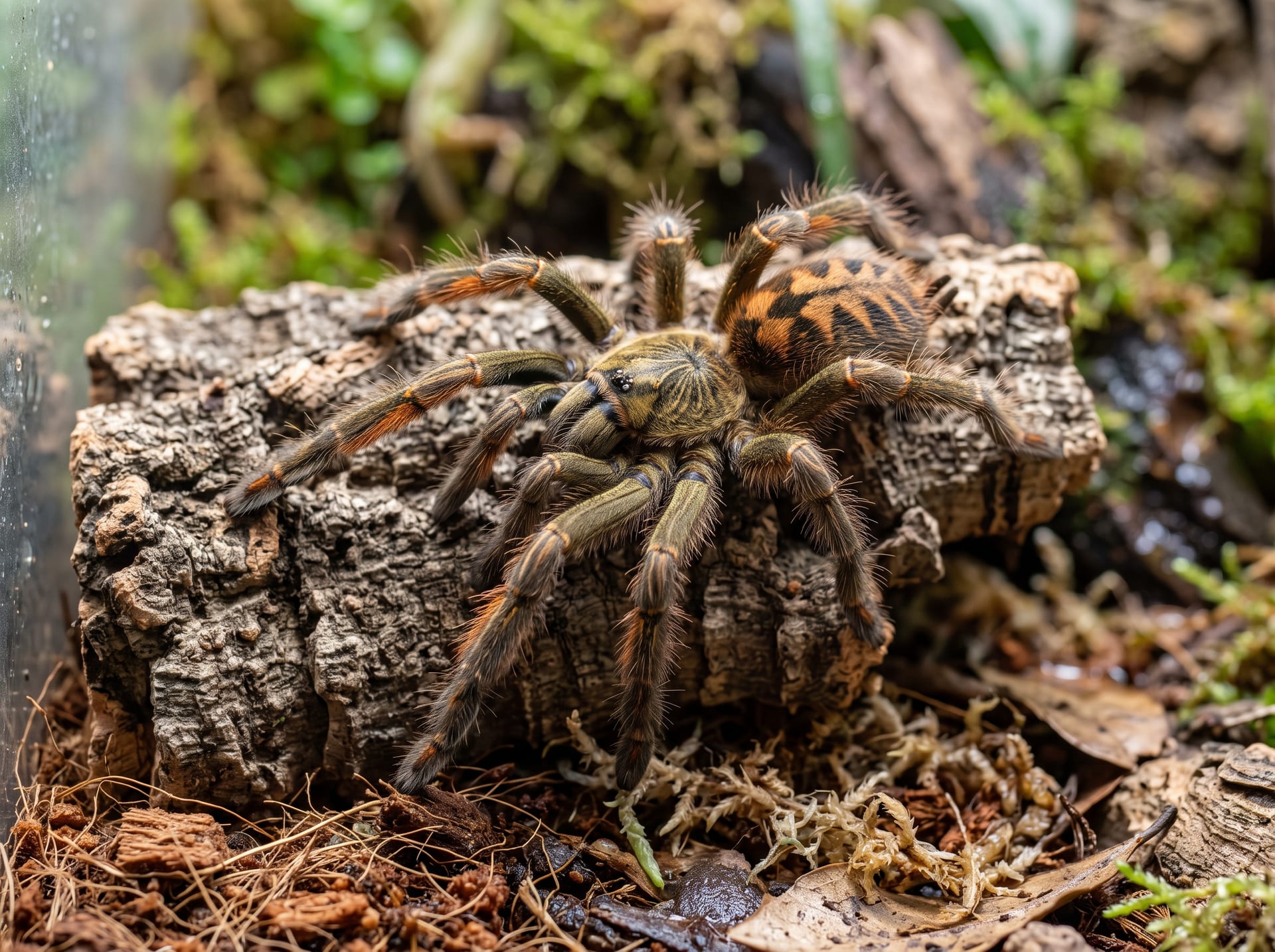
Trinidad Chevron
Psalmopoeus cambridgei
An arboreal species with chevron abdominal markings and an olive-to-russet body. It lacks urticating hairs and grows fast, but is quick and defensive with moderately strong venom.
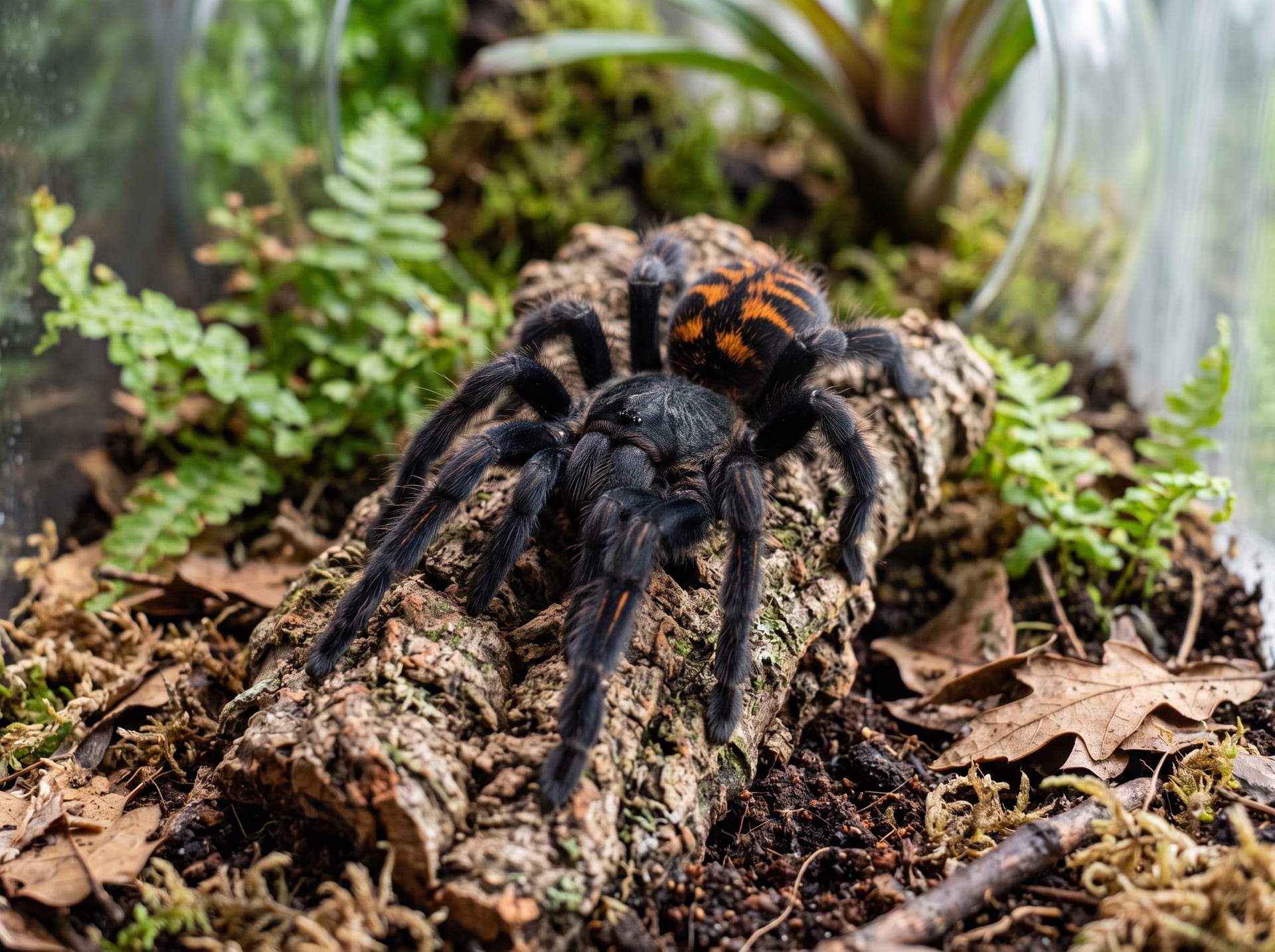
Venezuelan Suntiger
Psalmopoeus irminia
A Venezuelan arboreal species with orange-striped legs on a black body. It lacks urticating hairs but is very fast and defensive with stronger venom—for experienced keepers.
Related Content
Exotic Invertebrate FAQ
- What are exotic invertebrates? Can beginners keep them?
- It's a general term for invertebrates centered on arachnids and myriapods such as tarantulas, scorpions, millipedes, and whip scorpions. Hardy species like the Chilean rose tarantula and terrestrial millipedes are relatively easy to keep and popular with beginners.
- How much do exotic invertebrates cost?
- Common hardy tarantulas run 3,000-30,000 yen, while rare species exceed tens of thousands. Scorpions are around 2,000-15,000 yen and millipedes 1,000-5,000 yen. Prices vary with rarity, size, and whether the animal is captive-bred (CB).
- How long do exotic invertebrates live?
- Female tarantulas are remarkably long-lived, reaching 10-20+ years depending on species, while males live only 1-3 years after maturity. Scorpions live 5-8 years and millipedes roughly 3-10 years depending on species, with many kept long-term through repeated molts.
- What equipment is needed for exotic invertebrates?
- Basics include a secure enclosure, substrate (moisture-retaining or dry depending on species), a shelter, and a water dish. Many species need heating, so prepare a heat mat and a thermometer-hygrometer. Arboreal tarantulas need height and climbing structures, while burrowing species need deep substrate.
- What safety precautions apply to exotic invertebrates?
- While most tarantulas have mild venom, urticating hairs and bites can trigger allergic reactions. Some scorpions and centipedes are venomous enough to require medical attention, so always research each species' risks in advance. Keep enclosures securely sealed and locked to prevent escapes.