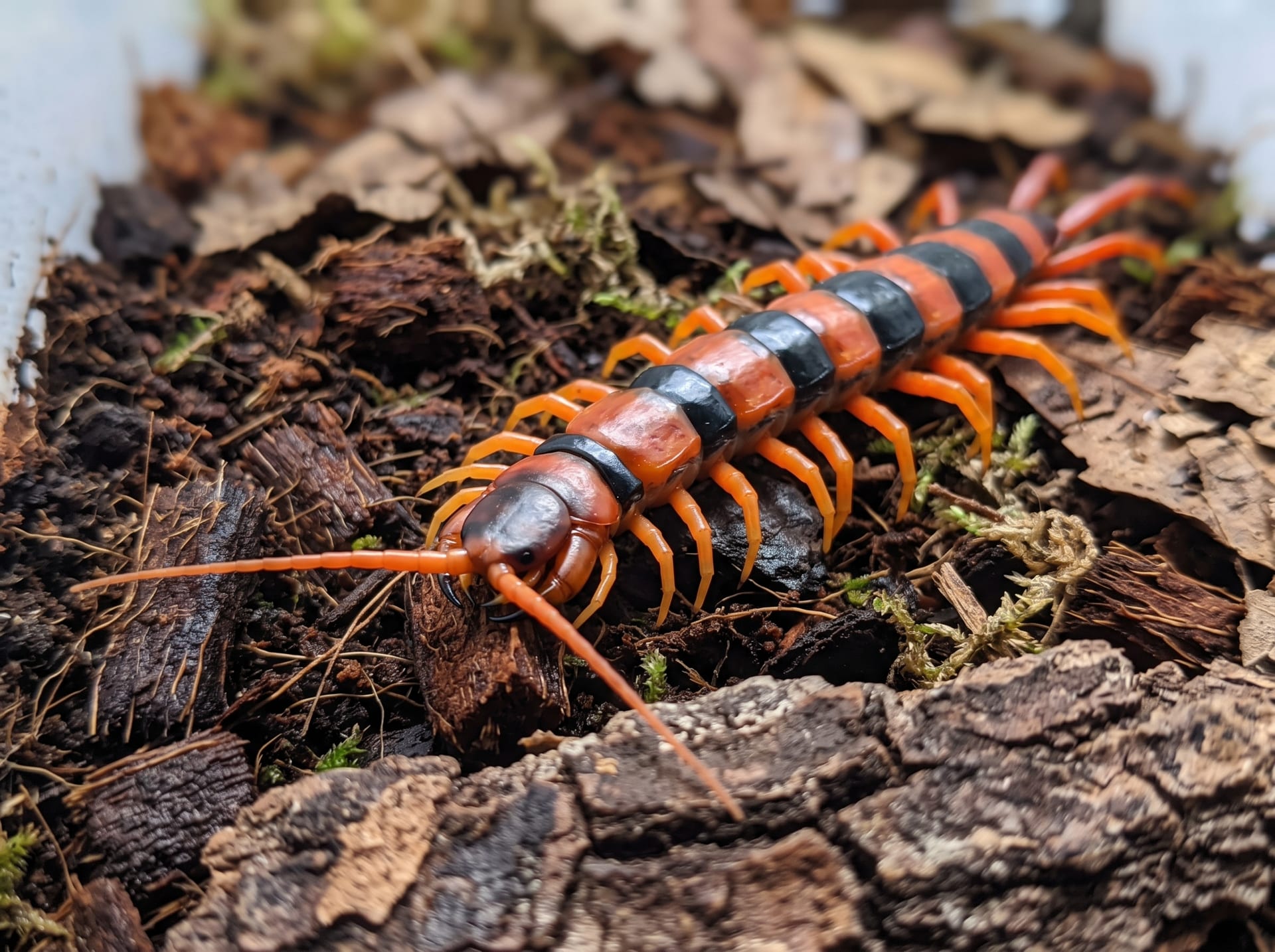
AI-generated image
Indian Tiger Centipede
AdvancedScolopendra hardwickei
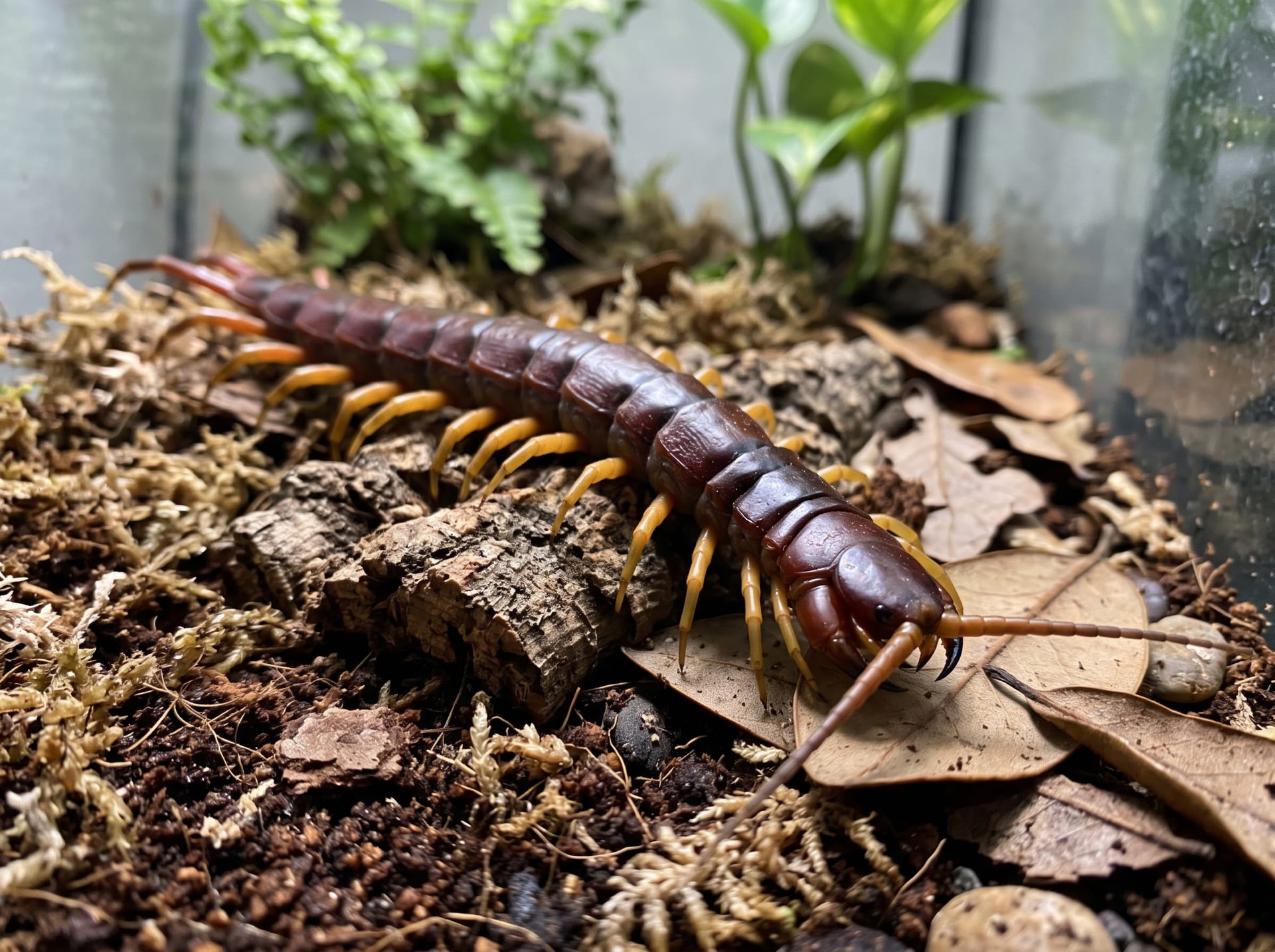
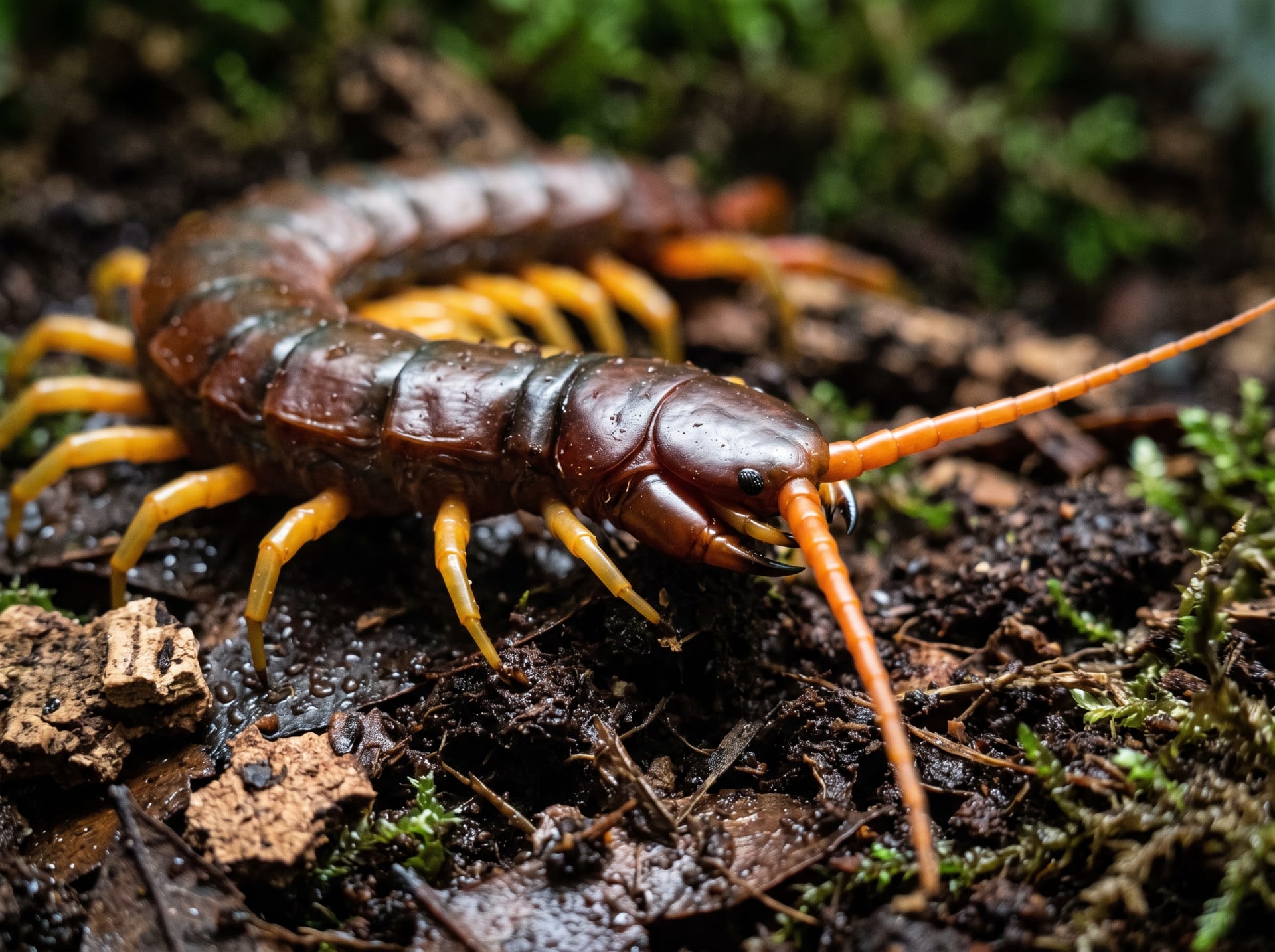
A highly prized species famous for its vivid red-and-black banding. It is nervous, fast, and bites defensively with painful venom, making it best suited to experienced keepers.
Difficulty
Advanced
Temperature
24〜28℃
Lifespan
About 5-8 years
Size
Around 13-18 cm in length
Humidity
65〜80%
Diet
Mainly live crickets and roaches; withhold feeding around molts.
About
The Indian tiger centipede (Scolopendra hardwickei) is a highly prized species famous for its vivid red-and-black banding, reaching about 13–18 cm and native to India and surrounding South Asia. It is nervous, fast, and bites defensively, with venom that causes intense pain, making it best suited to experienced keepers. House it singly at 24–28°C and 65–80% humidity, feeding live prey such as crickets and roaches. Withhold food around molts to keep the animal stable.
Basic Info
Origin
India and surrounding South Asia
Lifespan
About 5-8 years
Size
Around 13-18 cm in length
Temperature
24〜28℃
Humidity
65〜80%
Diet
Mainly live crickets and roaches; withhold feeding around molts.
Care Guide
Enclosure
Provide a deep, slightly drier substrate for burrowing with a hide and shallow water dish, and seal against escape.
Temperature & Humidity
Keep 24-28°C and 65-80% humidity, dampening locally and avoiding over-wet conditions that invite mites and mold.
References & Sources
Edited & verified by: br-choku editorial team
The taxonomic, regulatory, and husbandry data on this page are compiled and verified against the authoritative primary sources below.
Indian Tiger Centipede Listings
Loading latest listingsFind listings for this species