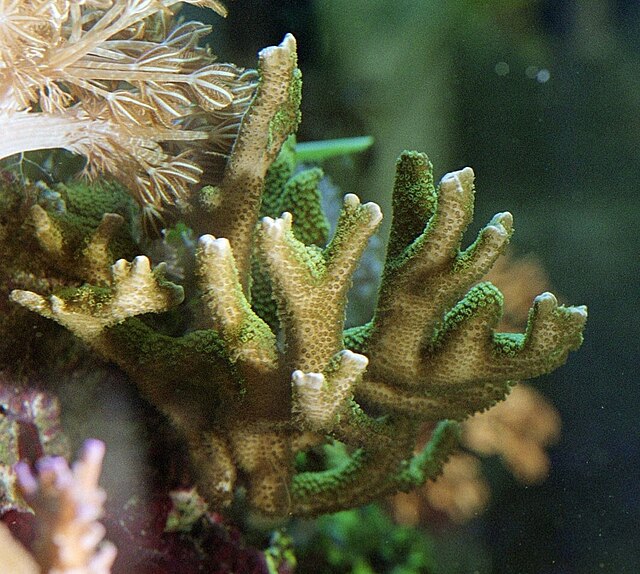
Source: Wikimedia Commons
Montipora Digitata
IntermediateMontipora digitata
An SPS coral that branches in finger-like shapes. Hardier than Acropora, ideal for SPS beginners.
Difficulty
Intermediate
Temperature
24〜27℃
Lifespan
10+ years
Size
10-40cm
Diet
Photosynthesis
About
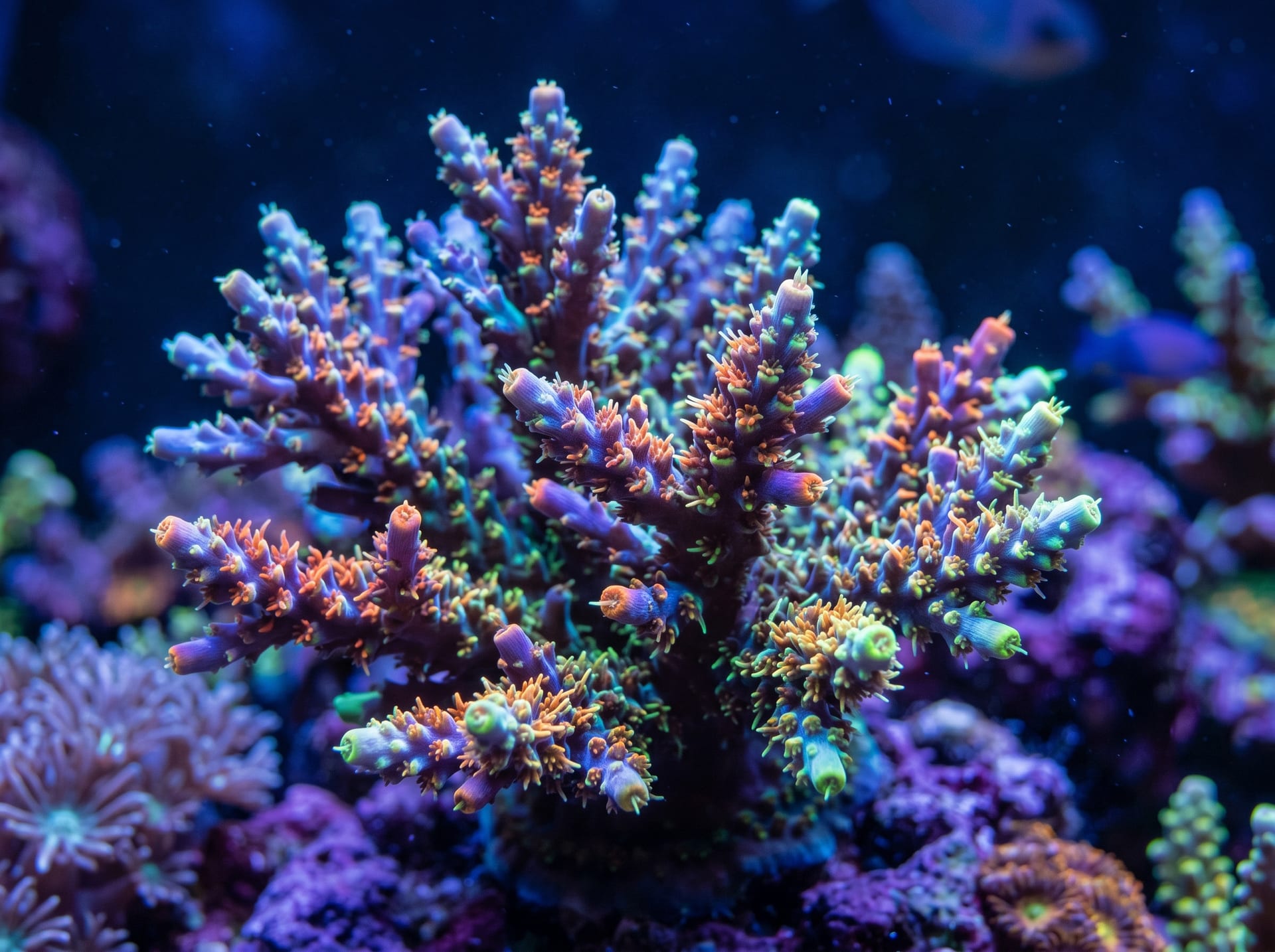
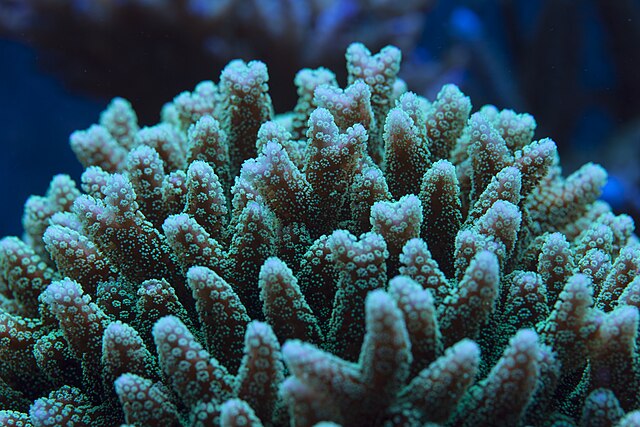
Montipora digitata (family Acroporidae) is a branching SPS coral whose slender, finger-like branches ("digitata" means finger-shaped) extend upward in purple, pink, orange, or green hues. One of the most common and widely kept Montipora species throughout the Indo-Pacific shallows, it is hardier than Acropora and serves as an excellent first SPS coral. It thrives under moderate to strong lighting (200–350 PAR) with moderate to strong flow and standard SPS chemistry—calcium 400–450 ppm, alkalinity 8–9 dKH. Its fast growth and ease of fragging make it a staple for adding height and color diversity to SPS reef displays, though detritus between branches should be managed with good flow.
Lifespan of the Montipora Digitata
The Montipora Digitata lives 10+ years.
Size of the Montipora Digitata
The Montipora Digitata grows to 10-40cm.
Temperature & humidity for the Montipora Digitata
The ideal water temperature for the Montipora Digitata is 24〜27℃.
Basic Info
Origin
shallow reefs of the Indo-Pacific
Lifespan
10+ years
Size
10-40cm
Temperature
24〜27℃
Diet
Photosynthesis
Care Guide
Lighting
Prefers moderate to strong lighting (200-350 PAR). It grows well placed in the upper to middle tank where strong light is available.
Flow & Placement
Moderate to strong flow suits it. Detritus tends to collect between the branches, so adjust the flow direction regularly to prevent dead spots.
Water Temperature & Quality
Keep water stable at Ca 400-450 ppm and KH 8-9. It tolerates fluctuation better than Acropora, but still avoid sudden changes.
Health & Cautions
It propagates easily by fragging; a cut branch fixed to rock will take. Thin out excess growth to keep water moving between the branches.
Growth
Fast growing for an SPS
MontiporaSPSBranchingBeginner SPS
Montipora Digitata FAQ
QHow difficult is it to keep Montipora Digitata?
A
Intermediate. This is an intermediate-level species. Some prior experience and knowledge of environmental management are recommended.
QWhat is the ideal temperature for Montipora Digitata?
A
The ideal temperature for Montipora Digitata is 24〜27℃. Avoid sudden temperature changes and maintain a stable environment.
QWhat is the lifespan of Montipora Digitata?
A
The average lifespan of Montipora Digitata is 10+ years. With proper care and nutrition, they can live a long and healthy life.
QHow large does Montipora Digitata get?
A
Montipora Digitata typically reaches 10-40cm as an adult. Size may vary depending on care conditions and individual genetics.
QWhat should I feed Montipora Digitata?
A
Montipora Digitata feeds on: Photosynthesis. Aim for a balanced diet with appropriate feeding frequency.
QWhat is the typical price for Montipora Digitata?
A
The price of Montipora Digitata varies significantly depending on variety, size, and individual quality. Check our market price page for the latest pricing information.
Last updated: August 31, 2026
Care Specifications
- Carbonate (KH)
- 8–11 dKH
- Water Temp.
- 24–27℃
- Specific Gravity
- 1.023–1.025
- Salinity
- 33–35 ppt
- Calcium (Ca)
- 420–450 ppm
- Magnesium (Mg)
- 1300–1400 ppm
SPSLight: High (PAR>150)Flow: HighPlacement: Top
Sources: AlgaeBarn: SPS/LPS care (PAR/flow) / AlgaeBarn: Water Parameters 101
Calls & Media
Fluorescence appearance
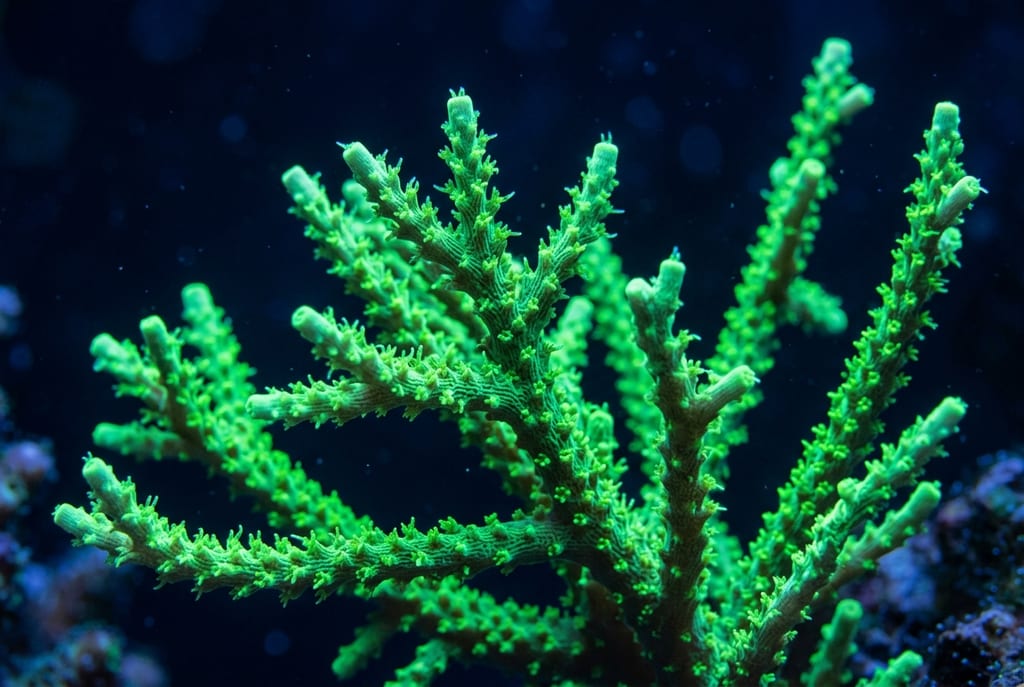
Coral fluorescent proteins are excited by blue/actinic light. Appearance differs greatly from under white light.
References & Sources
Edited & verified by: BreederDirect editorial team
The taxonomic, regulatory, and husbandry data on this page are compiled and verified against the authoritative primary sources below.
Taxonomy & Authority
Regulations & Conservation Status
CITES Appendix II
Stony coral order (Montipora digitata, Acroporidae). CITES Appendix II.
Sources: DOC NZ / CITES-listed corals (Scleractinia spp. = App. II)
Regulations may change. Always verify the latest information with the relevant authorities.
Related Species
Montipora Digitata Listings
Loading latest listingsFind listings for this species
Related Articles
Montipora Care Guide | Management of Beginner-Friendly SPS Corals and Characteristics by Type
Comprehensive guide to caring for Montipora species (Montipora spp.). Covers morphology-specific characteristics such as foliose, encrusting, and branching forms, water quality management, lighting setup, and fragging techniques—a practical guide for long-term maintenance of Montipora, a popular beginner-friendly SPS coral.
Complete Montipora (Ridged Coral) Care Guide | Water Quality, Lighting, Water Flow, and Breeding Thoroughly Explained
A comprehensive guide to caring for Montipora (Ridged Coral), a popular SPS beginner species. We explain water quality parameters, lighting PAR values, water flow design based on growth morphology, tips for fragment propagation, and solutions for RTN, STN, and nudibranch problems.
Coral Tank Record Management and Measurement Logs | Building a Habit of Science-Based Care Through Data
Keeping tank logs is essential for improving coral husbandry. By recording and analyzing water quality parameters, equipment settings, and trouble history, early problem detection and continuous improvement in husbandry quality can be achieved.
Coral tank management while traveling and during extended absence | Pre-departure preparation and automation for peace of mind when away
When you need to leave your coral tank for several days to a week or longer due to travel or business, how should you manage it? This guide explains practical methods to protect your tank during your absence, from advance preparation to automated equipment.