Source: Wikimedia Commons
European Goldfinch
IntermediateCarduelis carduelis
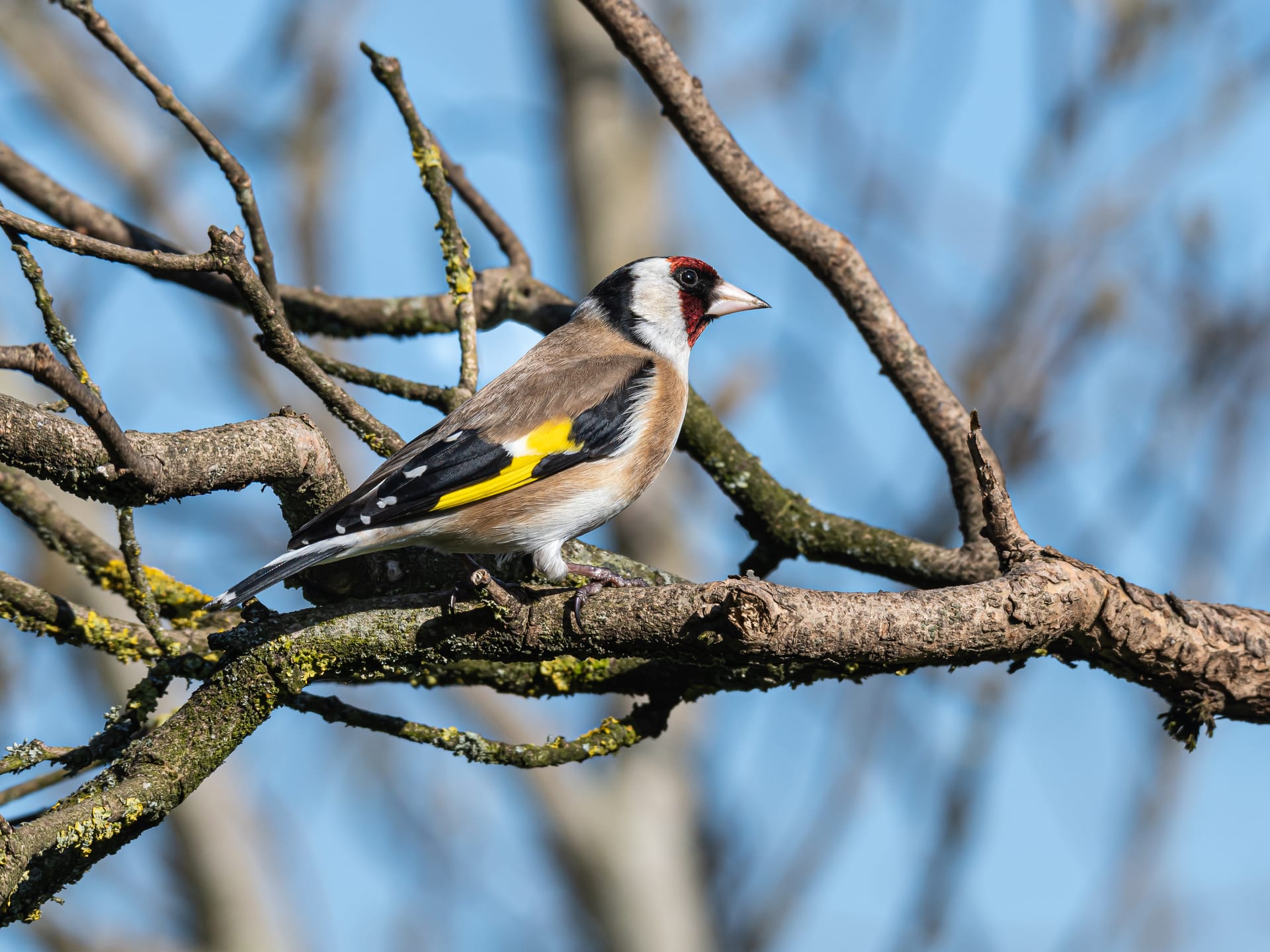
A finch with a red face, a black-and-white head and a broad yellow bar across the black wing. Long a favourite European cage bird, it has also been crossed with canaries.
Difficulty
Intermediate
Temperature
15〜30℃
Lifespan
Longevity record about 27 years
Size
12-13cm
Humidity
40〜60%
Diet
Mixed seed including thistle and burdock seed, rapeseed, greens, and small livefood when breeding
About
The European goldfinch (Carduelis carduelis) is a finch native to Europe, North Africa and western and central Asia. The sexes differ little, both showing a red face, a black and white head, warm brown upperparts, white underparts with buff flanks and breast patches, and black and yellow wings. On close inspection the male has a larger, darker red mask extending just behind the eye, and his shoulder feathers are black where the female's are brown. It inhabits open, partially wooded lowlands, resident in the milder west of its range and migratory from colder areas. It has been introduced widely, with records from Bermuda, Canada, the United States, Mexico, Peru, Argentina, Chile, Uruguay and Brazil among others. Until the 20th century its bright colours made it a favourite aviary bird, and it was crossed with canaries and other carduelines. Keepers are advised to use a cage at least a metre long together with an appropriate diet.
Source: Wikipedia (CC BY-SA 4.0)
Lifespan of the European Goldfinch
The European Goldfinch lives Longevity record about 27 years.
Size of the European Goldfinch
The European Goldfinch grows to 12-13cm.
It is 12-13 cm long with a wingspan of 21-25 cm and a weight of 14-19 g.
Basic Info
Origin
Open, partially wooded lowlands of Europe, North Africa and western and central Asia
Lifespan
Longevity record about 27 years
Size
Care Specifications
References & Sources
Edited & verified by: BreederDirect editorial team
The taxonomic, regulatory, and husbandry data on this page are compiled and verified against the authoritative primary sources below.
Taxonomy & Authority
Accepted name: Carduelis carduelis (Linnaeus, 1758)
Synonyms: Fringilla carduelis
Authority databases: GBIF
Nomenclature follows global taxonomic authority databases.
Regulations & Conservation Status
CITES Appendix IIIIUCN LC · Least Concern
The Ukrainian population has been listed in CITES Appendix III by Ukraine, effective 22 June 2021. The listing covers only the population of Ukraine, not the species as a whole. Birds in trade in Japan are captive bred; an Appendix III listing requires a certificate of origin for export from the listing country.
Sources: CITES Appendices (Fringillidae not listed) / IUCN Red List / Species+ (CITES appendices)
Regulations may change. Always verify the latest information with the relevant authorities.
European Goldfinch Listings
Loading latest listingsFind listings for this species