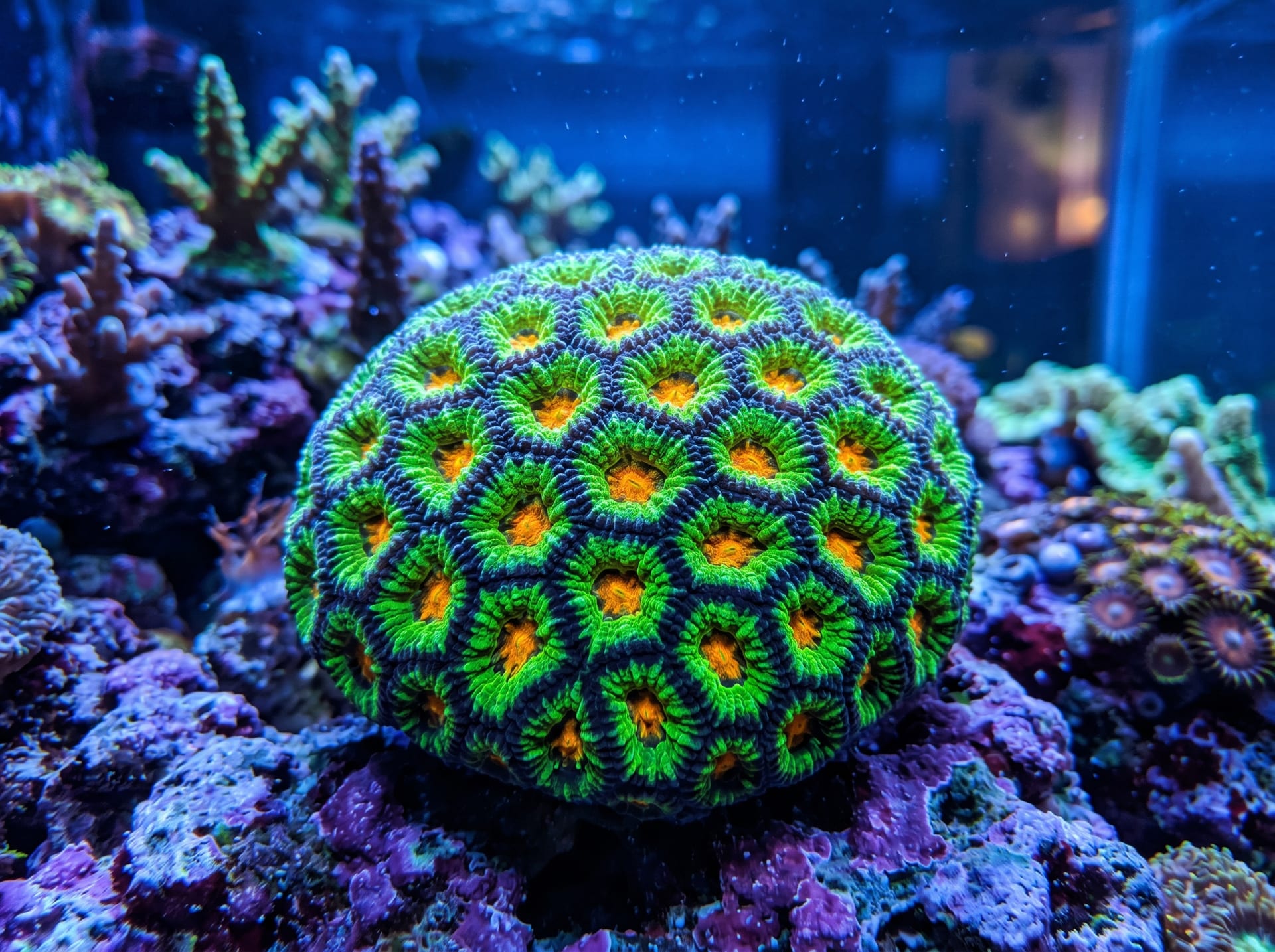
Favites Coral
Favites Coral is a large-polyp stony (LPS) coral known for its tightly packed, hexagon-shaped corallites that form a distinctive honeycomb-like skeleton. Hobbyists often call it simply "Favites," and it's a close relative of the "war coral," sharing that group's wide range of color patterns — greens, reds, and purples can all appear across individual colonies. Its sturdy skeleton makes it tolerant of water quality fluctuations, and its slow, steady growth makes it a long-term centerpiece for any reef tank. Many beginners find it a forgiving and rewarding coral to start with.
View Favites Coral encyclopedia →0% commission on your first sales!Register by September 30, 2026 and your first 2 sales are commission-free!
Breeder Wanted!
List on BreederDirect and sell directly to customers nationwide!
Br-Choku's 6 Transparency Standards
Our Breeder sellers disclose detailed care specs for all Coral listings. We prioritize Aquacultured/CB specimens, verify WYSIWYG photos, and provide difficulty ratings—avoiding wild-caught.
- Aquacultured
- WYSIWYG Photo
- Difficulty Disclosed
- Frag/Colony
- Care Info Included
- Trade name shown
Browse all 66 breeds
Difficulty
No listings match your filters
Adjust your filters, or get notified when new listings arrive.
Getting alerts is free with a member account. When new listings match your saved search, we'll notify you by email and in-app.
Browse other categories
Verified breeders (preview)
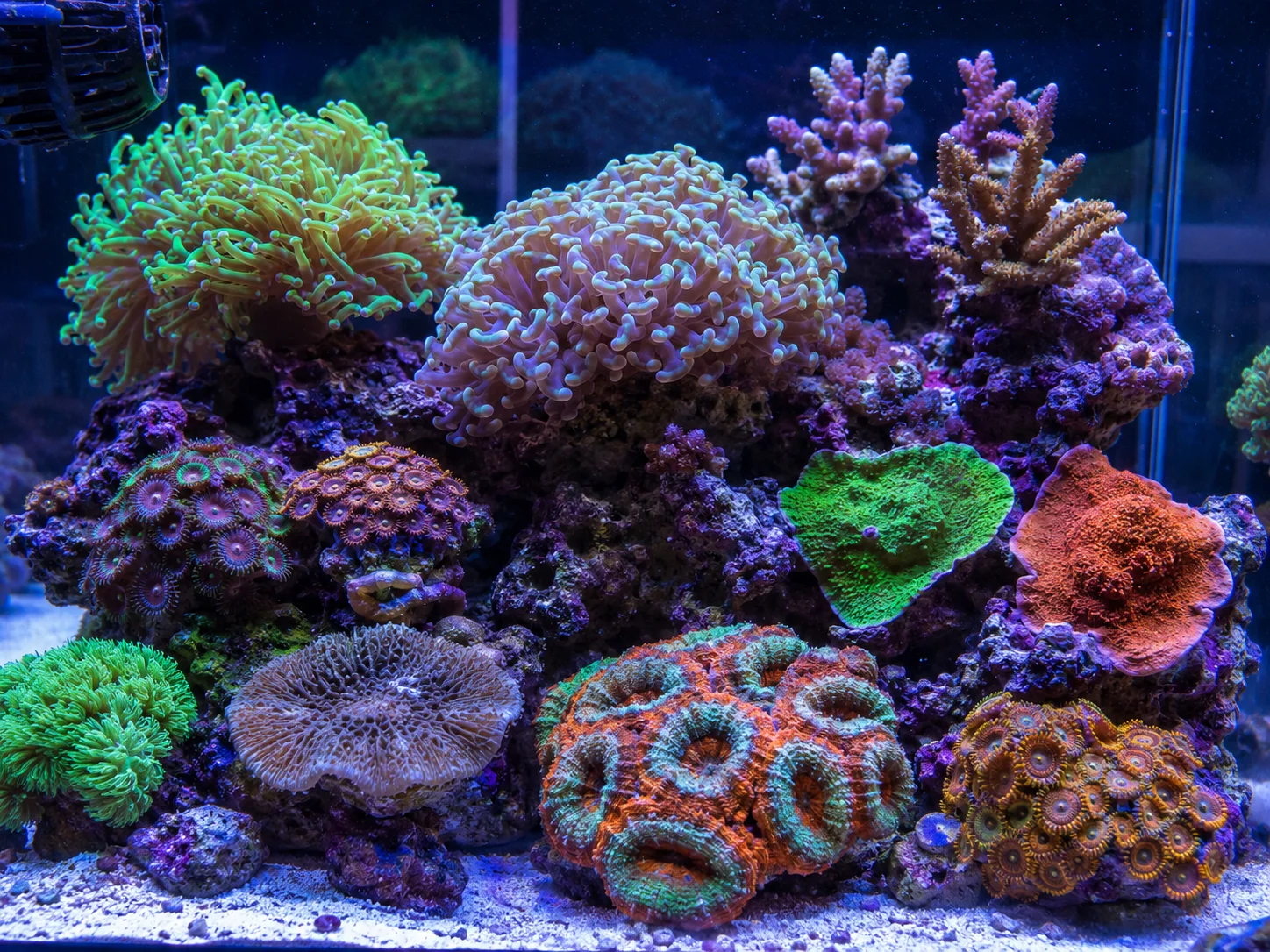
About Favites Coral
Favites Coral is a beginner-friendly LPS coral with densely packed hexagonal corallites and vivid color variation. Hardy and long-lived, it can live 10+ years and grow to 10-40cm.
7 things to know before welcoming a Favites Coral
1Easy Care for Beginners
Favites Coral is hardy and tolerant of changing conditions, making it a good choice for first-time coral keepers. Even so, avoid sudden water quality swings — a stable environment is the foundation of long-term success.
2Lighting and Flow
This coral prefers moderate lighting and gentle water flow. Strong direct flow can prevent its polyps from extending fully, so place it somewhere flow is indirect.
3Wide Color Variation
Individual colonies can appear in green, red, purple, and more, making each one distinct. As a close relative of the "war coral," it's also popular among collectors for this variety.
4Slow, Steady Growth
Growth is gradual, and colonies take time to reach full size. Since adults can reach 10-40cm, plan your tank layout with that eventual footprint in mind.
5Spacing from Other Corals
This species can extend aggressive sweeper tentacles, so leave ample space between it and neighboring corals. In densely placed layouts, watch for contact damage.
6Feeding Needs
Most of its nutrition comes from photosynthesis, but it may extend tentacles at night to capture tiny plankton. Supplemental feeding isn't required but can be considered depending on the coral's condition.
7Tank Readiness Before Arrival
LPS corals do best in tanks with stable water parameters. Introducing it to a mature, stable tank rather than a newly set-up one reduces the risk of problems.
Frequently asked questions about Favites Coral
- Q.Is this coral suitable for beginners?
- A.Yes, Favites Coral is hardy and tolerant of changing conditions, which makes it a good choice for beginners. With basic water quality maintenance, it can be enjoyed for a long time.
- Q.How large does it grow?
- A.Adult colonies typically reach 10-40cm. Growth is slow, so you can watch your layout evolve gradually over the years.
- Q.How long does it live?
- A.Under appropriate conditions, it's known to live 10 years or more, making it a coral you can keep for the long haul.
- Q.Can it be placed next to other corals?
- A.It can extend sweeper tentacles, so leave plenty of space between it and neighboring corals. Placing corals too close together can lead to contact damage.
- Q.Is it subject to any special regulations?
- A.Favites Coral is not subject to CITES.
Useful tools for Favites Coral care
Learn more about Favites Coral in the encyclopedia
View Favites Coral encyclopedia entry →
Care difficulty, lifespan, size and diet — all basics covered.
More in this category
Can't find the one you're looking for?
Post your wishes for free and breeders with matching animals will contact you with introductions.