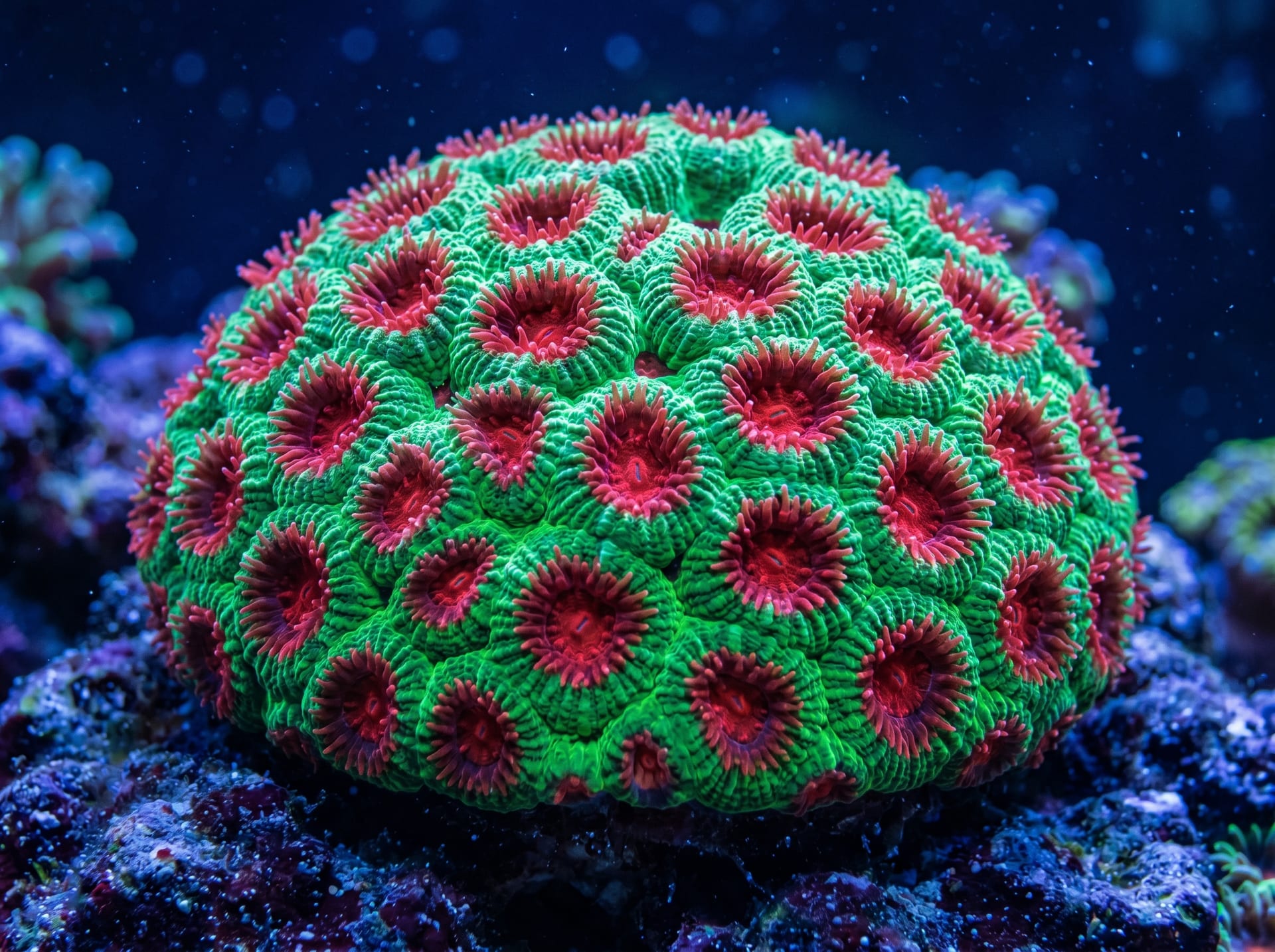
Favia Coral
Favia coral is a massive LPS (large polyp stony) coral characterized by rounded corallites arranged closely across its surface. It closely resembles the related Favites, but its corallites remain clearly separated from one another, which is the easiest way to tell the two apart. Hardy and adaptable to varying tank conditions, Favia is considered approachable even for beginner reef keepers. Individual colonies display a wide range of colors, from green to red to orange, each with its own distinct appearance. Polyps tend to stay retracted during the day and extend broadly at night to feed, giving keepers an engaging shift in appearance to observe over time.
View Favia Coral encyclopedia →0% commission on your first sales!Register by September 30, 2026 and your first 2 sales are commission-free!
Breeder Wanted!
List on BreederDirect and sell directly to customers nationwide!
Br-Choku's 6 Transparency Standards
Our Breeder sellers disclose detailed care specs for all Coral listings. We prioritize Aquacultured/CB specimens, verify WYSIWYG photos, and provide difficulty ratings—avoiding wild-caught.
- Aquacultured
- WYSIWYG Photo
- Difficulty Disclosed
- Frag/Colony
- Care Info Included
- Trade name shown
Browse all 66 breeds
Difficulty
No listings match your filters
Adjust your filters, or get notified when new listings arrive.
Getting alerts is free with a member account. When new listings match your saved search, we'll notify you by email and in-app.
Browse other categories
Verified breeders (preview)
About Favia Coral
Favia coral is a hardy, colorful massive LPS species with rounded corallites arranged in a regular pattern, popular among reef-keeping beginners. It resembles the closely related Favites but can be told apart by how clearly separated its corallites are.
7 things to know before welcoming a Favia Coral
1Moderate Light & Flow
Favia coral can be stressed by overly intense lighting or strong water flow, so moderate light and gentle current work best. Placing it in the mid-to-lower area of the tank is generally recommended.
2Give It Space
Favia corals can extend sweeper tentacles that sting nearby corals. Leave ample spacing between it and neighboring colonies when aquascaping.
3Spot the Corallite Gap
Favia looks very similar to the closely related Favites, but its corallites (the individual skeletal cups) remain clearly separated from one another. This is the easiest way to tell the two apart when selecting a specimen.
4Hardy & Beginner-Friendly
Favia adapts relatively well to changing conditions, making it approachable for first-time coral keepers. That said, avoid sudden shifts in water parameters and aim for a stable environment.
5Polyps Open Wide at Night
Polyps stay modestly retracted during the day but extend broadly at night to feed. Watching the colony's appearance shift between day and night is one of its appeals.
6Colors Vary by Colony
Coloration ranges from green to red to orange depending on the individual colony. Since no two Favia look quite the same, it's worth comparing colors closely before choosing one.
7Plan for Long-Term Care
Favia has a lifespan of 10 years or more and can grow into a massive colony reaching roughly 10 to 40 cm. Make sure your tank has enough long-term space to accommodate its eventual size.
Frequently asked questions about Favia Coral
- Q.What's the difference between Favia and Favites coral?
- A.The two corals look very similar, but Favia has corallites that are clearly separated from one another, while Favites has corallites packed tightly together with little to no gap. This separation is the easiest way to tell them apart when selecting a specimen.
- Q.Can Favia be kept with other corals?
- A.Yes, Favia can be kept alongside other corals, but it extends sweeper tentacles that can sting nearby colonies, so leave adequate spacing around it. As long as sufficient distance is maintained, mixed placement is fine.
- Q.Is Favia coral suitable for beginners?
- A.Favia is hardy and relatively tolerant of changing conditions, which is why it's often recommended as an entry-level coral. Even so, avoid sudden shifts in water parameters and keep the tank environment stable.
- Q.Why does it look less visible during the day?
- A.Favia keeps its polyps modestly retracted during the day and extends its tentacles widely at night to feed. This day-to-night change in appearance is normal behavior, so there's no cause for concern.
- Q.Is Favia coral subject to CITES?
- A.Favia coral is not subject to CITES.
Useful tools for Favia Coral care
Learn more about Favia Coral in the encyclopedia
View Favia Coral encyclopedia entry →
Care difficulty, lifespan, size and diet — all basics covered.
More in this category
Can't find the one you're looking for?
Post your wishes for free and breeders with matching animals will contact you with introductions.