Tree Monitor Care Guide | Arboreal Monitor Lizard Enclosure Design, Feeding, and Breeding
A detailed explanation of vertical vivarium design, feeding management, temperature and humidity control, and breeding methods for tree monitors (including emerald monitors). A complete overview of arboreal monitor lizard care.
Key Takeaways
A detailed explanation of vertical vivarium design, feeding management, temperature and humidity control, and breeding methods for tree monitors (including emerald monitors). A complete overview of arboreal monitor lizard care.
Tree Monitor Species and Characteristics
Tree monitors are a general term for arboreal monitors belonging to the family Varanidae. Their primary natural habitats are the tropical rainforests of the Aru and Batanta Islands in Indonesia, as well as Papua New Guinea, and their most distinctive features are their vibrant coloration and body structure specially adapted for climbing.
✍️
BreederDirect Editorial
The BreederDirect editorial team specializes in care information for animals, covering veterinary care and breeding to deliver beginner-friendly guides.
Find Reptiles on BreederDirect
Buy directly from verified breeders
Browse Related Listings
Find Reptiles listings related to this article on BreederDirect. Buy directly from verified breeders.
The three representative species distributed domestically are as follows.
Species
Scientific name
Color characteristics
Adult length guide
Emerald Tree Monitor
Varanus prasinus
Brilliant emerald green
80–90 cm
Blue Tree Monitor
Varanus macraei
Bluish coloration with black reticulated pattern
90–100 cm
Yellow Tree Monitor
Varanus reisingeri
Yellow to yellow-green
70–80 cm
All species are characterized by an elongated body and long tail, with the tail functioning as a prehensile organ that wraps around tree branches to stabilize the body. The body is lightweight, allowing rapid movement even on thin arboreal branches. There exists a dedicated collector base among reptile enthusiasts, and geographic origin and color variations are highly prized.
Vertical Vivarium Design and Setup
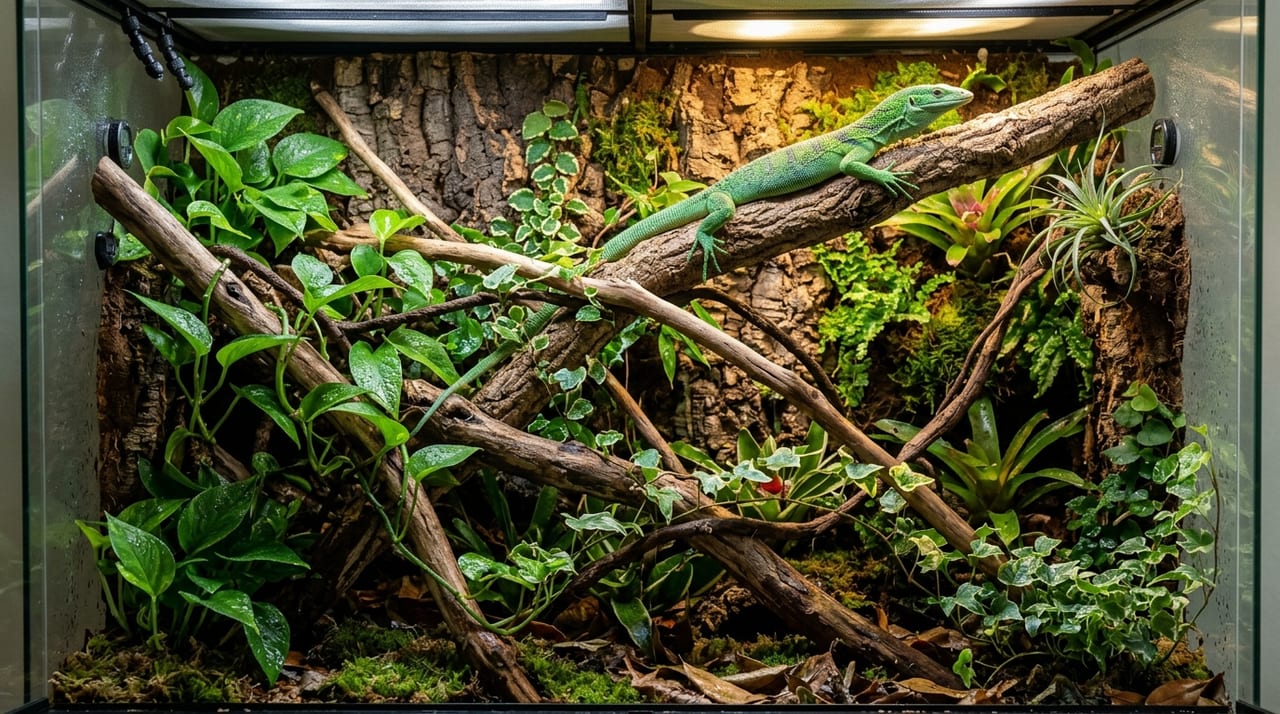
The most critical aspect of tree monitor husbandry is providing "vertical space." Horizontal enclosures are unsuitable; prioritize height and adopt a vertical layout.
Recommended enclosure size guidelines:
Juveniles (up to 40 cm length): approximately 90 cm height × 60 cm width × 45 cm depth
Single adult: 120 cm height × 60 cm width × 45 cm depth or larger
Adult pairs or breeding: 150 cm height × 90 cm width × 60 cm depth or larger
Materials should ideally be a vertical enclosure designed specifically for reptiles with abundant mesh paneling. Fully enclosed glass enclosures tend to become humid and poorly ventilated; select designs with ventilation holes on the sides and top.
Furnish the enclosure to replicate a natural forest environment. Combine driftwood of varying diameters, cork bark backgrounds, and fine bamboo perches at multiple heights, arranging resting spots in three-dimensional space. Planting potted plants (such as pothos, ficus, ficus benjamina, and ivy) improves moisture retention and provides hiding places. Layer the substrate with plant-fiber blended soil or oak chips approximately 10–15 cm deep; using this as a nesting substrate facilitates breeding.
Temperature, Humidity, and Lighting Management
Since tree monitors are tropical species, low temperatures and excessive dryness are major stress factors. Use the following as guidelines to establish the proper environment.
Item
Target range
Ambient daytime temperature
28–32°C
Basking spot
35–40°C
Nighttime temperature
22–26°C (do not drop below 20°C)
Humidity
70–90%
Place the basking spot at the top of the enclosure to allow the individual to thoroughly warm up at height. Halogen bulbs can cause excessive temperature increases; monitor actual temperatures with a thermometer and select the appropriate wattage.
An automated misting system is effective for maintaining humidity. Misting the entire enclosure, walls, and plant leaves 2–3 times daily stabilizes high humidity and provides drinking water. Tree monitors prefer to drink flowing water or water droplets on leaves; relying solely on stationary water dishes often results in insufficient water intake. Provide a shallow water dish but be consistent with misting.
UVB lighting is essential. Use high-quality T5 HO UVB lamps and maintain proper distance during installation. This directly affects calcium metabolism, immune function, and activity levels. Base photoperiod on 12–14 hours daily; for breeding, gradually adjust the duration seasonally for better results.
Feeding and Nutritional Management
Tree monitors are strictly carnivorous. In the wild, they prey on insects, small lizards, bird eggs, and small mammals. In captivity, combine the following food items.
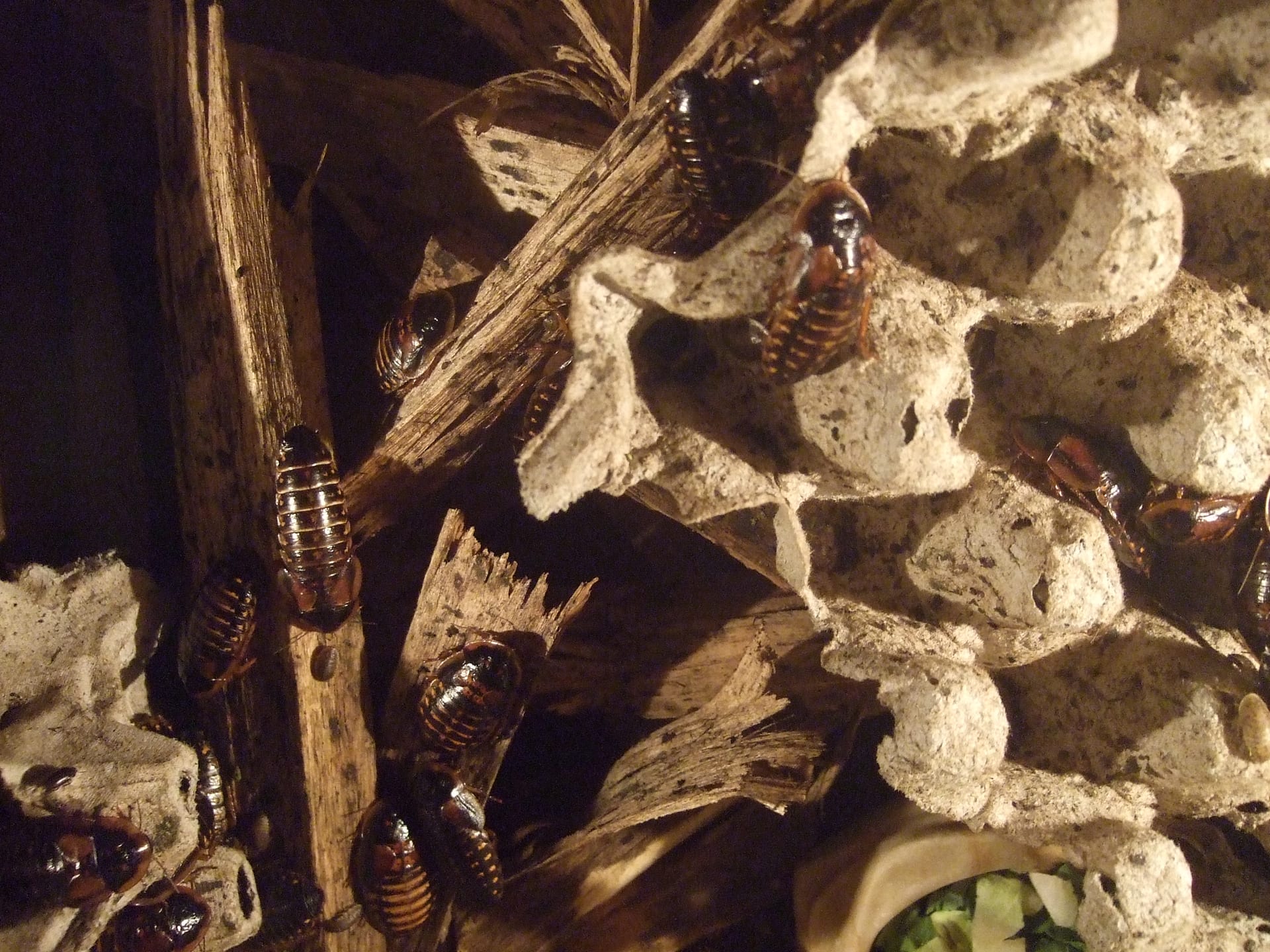
Crickets and dubias: Main food for juveniles and young adults. Nutritional value increases when gut-loaded (pre-feeding with nutrient-rich vegetables and fruits) before offering.
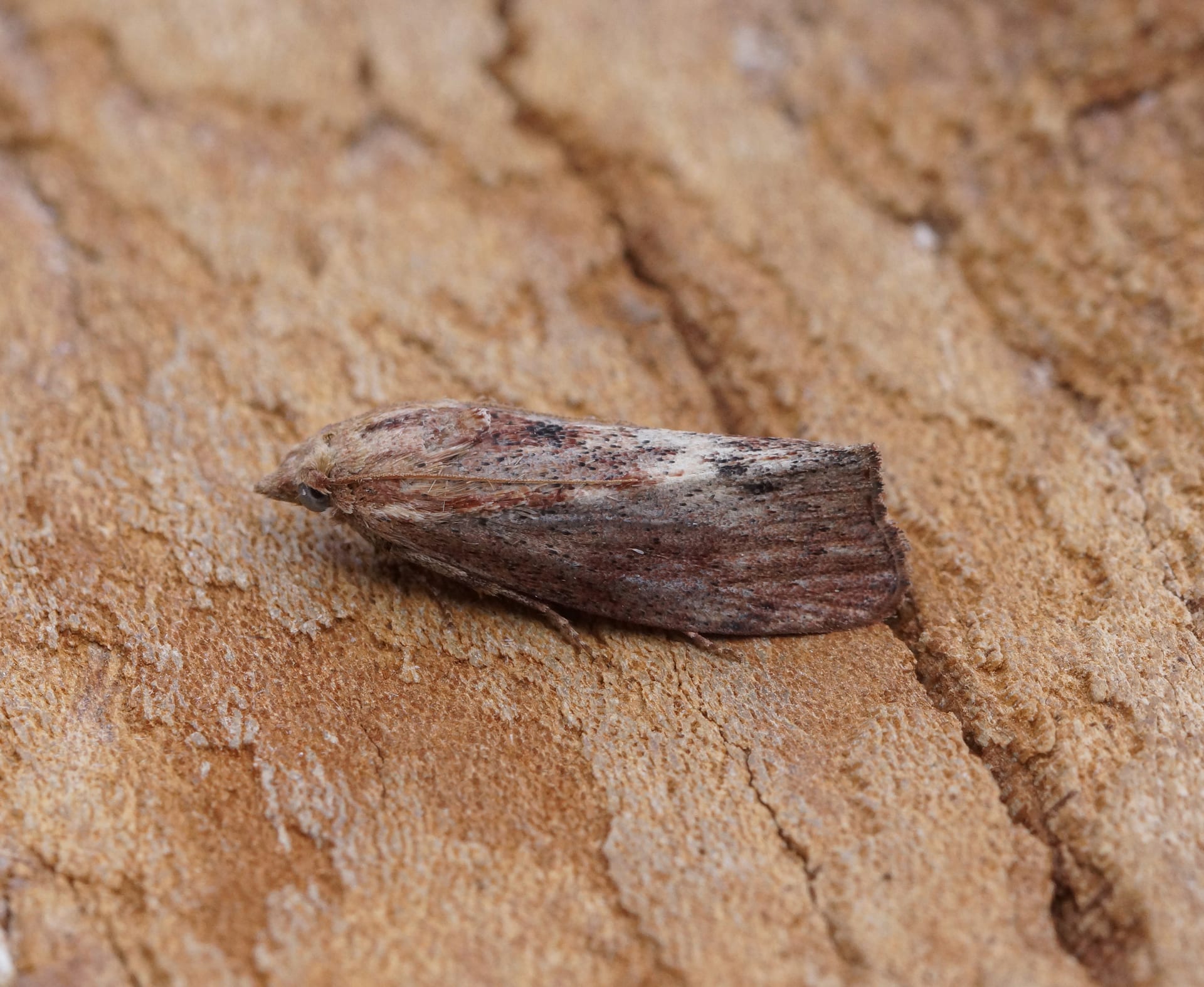
Mealworms and waxworms: Highly palatable and useful as supplementary items. Note that they are high in fat, so avoid overfeeding.
Frozen mice (pinkie or hopper): Many individuals will consume these once fully grown, but combining with insect-based diets is ideal. Relying too heavily on mice increases obesity and fatty liver disease risk; use no more than once weekly.
Feeding frequency guidelines: juveniles (hatchlings to 1 year) 3–4 times weekly; young adults (1–2 years) 2–3 times weekly; adults 1–2 times weekly. To prevent digestive upset, feed within 2–3 hours after basking, if possible.
For supplementation, lightly dust prey with calcium powder (containing vitamin D3) at every feeding. Use multivitamin supplements 1–2 times weekly, being careful not to overdose, especially with vitamins A and D.
Breeding Induction and Specimen Acquisition
Tree monitor breeding requires proper pair composition and seasonal stimulation. To induce breeding, reduce photoperiod to 11–12 hours, lower nighttime temperature slightly, and reduce misting frequency for several weeks to simulate a "dry season." Then restore conditions to simulate a "wet season." This environmental shift triggers breeding readiness.
Females will begin burrowing in the substrate before egg-laying. Watch for this signal and prepare a nesting box filled with moist vermiculite or oak chips at least 15 cm deep. A single clutch typically consists of 2–6 eggs, incubated at 28–29°C in high humidity. Incubation typically takes 160–200 days.
Domestic acquisition is increasingly dominated by CB (captive-bred) specimens. CB animals are more readily tamed, have lower parasite risk, and are better suited for long-term care; acquiring CB specimens from breeders is recommended. Key points to verify at purchase are as follows:
Verification that the individual is CB (breeding records present)
Ability to feed voluntarily (no signs of feeding refusal)
Condition of the skin, eyes, and vent (no signs of infection or parasites)
Weight appropriate for age (no excessive thinness or abdominal distension)
Information on previous husbandry conditions, temperature settings, and diet for continuity
Tree monitors are an advanced species requiring sophisticated environmental design and meticulous care. In return, their vibrant coloration and active behavior displayed in a vertical vivarium offer an unmatched husbandry experience. Setting up adequate facilities before acquiring an individual is the crucial first step to a long and rewarding relationship.