How to Choose and Set Up Thermostats and Temperature Control Equipment for Reptile Care
An explanation of the combination and setup methods for thermostats, heat panels, ceramic heaters, and basking lights essential for reptile health. We introduce tips for creating temperature gradients that even beginners can manage and points for selecting equipment without failure.
Key Takeaways
An explanation of the combination and setup methods for thermostats, heat panels, ceramic heaters, and basking lights essential for reptile health. We introduce tips for creating temperature gradients that even beginners can manage and points for selecting equipment without failure.
Related Species
Why Temperature Management is Critical for Reptiles
Reptiles are ectothermic animals and regulate their body temperature using heat from their external environment. Without proper temperature conditions, digestive function, immune function, reproductive capacity, and shedding can be compromised, leading to serious health issues.
The most important concept is the "temperature gradient." By creating a warm area (basking spot) and a cool area (cool side) within the enclosure, reptiles can perform thermoregulation—adjusting their body temperature by moving to the optimal location.
Types of Thermostats and Their Characteristics
On/Off Type (Bimetallic—Most Affordable)
A simple control method where power cuts off at the set temperature and turns back on when the temperature drops below it.
Pros: Affordable (¥1,000–3,000), simple and durable Cons: Temperature fluctuation of ±3–5℃. Can be inconvenient for certain applications Best for: Temperature control of heat panels (fluctuation is minimized), beginners unfamiliar with electronics
PWM Control Type (Pulse Width Modulation)
A method that stabilizes temperature by fine-tuning power supply levels.
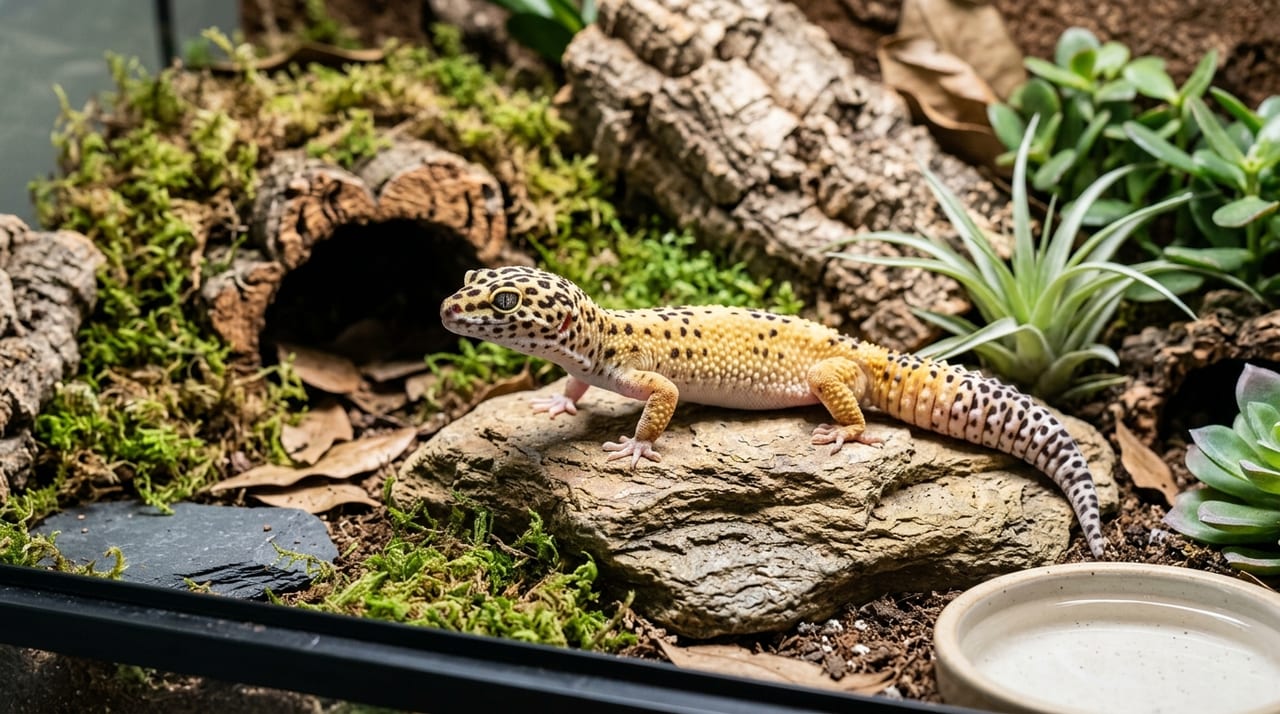
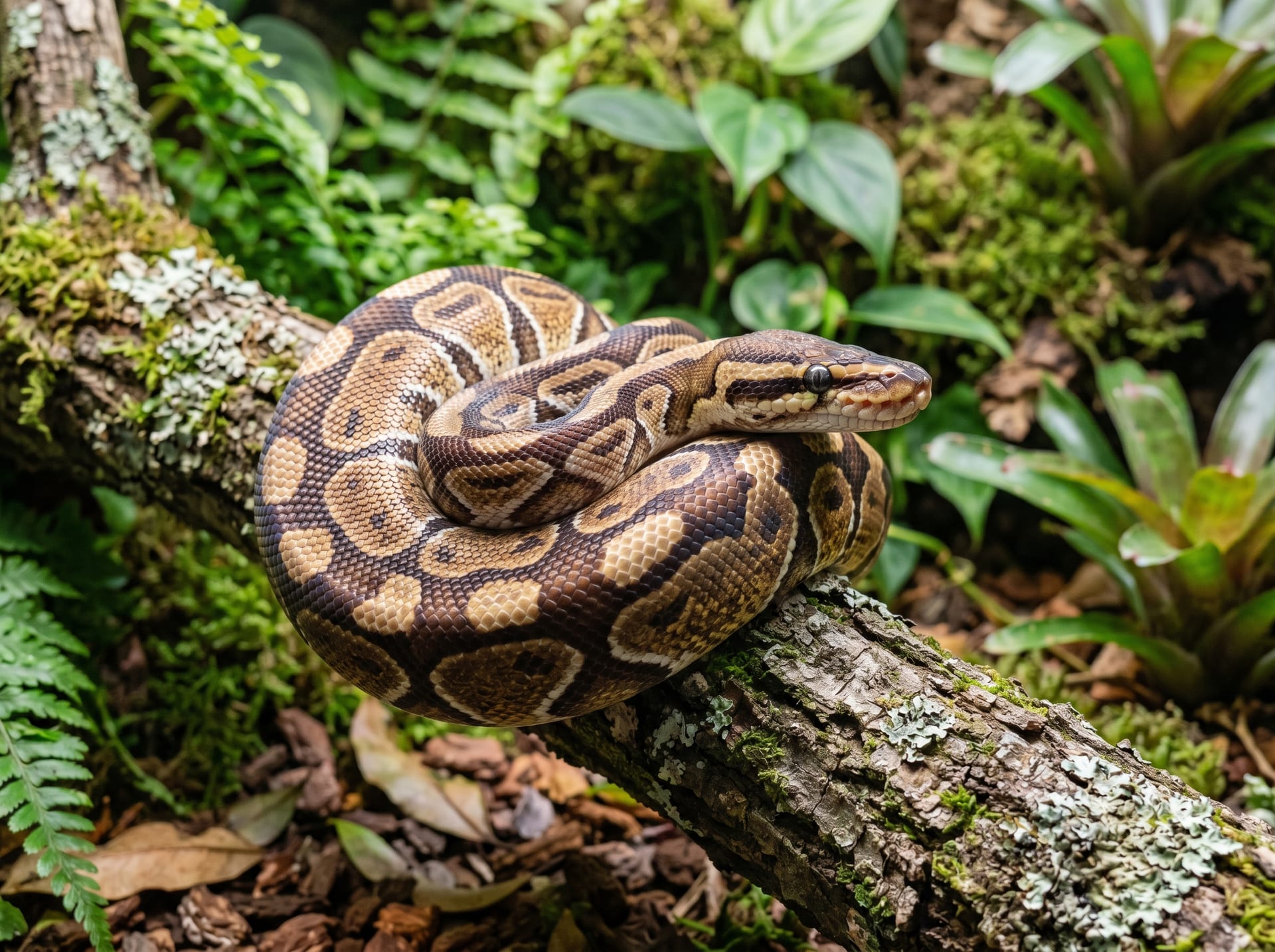
Pros: High-precision control of ±1–2℃ Cons: Moderately expensive (¥5,000–15,000) Best for: Species requiring precise temperature management, such as leopard geckos and ball pythons
PID Control Type (Highest Precision)
A high-precision type that learns temperature change patterns and uses predictive control.
Pros: Extremely high-precision control of ±0.5–1℃ Cons: Expensive (¥15,000–30,000+) Best for: Breeding management of chameleons and gecko species, incubator control
Recommended Product Examples
| Product | Type | Price Range | Use |
|---|---|---|---|
| Multi-Controller (GEX) | On/Off | ¥3,000+ | Heat panel control |
| Vivaria Multi Panel Heater w/ Thermostat | On/Off | ¥5,000+ | Convenient as a set |
| Herpstat (Imported) | PWM/PID | ¥15,000+ | High-precision management |
| Inkbird ITC-308 | On/Off | ¥3,000+ | DIY custom setups |
Types of Heating Equipment
Heat Panel (Under-Tank Heater)
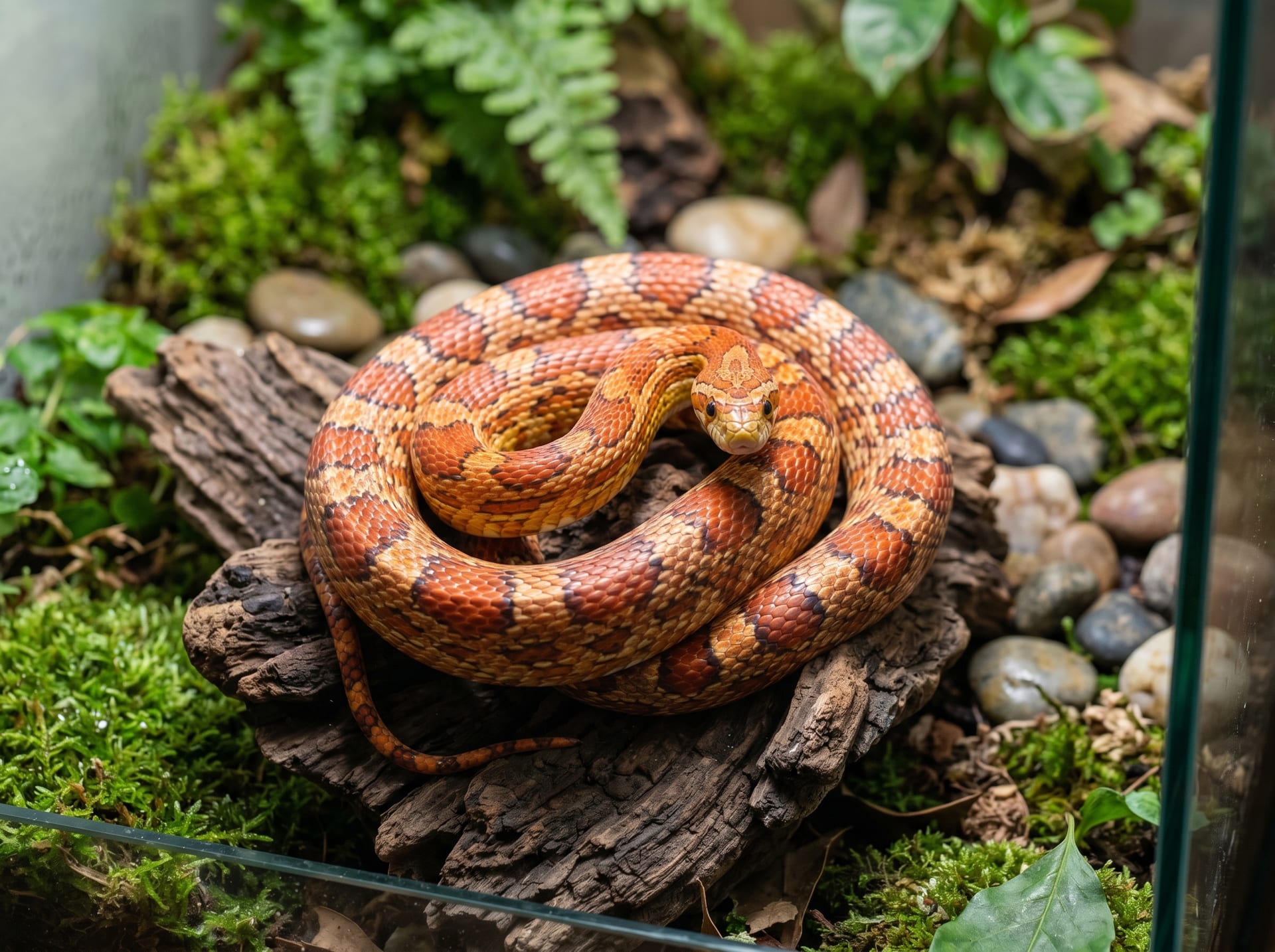
A method of heating from the ground by placing a heat panel beneath the enclosure floor. Ideal for ground-dwelling species such as leopard geckos and corn snakes.
Installation Tips
- Size the panel to cover approximately 1/3 of the enclosure floor, placed on one side
- Place spacers between the enclosure and the stand to prevent heat buildup
- Always use with a thermostat (prevents overheating)
Ceramic Heater (Infrared Emission)
A heating element that emits infrared radiation without visible light. Suitable for nighttime supplemental heating for nocturnal species.
Usage Tips
- Temperature varies depending on distance from the heat source (direct from above near the tank edge)
- A protective glass cover is essential (direct contact causes severe burns)
- Combine with thermostat control
Basking Light (Incandescent or Halogen)
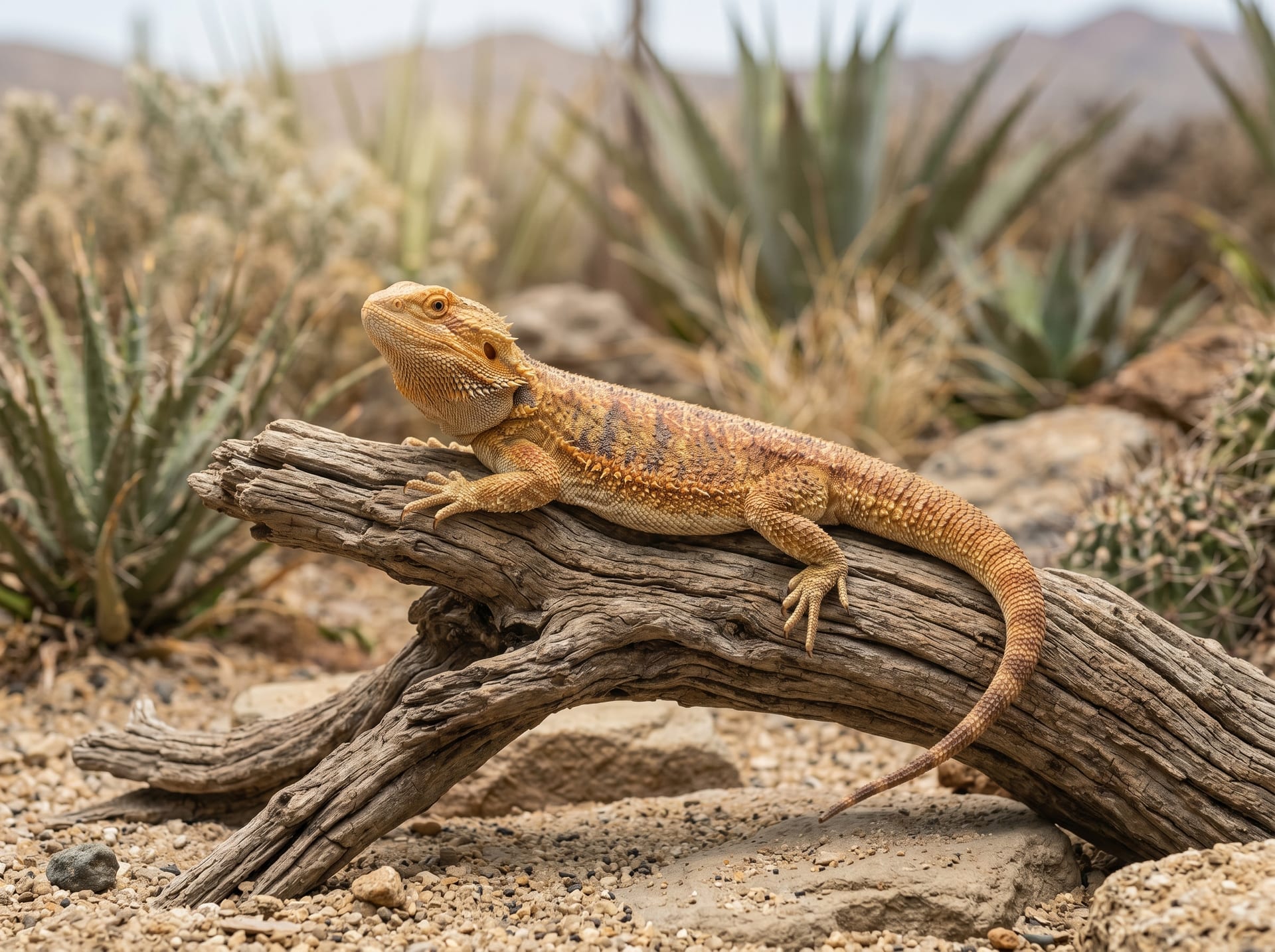
A localized heat light essential for diurnal reptiles such as bearded dragons and iguanas.
Installation Tips
- Place a rock or brick at the basking spot, positioned 20–30cm below the light
- Use a digital thermometer to measure the actual basking spot temperature and adjust accordingly (bearded dragons: 45–50℃)
- Use a timer to turn on during daylight hours only (e.g., 7am–7pm) to mimic natural light cycles
Far-Infrared Heat Panel (Wall-Mounted)
A wall-mounted heating method suitable for arboreal or climbing reptiles such as chameleons and tree-dwelling lizards.
Creating Temperature Gradients (Practical Examples)
Leopard Gecko (45×30cm or larger enclosure)
| Location | Target Temperature | Equipment |
|---|---|---|
| Basking Spot (Warm Side) | 30–32℃ | Heat Panel + Thermostat |
| Central Area | 26–28℃ | — |
| Cool Side | 22–24℃ | None (room temperature) |
During the night, it's fine to drop the entire enclosure to 20–22℃ (mimicking natural day-night temperature variation).
Bearded Dragon (120×45cm or larger enclosure)
| Location | Target Temperature | Equipment |
|---|---|---|
| Basking Spot | 45–50℃ | Basking Light |
| Warm Side (Overall) | 35–38℃ | — |
| Cool Side | 25–28℃ | — |
Placing a hide on the opposite side from the basking spot increases the reptile's ability to choose its preferred temperature.
Thermostat Setup Procedure
- Connect the heating equipment to the thermostat outlet
- Place the temperature sensor (probe) at the location to be measured (e.g., directly below the basking spot on the ground)
- Set the target temperature using the dial or digital interface
- Confirm the actual temperature with a digital thermometer (a non-contact type is convenient) and adjust for any discrepancies between the thermostat setting and actual temperature
- Monitor temperature fluctuations over 24 hours to verify stability
Common Problems and Solutions
Temperature Does Not Reach the Set Level
- The heater wattage may be insufficient. The larger the difference between room temperature and target temperature (ΔT), the higher the wattage needed
- Improve enclosure insulation (add insulation material, check lid closure)
Temperature Rises Too High
- Sensor placement is inappropriate (too close to heat source, etc.)
- Thermostat malfunction. Verify actual readings with a separate thermometer
Summary
When it comes to temperature control for reptile care, a thermostat is best upgraded in stages from "on/off type (affordable) → PWM type (high precision)" for the best cost-benefit ratio. First, research the temperature requirements of the species you're keeping, determine what type of heating equipment you need, and choose an appropriate thermostat to combine with it. Placing thermometers at multiple points to understand the actual temperature gradient in your enclosure is the key to successful reptile husbandry.