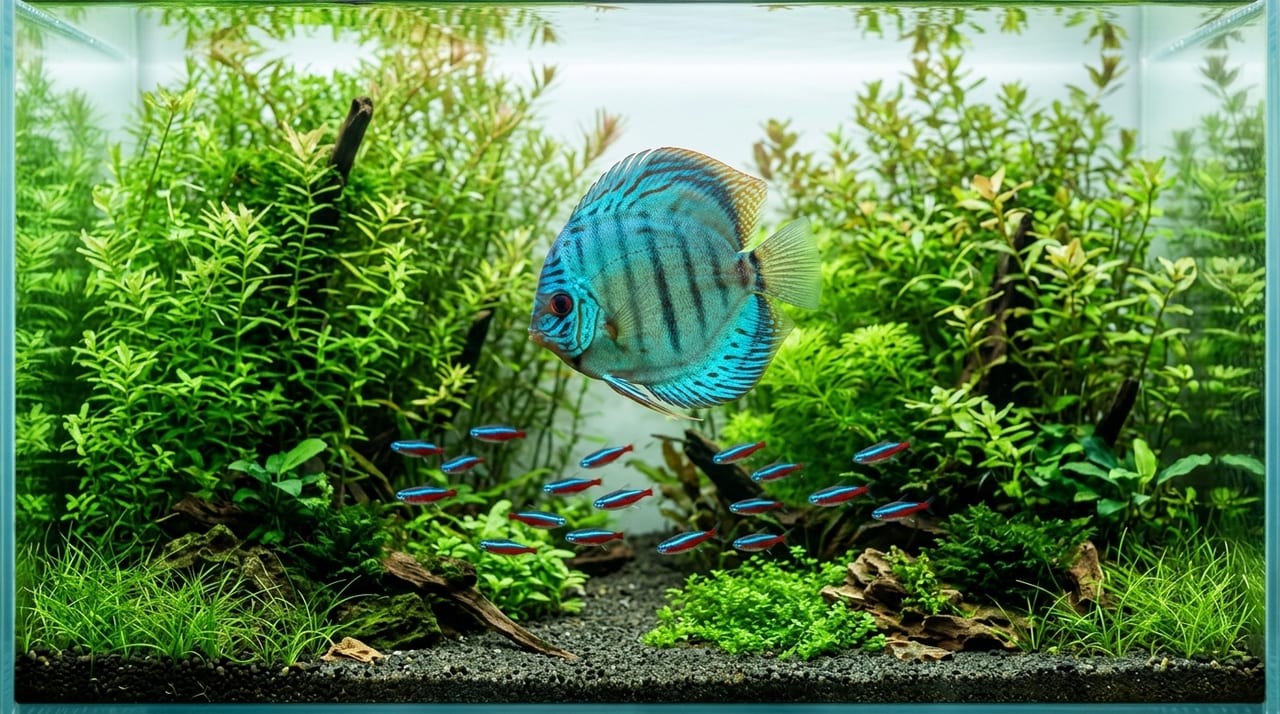
Why CO2 Dosing is Essential for Aquatic Plant Tanks
Aquatic plants grow through photosynthesis, but when CO2 (carbon dioxide) in the water is insufficient, the photosynthetic rate drops dramatically. Typical tap water contains about 5–10 mg/L of dissolved CO2, but this becomes depleted quickly during daytime hours when plants photosynthesize actively. By maintaining water CO2 concentration at 15–30 mg/L through proper dosing, aquatic plants maintain vibrant green coloration, grow vigorously, and algae proliferation is suppressed.
However, excessive CO2 dosing risks suffocation in fish. When CO2 concentration exceeds 30 mg/L, it becomes toxic to most fish and impedes oxygen uptake through their gills. Daily observation of fish behavior—particularly gulping at the surface—is essential to properly maintain appropriate CO2 levels.
Types of CO2 Dosing Systems and How to Choose
Fermentation Method (Yeast)
The most cost-effective method to begin with, this system generates CO2 from fermented liquid made by mixing sugar, yeast, and water. Initial investment runs roughly ¥500–¥1,500, making it ideal for beginners. However, CO2 output cannot be controlled, and because it continues adding gas throughout the night, careful attention must be paid to its effects on fish. This method is primarily suited for small tanks (up to 30L).
Small Cartridges (Disposable)
These products bundle a dedicated mini-cartridge with a regulator, with setup costs starting around ¥10,000. Flow control valves allow some adjustment of dosage, and timer connectivity enables synchronized on/off operation with lighting. Since cartridge replacement incurs ongoing costs, this option becomes expensive for tanks 60 cm or larger. It is ideal for medium-sized tanks (30–60L).
Large Cylinders (Refillable)
This option offers the best cost efficiency and is essential for long-term management of large tanks. A 1 kg cylinder provides enough CO2 for a standard 60 cm tank for 3–6 months. By combining a regulator, solenoid valve, and timer into a comprehensive system, precise dosing synchronized perfectly with lighting becomes possible. While initial setup costs ¥30,000–¥50,000, long-term operating costs are the lowest.
CO2 Dosage Guidelines (bubbles/second)
| Tank Size | Low Plant Density | High Plant Density |
|---|
| 30 cm (27L) | 0.5–1 bubble/sec | 1–2 bubbles/sec |
| 60 cm (65L) | 1–2 bubbles/sec | 2–3 bubbles/sec |
| 90 cm (160L) | 2–3 bubbles/sec | 3–5 bubbles/sec |
Liquid Fertilizer Fundamentals and Application
Nutrients required by aquatic plants are broadly divided into "macronutrients" and "micronutrients."
Macronutrients (NPK)
- Nitrogen (N): Leaf growth and chlorophyll maintenance
- Phosphorus (P): Root development and flowering
- Potassium (K): Cell strengthening and algae inhibition
Micronutrients
- Iron (Fe): Essential for chlorophyll synthesis. Deficiency causes iron chlorosis, turning new leaves yellow
- Manganese, zinc, boron, and others: Even slight deficiencies trigger growth disorders
In typical aquariums using aquatic soil, NPK leaches from the substrate for several months after setup, making supplemental fertilization unnecessary. However, tanks with aged soil or those using sand or gravel substrates often develop nitrogen and phosphorus deficiencies.
Apply liquid fertilizer the day after water changes or once or twice weekly. Overdosing directly causes algae blooms, so the key to success is starting at half the recommended dose and adjusting based on plant response.
Substrate Fertilizers: Application and Effects
Substrate fertilizers are embedded into the substrate and absorbed through the roots of stem plants and rosette-type plants. Unlike liquid fertilizers that diffuse throughout the water column, substrate fertilizers concentrate nutrients at the plant base.
Initial Setup Fertilization (Base Fertilizer)
This method involves laying powder or solid fertilizer at the substrate bottom before adding soil, providing nutrients over an extended period (6–12 months). Products like ADA's Power Sand and Jun's Platinum Soil Base fall into this category.
Top-Dressing (Insert-Type)
When nutrients become depleted after setup, solid fertilizers (stick or tablet form) are pushed into the substrate near plant roots by hand. Products like Initial Sticks and Flourish Tablets are well-known, typically applied once every 3–4 months.
Most substrate fertilizers contain high phosphorus levels, and excess can trigger algae growth (particularly cyanobacteria and brush algae). Avoid heavy fertilization when plants are not yet densely established.
Achieving Symbiotic Balance Between Fish and Aquatic Plants
Fish waste contains ammonia and nitrite, which ultimately accumulate as nitrate. Since aquatic plants utilize nitrate as a nitrogen source, an appropriate fish bioload benefits plants.
Common problem patterns include:
- Overstocked fish + sparse plants: Excess nutrients cause algae blooms
- Few fish + densely planted: Nitrogen and phosphorus deficiency causes plant yellowing and stunted growth
- Excessive CO2 + no nighttime aeration: Risk of fish suffocation
As a guideline for balance, aim for "plant leaves releasing fine bubbles (pearling) in the water—a sign of vigorous photosynthesis." If this state persists for several hours during the day, it indicates that all three elements—CO2, light, and fertilization—are properly balanced.
Secure fish safety by stopping CO2 dosing at night (automated via solenoid valve and timer) and running aeration. This three-way synchronized timer management of lighting, CO2, and aeration is the most critical factor in successfully maintaining both tropical fish and aquatic plants.
Summary: Avoiding Failure Through Gradual Implementation
The golden rule for aquatic plant tank fertilization and CO2 management is to "start low and observe." If algae appears, reduce dosage; if plants yellow, increase it—this iterative adjustment is the fastest path to mastery.
Starting with fermentation-based CO2, then transitioning to a large cylinder system after learning plant responses is the approach with the fewest failures and makes the most sense economically long-term. Prioritize fish health while striving for the beautiful sight of plants pearling.