Solo-Housed Parrot Behavioral Problems Guide | Solutions for Excessive Vocalization, Chewing, and Aggression
Solo-Housed Parrot Behavioral Problems Guide。Background: Why Solo-Housed Parrots Develop "Problem Behaviors" Parrots are highly social birds that live in…
Key Takeaways
Solo-Housed Parrot Behavioral Problems Guide。Background: Why Solo-Housed Parrots Develop "Problem Behaviors" Parrots are highly social birds that live in…
Background: Why Solo-Housed Parrots Develop "Problem Behaviors"
Parrots are highly social birds that live in flocks in the wild, constantly calling and communicating with their companions. In nature, they rarely spend time alone and are continuously aware of their flock mates' presence. When kept alone despite this instinct, they develop an excessive dependence on their owner, and frustration manifests in behavioral problems.
However, it's important to note that vocalization, chewing, and biting are all "normal behaviors for parrots." The issue arises when the frequency or intensity of these behaviors disrupts daily life. With proper understanding of the underlying causes, most cases can be improved.
Excessive Vocalization: Causes and Solutions
Why They Won't Stop Calling
The most common reason for excessive vocalization in solo-housed parrots is "contact calling." In the wild, it's an instinctive behavior where separated flock members call to each other; pet parrots continue calling when their owner leaves their sight, feeling that their "companion" has disappeared. Other causes include boredom, hunger, fear, hormonal changes, and poor health, which may occur simultaneously.
Improvement Tips
Ignoring the behavior with consistent timing is key. Rushing to respond when they call teaches them "calling brings attention," actually reinforcing the behavior. Conversely, completely ignoring them increases stress. The following approaches are more effective:
- Brief responses to contact calls: Instead of appearing in view, respond from another room with a voice saying something like "I'm here." The parrot may be satisfied knowing their companion has answered and stop calling.
- Reward quiet moments: Give treats or verbal praise when they are quiet, teaching them that "being quiet leads to good things."
- Reconsider cage placement: Placing it where they can see your daily movements provides reassurance without requiring vocalization. However, avoid high-traffic areas that cause overstimulation; a corner of the room or similarly calm location is ideal.
- Establish routines and increase stimulation: Creating a consistent daily play schedule helps them learn to wait at other times.
Chewing Behavior: Causes and Solutions
Chewing Is a Natural Instinct, Not Misbehavior
Parrot beaks continuously grow, so in the wild they maintain them by chewing on branches and seeds. Chewing serves three purposes: beak maintenance, nesting instinct expression, and exploratory curiosity. Trying to stop chewing altogether goes against their natural instincts and is unreasonable.
Solution: Direct Chewing to Appropriate Objects
The solution isn't preventing chewing but rather directing it toward appropriate objects:
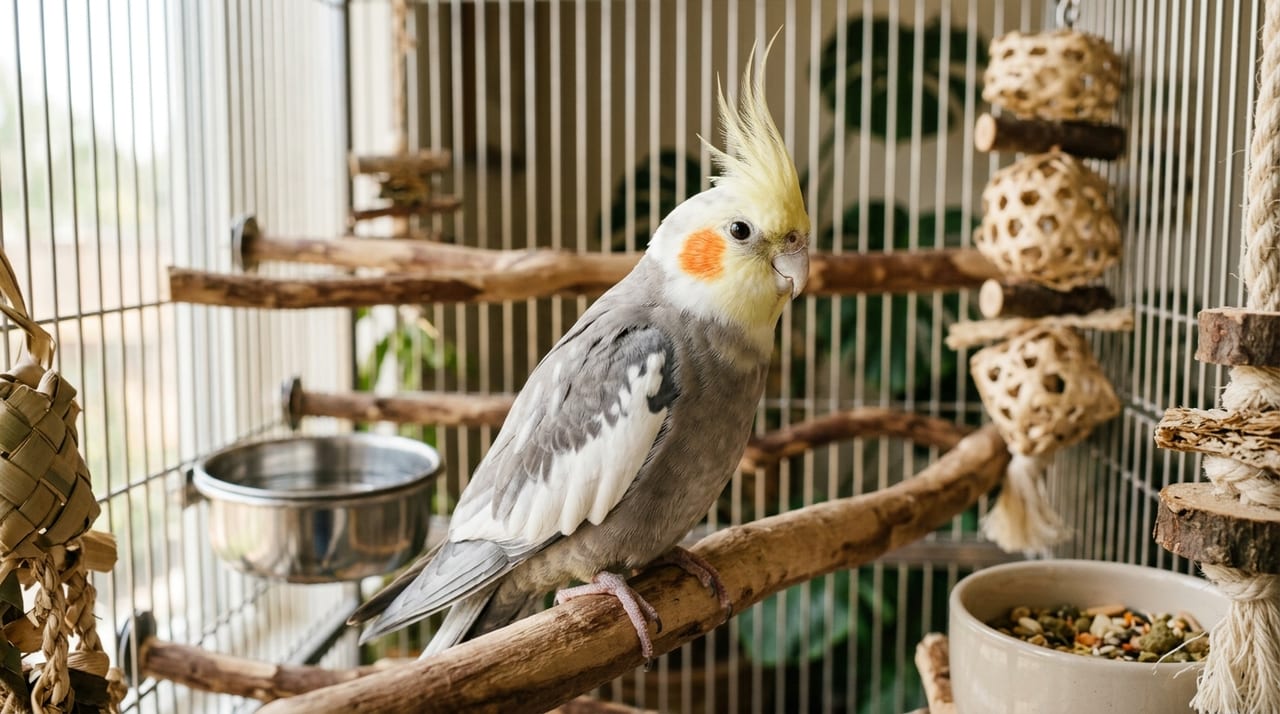
- Regularly rotate wooden toys: When bored with the same toy, they'll turn to furniture and wires. Rotating different materials like clay, cork, willow, and birch weekly maintains their interest.
- Introduce foraging games: Hide treats in toys or folded paper and let them chew to extract them. This mimics natural foraging and effectively combats boredom.
- Prevent access to off-limit items: Protect wires with covers and remove furniture from sight. Environmental management is faster than punishment.
- Never leave them unattended during free-flight time: While flying freely is important, unsupervised chewing is dangerous (lead-based paint, electrical hazards). Allow out-of-cage time only in verified safe spaces.
Aggression (Biting): Causes and Solutions
Biting Has a Message
Biting always has a signal behind it. It's a last warning meaning "don't touch me," "I'm scared," "I'm protecting my territory," or "I'm hormonally excited." Usually, there are warning signs beforehand: feather fluffing, pupil constriction (pinning), or low growling sounds. Learning to read these signals allows you to intervene before being bitten.
Rebuilding Trust Is the Priority
When aggression is elevated, start by reducing pressure rather than forcing interaction:
- Return to basic step-up training: Offer your hand with the "step up" command and immediately reward when they comply. Repeated positive experiences of choosing to step up reduce fear and tension around your hand.
- Reduce stimulation during breeding season: Aggression increases when hormonal. Removing mirrors and nesting boxes, and adjusting light to natural levels (10-12 hours daily) can help stabilize hormones.
- Avoid punishment: Yelling or restraining the beak increases fear and worsens aggression. Even if painful, stay calm and quietly remove your hand.
- Reduce cage territoriality: Increase out-of-cage interaction time to prevent them from viewing the cage as a territory to defend.
Preventing Problems Through Environmental Enrichment
Most behavioral problems stem from boredom and frustration. Daily environmental enrichment is a more effective prevention strategy than dealing with problems after they develop.
Ensuring daily out-of-cage time is most important. Allow at least 1-2 hours daily in a safe space where they can move freely. Actively talking and playing during this time deepens your bond with your parrot.
Toy rotation is essential. Parrots quickly tire of the same toys. Keep 5-6 toy types on hand and swap 1-2 weekly to maintain curiosity about "new" items.
Music and radio also help reduce loneliness. Many owners report reduced excessive vocalization when soft music or nature sounds play while they're away. However, avoid loud volume; keep it at a level where conversation is still audible.
If Improvement Seems Difficult
If no improvement appears after weeks of attempting the above, or if aggression suddenly increases or they become unexpectedly quiet, underlying health issues may be present. Parrots instinctively hide weakness, so behavioral changes often signal early illness. I strongly recommend consulting an avian veterinarian as soon as possible.
Behavioral problems won't resolve overnight, but by empathetically and patiently working with your parrot, the relationship will surely improve. Take your time and enjoy the small daily improvements along the way.