Japanese House Gecko Care Guide | Vertical Cage, Temperature/Humidity, Cricket Feeding Basics
Complete guide to caring for the Japanese House Gecko (*Gekko japonicus*), a native Japanese species. This guide covers enclosure setup with vertical tanks, temperature maintenance of 24–28°C, humidity levels of 50–70%, cricket feeding with calcium dusting, breeding and egg management, and solutions for common issues like shedding problems and cryptosporidium infection.
Key Takeaways
Complete guide to caring for the Japanese House Gecko (*Gekko japonicus*), a native Japanese species. This guide covers enclosure setup with vertical tanks, temperature maintenance of 24–28°C, humidity levels of 50–70%, cricket feeding with calcium dusting, breeding and egg management, and solutions for common issues like shedding problems and cryptosporidium infection.
Related Species
Japanese House Gecko Overview
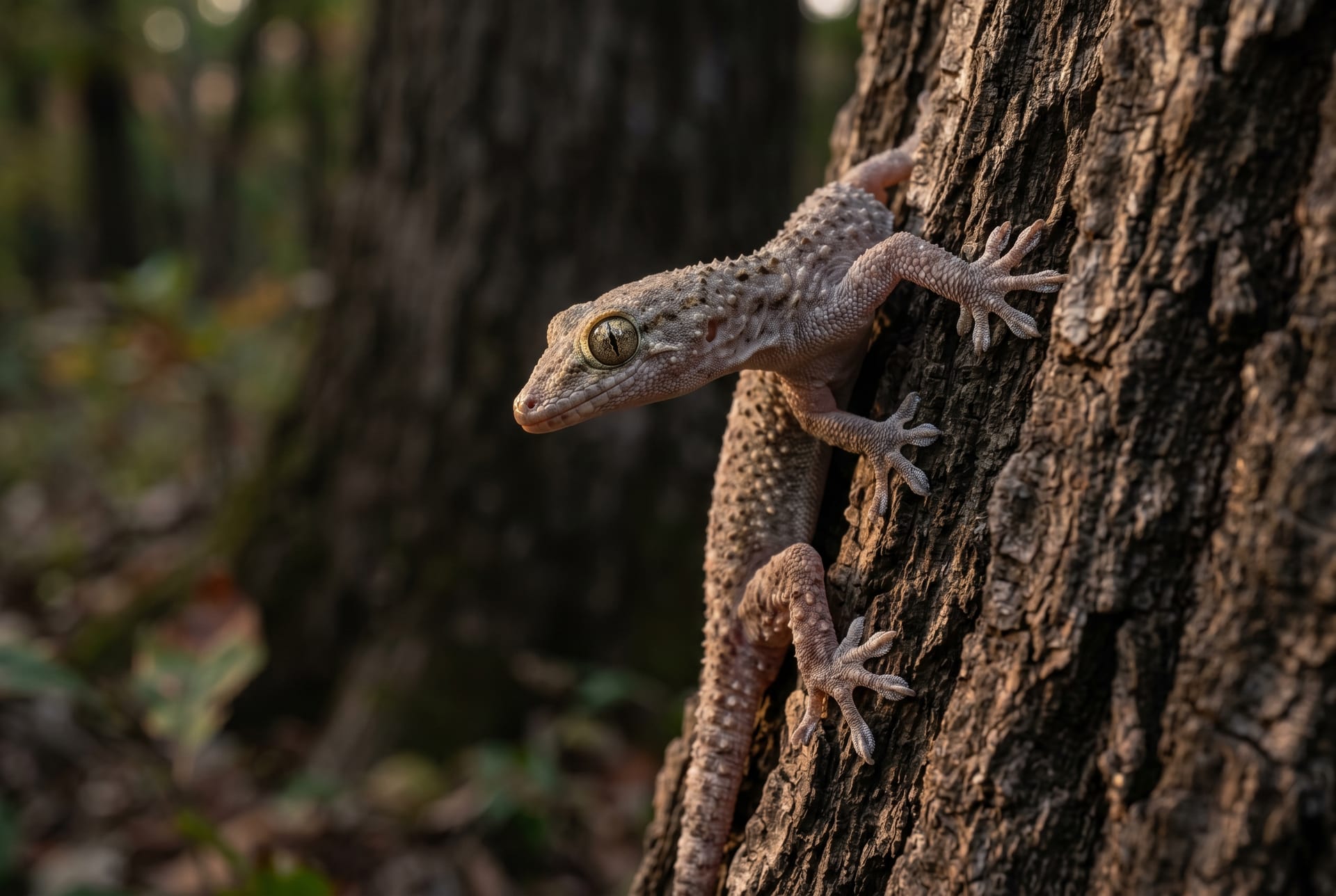
The Japanese House Gecko (Gekko japonicus) is an endemic Japanese species distributed widely across Honshu, Shikoku, and Kyushu. With a compact body length of 10–14 cm (including tail), they're a familiar sight to Japanese people during summer nights, clinging to exterior walls and window panes to wait for insects.
Japanese House Gecko Characteristics
- Fingertips feature fine hair-like structures called "subdigital lamellae," allowing them to freely climb glass and walls
- Nocturnal and insectivorous (feeding on moths, mosquitoes, and other flying insects)
- Tail autotomy (like other lizards, they detach their tails when threatened)
- Vocalizations: They produce distinctive "kek, kek" calls for communication
- Color change: Body color becomes lighter or darker depending on wall color and light intensity
Legal Status
As a native species, Japanese House Geckos are neither designated invasive species nor natural monuments, so no permit is required to keep them. However, if collecting wild individuals, it's advisable to confirm with the landowner of the collection site.
Enclosure Setup
Cage Size and Shape
Since Japanese House Geckos prefer vertical surfaces, tall vertical enclosures are ideal.
- Minimum recommended size: 30 cm × 30 cm × 45 cm (H)
- For 2–3 individuals: 45 cm × 45 cm × 60 cm (H)
- Front-opening reptile enclosures (Exo Terra, GEX Exoterra, etc.) are easier to manage
- Mesh screen top: Provides ventilation while preventing escape
- Glass or acrylic: Plastic scratches easily and obscures observation
Substrate (Bedding)
- Husk chips or coconut husk: High moisture retention and replicates natural environment
- Paper towels: Hygienic and easy to maintain (good for beginners and treatment enclosures)
- Sand and fine gravel are not recommended due to impaction risk
Temperature and Humidity Management
Since Japanese House Geckos originate from temperate regions, they don't require the high temperatures needed by tropical geckos.
| Item | Recommended |
|---|---|
| Daytime temperature | 24–28°C |
| Nighttime temperature | 18–24°C |
| Winter temperature | Can allow natural drop (hibernation-compatible) |
| Humidity | 50–70% |
Heating: Use a heating panel on the outside of the cage's side wall or a small under-tank heater. UVB lighting is not essential since they're nocturnal, but providing dim light and a consistent day-night cycle enhances activity levels.
Humidity maintenance: Mist the substrate and walls nightly (1–2 times daily). Japanese House Geckos obtain water by licking droplets on surfaces, making misting walls essential (many don't use water bowls).
Layout and Hides
- Cork bark, natural bark, and artificial caves (Exo Terra Caves, etc.): Essential hides
- Driftwood and branches: Provide vertical climbing space
- Artificial or live plants (pothos, etc.): Help maintain humidity and create a natural environment
- Installing suction-cup leaf-shaped hides on the wall creates an environment suited to their wall-climbing nature
Feeding and Diet
Main Foods
Japanese House Geckos are insectivores that actively hunt live prey.
- Crickets (European house cricket, two-spotted cricket): The most readily available and nutritionally balanced staple. Choose sizes S–M to match their head size.
- Fruit flies (flightless): Suitable for smaller individuals and juveniles.
- Mealworms and waxworms (standard and giant): Highly palatable but fatty; offer as supplementary food 1–2 times weekly.
- Honey worms (bee larvae): High-calorie and very palatable; effective for recovery and post-breeding females. However, constant feeding causes obesity.
Wild-caught prey: Small moths, crickets, and roach nymphs collected from gardens during summer can be fed, but only if collected from pesticide-free areas due to contamination risks.
Feeding Frequency
- Adults (1+ years old): Once every 2–3 days, approximately 2–4 crickets per feeding.
- Juveniles/growing: Daily to once every 2 days (growth requires more nutrition).
Supplements
As with all insectivorous reptiles, calcium and vitamin D3 supplementation is crucial.
- Calcium powder: Dust prey items every feeding.
- Multivitamin: Dust with vitamin powder 1–2 times weekly.
- Calcium deficiency leads to metabolic bone disease (MBD).
Hydration
Geckos obtain water by licking droplets on cage walls. Since most won't use water bowls, mist walls and plants nightly to provide drinking water.
Breeding and Egg Management
Japanese House Geckos breed in spring to summer (April–August), and natural breeding may occur if a pair is housed together.
Egg Characteristics
- Females lay hard, white eggs in pairs (gecko eggs are calcareous, not leathery).
- Eggs are laid in hidden places like wall crevices or under cork bark.
- Incubation period: 60–90 days (varies with temperature).
If Incubating Eggs
- Do not move eggs from where they were laid (moving them can cause orientation loss and mortality).
- Place eggs in an incubation box with moistened vermiculite at approximately 28°C.
- Hatchlings begin feeding 1–2 days after hatching on fruit flies and pinhead crickets.
Common Health Issues
Shedding problems: Insufficient humidity prevents proper shedding, leaving old skin on digits. Increase misting and gently remove retained skin with a cotton swab soaked in warm water.
Cryptosporidium infection (crypto): Parasitic gastrointestinal disease marked by weight loss and appetite loss. Hard to treat; quarantining new individuals is essential.
Injuries and nose-rubbing: Rubbing against cage walls or lids, damaging the snout. Usually caused by inadequate space or stress.
Regrown tail: Regenerated tails consist of cartilage and look different from the original, but function normally.
Living with Japanese House Geckos
While some Japanese House Geckos may become hand-tame with acclimation, they're fundamentally "observational pets." They dislike sudden movements and drop their tails when stressed, so minimize handling.
Since they're most active at night, observing and feeding them in the evening to night aligns best with their natural rhythm. As a familiar native Japanese reptile, treasure the joy of observing Japanese House Geckos' natural behavior.