How to Keep Japanese Five-Lined Skinks, Grass Lizards, and House Geckos | Raising Japan's Native Reptiles in Natural-Like Environments | ブリちょく
Reptiles| ✍️ BreederDirect Editorial
How to Keep Japanese Five-Lined Skinks, Grass Lizards, and House Geckos | Raising Japan's Native Reptiles in Natural-Like Environments
A detailed guide to Japanese native reptiles—Japanese five-lined skinks, grass lizards, and house geckos—covering capture, husbandry, feeding, and overwintering. We provide accurate care information with an awareness of native species conservation.
Key Takeaways
A detailed guide to Japanese native reptiles—Japanese five-lined skinks, grass lizards, and house geckos—covering capture, husbandry, feeding, and overwintering. We provide accurate care information with an awareness of native species conservation.
Related Species
The Appeal of Keeping Japan's Native Reptiles
While exotic pets often grab attention, keeping Japan's native reptiles offers unique appeal. Japanese five-lined skinks, grass lizards, and house geckos are nostalgic creatures many remember seeing in parks and gardens as children, and they are hardy species well-adapted to Japan's climate.
Benefits of Keeping Native Species:
- Management suited to Japan's climate (relatively low heating costs)
- Live prey can be collected from the wild
- You can learn about ecology and behavior while observing wild nature nearby
- Serves as an opportunity for nature conservation and environmental education
However, care is necessary when collecting from the wild. As a rule, specimens should be returned to their original location after collection, and if long-term keeping is intended, consideration must be given to minimizing impact on the local ecosystem.
---
Japanese Five-Lined Skink (Plestiodon japonicus)
Basic Information
Item
Details
Full Length
15–27 cm (including tail)
Habitat
Honshu, Shikoku, and Kyushu (lowlands to mountains)
Activity
Diurnal
Diet
Carnivorous (insects, spiders, earthworms, etc.)
✍️
BreederDirect Editorial
The BreederDirect editorial team specializes in care information for animals, covering veterinary care and breeding to deliver beginner-friendly guides.
Find Reptiles on BreederDirect
Buy directly from verified breeders
Browse Related Listings
Find Reptiles listings related to this article on BreederDirect. Buy directly from verified breeders.
Enclosure
A horizontal enclosure 60–90 cm or larger is recommended. Space is important since they are active. A tight-fitting lid without gaps is necessary to prevent escape.
Substrate
A mixture of leaf mold, red soil, and coconut husk is ideal. Since Japanese five-lined skinks burrow into soil, provide substrate at least 10 cm deep.
Temperature and Lighting
- Daytime: 25–30°C (basking spot 32–35°C)
- Nighttime: 18–22°C
- UVB lighting: essential (needed for vitamin D3 synthesis via ultraviolet radiation)
Creating a temperature gradient with a warm basking area and cooler refuge is important.
Humidity
Around 40–60%. Create a moist area near hides by misting.
Feeding
Crickets, dubias, mealworms, weevils, and moths are staple foods. Wild-collected insects (sowbugs, spiders, grasshoppers) can also be used, but avoid insects from areas where pesticides may have been applied.
Feed juveniles daily and adults every 2–3 days. Supplement with calcium powder dusting 2–3 times per week.
Overwintering (Cooling)
Japanese five-lined skinks undergo low-temperature dormancy (brumation) in winter. If managed seasonally, gradually lower the temperature from November (around 12–15°C), stop feeding, and allow them to rest. They naturally awaken in April–May.
Year-round consistent indoor temperatures are possible, but cooling is necessary if breeding is intended.
---
Japanese Grass Lizard (Takydromus tachydromoides)
Basic Information
Item
Details
Full Length
16–27 cm (tail is very long)
Habitat
Grasslands and forest edges throughout Japan
Activity
Diurnal
Diet
Carnivorous (small insects, spiders, etc.)
Distinctive Features
Slender body and long tail, common in grasslands
Grass lizards are slimmer than five-lined skinks with rough scales. They have gentle dispositions and tame easily, making them popular as a beginner species.
Husbandry
Enclosure
A 45–60 cm horizontal enclosure is suitable. Since they prefer vertical movement, branch and plant layouts are effective.
Substrate
A mixture of leaf mold, coconut husk, and wood chips. Since they burrow less, 5–7 cm is sufficient.
Temperature and Lighting
- Daytime: 24–28°C (basking spot 30–33°C)
- Nighttime: 15–20°C
- UVB lighting: essential
Layout
Using abundant live plants (pothos, Boston ferns, etc.) and branches with plenty of hides reduces stress.
Feeding
Small crickets, fruit flies, woodlice, and small spiders are staple foods. Since grass lizards prefer small live prey, proper sizing is important.
Calcium and Vitamin Supplementation
Dusting with calcium powder (containing D3) is essential to prevent metabolic bone disease. Apply to feeder insects 2–3 times per week.
Taming
Grass lizards initially are wary and attempt to escape. By slowly approaching your hand daily and repeatedly feeding them from your hand, they may become hand-tame in weeks to months. Patience and respecting the individual's pace are key.
---
Japanese House Gecko (Gekko japonicus)
Basic Information
Item
Details
Full Length
10–14 cm
Habitat
Honshu, Shikoku, and Kyushu (common around residences)
Activity
Nocturnal
Diet
Carnivorous (insects, spiders, etc.)
Distinctive Features
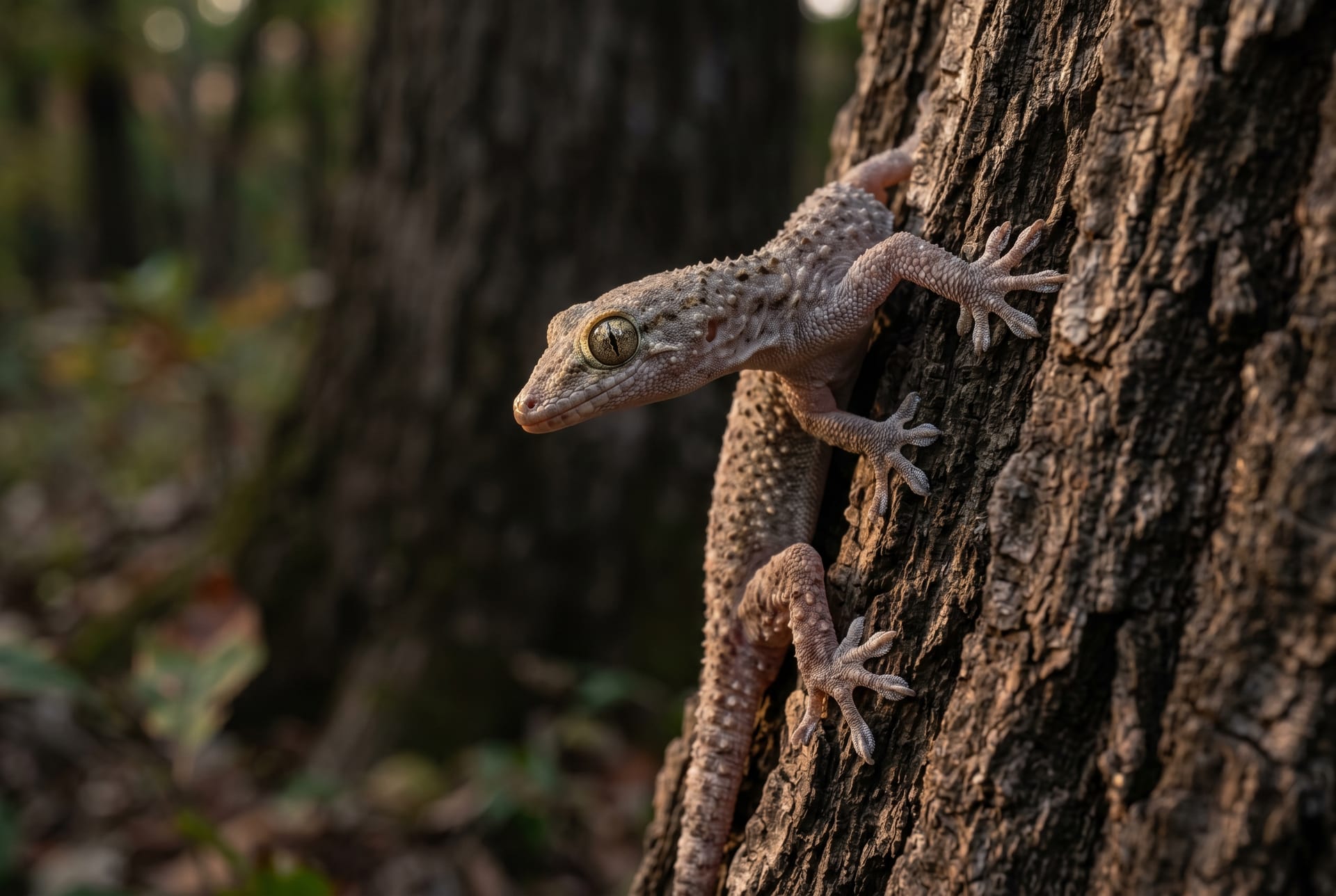
Toe pads allow them to cling to walls and ceilings
Since Japanese house geckos are nocturnal, they hide during the day. They have long been familiar as beneficial animals, eating insects attracted to house lights.
Husbandry
Enclosure
Since they climb walls, a tall (vertical) enclosure is suitable. 30×30×45 cm or larger is recommended. A lid that balances ventilation with security is necessary to prevent escape.
Temperature and Lighting
- Daytime: 22–28°C
- Nighttime: 18–22°C
- UVB lighting is not essential due to their nocturnal nature, but weak UVB is beneficial for overall health
- Use red or dim lamps for nighttime observation without disturbing activity
Humidity
50–70%. Misting walls provides hydration opportunities. Since geckos rarely drink from bowls, misting often becomes the primary water source.
Feeding
Small crickets, fruit flies, and mealworms are staple foods. Since they are active in the evening and at night, feeding is done in the evening or nighttime.
Layout
Position cork bark, driftwood, and stones vertically to create abundant hiding places. While multiple geckos can be kept together, compatibility varies between individuals, so careful observation is needed.
---
General Precautions
Returning to Nature and Collection Guidelines
Releasing wild-caught individuals back to nature after long-term captivity is prohibited in principle due to risks of disease introduction and genetic contamination. Once you begin keeping a specimen, commit to lifetime care.
When collecting, also:
- Check the protection status of collection sites (collecting in protected areas is prohibited)
- Avoid breeding season (May–July)
- Do not collect many specimens from a single location (prevents local population decline)
Common Health Management
Metabolic Bone Disease (MBD)
Skeletal deformity caused by calcium and vitamin D3 deficiency. Prevent with UVB lighting and calcium dusting.
Improper Shedding
When shedding cannot be completed due to low humidity, provide a humidity bath in lukewarm water (30–35°C) for 5–10 minutes to aid shedding.
Mouth Rot (Stomatitis)
Bacterial infection with redness around the mouth and pus discharge. Consult a reptile veterinarian before it progresses.
---
Summary: Living with Japan's Reptiles
Japanese five-lined skinks, grass lizards, and house geckos are domestic reptiles that can be kept without specialized equipment. However, the basics—UVB lighting, proper temperature management, and live prey availability—must be maintained.
Key Points for Care:
- Support vitamin D3 synthesis with UVB lighting
- Create a temperature gradient (warm and cool areas)
- Prevent metabolic bone disease with calcium dusting
- Manage overwintering based on species and individual condition
As a gateway to Japan's familiar nature, enjoy keeping native reptiles with care.