Creating a Nano Fish Community Tank | Care Guide for Scarlet Gem, Espei, and Dwarf Pufferfish
Learn how to set up a small mixed-species aquarium using nano fish such as Scarlet Gem, Espei, Harlequin Rasbora, and Dwarf Pufferfish. This practical guide covers tank size and equipment selection, species-specific water quality requirements, feeding and compatibility, and key points for enjoying breeding.
Key Takeaways
Learn how to set up a small mixed-species aquarium using nano fish such as Scarlet Gem, Espei, Harlequin Rasbora, and Dwarf Pufferfish. This practical guide covers tank size and equipment selection, species-specific water quality requirements, feeding and compatibility, and key points for enjoying breeding.
What Are Nano Fish?
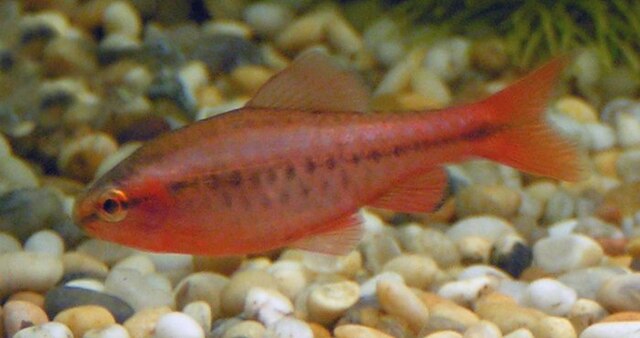
Nano fish is a general term for extremely small tropical fish with an adult body length of approximately 3cm or less. Representative nano fish species include Scarlet Gem (Dario dario), Espei (Trigonostigma espei), Harlequin Rasbora (Trigonostigma heteromorpha), Cherry Barb (Puntius titteya), and Dwarf Pufferfish (Carinotetraodon travancoricus).
✍️
BreederDirect Editorial
The BreederDirect editorial team specializes in care information for animals, covering veterinary care and breeding to deliver beginner-friendly guides.
Find Tropical Fish on BreederDirect
Buy directly from verified breeders
Browse Related Listings
Find Tropical Fish listings related to this article on BreederDirect. Buy directly from verified breeders.
Related Tools
Related Articles
Browse by Category
🪸Coral
🐠Marine Fish
🐟Tropical Fish
🐡Goldfish
🐟Medaka
🦎Reptiles
Share
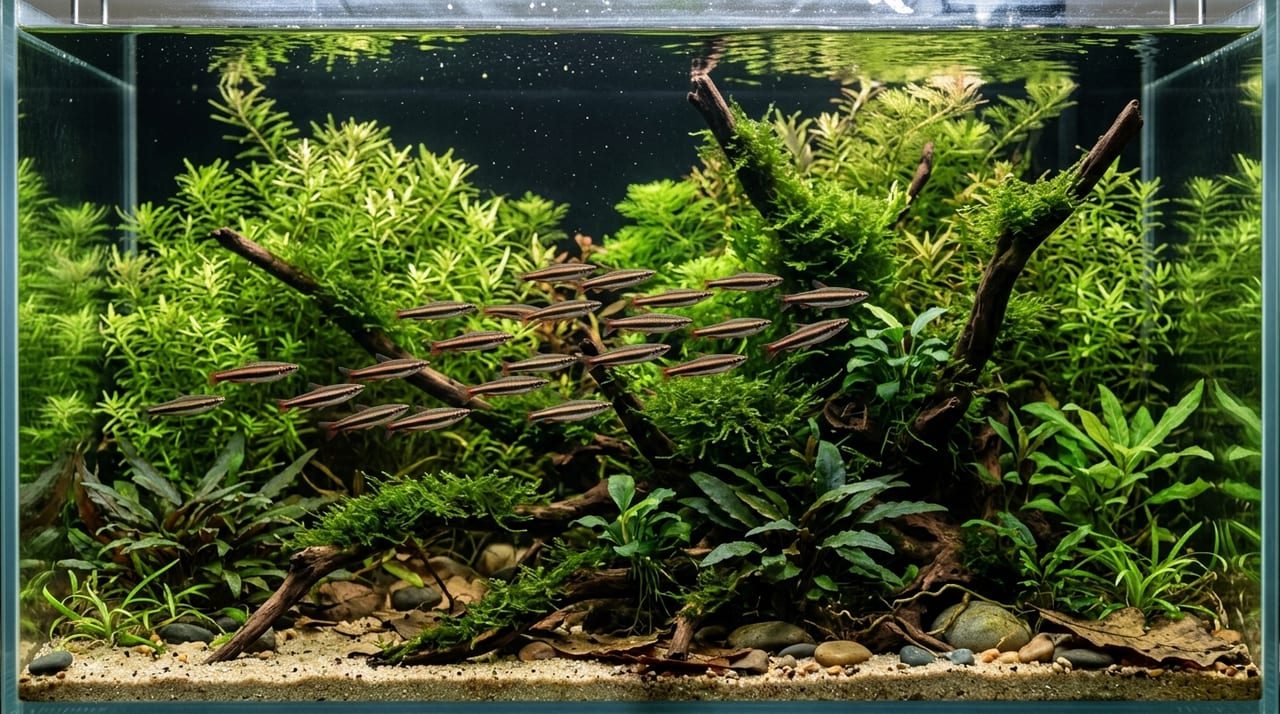
They are popular because they allow impressive schooling displays even in small tanks, make multi-species compatibility relatively easy to achieve, and concentrate observation enjoyment into a compact space.
Benefits of Nano Fish Tanks
Create a rich schooling layout even in 30–45cm tanks
Manageable with minimal water changes and small feeding amounts (low cost)
Excellent compatibility with aquatic plants (small species scale perfectly with plants)
Many species are easy to breed, making aquarium breeding enjoyable
Basic Nano Fish Tank Setup
Choosing Tank Size
Tank Size
Recommended Nano Fish
Features
20cm Cube
10–20 fish
Ultra-minimal, fits on a desk
30cm
20–40 fish
Standard nano fish tank
45cm
40–80 fish
Suited for multi-species and planted layouts
60cm
80–150 fish
Allows large schooling displays
For beginners, 30–45cm tanks are recommended for ease of maintenance. Tanks 20cm or smaller can actually increase trimming and water quality management costs.
Essential Equipment
Filters
Hang-on filters and sponge filters are standard for nano tanks.
Hang-on Filter: Choose one with water flow adjustment (strong currents sweep around small fish)
Sponge Filter: Ideal for breeding and fry tanks (prevents intake accidents)
Undergravel Filter: Paired with substrate, promotes bacterial colonization
Setting water flow to low is important. Species like Scarlet Gem from slow-flowing streams become stressed by strong currents.
Lighting
LED lighting is necessary if you include aquatic plants. Many small LED fixtures are available for nano tanks. Lighting requirements vary by plant type, but for low-light plants without CO₂ (such as Anubias nana and Microsorum) modest lighting is sufficient.
Heater
Use a small heater for nano tanks (fixed at 26°C for convenience). Most nano fish thrive at 26–28°C.
Characteristics and Compatibility of Popular Nano Fish
Scarlet Gem (Dario dario)
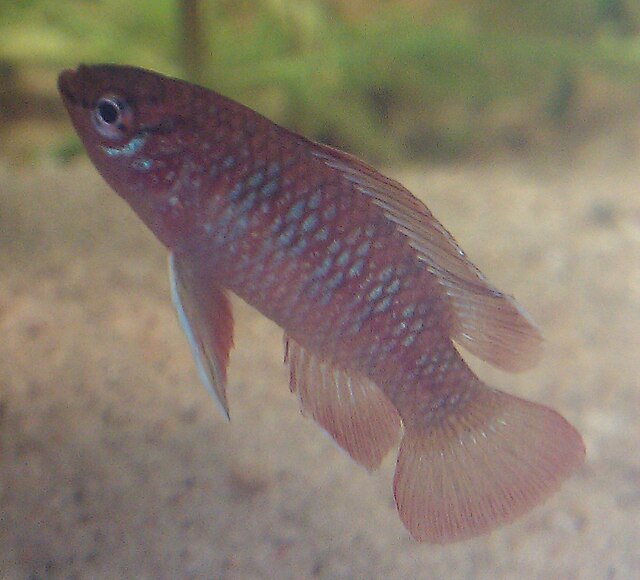
A tiny basilid from streams in Meghalaya State, India. Males display vibrant red and green coloration.
Item
Details
Body Length
Males 2–3cm, Females 1.5–2cm
Water Temperature
22–26°C (cool)
Water Quality
Slightly acidic soft water (pH 6.0–7.0)
Diet
Carnivorous (prefers live and frozen foods)
Compatibility
Same-species aggression (stable with multiple females and one male)
Caution: Poor appetite for prepared foods; frozen brine shrimp and freeze-dried bloodworms are necessary as staples.
Espei (Trigonostigma espei)
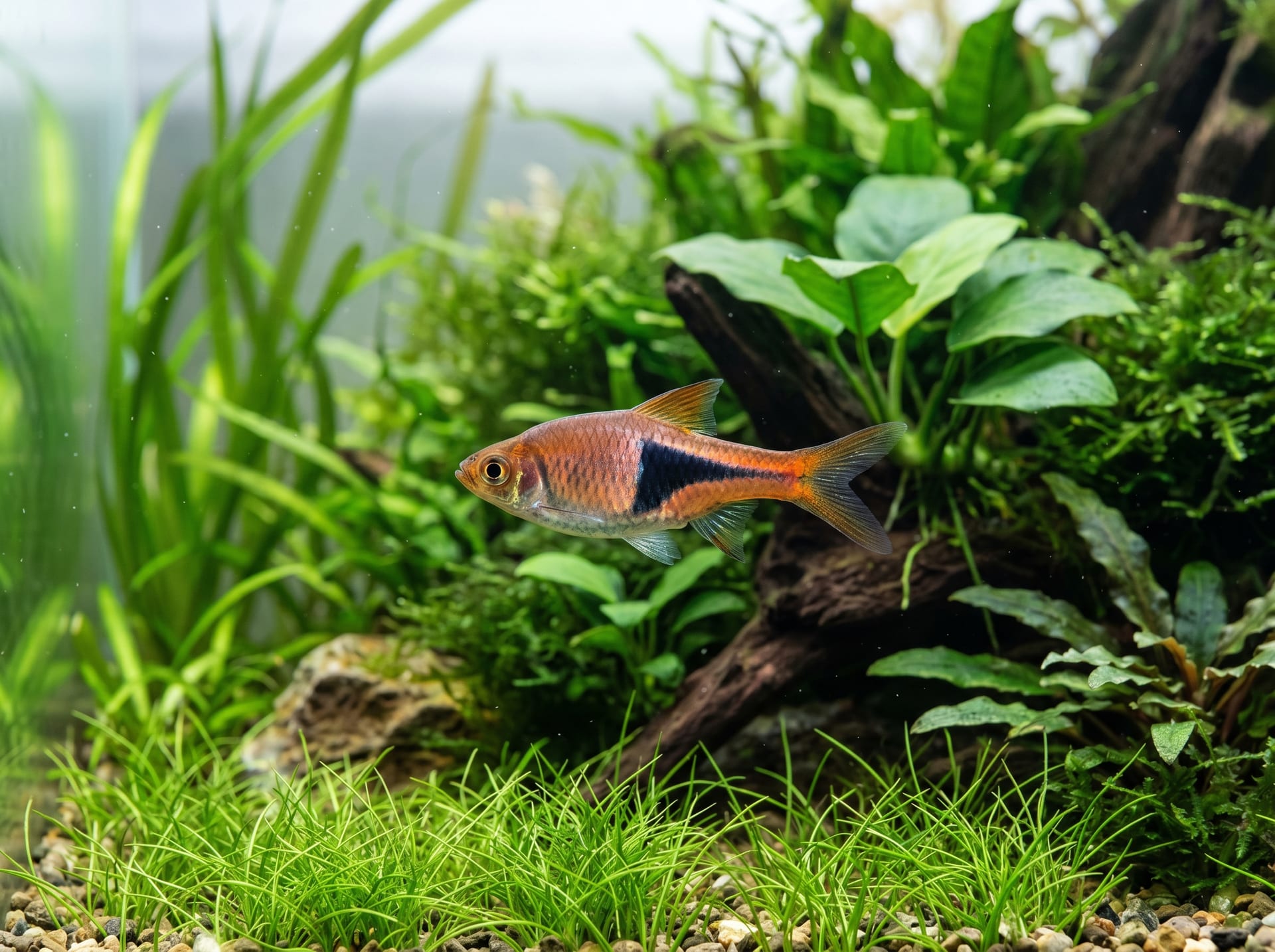
A hardy small cyprinid characterized by a triangular black marking (also called Red Rasbora Espei).
Item
Details
Body Length
Around 3cm
Water Temperature
24–28°C
Water Quality
Slightly acidic to neutral (pH 6.0–7.5)
Diet
Omnivorous (flakes and pellets)
Compatibility
Peaceful; stable in schools of 10 or more
Features: Hardy and beginner-friendly. The beauty of their schooling behavior is outstanding, making them ideal as the main fish in a nano tank.
Harlequin Rasbora (Trigonostigma heteromorpha)
A cyprinid inhabiting waters from Singapore to Thailand. Distinctive two-tone body color and triangular black marking. Slightly larger than Espei (up to 4.5cm) and technically not strictly "nano," but a standard choice for small tank setups.
Dwarf Pufferfish (Carinotetraodon travancoricus)
The world's smallest pufferfish, native to India. Despite measuring only 2–3cm, it is popular for its distinctive behavior and adorable form.
Item
Details
Body Length
2–3cm
Water Temperature
24–28°C
Water Quality
Slightly acidic to neutral
Diet
Carnivorous (snails, frozen foods)
Compatibility
Requires caution (has fin-nipping tendencies)
Caution: Has a tendency to nip the fins of other fish, so tankmates must be chosen carefully. Solitary keeping or pairing with fast-moving fish is recommended.
Successful Multi-Species Combinations
Basic Rules for Nano Fish Compatibility
Similar-sized species: Large fish chase or prey on smaller ones
Similar water quality requirements: Group species with similar preferences (e.g., slightly acidic soft water lovers)
Utilize tank layers: Divide the tank vertically with surface, mid-water, and bottom-dwelling species
Maintain appropriate numbers: Avoid overstocking (use "1cm of fish per liter" as a guideline)
Recommended Combinations (30cm Tank Example)
Pattern A (Beginner-friendly with hardy species)
Espei × 10 fish (mid-water, schooling)
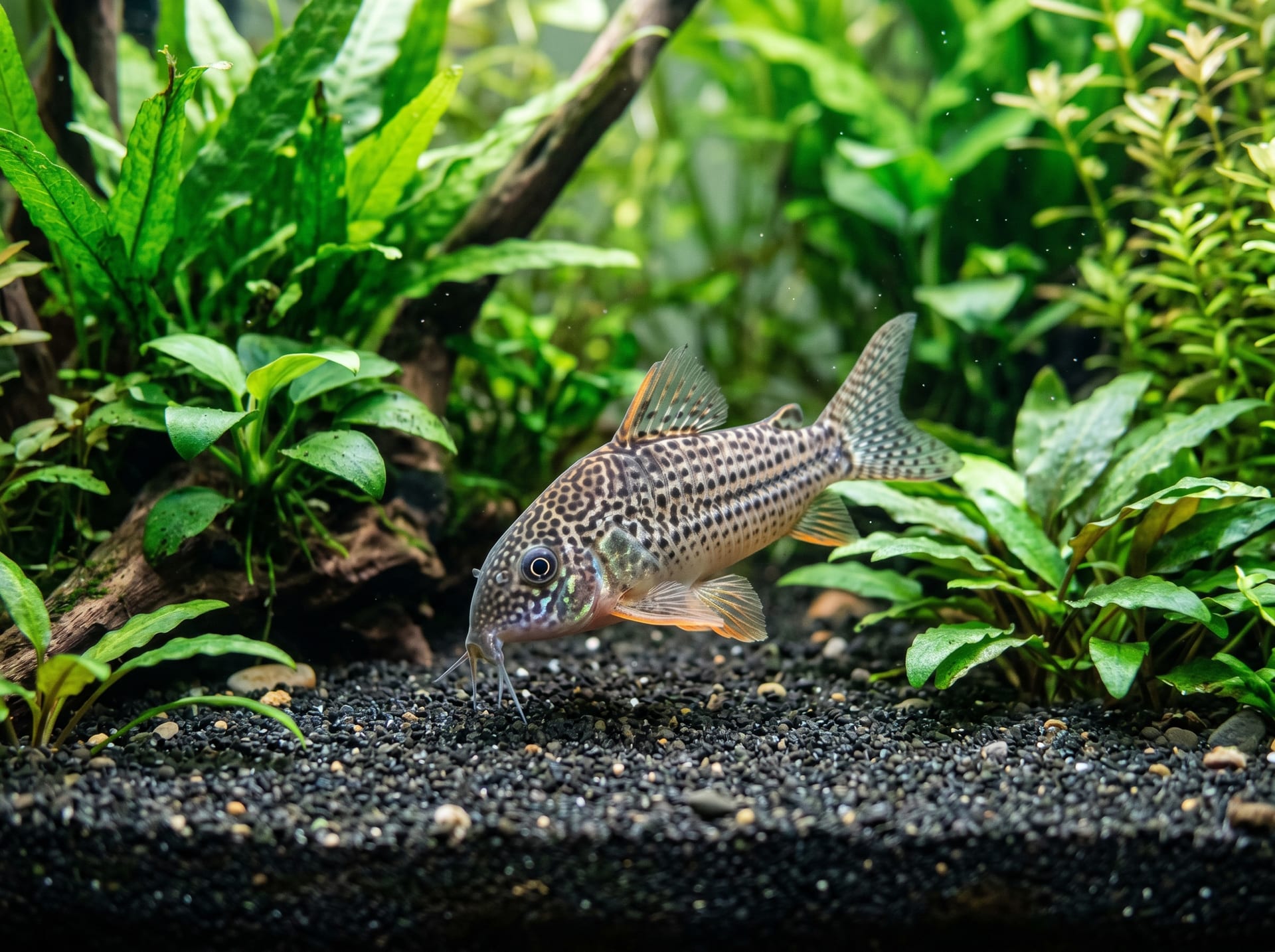
Corydoras habrosus × 3 fish (bottom-dwelling)
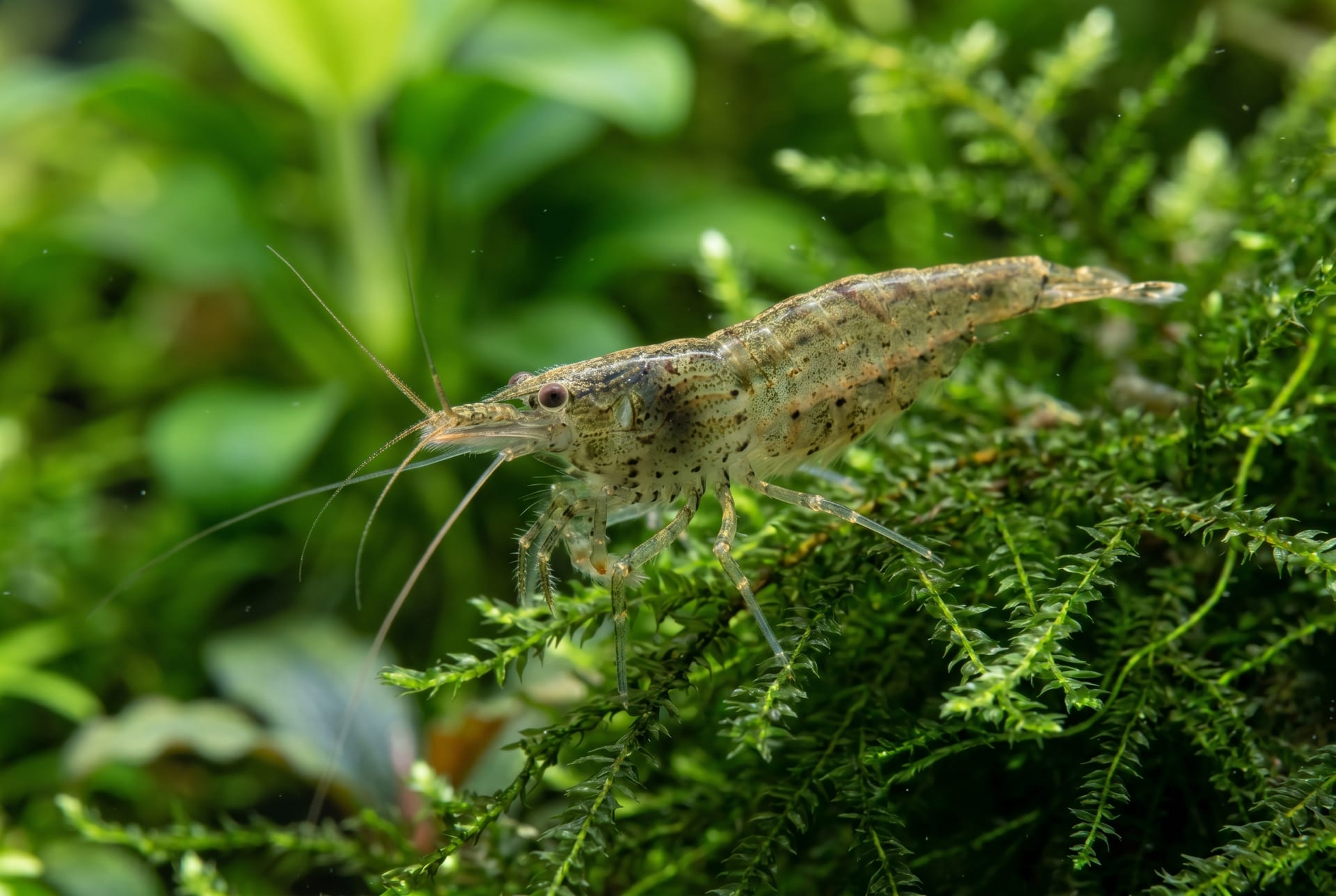
Amano Shrimp × 5 (algae control)
Pattern B (Intermediate with beautiful coloration)
Scarlet Gem × 4–6 fish (mid and lower water)
Cherry Barb × 8 fish (mid-water)
Red Dwarf Shrimp × 10 (bottom-dwelling)
Pattern C (Rare and interesting combination)
Dwarf Pufferfish × 2–3 fish (somewhat solitary)
Cherry Barb × 8 fish (fast-moving, less prone to fin-nipping)
Corydoras pygmaeus × 5 fish (bottom-dwelling, quick movements)
Feeding and Nutrition Management for Nano Fish
Nano fish have small mouths and require fine-grained foods.
Recommended Foods
Micro-flakes and Nano Pellets: Brands like Tetra and Kyorin offer options. Float at the surface for easy consumption by small fish
Frozen Brine Shrimp: Essential for carnivorous species like Scarlet Gem
Freeze-Dried Bloodworms: Good appetite appeal, suitable for most nano fish
Planktonic Foods: Infusoria and daphnia are effective for fry and very small species
Feed twice daily, amounts that can be consumed in 3–5 minutes, removing uneaten food with a pipette to prevent water quality decline from excess organic matter.
Adjust water to slightly acidic soft water conditions
Add fine-leaf plants such as Willow Moss, Java Fern, and Hornwort as hiding places for fry
Prepare infusoria (paramecium cultured in water) as food for fry
The world of nano fish offers a unique enjoyment: condensing biodiversity and observational depth into a small volume. Start with schooling of a single species, then gradually progress to multi-species challenges.