How to Choose Medaka Breeding Containers | Comprehensive Comparison of Toro Trays, Water Lily Bowls, and NV Boxes
A comprehensive comparison of major containers used for medaka breeding. This article explains the characteristics, advantages, and disadvantages of toro trays, water lily bowls, NV boxes, polystyrene containers, and other popular options.
Key Takeaways
A comprehensive comparison of major containers used for medaka breeding. This article explains the characteristics, advantages, and disadvantages of toro trays, water lily bowls, NV boxes, polystyrene containers, and other popular options.
Medaka breeding containers come in many varieties, each with distinct characteristics. The optimal container depends on your breeding purpose, installation location, and budget—it's important to understand the strengths and weaknesses of each option before making a choice. This article compares and introduces popular medaka breeding containers.
Characteristics of Toro Trays (Plastic Trays)
Toro trays are shallow plastic containers originally used by plasterers and have become the standard container for medaka breeding. They come in sizes ranging from 20 to 80 liters, with prices around 500–2,000 yen at home centers—very affordable. The rectangular shape makes efficient use of space and is convenient for breeding multiple varieties by arranging trays on shelves. The shallow depth and wide water surface make them ideal for viewing medaka from above. The material is durable and relatively UV-resistant, allowing several years of outdoor use. The downside is their industrial appearance, which can be difficult to blend into your garden or balcony aesthetic. Black toro trays have the added benefit of deepening the medaka's body color, making them the most cost-effective choice for serious breeders. Since they lack a drainage hole, you'll need to add a sponge or drainage outlet to prevent overflow during rain.
Appeal and Considerations of Water Lily Bowls
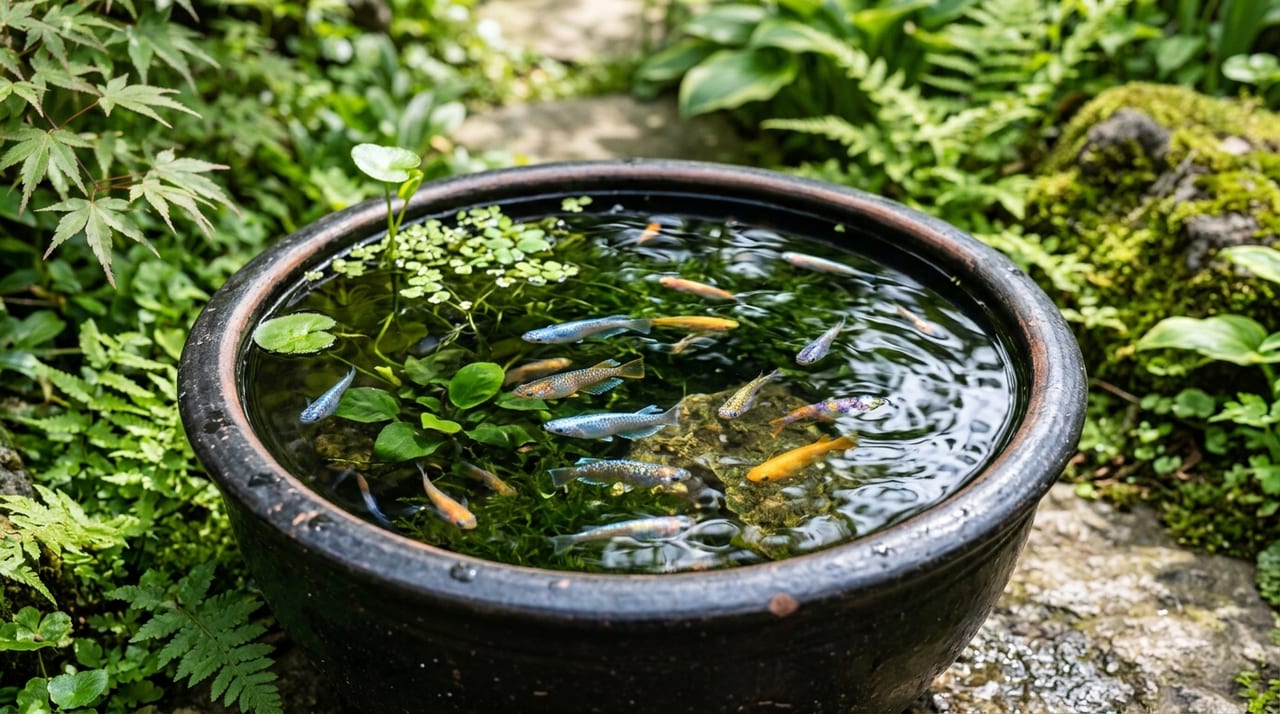
Water lily bowls are round ceramic containers popular among those seeking aesthetic appeal in their medaka setup. They create a Japanese-style atmosphere and, when placed in a garden or entryway, function beautifully as a biotope. They look especially beautiful when paired with aquatic plants like water lilies and water lettuce, allowing you to appreciate medaka in an environment close to nature. The thermal insulation of ceramic means water temperature fluctuates more slowly compared to plastic containers. However, because they're made of ceramic, they're heavy and difficult to move once filled with water. You'll need to decide on a permanent location before setting up. Prices vary widely depending on size and material, ranging from 1,000 to over 10,000 yen, with premium items like Shigaraki ware being even more expensive. Ceramic can crack if frozen in winter, so extra caution is needed in cold climates. Many models don't display capacity information, so check the water volume before purchasing and set appropriate medaka quantities accordingly.
NV Boxes and 100-Yen Shop Containers
NV boxes are semi-transparent plastic containers made by Astage, available in 13-liter and 22-liter sizes. They come with lids and are stackable, making them extremely convenient for managing different medaka varieties. At 300–500 yen each, they're so affordable that even stocking large quantities keeps costs down, which is why serious breeders favor them. The semi-transparent material allows you to observe medaka from the side, making health checks easier. However, due to their small capacity, they're better suited for raising fry and managing breeding stock rather than long-term care of adult medaka. Storage boxes and buckets from 100-yen shops are also used for medaka breeding, but durability and weather resistance vary significantly, so caution is needed for outdoor long-term use. Non-food-grade plastic containers may leach harmful substances, so it's safer to choose products with a proven track record in medaka breeding.
Advantages of Polystyrene Containers
Polystyrene containers are excellent insulators, moderating both summer heat and winter cold—a hidden gem for medaka breeding. Particularly for outdoor winter breeding, they help prevent rapid water temperature drops, increasing the medaka's overwinter survival rate. They're also lightweight and easy to move. Fish transport foam boxes can often be recycled for free. Dedicated black polystyrene containers are also commercially available, combining insulation with the body color enhancement of black containers. The downside is poor durability; they degrade quickly under UV exposure and typically need replacement after 1–2 years. Their low structural strength means they crack easily if bumped or stepped on. Their appearance isn't particularly attractive, making them better suited for breeding and rearing rather than display purposes.
Pre-Purchase Checklist Summary
When purchasing goldfish, check the following points:
| Checklist Item | Good Condition | Condition to Avoid |
|---|---|---|
| Swimming | Active and stable | Floating, sinking, or tilted |
| Body Surface | Glossy and clean | White spots, bloodshot areas, cotton-like growths |
| Fins | Taut and upright | Torn, decomposing, or bloodshot |
| Gills | Both sides move evenly | Only one side moving, rapid breathing |
| Appetite | Responds to food | Unresponsive, won't eat |
Also check the overall condition of the tank at your purchase location. Individual fish from tanks with cloudy water or dead fish may already be infected with disease. Purchasing from trustworthy breeders or specialized shops significantly increases your chances of getting healthy individuals.
Selecting Medaka to Match Your Container at BreederDirect
Once you've decided on container type and size, select medaka that match. At BreederDirect, many breeders are happy to consult about breeding environments—tell them your container size and installation location, and they can advise you on appropriate varieties and quantities. When purchasing premium varieties in particular, consulting with the breeder about the optimal breeding container allows you to create an environment that brings out their full beauty.