Complete Guide to Eliminating Aiptasia (Curly) | Protecting Saltwater Aquariums with Natural Enemies, Medications, and Prevention
Explains effective methods for eliminating Aiptasia (Curly) that proliferates in saltwater aquariums. Introduces how to use Aiptasia-X, vinegar injection, peppermint shrimp, and Berghia nudibranchs, along with strategies to prevent recurrence.
Key Takeaways
Explains effective methods for eliminating Aiptasia (Curly) that proliferates in saltwater aquariums. Introduces how to use Aiptasia-X, vinegar injection, peppermint shrimp, and Berghia nudibranchs, along with strategies to prevent recurrence.
Related Species
What is Aiptasia (Curly)? Why is it dangerous?
Aiptasia (scientific name: Aiptasia spp.) is a small anemone that invades saltwater aquariums. Also known as "Curly" and "Glass Anemone," it attaches to glass surfaces and crevices in live rock as the name suggests. While it resembles corals at first glance, it is known as an invasive species in reef ecosystems and causes serious problems for home saltwater aquariums.
There are mainly three reasons why Aiptasia is dangerous. First, it has extremely high reproductive capacity. Once a single individual establishes itself, it continuously divides asexually from the pedal disc, and if left unchecked, it will spread throughout the entire tank within weeks. Second, its nematocyst toxin is powerful. The nematocysts on its tentacles damage corals and fish like tangs, causing both LPS and SPS corals to decline. Third, it is extremely difficult to eliminate. Even if only a portion of the body remains, it will regenerate, so half-measures can actually make the problem worse.
Routes of entry into aquariums and early detection
Aiptasia is primarily introduced into aquariums through live rock or when propagating soft corals. It can hide on the surface of newly purchased live rock, at the base of new corals, and even within substrate covered with algae.
Early detection tips:
- If small anemones with semi-transparent tentacles of approximately 2-10mm appear on live rock or glass surfaces, they are likely Aiptasia
- They extend their tentacles shortly after the lights are turned off, so using a flashlight to observe the live rock 15 minutes after lights out makes them easier to spot
- They are characterized by a brown color with an oral disc in the center, and rapidly contract when touched
When introducing new live rock or corals, the best preventive measure against Aiptasia invasion is to observe them in a quarantine tank for 1-2 weeks.
Physical removal methods (DIY)
There are physical and chemical approaches to removing Aiptasia. First, let's introduce physical methods that can be tried without significant expense.
Hot/boiling water injection
Fill a syringe with boiling water and inject it directly into the Aiptasia's oral disc. The high temperature denatures proteins and destroys its regenerative ability. However, if the Aiptasia contracts in shock during injection, the liquid can splash and contact other organisms, so it is important to inject slowly and carefully.
Vinegar (acetic acid) injection
This method involves filling a syringe with white vinegar and injecting it into the oral disc. The low pH of acetic acid breaks down Aiptasia's proteins. Small quantities have minimal impact on aquarium water quality, but caution is needed if using large amounts at once.
Citric acid paste
Mix citric acid and salt into a paste and apply it directly to the Aiptasia with the pump stopped. Work carefully to avoid contacting corals, and remove after 5-10 minutes.
Chemical and commercial product removal
Aiptasia-X (Red Sea)
The most widely used Aiptasia-specific eradication product. It is a thick white liquid applied directly to the Aiptasia's oral disc via syringe. The active ingredients dissolve the Aiptasia from within and prevent regeneration. It has minimal impact on corals and fish, making it easy for beginners to use.
Usage instructions:
- Stop the pump and circulation
- Fill the included syringe with the product
- When the Aiptasia is fully extended, slowly inject into the center of the oral disc
- Resume the pump after 15 minutes
- After one week, check for recurrence; if any remains, treat again
Aiptasia Killing Solution (various manufacturers)
Multiple manufacturers sell products with similar mechanisms of action. Since ingredients and viscosity differ, choose based on your aquarium's conditions.
Biological control (introducing natural enemies)
Biological control using natural enemies is an effective alternative to chemical treatment.
Berghia Nudibranch
The nudibranch Berghia stephanieae is a specialized predator that feeds exclusively on Aiptasia. In heavily infested tanks, it is known as the most reliable biological control method. However, it starves once it exhausts the Aiptasia supply, so it should be used primarily to limit population numbers.
Note that Berghia are extremely small (1-2cm), nocturnal, and rarely visible during the day. They will also be preyed upon if lionfish or large wrasses are present in the tank.
Caution when selecting fish that eat copepods, etc.
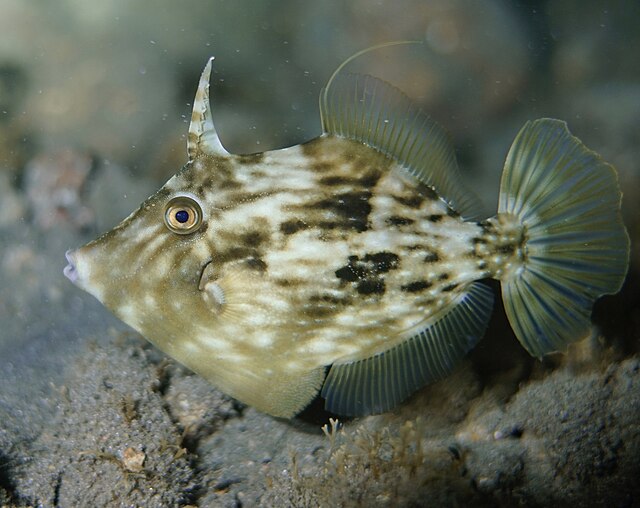
Some filefish (leatherjackets), particularly Seagrass filefish (Acreichthys tomentosus), are said to eat Aiptasia. However, there is individual variation, and they may also nibble on other corals, making their introduction to reef tanks risky.
Spotted Cleaner Shrimp (Peppermint Shrimp)
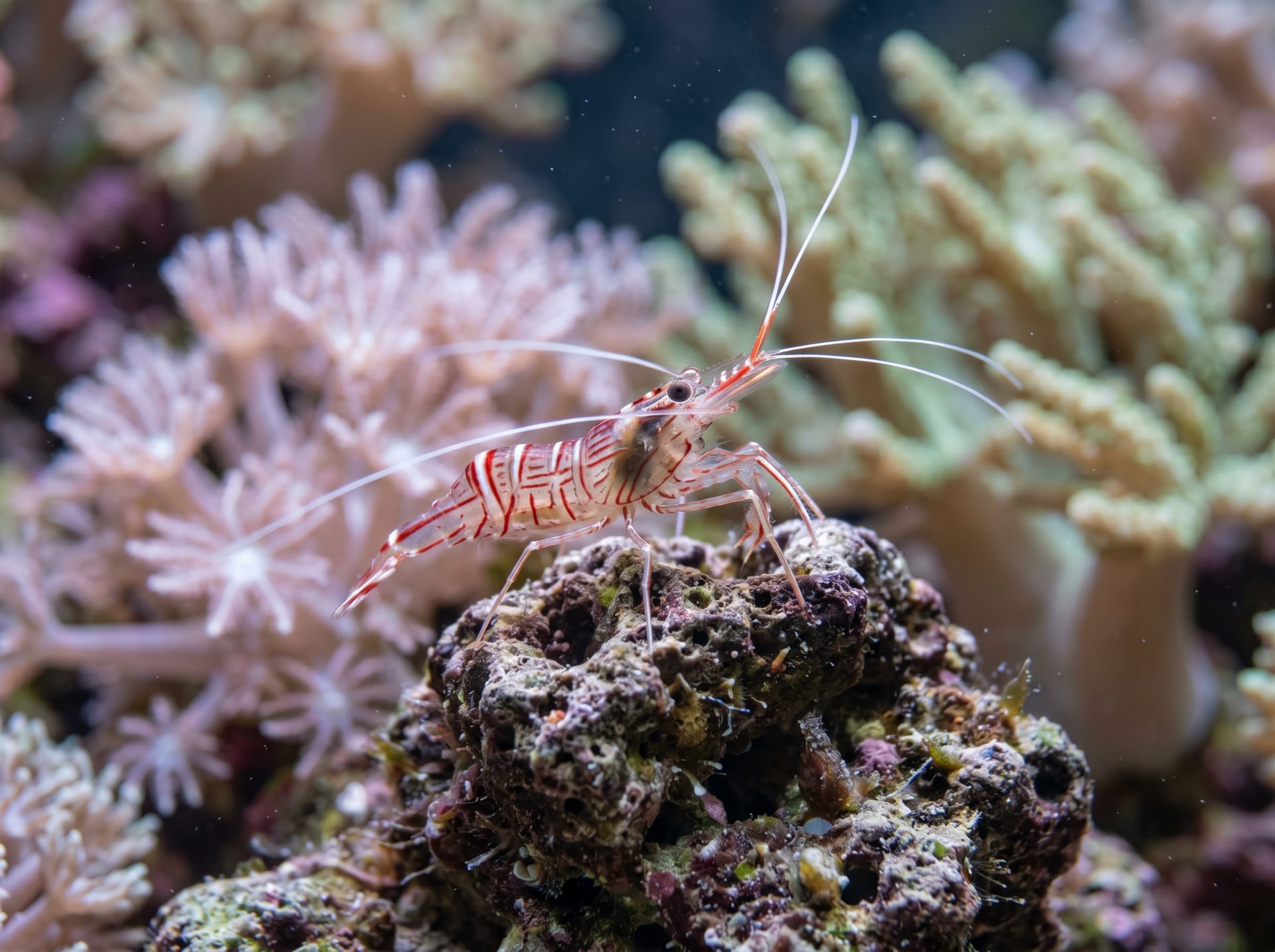
Lysmata wurdemanni (Peppermint shrimp) has a preference for feeding on small Aiptasia. The related species L. boggessi has a weaker tendency, so it is important to confirm species identification before purchasing. Effectiveness increases when introducing multiple individuals (3-5).
Preventing recurrence after removal
Even if you think you've eliminated Aiptasia, it can recur from individuals hidden deep within live rock. Keep these prevention tips in mind.
Continuous monitoring: Develop a habit of checking the back of live rock and silicone sections of glass during weekly maintenance.
Quarantine new introductions: Quarantine not only live rock but also macroalgae and coral frags for 2 weeks before moving them to the main tank.
Live rock placement: Place live rock away from walls so you can regularly observe the back surfaces and adjust layout accordingly.
Early action: Treat immediately upon discovering 1-2 individuals. Underestimating the problem at this stage can lead to mass proliferation.
Summary
Aiptasia is one of the challenges every saltwater aquarium keeper must face. Even if it invades, it can always be controlled by combining early detection with appropriate treatment. It's important to use different tools depending on the situation: specialized products like Aiptasia-X, natural enemies like peppermint shrimp, and the trump card of Berghia nudibranch.
Most importantly, rather than "noticing after it multiplies," develop the habit of "striking before it multiplies" through regular observation. To maintain a beautiful reef tank, incorporate Aiptasia control into your basic aquarium maintenance routine.