Safe Receipt and Unpacking of Live Animals | Points to Note Upon Arrival
Explains important points to know when live animals arrive, including specifying delivery times, unpacking procedures, temperature and water acclimation, and management on the first day of introduction.
Key Takeaways
Explains important points to know when live animals arrive, including specifying delivery times, unpacking procedures, temperature and water acclimation, and management on the first day of introduction.
When live animals purchased through online shopping arrive at your home, whether or not you know the correct procedures for receiving and unpacking them can significantly affect the animal's health thereafter. Shipping is a major source of stress for animals, and if the post-arrival response is improper, animals can become ill or, in the worst case, lose their lives. This article explains the procedures for safely receiving live animals and introducing them to their new living environment.
Specifying Delivery Time and Receiving
For live animal shipping, it is important to minimize transport time as much as possible.
Things to confirm before shipping
- Arrange the shipping date and arrival date with the breeder in advance
- If morning delivery or a time slot option is available, select the earliest possible time
- Always specify an arrival date when you can be at home
- If the weather is extremely bad (scorching heat, extreme cold, typhoons, etc.), ask to postpone shipping
Points when receiving
- If a delivery notice card is left, request redelivery as soon as possible
- As soon as you receive the package from the delivery person, start preparing to open it
- Handle the package carefully without throwing or vibrating it during transport
- Do not leave it in direct sunlight or in extremely hot or cold locations
Unpacking Procedure
It is important to unpack calmly and without rushing.
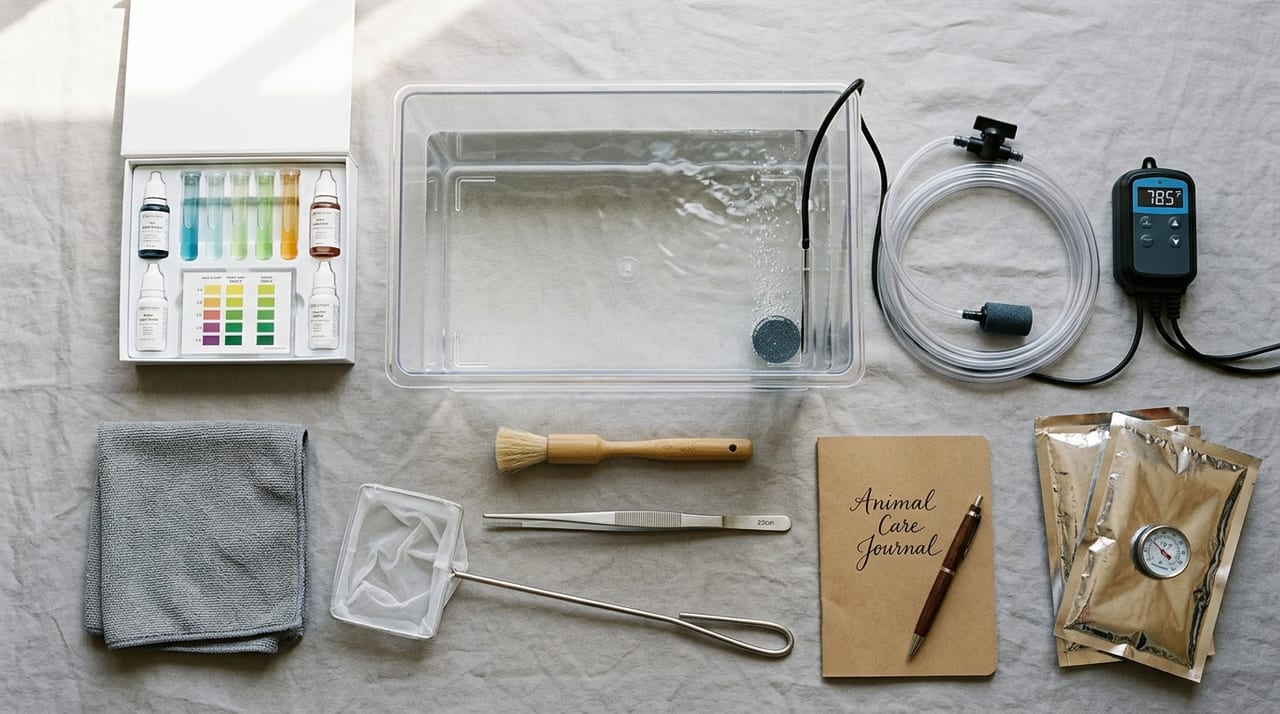
Things to prepare
- Scissors or a utility knife (to cut packaging materials)
- Towels or newspaper (for water leak prevention)
- A container for temperature acclimation (for aquatic organisms)
- Tweezers (for small organisms)
Unpacking steps
- Before opening the outer box, confirm the "Live animals on board" label and handling precaution markings
- When opening the outer box with a utility knife, be careful not to insert the blade too deeply
- If there are insulation materials (heat packs) or cooling materials, remove them first
- Carefully remove the bag or cup containing the live animal
- Check the condition of the animal (is it moving, are there any injuries)
- If there is dead on arrival or obvious abnormalities, contact the breeder immediately and take photos
Temperature Acclimation and Water Acclimation
The most important process when introducing aquatic organisms is temperature acclimation and water acclimation.
Temperature acclimation (common to all organisms)
- Keep the bag or cup floating on the surface of the breeding water tank (approximately 30 minutes to 1 hour)
- Prevent temperature shock by avoiding sudden temperature changes
- For terrestrial organisms, also place them near the rearing environment to gradually adjust to the temperature
Water acclimation (for aquatic organisms)
- Drip method is the safest: use an air tube and valve to slowly add breeding water to the bag's water
- As a guideline, add breeding water over 30 minutes to 1 hour until the water volume in the bag is 2–3 times the original
- After water acclimation is complete, avoid putting the bag water into the breeding water tank as much as possible and transfer only the animal
- For shrimp and sensitive fish species, perform water acclimation even more carefully over a longer period
Water acclimation precautions
- Keep room temperature appropriate so that water temperature does not drop too much during water acclimation
- Since oxygen in the bag decreases, add aeration for long water acclimation
- If the animal shows abnormal behavior during water acclimation, move it to the breeding water tank immediately
Management on Introduction Day
The first day after moving the animal to its new environment requires particularly careful management.
Basic precautions
- Do not feed on the first day of arrival (transport stress reduces digestive capacity)
- Set lighting to a dim level or turn it off
- Maintain as quiet an environment as possible and minimize the frequency of observing the animal
- If introducing to a tank with other animals, carefully observe to ensure it is not being attacked
Actions from the next day onwards
- From the next day onward, try offering a small amount of food and check if it eats
- If it does not eat, do not force it and try again after 2-3 days
- For the first week after introduction, perform daily water quality tests and check for any abnormalities (for aquatic organisms)
- If there are signs of poor health (loss of appetite, changes in body color, abnormal behavior), consult the breeder immediately
Safe Live Animal Delivery with BreederDirect
BreederDirect has many experienced breeders who are skilled in live animal shipping. Since you can discuss packaging methods and delivery conditions with the breeder in advance, you can receive live animals with confidence. Many breeders are also available for consultation on care after arrival, so even first-timers can feel assured.
Common Failures and Their Solutions
Post-arrival problems are determined more by the "30 minutes after unpacking" than by the shipping itself.
Failure 1: Delaying unpacking after receiving As time passes, oxygen decreases inside the packaging and ammonia accumulates. Once you receive it, unpack it first and check the animal's condition, water temperature, and the state of the pack. If it is returned due to absence, conditions worsen further.
Failure 2: Putting the shipping bag water directly into the tank The water in the bag contains waste and, in some cases, medication. After temperature acclimation, replace the water using the drip method or similar and transfer only the animal—this is the basic procedure.
Failure 3: Feeding on the day of arrival Digestive function is reduced immediately after shipping, and leftover food can rapidly worsen water quality. Resume feeding the next day or later, starting with small amounts.