[Complete Comparison] Leopard Gecko vs Crested Gecko | Care Difficulty, Cost, and Key Differences
Complete comparison of care difficulty, initial cost, lifespan, and temperament between leopard and crested geckos. Which gecko is right for you?
Key Takeaways
Complete comparison of care difficulty, initial cost, lifespan, and temperament between leopard and crested geckos. Which gecko is right for you?
Related Species
Which Should You Choose? Basic Profiles of Leopard and Crested Geckos
Leopard Geckos (Leos) and Crested Geckos (Cresties) have long been popular beginner species among gecko enthusiasts. While both are often introduced as "beginner-friendly," their care styles are completely different. Leopard Geckos offer the charm of watching a lizard-like creature walk across the ground, while Crested Geckos are arboreal climbers that scale walls and branches with ease. This article provides a thorough comparison of both species to help you choose the right gecko for your lifestyle.
Leopard Geckos originate from the arid regions of Central to South Asia. They are ground-dwelling geckos that live in rocky and sandy environments, characterized by their eyelids (which allow them to blink) and the absence of adhesive toe pads. Due to their docile movements and friendly nature, they have established themselves as the gold standard beginner species for reptile hobbyists.
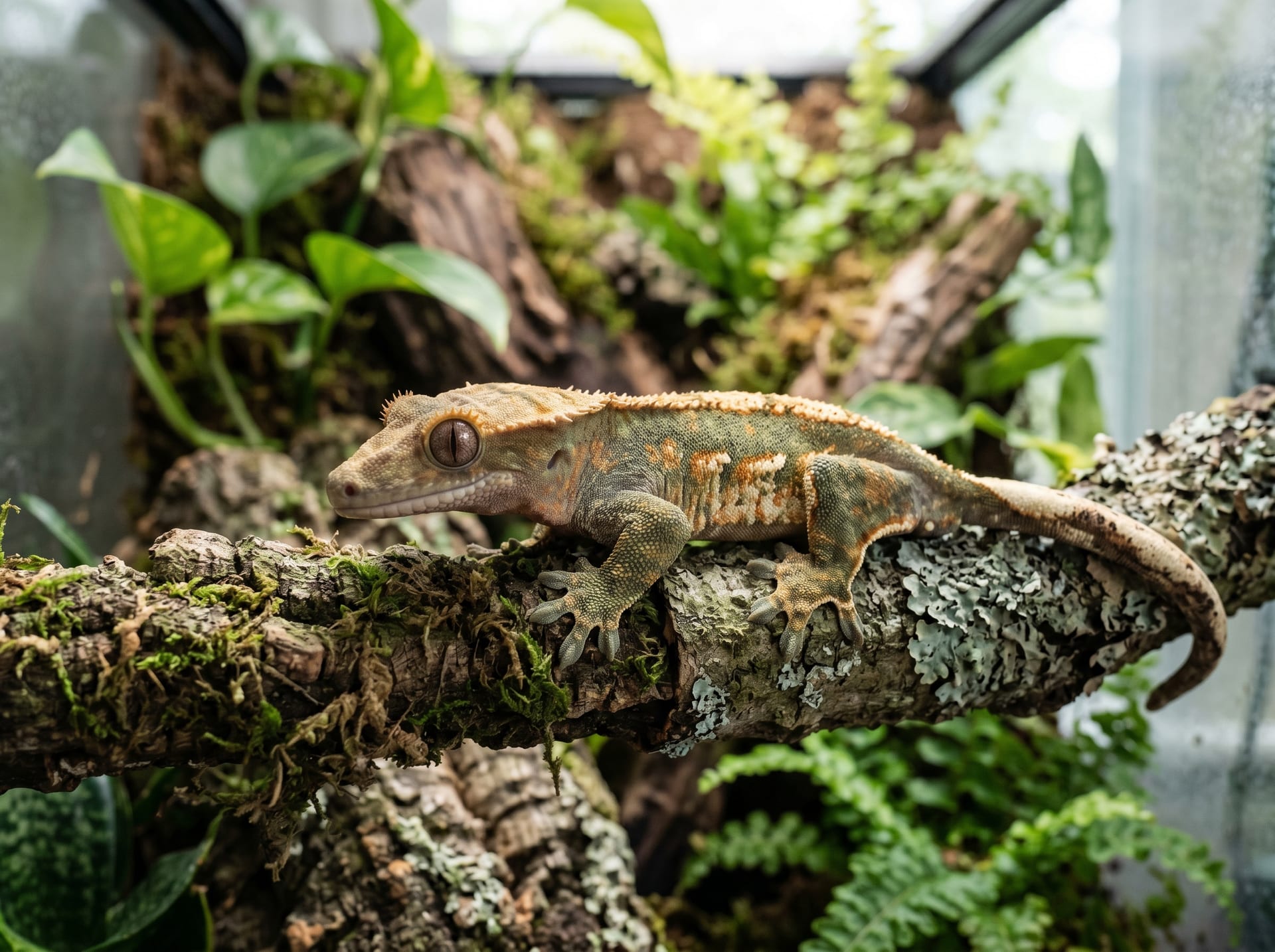
Crested Geckos are arboreal geckos native to New Caledonia. They're beloved for the prominent crest (like a crown) running along their head and back, and their large, expressive eyes. These geckos were thought to be extinct until they were rediscovered in the 1990s, but captive-bred individuals are now widely available in the hobby.
Differences in Care Environment: Temperature, Enclosure, and Humidity
The most significant difference between these species lies in how you set up their habitat.
Leopard Gecko Environment Setup
Since Leopard Geckos are ectothermic, creating a temperature gradient in the enclosure is essential.
Enclosure Size: A minimum width of 45cm is recommended for adults
Temperature Management: Use an under-tank heater to create a warm spot (floor temperature 32–35°C) and maintain a cool side (25–28°C)
Humidity: 40–60%. Before shedding, provide a humid hide to increase local humidity
✍️
BreederDirect Editorial
The BreederDirect editorial team specializes in care information for animals, covering veterinary care and breeding to deliver beginner-friendly guides.
Find Reptiles on BreederDirect
Buy directly from verified breeders
Browse Related Listings
Find Reptiles listings related to this article on BreederDirect. Buy directly from verified breeders.
Related Tools
Related Articles
Browse by Category
🪸Coral
🐠Marine Fish
🐟Tropical Fish
🐡Goldfish
🐟Medaka
🦎Reptiles
Share
Lighting: UVB lighting isn't strictly necessary, but weak ambient lighting helps maintain their circadian rhythm ✓
During winter, an under-tank heater alone may not maintain adequate temperature, so combining it with radiant heaters or air conditioning is common practice.
Crested Gecko Environment Setup
Crested Geckos require a tall, arboreal enclosure layout.
Enclosure Size: A tall, vertical enclosure with at least 45cm height is ideal
Temperature Management: Room temperature of 20–27°C is suitable. Temperatures exceeding 28°C cause heat stress, so air conditioning is essential during Japan's hot summers
Humidity: 60–80%. Mist daily 1–2 times to provide both humidity and drinking water
Lighting: Low-level UVB lighting is beneficial but not required for basic care
Crested Geckos are actually sensitive to heat, making summer temperature management more critical than with Leopard Geckos. Winter warmth is usually minimal, so they're relatively easy to care for in homes with year-round air conditioning.
Diet Differences: Live Insects vs Prepared Foods
Diet is a crucial factor that directly affects the keeper's workload and commitment.
Leopard Gecko: Primarily Insectivorous
Leopard Geckos are carnivorous and feed mainly on insects.
Crickets (European House Crickets and Two-spotted Crickets) are the standard
Mealworms and Dubia Roaches are also suitable options
Calcium powder dusting is essential
Using thawed frozen crickets eliminates the need to maintain live colonies
While handling insects may be challenging for some keepers, it's possible to transition Leopard Geckos to frozen or prepared foods. However, individual preferences vary, and some geckos may be stubborn about accepting artificial diets exclusively.
Crested Gecko: Complete Nutrition with Prepared Food
A major advantage of Crested Geckos is that specialized prepared foods (CGD) alone can sustain them throughout their lives.
Commercial Crested Gecko Diet powders (such as Repashy Crested Gecko Diet) are the primary staple
Simply mix with water and serve—no need to purchase or maintain live insects
Occasionally offering crickets as supplemental food improves nutritional balance
Fruits like banana and mango can be offered as occasional treats
For those uncomfortable with insects or too busy to manage live colonies, Crested Gecko feeding is significantly more convenient.
Care Environment and Diet Comparison Table
Factor
Leopard Gecko
Crested Gecko
Lifestyle
Ground-dwelling
Arboreal (tall enclosure)
Ideal Temperature
Warm 32–35°C / Cool 25–28°C
20–27°C (heat-sensitive, summer AC needed)
Humidity
40–60%
60–80% (daily misting)
Diet
Insects (crickets, etc.)
Prepared food (CGD) alone sufficient
Morphs
Extremely diverse
Diverse (increasingly varied)
Size, Lifespan, and Cost: By the Numbers
Factor
Leopard Gecko
Crested Gecko
Total Length
20–25cm
15–20cm
Weight
50–80g
35–55g
Lifespan
10–15 years
15–20 years
Individual Price
¥3,000–¥30,000
¥5,000–¥50,000
Initial Setup Cost
¥20,000–¥40,000
¥15,000–¥35,000
Lifespan deserves special attention. Crested Geckos can live around 20 years, making them a long-lived species. When bringing one home, consider making a long-term commitment.
Regarding morph (color variation) diversity, Leopard Geckos are far superior, with dozens of morphs available including Albino, Mack Snow, and Blizzard, making them highly collectible. Crested Geckos also feature beautiful morphs such as Flame, Harlequin, and Lily White, with their variety increasing each year.
Personalized Recommendations: Which Gecko is Right for You?
Leopard Geckos are ideal for you if:
You're new to reptile keeping and want an easy-to-handle species
You enjoy watching the gentle, ground-level movements of a gecko
You're interested in collecting different morphs
You're comfortable handling insects (or can adjust to frozen foods)
You prefer compact enclosures
Crested Geckos are ideal for you if:
You're uncomfortable with insects and prefer prepared-food-only feeding
You'd like to create a tall vivarium with live plants
You enjoy watching active climbing and branch-traversing behavior
You have year-round air conditioning (essential for summer heat management)
You're seeking a long-term companion to share many years with
Safety and Trust Through BreederDirect
Both Leopard and Crested Geckos benefit greatly from sourcing through direct breeder connections, allowing you to verify the gecko's rearing environment and parental lineage beforehand. Learning details like "what environment did it grow up in" and "what has it been eating"—information unavailable from pet shop purchases—is invaluable for long-term care success.
BreederDirect exclusively features healthy individuals from reputable breeders, and you can ask questions and consult directly with the breeder before purchase. Whether you're a first-time reptile keeper or an experienced enthusiast, our platform ensures you have access to expert guidance straight from the source.
With proper care and knowledge, life with a gecko can be an incredibly enriching experience. Once you understand the unique qualities of both Leopard and Crested Geckos, you'll be ready to find your perfect match.
![[Complete Comparison] Leopard Gecko vs Crested Gecko | Care Difficulty, Cost, and Key Differences](https://img.br-choku.com/encyclopedia/05b2607bb82b.jpg)