Complete Japanese Rhinoceros Beetle Care Guide | Keeping Them Healthy from Larvae to Adulthood
A comprehensive guide to rearing domestic Japanese rhinoceros beetle larvae, pupation, eclosion, and adult management. We detail the complete rearing process from substrate selection, temperature control, mating, to egg-laying.
Key Takeaways
A comprehensive guide to rearing domestic Japanese rhinoceros beetle larvae, pupation, eclosion, and adult management. We detail the complete rearing process from substrate selection, temperature control, mating, to egg-laying.
Japanese Rhinoceros Beetle Care Overview
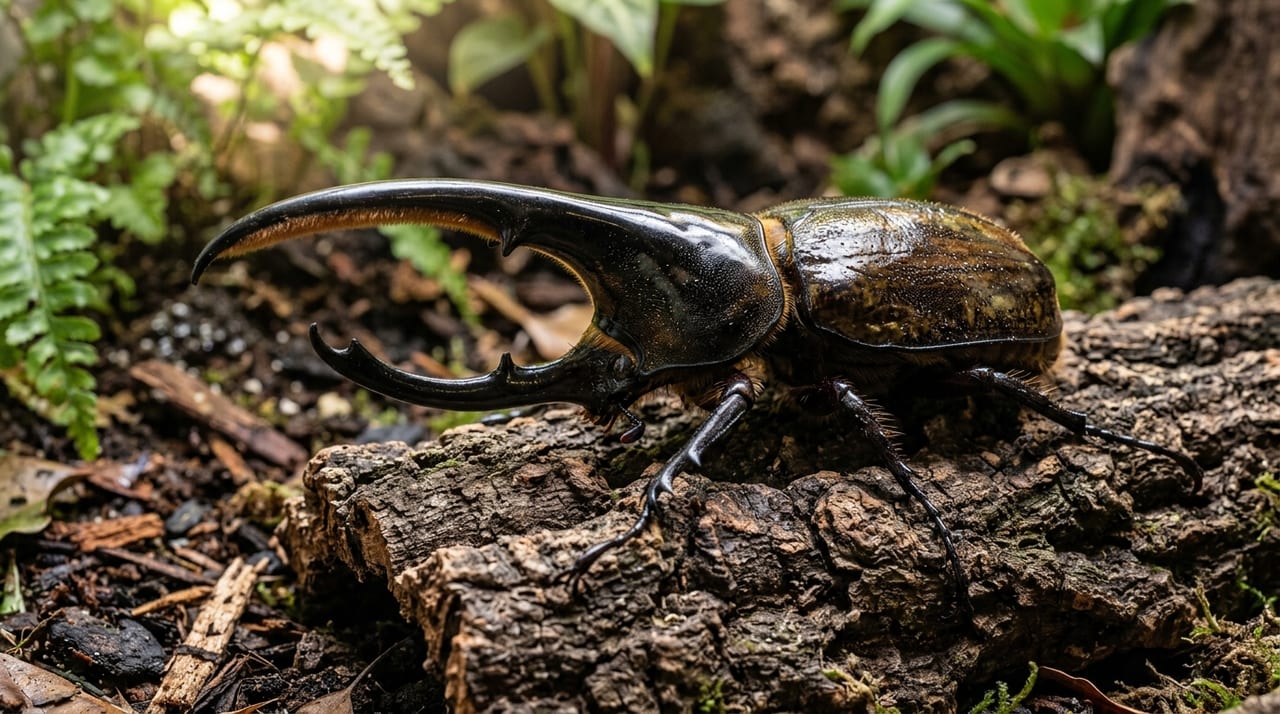
The Japanese rhinoceros beetle (Trypoxylus dichotomus) is considered a symbol of insect-keeping culture in Japan, with enthusiasts ranging from children to adults. Beyond simply purchasing adults from pet shops during summer and enjoying them, the satisfaction of raising larvae from the beginning and witnessing their independent eclosion is incomparable.
The life cycle of rhinoceros beetles spans approximately one year: "egg → larva (1st to 3rd instar) → pupa → adult." The larval stage is the longest (8–10 months), and management during this period greatly influences the adult's size and health. Most importantly, nutrition and temperature control during the larval stage determine the final individual size.
Eggs are laid around July–August and hatch after approximately two weeks. Newly hatched 1st instar larvae are only about 5mm, but they feed voraciously on substrate and grow rapidly, becoming 3rd instar larvae weighing 10–20g or more by the time they overwinter. How well you rear these 3rd instar larvae—keeping them large and healthy—is the key to producing impressive adults.
Larval Rearing — Substrate and Temperature Are Critical
Substrate Selection
The larvae's staple diet is substrate (wood-based leaf mold or fermented substrate). For domestic Japanese rhinoceros beetles, fully fermented "fully-composted leaf mold substrate" or "rhinoceros beetle-specific fermented substrate" are optimal. Unfermented (raw) substrate produces gases that can kill larvae, so always choose products labeled "fermented." With commercially available substrates, it is safe to leave the bag open for several days to off-gas before use.
Rearing Containers and Space
A minimum of 2–3 liters of space per larva, preferably 5 liters or more, promotes healthy growth. If aiming for large individuals (males over 70mm), a container of 10 liters or larger for solitary rearing is recommended. When rearing multiple larvae in the same container, overcrowding causes cannibalism and stunted growth; aim for 3–4 larvae per 10 liters.
Substrate Management
- Depth: 15–20cm or deeper (to ensure vertical space for pupation)
- Humidity: Moist enough that a handful forms a ball but does not crumble; the ideal state is when squeezing yields no water drips
- Replacement: Replace approximately half the substrate every 2–3 months. Mixing old and new substrate reduces stress from environmental changes
- Avoid complete substrate changes (to preserve beneficial intestinal bacteria in larvae)
Temperature Control
Larvae thrive at 20–28℃. Above 30℃, mortality risk rises sharply, making summer management particularly crucial. Place containers in a cool, shaded indoor location away from direct sunlight, or provide air conditioning if possible. In winter, activity drops dramatically below 5℃, but in most temperate regions, room temperature indoors (around 15℃) is sufficient for overwintering.
Pupation to Eclosion — The Most Delicate Period
Around May–June, larvae lose their appetite and begin constructing a "pupation chamber (yōshitsu)" in the substrate—an oval-shaped cavity. The body color turns yellowish as the larva enters the pre-pupal (zenyō) stage. Once this sign appears, substrate changes are absolutely forbidden. Damaging the pupation chamber directly causes eclosion failures.
Precautions During Pupation
- Do not unnecessarily touch the container or subject it to vibrations (pupae are extremely fragile)
- Keep misting to a bare minimum on the container walls (overly moist pupation chambers risk eclosion failure)
- If the pupa is visible on the container side, block light and never expose to direct sunlight
- Wait patiently for 3–4 weeks until eclosion
Artificial Pupation Chambers
If the pupation chamber collapses or the pupa is exposed on the substrate surface, use an "artificial pupation chamber." Gently transfer the pupa into a commercially available oasis-material chamber, maintaining the correct orientation with the abdomen facing upward. Improper positioning prevents wings from fully extending, resulting in eclosion failure.
Newly eclosed beetles have soft bodies and incompletely hardened wings. For 1–2 weeks after eclosion, keep them quiet in substrate or a separate container, and avoid handling as much as possible to allow their bodies to harden. Rough handling during this period can deform wings or break legs.
Adult Rearing and Longevity Tips
Adult lifespan is typically 2–3 months, but proper care can extend their condition.
Environmental Setup
- Insect jelly: Provide fresh jelly daily and remove uneaten portions promptly. Avoid fresh foods like watermelon or banana, which rot easily and promote bacterial growth. Offering high-protein jelly 1–2 times weekly helps maintain vigor
- Anti-tipping aids: Place multiple climbing wood or cork bark pieces. Japanese rhinoceros beetles that flip over cannot right themselves and often weaken and die as a result
- Avoid high temperatures and direct sunlight: Adults are also stressed by temperatures above 30℃
- Substrate: Thin substrate (3–5cm) is sufficient for adult housing. Replace as needed when soiled by waste
Housing Males and Females Together
Keeping male and female adults in the same container long-term can lead to excessive mating by the male, causing the female to become exhausted and injured. Once mating is confirmed (usually 1–2 weeks after cohabitation), transfer the female to a separate egg-laying container. Prepare the egg-laying substrate deeper (20–25cm) and slightly more moist. A female will lay 20–100 eggs over one season.
Egg and Larva Collection for the Next Generation
Eggs hatch approximately two weeks after laying. Eggs are tiny (2–3mm in diameter) and delicate; take care not to crush them when excavating the substrate. Newly hatched larvae start white and small, but as they fill their digestive tract with substrate, their abdomens gradually darken. This darkening is a normal, positive sign of healthy feeding.
Once larvae hatch, either transfer each to an individual container or raise them together in a large container (30 liters or larger). Overcrowding accelerates substrate deterioration and directly causes stunted growth, so caution is necessary.
Success in Japanese Rhinoceros Beetle Care
Most failures in rhinoceros beetle rearing come down to three factors: "high temperature," "neglected substrate deterioration," and "rough handling during pupation." Conversely, careful management of these three points allows even beginners to successfully rear beetles through eclosion.
Watching a rhinoceros beetle you raised from a larva emerge and move with vigor after eclosion is the true joy of keeping them. As an excellent educational tool for fostering children's interest in living creatures, try completing one full cycle with your family. You can also enjoy multi-generation rearing by breeding the eclosed adults again the following year.