Complete Guide to Setting Up a Goldfish Tank | How Beginners Can Avoid Mistakes
Explanation of how to set up a goldfish tank for beginners. Introduction to tank and filter selection, water conditioning, and acclimation methods.
Key Takeaways
Explanation of how to set up a goldfish tank for beginners. Introduction to tank and filter selection, water conditioning, and acclimation methods.
The first step in keeping goldfish is preparing an appropriate tank environment. Many cases of "goldfish from goldfish scooping games dying quickly" are due to insufficient tank cycling. Adding goldfish immediately after purchasing a tank is not advisable, as beneficial bacteria that break down harmful substances have not yet established themselves. In this article, we'll provide a detailed explanation of tank setup procedures to help beginners succeed, from equipment selection to water acclimation.
✍️
BreederDirect Editorial
The BreederDirect editorial team specializes in care information for animals, covering veterinary care and breeding to deliver beginner-friendly guides.
Find Goldfish on BreederDirect
Buy directly from verified breeders
Browse Related Listings
Find Goldfish listings related to this article on BreederDirect. Buy directly from verified breeders.
Related Tools
Related Articles
Browse by Category
🪸Coral
🐠Marine Fish
🐟Tropical Fish
🐡Goldfish
🐟Medaka
🦎Reptiles
Share
Choosing the Right Tank: Basics
Tank size is one of the most critical factors in goldfish keeping. Many assume "smaller is easier to maintain," but the reality is the opposite: the less water volume, the more quickly water quality deteriorates and the more difficult it is to manage.
Size Guidelines
Ideal: 10-15 liters of water per goldfish
45cm tank (~30L): 2-3 goldfish (suitable for small varieties)
60cm tank (~60L): 3-5 goldfish (the most cost-effective standard size)
90cm or larger: recommended for active swimming varieties like wakin, comet, and London Shubunkin
Goldfish bowls and small containers (under 10L) deteriorate very rapidly, increasing stress and disease risk. For beginners, a 60cm standard tank (60cm wide × 30cm deep × 36cm tall) is ideal as a first tank. This is because larger water volumes maintain water quality more easily and prevent problems from occurring.
Essential Equipment and How to Choose
Equipment selection determines success or failure in keeping goldfish. We'll explain it by category here.
Filter (Most Important Equipment)
Filters are essential for water quality management. Goldfish produce more waste than other ornamental fish and easily foul the water. Understand the types and characteristics of filters to choose the right one.
Top Filter: High filtration capacity, best suited for goldfish in 60cm tanks. Easy maintenance and excellent value
External Filter: Very quiet and looks sleek. Best for 60cm+ tanks, but pricier
Box Filter (such as Suisaku Eight): Affordable and simple. Recommended as a secondary filter in combination with a main filter
Hang-on Filter: For small tanks. When used alone, it often provides insufficient filtration for larger goldfish populations
Other Essential Equipment
Air Pump: Essential for oxygen supply and water circulation. Always use if separate from the filter
Dechlorinator (Chlorine Neutralizer): Instantly neutralizes chlorine in tap water. Liquid types are most convenient
Thermometer: Basic for temperature management. Digital types are easy to read and recommended
Heater: Good to have if room temperature drops below 5°C in winter
Lighting: Not essential for goldfish, but effective for maintaining color development and viewing pleasure. Timer-equipped lights make management easier
Substrate Selection and Tank Layout
Substrate choice affects both maintenance and aesthetics.
Large-Grain Sand (Ōiso Sand): The most popular substrate. Bacteria establish easily and contribute to stable water quality. Large grains make cleaning easier
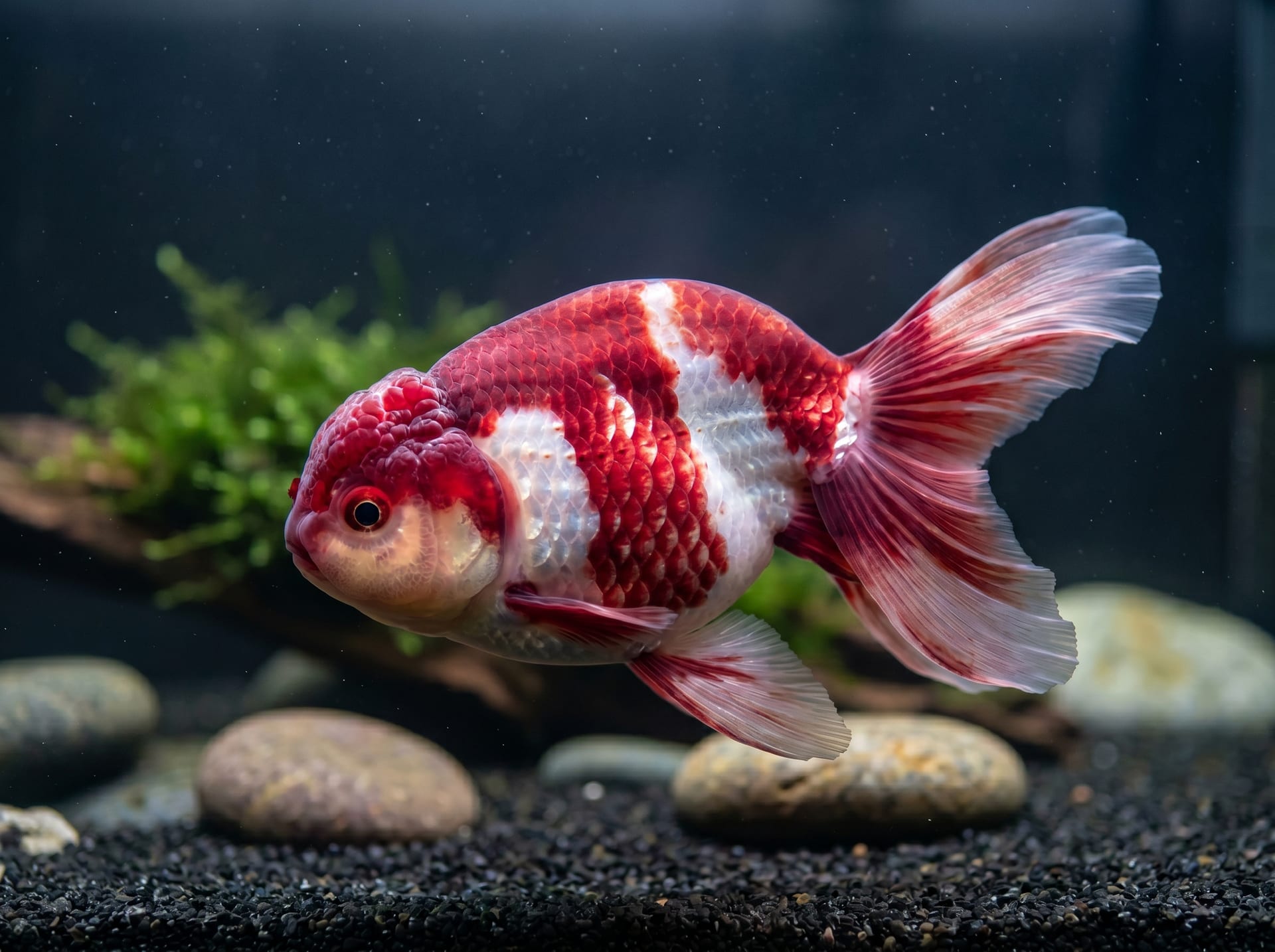
Bare Bottom (No Substrate): Makes waste easy to spot and cleaning simplest. Common for premium varieties like ranchu, tosa goldfish, and pompom goldfish
Colored Gravel/Color Sand: Visually striking for aesthetics-focused tanks. Medium grain size is easiest to handle
Aquatic Soil Not Recommended: Goldfish dig it up and break it down, causing water to become cloudy. Avoid unless plants are the main focus
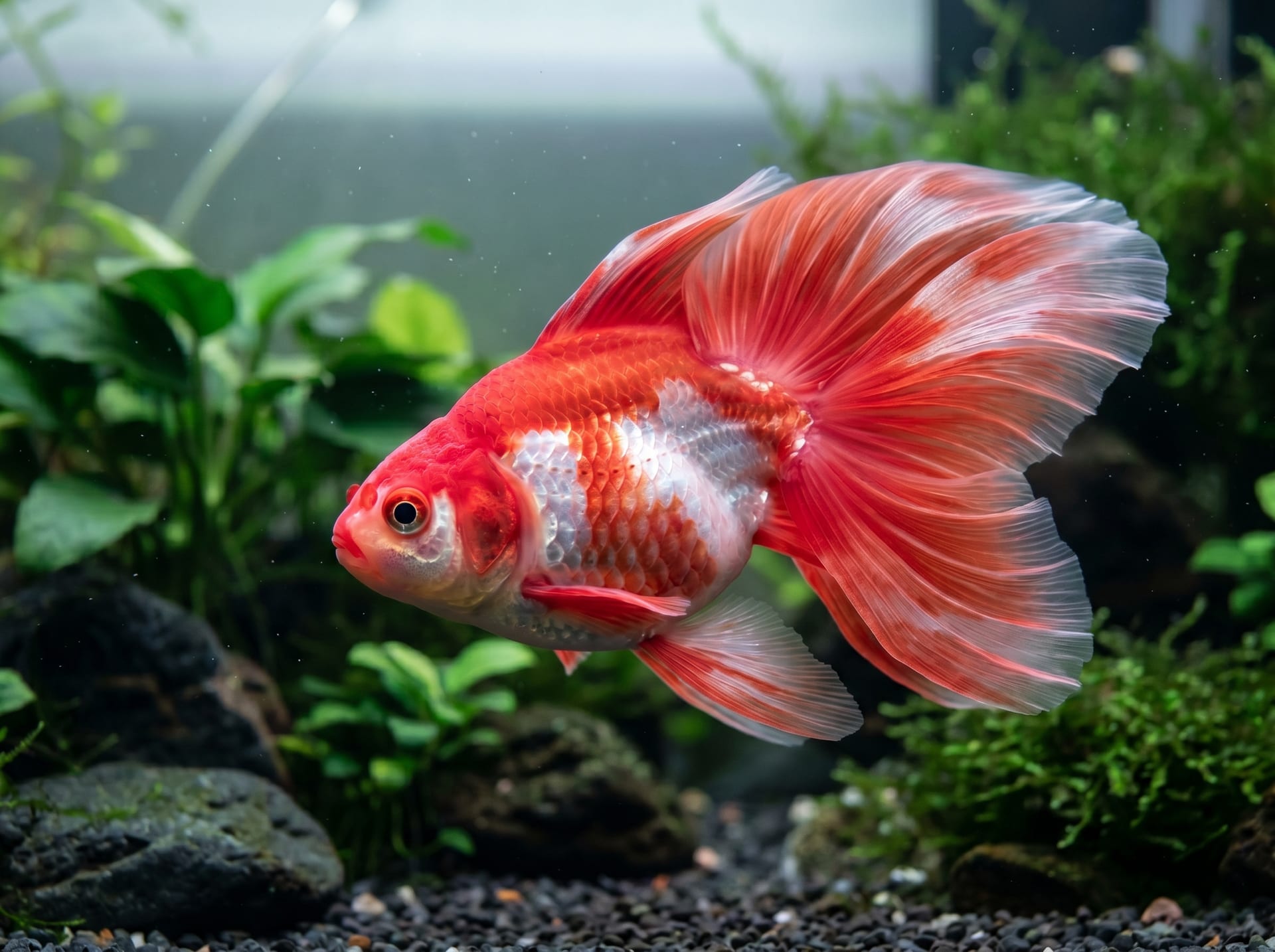
Layout materials like driftwood and rocks can be used, but sharp edges risk injuring goldfish. Since goldfish swim actively, keep obstacles minimal and ensure open space. For varieties with long tails like ryukin and calico ryukin, use smooth materials and gentle layouts to avoid injury.
Water Conditioning (Cycling): Steps to Cultivate Beneficial Bacteria
The most important process in setting up a tank is "water conditioning" (cycling). The goal is to establish bacteria that convert ammonia to nitrite, and nitrite to nitrate.
Set up the tank, substrate, and equipment. Rinse the substrate thoroughly with tap water before adding it
Pour in dechlorinated tap water gently (placing a plastic bag on the substrate and pouring over it prevents disturbance)
Start running the filter and air pump
Adding commercial bacterial supplements (like PSB or Tetra SafeStart) speeds up cycling
Run the tank for at least one week, preferably two weeks, without any fish
Use a water test kit to confirm ammonia and nitrite are zero before introducing goldfish
Some hobbyists add a few hardy, inexpensive "pilot fish" to provide an ammonia source for bacteria during cycling, but adding bacterial supplements is now standard practice. Resist the urge to add goldfish immediately. This preparation is key to long-term goldfish success.
Introducing Goldfish and Water Acclimation
Once your tank is ready, it's time to bring home your goldfish. Placing a newly purchased goldfish directly into the tank can shock it due to temperature and water quality differences, potentially weakening it. Always perform water acclimation.
Water Acclimation Steps
Float the bag on the water surface for about 30 minutes to match water temperature
Open the bag and add small amounts of tank water (~100ml) every 15 minutes, 3-4 times, to gradually match water chemistry
Finally, use a net to transfer only the goldfish to the tank (don't add the bag water as it may contain pathogens)
Don't feed on the day of introduction (the fish needs energy to adapt and digest)
Observe your goldfish closely for 2-3 days after introduction. If it stays at the bottom or has clamped fins, it's a sign of distress. Check for sudden temperature changes or water quality problems.
For Goldfish You Welcome from BreederDirect
At BreederDirect, you can purchase goldfish directly from trusted domestic breeders. We handle not only rare varieties like ranchu, tosa goldfish, and pompom goldfish, but also hardy and easy-to-keep varieties like wakin and comets.
Before purchasing from a breeder, your tank must be fully cycled. It's also helpful to ask the breeder about their typical water pH and temperature—this information helps during acclimation. Feel free to use BreederDirect's messaging feature to ask questions about care requirements.
Goldfish welcomed into a well-prepared tank thrive remarkably, living longer and developing vibrant colors. Please set up the perfect environment before choosing your favorite goldfish.