Goldfish Exhibitions & Contests: A Participation Guide | Show Standards and Judging Criteria
A guide to participating in goldfish exhibitions and contests, explaining judging standards. Detailed coverage of breed-specific evaluation criteria for Ranchu, Azuma Nishiki, Tanotchu and more, breeding and conditioning tips for exhibition, major competition information and participation eligibility.
Key Takeaways
A guide to participating in goldfish exhibitions and contests, explaining judging standards. Detailed coverage of breed-specific evaluation criteria for Ranchu, Azuma Nishiki, Tanotchu and more, breeding and conditioning tips for exhibition, major competition information and participation eligibility.
Related Species
What Are Goldfish Exhibitions?
Goldfish exhibitions (contests) are events where breeders bring their prized fish to compete on beauty, health, and body shape across different breeds. In Japan, this tradition dates back to the Meiji era, with shows held throughout the year nationwide, hosted by hobbyist clubs, goldfish dealers, and local governments.
Exhibitions evaluate far more than aesthetic appeal. Accuracy against breed standards, breeding skill level, and overall health are assessed comprehensively. For exhibitors, they provide clear targets for technical improvement; for buyers, they are opportunities to meet high-quality specimens. Hobby communities also use exhibitions as valuable venues for exchanging information and breeding stock.
Judging typically divides fish by breed class, sometimes further subdivided by size and age (first-year, second-year, three-years-or-older). A grand finals round brings together the top specimen from each class to determine the overall champion.
Breed-Specific Judging Criteria
Exhibition judging follows the "standard type" established for each breed. Judges possess deep knowledge of the ideal form each breed should exhibit and score each body part with precision.
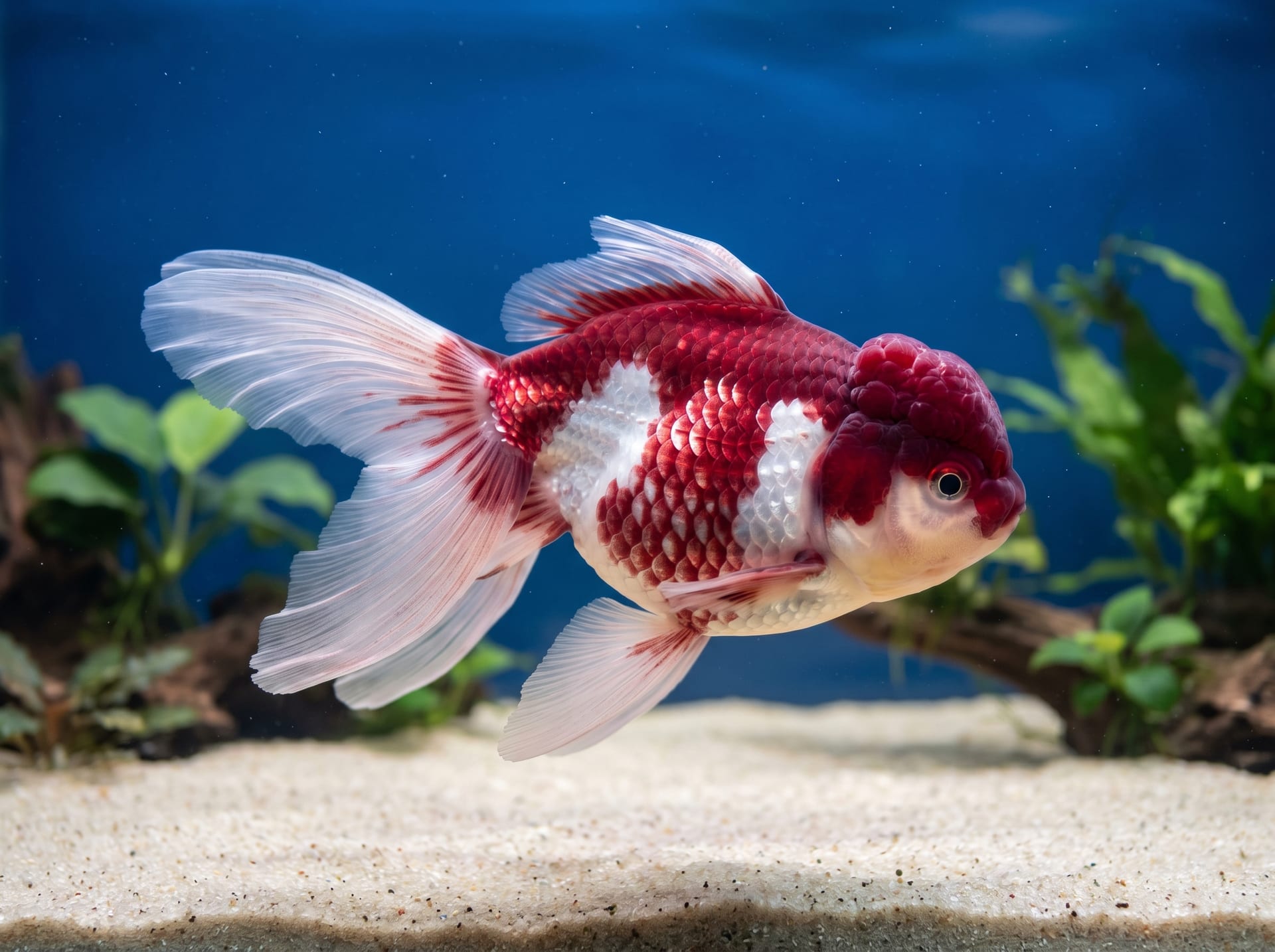
- Ranchu: Regarded as the king of Japanese goldfish, Ranchu lack a dorsal fin and have a rounded body, with a pronounced head wen (lipid growth) being the primary evaluation focus. Judges emphasize left-right symmetry when viewed from above, forming an elliptical shape; elegant swimming; and color vibrancy. The wen should develop evenly without pressing on the eyes or mouth. The tail fin should measure approximately half the body length, with four lobes opening cleanly—a key criterion for excellence.
- Azuma Nishiki: Combining an oranda head with tri-color markings, this breed is judged on head wen development, the three-color balance of white, red, and black, and fin length and shape. Particularly, the placement of black markings often divides judges' assessments, with symmetrical color distribution typically receiving higher scores.
- Tancho: Characterized by a pure white body with crimson-red pigmentation only at the crown (the "Tenko" marking). The shape, size, and position of the red area are paramount, with round, center-crown placement considered ideal. The soft, open tail fin and pristine white coloration also receive high marks.
- Ryukin: Distinguished by a rounded body and long four-lobed tail. Judges focus on tail shape, length, and spread; the balance between body height and length; and roundness viewed from the side. Specimens with horizontally spread tail fins that extend evenly without distortion typically rank highest.
- Oranda Lionhead: Evaluated on wen development, body symmetry, and fin quality. An wen that covers the entire head region is ideal, and the dorsal fin must stand perfectly upright.
Conditioning for Exhibition
"Conditioning" for exhibition differs markedly from routine maintenance and demands precise management planned months in advance.
- Temperature control: For Ranchu, slightly cool water around 18–22°C typically promotes wen development. Higher temperatures accelerate growth but often result in coarser finishing. Stable conditions are critical; use heaters and shade to prevent sharp fluctuations during seasonal transitions.
- Feeding management: Use digestible feeds such as spirulina, brine shrimp, and premium pellets to shape the body correctly. Overfeeding causes poor form and abdominal sagging, losing points in judging. Underfeeding weakens the fish, reducing stress tolerance during transport. Adjust daily portions to maintain a firm, idealized body shape.
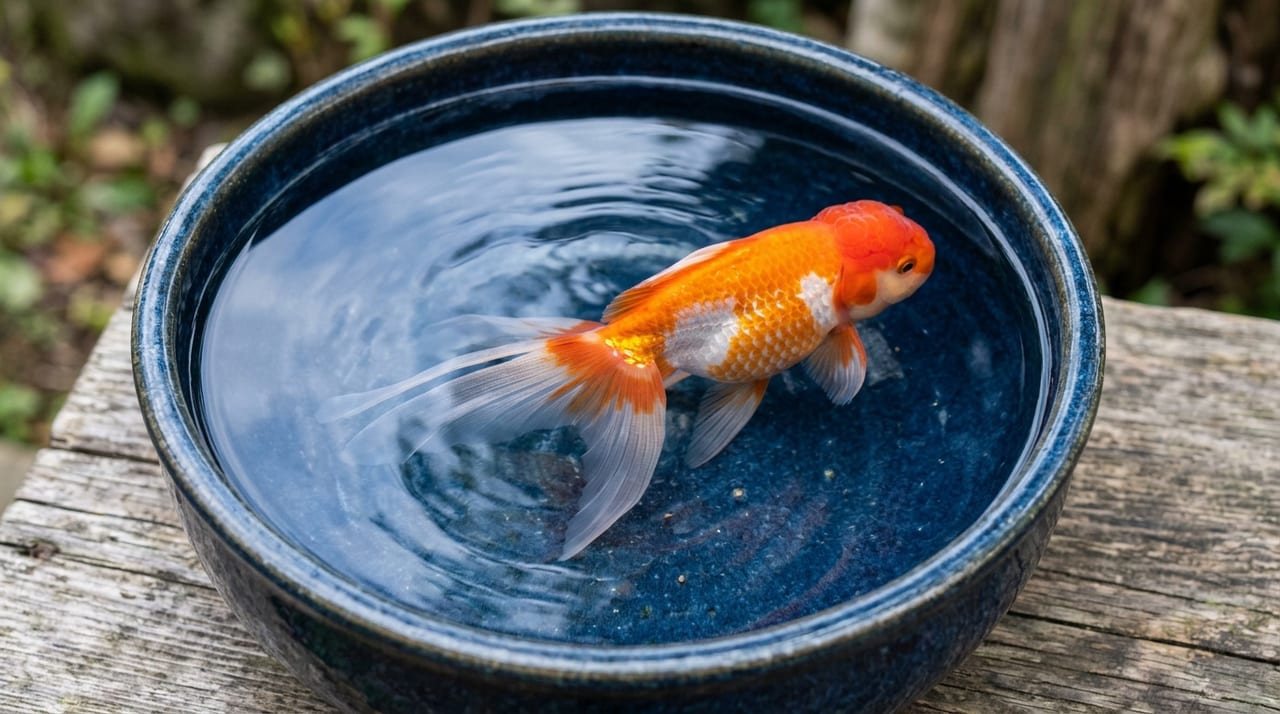
- Container selection: Since Ranchu evaluation emphasizes top-down profile, broad, shallow containers like wooden tubs ("toro-bune") or rectangular tubs are preferred over deep tanks. Black or navy containers are favored by experienced breeders to enhance color vibrancy.
- Pre-transport fasting: Withhold food for 2–3 days before show day to clear the digestive tract, minimizing transport stress and water fouling from waste. Acclimate the transport water to the venue's water parameters to reduce shock during introduction. Pay careful attention to temperature changes during delivery.
Exhibition Rules and Show Day Procedures
While rules vary by event, certain core considerations apply universally.
All exhibit fish must undergo health screening. Most venues prohibit fish with white spot disease, swim bladder disorder, torn fins, or other illness or injury. Judges carefully observe fish movement and body surface condition—unhealthy fish cannot earn high marks.
When registering, accurately declare breed, size, and age (first-year, second-year, etc.). False declarations result in disqualification. For hybrid or ambiguous breeds, contact the host organization beforehand for approval.
Arrive early on show day and allow time for the fish to acclimate in the designated containers or tanks. Judges may prohibit handling during evaluation. Listen closely to the judges' comments—they provide concrete guidance for future improvement.
Major National and Regional Competitions
- National Goldfish Exhibition (Osato Line): A historic event hosted by Ranchu enthusiasts in Osato, Saitama Prefecture. Named specimens gather from across Japan, showcasing the nation's finest Ranchu.
- Yatomi and Inazawa Goldfish Industry Events: Major goldfish-producing regions in Aichi Prefecture host exhibitions where breeder contributions are common, allowing close observation of industry-grade specimens.
- Prefectural Hobbyist Club Competitions: Regional Ranchu clubs and goldfish societies regularly host exhibitions. First-time entrants are encouraged to start with smaller, local shows. Competition is gentler, and experienced breeders often provide direct mentoring.
Advice for First-Time Participants
For debut participants, attending as an observer first is strongly recommended. Watching judges' approaches and comparing your fish against other entries provides objective perspective on your specimen's standing. Understanding what constitutes a "quality fish" through direct observation directly accelerates your breeding skills.
Joining a hobbyist club offers invaluable benefits. Veteran members share breeding techniques, broodstock selection, and conditioning secrets—practical knowledge unavailable from books or videos. Exhibitions balance friendly rivalry with genuine community exchange and knowledge transmission among enthusiasts.
There is no pressure to place in your first year. The primary goal is receiving judges' feedback to identify your breeding challenges. Repeated exhibition participation clarifies the ideal goldfish image and dramatically increases motivation. The exhibition is where you experience the goldfish's profound depth most intensely.