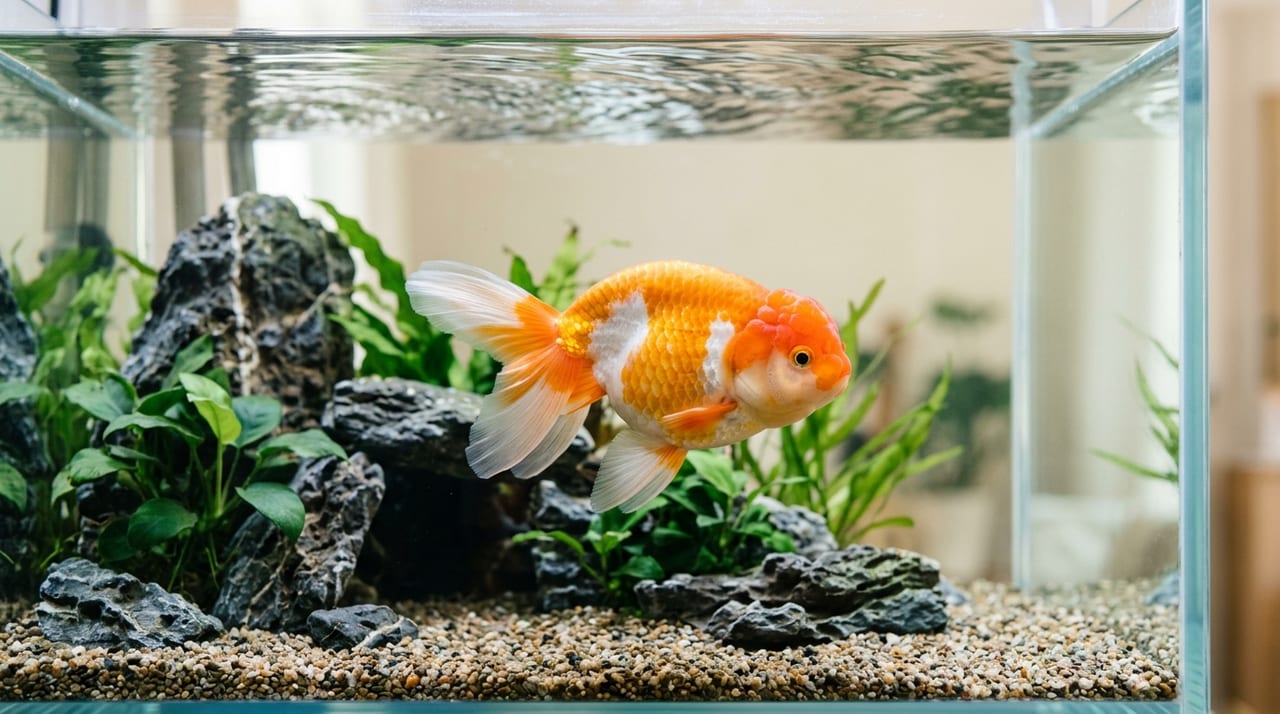
Why Treatment is Necessary for New Goldfish
Placing a goldfish directly into an existing tank immediately after purchasing from a breeder or shop — this is the most dangerous mistake beginners often make. Even if an individual appears very healthy, its immune system may be compromised by transport stress, environmental changes, and contact with other fish, and it may carry latent pathogens.
Treatment (quarantine) has two main objectives:
- Prevent infection spread to existing aquarium fish: If a new fish carries parasites or diseases such as white spot disease, fin rot, or anchor worms, introducing it to the main tank makes eradication extremely difficult.
- Stabilize the new fish itself: Recovery of immune function weakened by transport stress and time for adaptation to the new water conditions.
Especially when purchasing rare varieties and high-value individuals through a breeder direct-sales site, treatment is an essential investment, as the loss from disease outbreaks in the main tank can be substantial.
Preparing a Treatment Tank
Required Equipment
| Equipment | Specifications |
|---|
| Dedicated treatment tank | 30–45cm (for single fish) |
| Aeration (air stone) | Provides oxygen and water circulation |
| Filter (sponge type recommended) | Maintains water quality |
| Heater | Maintains stable water temperature at 25–26°C |
| Thermometer | Essential |
| Salt (sea salt, rock salt, or food-grade salt) | For salt baths |
A sponge filter (air-lift type) is optimal. Power filters produce water flow that may be stressful for weakened goldfish.
Water Preparation
Use the same water source (tap water) as the main tank, and condition it with dechlorinator to 25–26°C. Since the water in this tank will be discarded if disease is detected during quarantine, there is no need to culture bacteria from scratch. Circulation from aeration alone is sufficient.
Conducting Salt Baths
During the quarantine period, maintain a basic 0.5% salt bath. Salt baths provide the following benefits:
- Stabilization of body fluid osmotic balance
- Promotion of natural healing of minor wounds and inflammation
- Inhibitory effect on early-stage white spot parasites (Ichthyophthirius multifiliis)
Calculation Formula for 0.5% Salt Bath
```
Water volume (liters) × 5 = Required salt amount (grams)
Example: 30L tank → 150g
```
Do not add all salt at once. For safety, dissolve and add it in three portions at 6-hour intervals. Sudden changes in osmotic pressure cause stress to goldfish.
Types of Salt to Use
Commercial "aquarium fish salt" is safest, but food-grade salt (refined salt) from supermarkets can also be used. However, mineral composition varies depending on iodized salt or rock salt type, so use aquarium-specific salt or pure food salt if possible.
Observation Points During Quarantine
Observe the new goldfish for approximately 2 weeks. Daily items to check are as follows:
Body Surface and Fin Inspection
- White spots: Typical symptom of white spot disease (Ich). White spots approximately 0.5mm appear on body and fins
- Ragged/melting fins: Sign of fin rot (Columnaris infection)
- Redness or red spots: Possible sign of Aeromonas infection or hole-in-head disease
- Cotton-like white substance: Cotton mouth/fungal disease
- Fish rubbing against bottom or walls: Often caused by parasites on body surface
Behavior and Appetite Inspection
- Gasping at water surface (oxygen deficiency or parasites on gills)
- Isolated from others and remaining still (sign of poor health)
- Not eating (loss of appetite is common immediately after introduction, but warrants caution if lasting more than 3 days)
- Remaining on bottom without movement (swim bladder disease or weakness)
Treatment if Disease is Detected
If abnormalities are discovered during quarantine, begin medicated bath treatment based on symptoms.
Common Diseases and Treatment Medications
| Disease | Medication Example | Notes |
|---|
| White spot disease | Methylene blue, Green F liquid | More effective with water temperature raised above 28°C |
| Fin rot | Green F gold granules, Elbatage Ace | Can be combined with 0.5% salt bath |
| Fungal disease | Methylene blue | Secondary infection through wounds is common |
| Body surface parasites | Liffisch | More effective at low temperatures (15°C and below) |
Do not use activated carbon filters during medicated baths. Activated carbon will absorb the medication and render it ineffective. Use only sponge filters and add additional aeration if needed.
Precautions for Medicated Baths
- Always follow the specified dosage. More is not necessarily better; overdosing is toxic to goldfish
- Loss of appetite is common during medicated baths. Attempt feeding only once daily in small amounts
- Replenish medication with each water change (add medication amount proportional to the volume changed)
Quarantine Period and Timing for Introduction to Main Tank
Standard Quarantine Schedule
| Period | Content |
|---|
| Days 1–3 | Water acclimation followed by transfer to treatment tank. Begin salt bath. Feed minimally or not at all |
| Days 4–7 | Observe health condition while beginning normal feeding |
| Days 7–14 | Gradually reduce salt concentration if health remains stable |
| Day 14 onward | Consider moving to main tank if all is well |
A 2-week quarantine covers the incubation period for most diseases. For extra caution (rare varieties, high-value individuals, or introduction to a main tank with multiple goldfish), 4 weeks is ideal.
Moving to the Main Tank
Transfer to the main tank also requires water acclimation. Water conditions (pH, hardness, temperature) may differ between the treatment tank and main tank.
- Transfer the treatment tank water together with the fish into a bucket
- Add small amounts of main tank water gradually (approximately 30–50mL every 30 minutes)
- After 1–2 hours of gradual water adjustment, transfer the fish to the main tank
- Carefully observe the reaction of other fish and behavior of the new fish for several days after transfer
Treatment Tank Maintenance and Reuse
After transferring the fish to the main tank, keep the treatment tank clean for future use.
- After moving the fish, disinfect the tank interior with diluted bleach solution (50–100ppm)
- Remove and individually wash all filters, substrate, and decorations
- Allow to dry thoroughly before storage
Maintaining a treatment tank on hand enables emergency isolation (if disease develops in the main tank) and allows it to function as a multipurpose "hospital tank."
Points to Note When Purchasing from Breeders
When purchasing directly from a breeder, health status is generally better than through a shop, but treatment cannot be skipped.
Points worth confirming:
- Shipping method and duration: Long-duration transport in oxygen bags (6+ hours) causes significant stress to fish
- pH and water temperature used by the breeder: Careful acclimation is necessary if these differ greatly
- Condition of the bag upon arrival: If water is notably dirty or the fish appears weak, begin water acclimation immediately
Even when obtaining a quality individual directly from a breeder, improper subsequent care renders the effort futile. Quarantine and treatment are the fundamentals of goldfish keeping, and an investment in maintaining healthy goldfish long-term.