Goldfish Tank Lighting Guide — LED Selection, Duration & Color Enhancement | ブリちょく
Goldfish| ✍️ BreederDirect Editorial
Goldfish Tank Lighting Guide — LED Selection, Duration & Color Enhancement
Complete guide to goldfish tank lighting: LED types, brightness levels, recommended duration, effects on body coloration, and algae prevention tips.
Key Takeaways
Complete guide to goldfish tank lighting: LED types, brightness levels, recommended duration, effects on body coloration, and algae prevention tips.
Goldfish Tank Lighting Guide | LED Selection, Operating Hours & Color Enhancement Effects Explained
✍️
BreederDirect Editorial
The BreederDirect editorial team specializes in care information for animals, covering veterinary care and breeding to deliver beginner-friendly guides.
Find Goldfish on BreederDirect
Buy directly from verified breeders
Browse Related Listings
Find Goldfish listings related to this article on BreederDirect. Buy directly from verified breeders.
Related Tools
Related Articles
Browse by Category
🪸Coral
🐠Marine Fish
🐟Tropical Fish
🐡Goldfish
🐟Medaka
🦎Reptiles
Share
Lighting in a goldfish tank is not merely for visibility. It is an essential piece of equipment that significantly impacts your goldfish's health, body color, and circadian rhythm. By selecting appropriate lighting and using it correctly, you can help your goldfish grow more beautiful and healthy.
Why Goldfish Need Lighting
Maintaining Circadian Rhythm
Like humans, goldfish have internal clocks. A regular cycle of light and dark periods ensures their activity, rest, digestion, and immune functions work properly.
Continuous darkness without lighting can lead to various issues—decreased appetite, weakened immunity, and abnormal breeding behavior. Conversely, 24-hour lighting prevents goldfish from resting and causes stress.
Maintaining and Enhancing Body Color
The beautiful colors of goldfish are closely linked to light. When exposed to appropriate light, pigment cells become active, and their red, orange, white, and black colors become more vivid.
In particular, red pigments (carotenoid-based pigments) have their color enhancement promoted by light stimulation. Prolonged rearing in dark environments can cause body color to fade.
Observation by the Owner
Good lighting makes it easier to spot abnormalities on the fish's body—white spots, redness, fin damage—at an early stage. Early disease detection directly correlates with treatment success, making proper lighting important for health management.
Types of Lighting and Characteristics
Currently, LED lights are the primary choice for goldfish tanks. While fluorescent tubes and metal halide lamps were once mainstream, LEDs have become standard due to their energy efficiency, longevity, and minimal heat output.
Benefits of LED Lighting
Energy Efficient: Uses about half the power of fluorescent tubes
Long Lifespan: Approximately 30,000–50,000 hours (3–5 times longer than fluorescent tubes)
Low Heat Output: Helps prevent water temperature increases
Wide Range of Color Options: Available in white, warm, RGB dimmable, and more
Compact Design: Many sleek designs fit even narrow tanks
Types of LED Lighting
White LED
The most common type. It allows natural observation of your goldfish and illuminates the entire tank. Color temperatures of 6,000–8,000K (Kelvin) are ideal for goldfish tanks. Higher color temperatures appear more blue-white, while lower temperatures have warmer tones.
RGB LED (Full Spectrum LED)
A combination of red, green, and blue LEDs. Color adjustment is possible, allowing you to choose light colors that highlight your goldfish's body color. Emphasizing red-spectrum light creates a beautiful effect for red-colored goldfish.
Plant Growth LED
Chosen when cultivating aquatic plants alongside goldfish. It enhances wavelengths necessary for photosynthesis (red light around 660nm, blue light around 450nm), promoting plant growth. While it also works well with goldfish, excessively intense light can trigger excessive algae growth.
Dimmable & Timer-Equipped LED
Features built-in brightness adjustment and timer functions. Some models include "sunrise/sunset mode," which gradually brightens or darkens to mimic natural dawn and dusk, effectively reducing goldfish stress.
Choosing Lighting by Tank Size
When selecting lighting, it's important to match the light output to your tank size.
30cm Tank (about 12 liters)
Recommended light output: 300–500 lumens
Best choice: Small clip-on LED or slim LED
500 lumens or higher recommended if planting aquatic plants
45cm Tank (about 30 liters)
Recommended light output: 500–1,000 lumens
Best choice: Bar-type LED matching tank width
Medium light output sufficient if goldfish viewing is the main purpose
60cm Tank (about 60 liters)
Recommended light output: 1,000–2,000 lumens
Best choice: 60cm bar-type LED (dual-lamp setup also an option)
Adjust light output based on number of fish and presence of plants
Tanks 90cm and Larger
Recommended light output: 2,000 lumens or more
Best choice: Multiple lights in combination or high-output LED
Two or more lights recommended to prevent uneven illumination
Operating Hours Guidelines
Goldfish tank lighting should operate for 8–10 hours per day.
Recommended Schedule
Turn on at 8–9 AM, turn off at 6–7 PM: Easy to align with human daily rhythm
Automatic control with a timer: Manual on/off is easily forgotten. Using an electrical timer is recommended.
Risks of Excessive Operating Hours
Algae Bloom: Extended photosynthesis time causes algae to proliferate explosively
Goldfish Stress: Reduced rest time lowers immunity
Water Temperature Increase: While LEDs produce minimal heat, prolonged operation can still affect water temperature
Risks of Insufficient Operating Hours
Body Color Fading: Insufficient light stimulus reduces pigment cell activity
Aquatic Plant Death: If plants are present, insufficient photosynthesis causes them to wither
Disrupted Circadian Rhythm: Irregular light/dark cycles lead to goldfish health problems
Lighting and Body Color (Color Enhancement)
For goldfish enthusiasts, body color beauty is a major concern. Lighting affects not just how color "appears" but color "intensity" itself.
Impact of Light on Body Color
The red body color of goldfish comes from carotenoid-based pigments. While these pigments are obtained through diet, their intensity is also influenced by the quantity and quality of light.
Moderate Light: Promotes carotenoid pigment fixation and color enhancement
Excessive Light: Pigments break down more easily, potentially causing fading
Natural Light (Sunlight): Most effective for color enhancement, but requires careful management of water temperature and algae growth
Effective Lighting Practices for Color Enhancement
Choose LEDs containing red-spectrum wavelengths: Red wavelengths around 620–660nm promote red body color intensity
Maintain moderate light output: 8–10 hours with neither excessive nor insufficient light
Combine with color-enhancing feed: Lighting alone has limits. Combining with feed containing spirulina and astaxanthin increases effectiveness
Balance indoor and outdoor rearing: If possible, expose fish to natural sunlight outdoors spring through fall, and manage with LED lighting indoors during winter
Lighting Tips by Variety
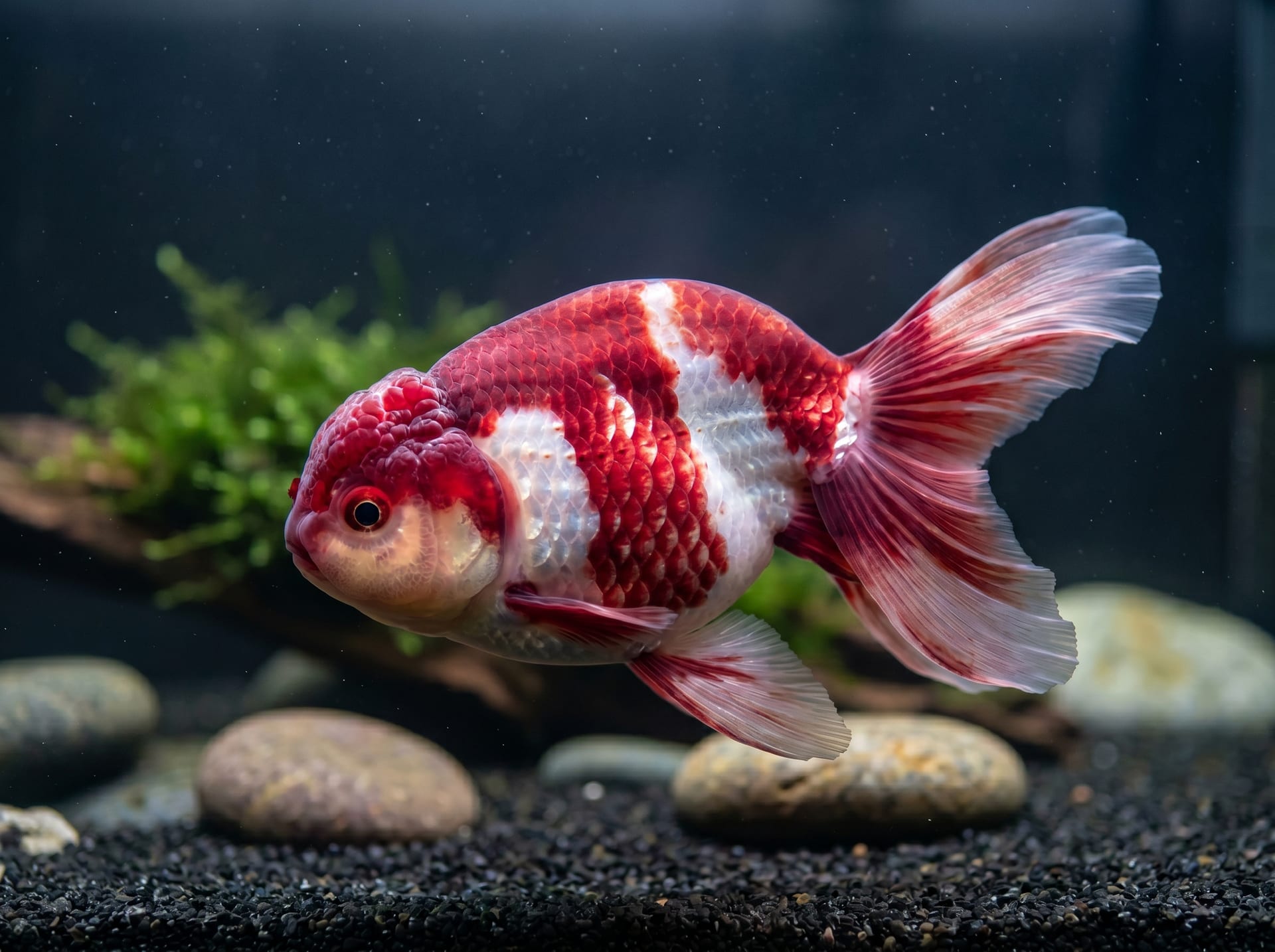
Red and Orange Goldfish (Wakin, Ryukin, Ranchu, etc.)
Warm-spectrum lighting (color temperature 5,000–6,500K) brings out beautiful red tones. Using RGB LED to emphasize red light is also effective.
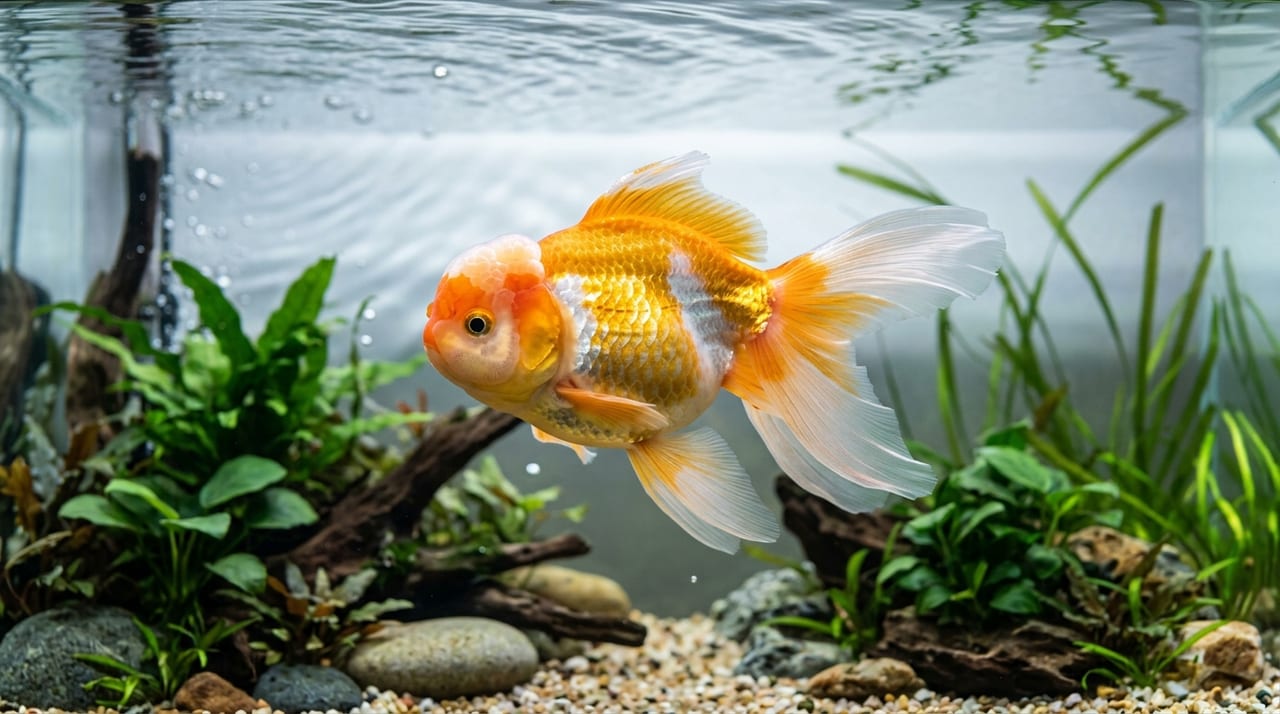
White Goldfish (White Ryukin, White Ranchu, etc.)
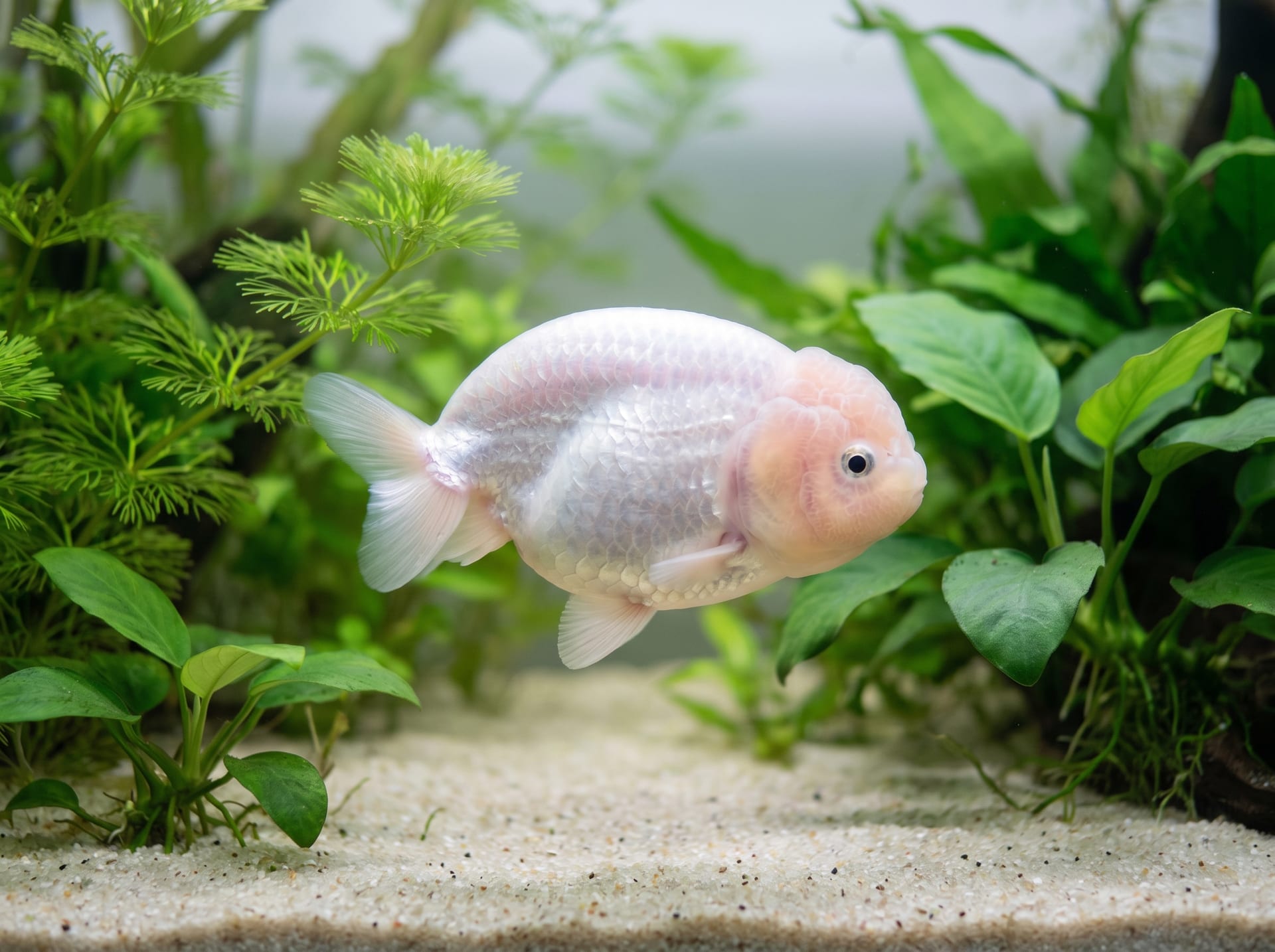
White LED with color temperature 6,500–8,000K enhances beauty. Warm-spectrum lighting can make white goldfish appear yellowish.
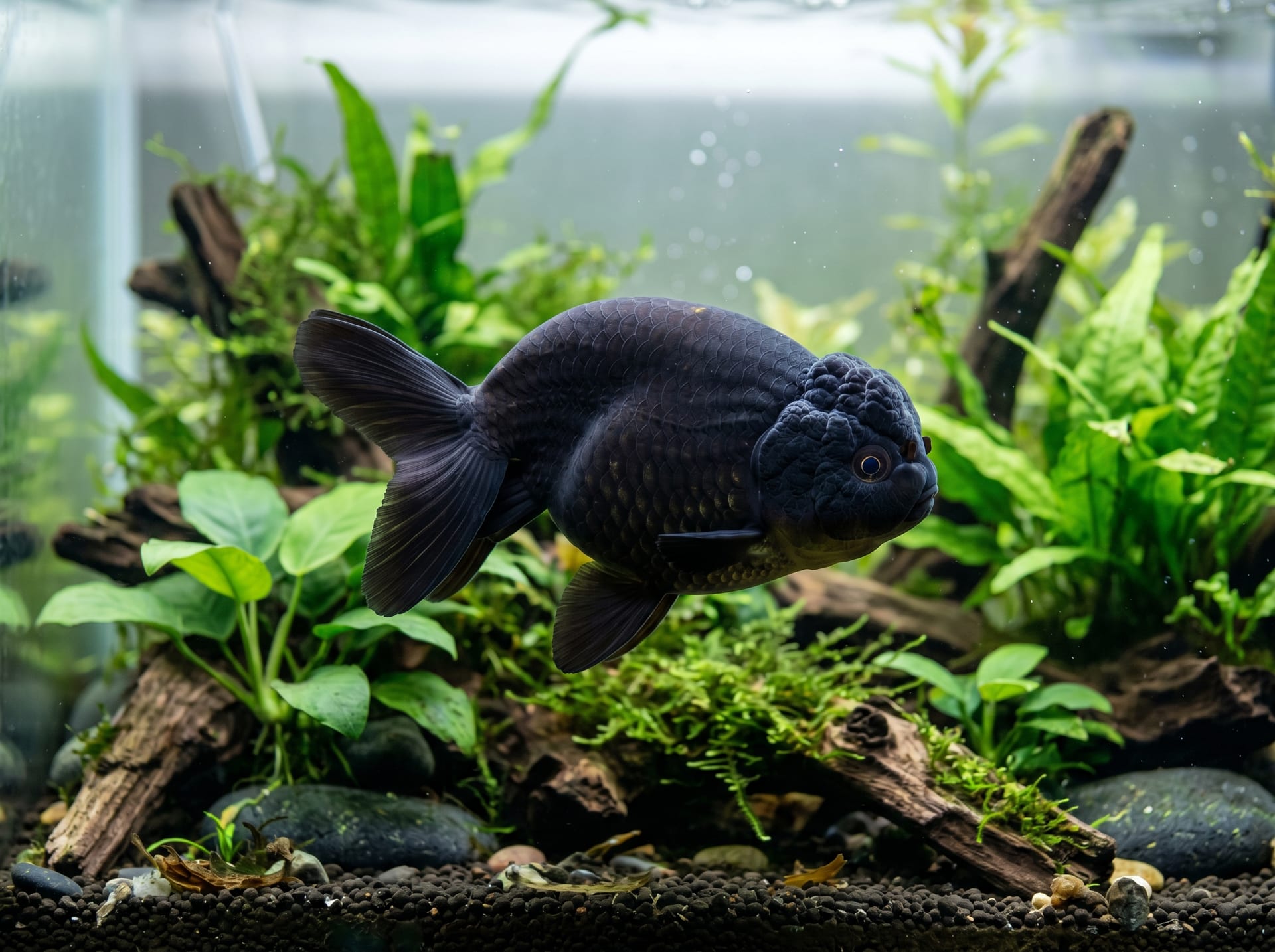
Black Goldfish (Demekin, Black Ranchu, etc.)
White LED emphasizes black's depth. Excessively intense light may cause the body's reflection to make black appear lighter, so sometimes slightly reduced light output is preferable.
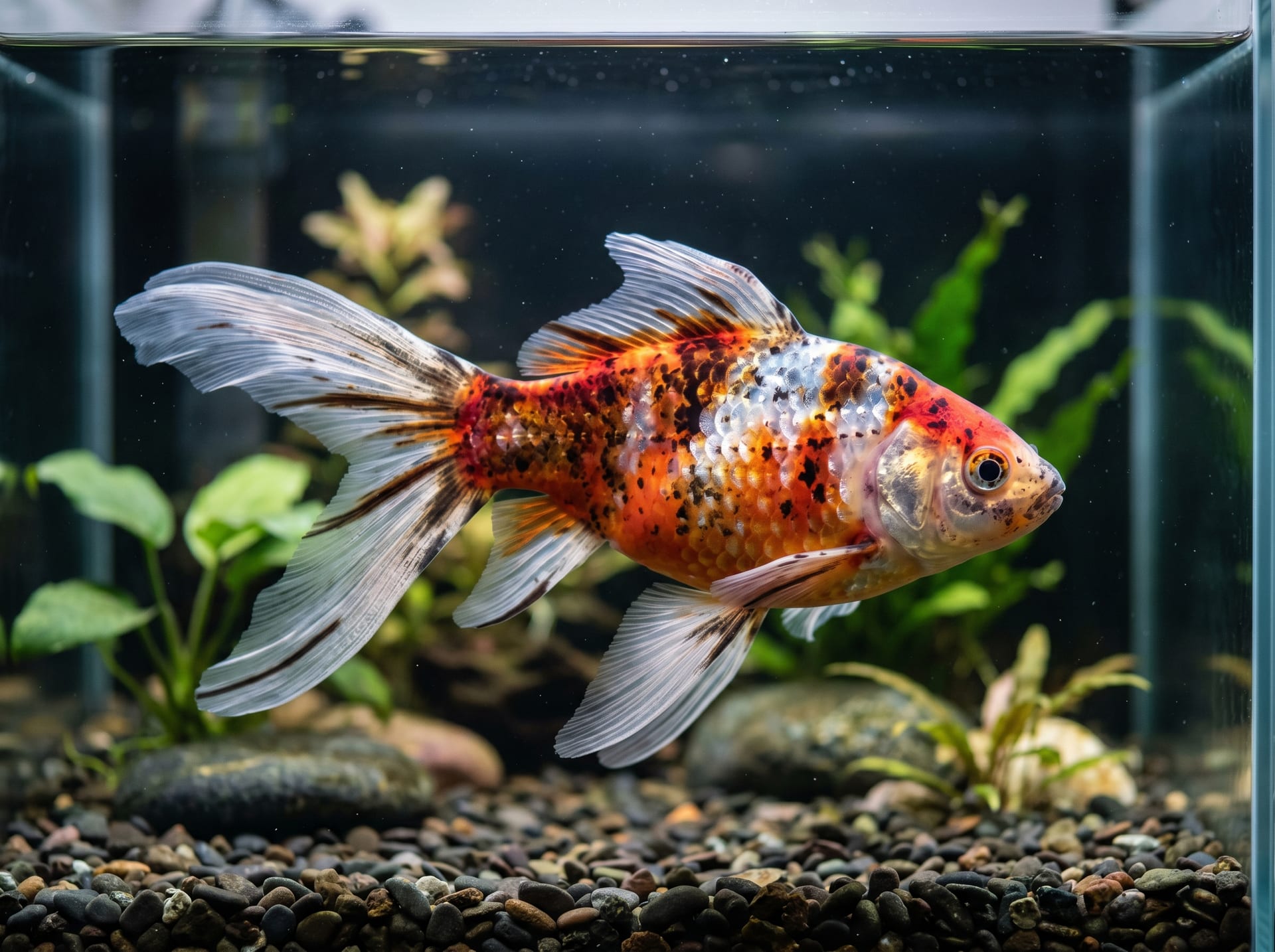
Calico and Tri-Color (Tosakin, Shubunkin, etc.)
Full-spectrum LED mimicking natural light is optimal to make multicolored patterns stand out. Color temperature around 6,000–7,000K brings out natural beauty.
Algae Control and Lighting Relationship
The most common lighting-related concern in goldfish tanks is "algae growth." Algae proliferate when light and nutrients (nitrates and phosphates) are present.
Lighting Management to Suppress Algae
Keep operating hours to 8 hours or less: If algae is a concern, reduce to 6–8 hours
Avoid direct sunlight: Placing tanks near windows creates excess light from both natural and LED sources
Choose adjustable LEDs: The ability to reduce brightness according to algae conditions is convenient
Implement lighting-free days: Creating one day per week without lighting is effective (with minimal impact on goldfish)
Dealing with Algae Growth
When algae appears, first review lighting operating hours and output. Simultaneously increase water change frequency to reduce nutrient concentration. Remove algae from glass surfaces with a scraper and bottom algae with a siphon. While goldfish eat some algae naturally, it's insufficient for control. Proper lighting management is essential.
Lighting Installation and Precautions
Installation Position
Lighting should be positioned 5–10cm above the water surface. Too close to the surface risks malfunction from water splashing. Using a lift-up stand makes maintenance convenient.
Waterproof and Splash-Resistant Rating
Since goldfish tanks experience frequent water splashing, choosing waterproof-rated lighting (IP65 or higher) provides peace of mind. With aeration, water droplets especially tend to reach the lighting fixture.
Avoid Sudden On/Off
Sudden bright light in a dark tank can startle goldfish and cause panic. Turn on room lighting first before tank lighting, or use LED with sunrise functionality. Similarly, turn off tank lighting before room lighting.
Lighting Lifespan and Replacement Timing
While LEDs are long-lasting, they gradually lose brightness with age. Check light output every 3–5 years from purchase; consider replacement if noticeably dimmer. Brightness loss is hard to notice with the naked eye—if your goldfish's color seems lighter than before, suspect lighting deterioration.
Summary
Goldfish tank lighting is essential equipment directly affecting not only viewing enjoyment but also goldfish health and body color. Select LED type, light output, and color temperature to match your tank size and the varieties you're raising, and maintain regular 8–10 hour daily lighting.
At Br-Choku, you can ask breeders directly about lighting environments and care conditions. With expert advice, create the optimal lighting environment for the goldfish you're bringing home.