Goldfish & Japanese Culture — The History and Charm of Goldfish Keeping Since the Edo Period
Exploring the deep connection between goldfish and Japanese culture from the Edo period to today: goldfish scooping festivals, breeding history, depictions in ukiyo-e and literature, and modern goldfish culture.
Key Takeaways
Exploring the deep connection between goldfish and Japanese culture from the Edo period to today: goldfish scooping festivals, breeding history, depictions in ukiyo-e and literature, and modern goldfish culture.
Related Species
Goldfish are the most familiar ornamental fish to Japanese people, and their history spans several centuries. From goldfish scooping at summer festivals to goldfish bowls in alcoves, and contemporary aquariums, goldfish have taken deep root in Japanese life and culture. In this article, we will trace the relationship between goldfish and Japanese culture from a historical perspective.
The Arrival of Goldfish and the Edo Period Goldfish Boom
Goldfish originated in China, where red fish born from carp mutations began to be bred for ornamental purposes about 1,000 years ago. They are believed to have been introduced to Japan from China around 1502 during the Muromachi period, initially remaining a luxury hobby enjoyed only by daimyo and wealthy merchants. Goldfish cultivation spread to the common people from the mid-Edo period onward. With advances in breeding techniques, prices fell, and the sight of goldfish sellers carrying shoulder poles walking through town became a symbol of summer in Edo. In 1748, Japan's first book on goldfish breeding, "Kingyo Yō Ganso" (The Goldfish Cultivation and Enjoyment), was published, systematically compiling knowledge about breeding methods and varieties. By the Edo period, prototypes of varieties such as Wakin, Ryukin, and Ranchu already existed, and Japan's unique selective breeding had begun.
Japanese Aesthetic Sense in Selective Breeding
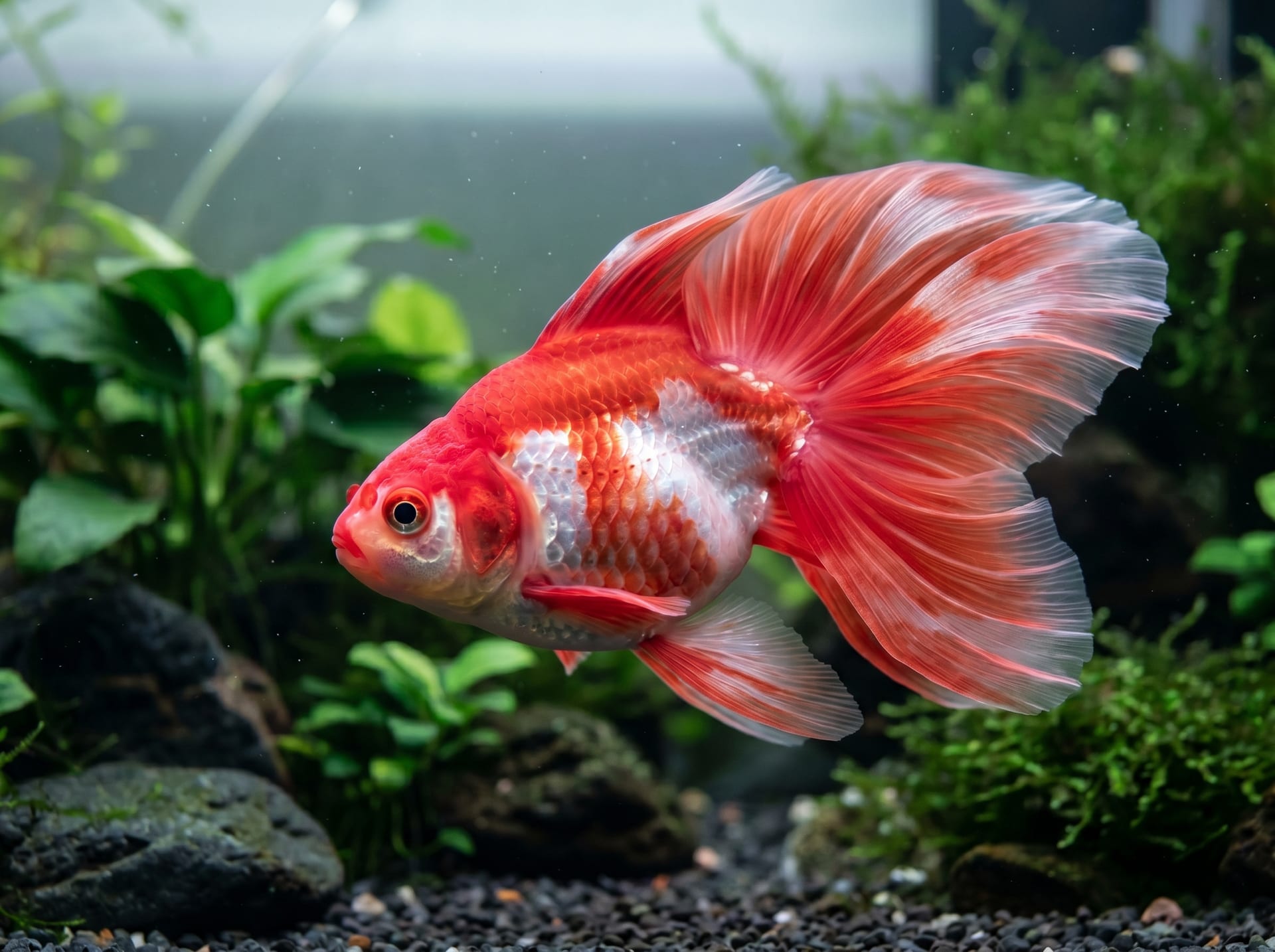
Japanese selective breeding of goldfish has developed based on a unique aesthetic sense. While China favored varieties embodying the strength of dragons and phoenixes, Japan—as exemplified by Ranchu—emphasized rounded, gentle forms and beauty viewed from above (kamami). Ranchu is called the "king of goldfish," with its smooth, dorsal-finless back line, well-balanced fatty tissue, and graceful swimming form serving as aesthetic ideals. Tosa-kin is a variety that developed uniquely in Kochi Prefecture and is bred in round bowls so its tail fin can be appreciated from above. Ji-kin is designated as a natural monument of Aichi Prefecture, prized for its "Rokurin" (six-scale) pattern—a white body with a red mouth and only six red fins. Each of these varieties can be said to be a cultural heritage created by the local climate and aesthetic sensibilities of different regions of Japan.
Goldfish in Art and Literature
Goldfish frequently appear in Japanese art and literature. In ukiyo-e prints, Utagawa Kuniyoshi left numerous humorous works personifying goldfish in his "Kingyo Zukushi" (All Things Goldfish) series. Images of goldfish drinking sake or wrestling reflect the playful spirit of Edo townspeople. In Meiji and later literature, Natsume Soseki depicted goldfish in "I Am a Cat," and Kōda Rohan wrote fantastical short stories featuring goldfish. In the world of haiku, "goldfish" is established as a summer seasonal word, with "kingyo-dama" (glass goldfish bowls) and "kingyo-uri" (goldfish sellers) also used as seasonal terms. Even in the modern era, goldfish remain a popular motif in art and photography, with goldfish art exhibitions held annually in Nara and Tokyo drawing large numbers of visitors. Goldfish are not merely pets but also a mirror reflecting Japanese aesthetic sensibilities.