Complete Giraffa Horn Beetle Breeding Guide | From Larval Care to Adult Rearing of the World's Longest-Jawed Large Beetle | ブリちょく
Insects| ✍️ BreederDirect Editorial
Complete Giraffa Horn Beetle Breeding Guide | From Larval Care to Adult Rearing of the World's Longest-Jawed Large Beetle
Complete guide to Giraffa Horn Beetle breeding. This practical guide covers larval substrate management, adult care, breeding, and egg-laying setup construction for this Southeast Asian large beetle with the world's longest mandibles—everything you need to raise large specimens.
Key Takeaways
Complete guide to Giraffa Horn Beetle breeding. This practical guide covers larval substrate management, adult care, breeding, and egg-laying setup construction for this Southeast Asian large beetle with the world's longest mandibles—everything you need to raise large specimens.
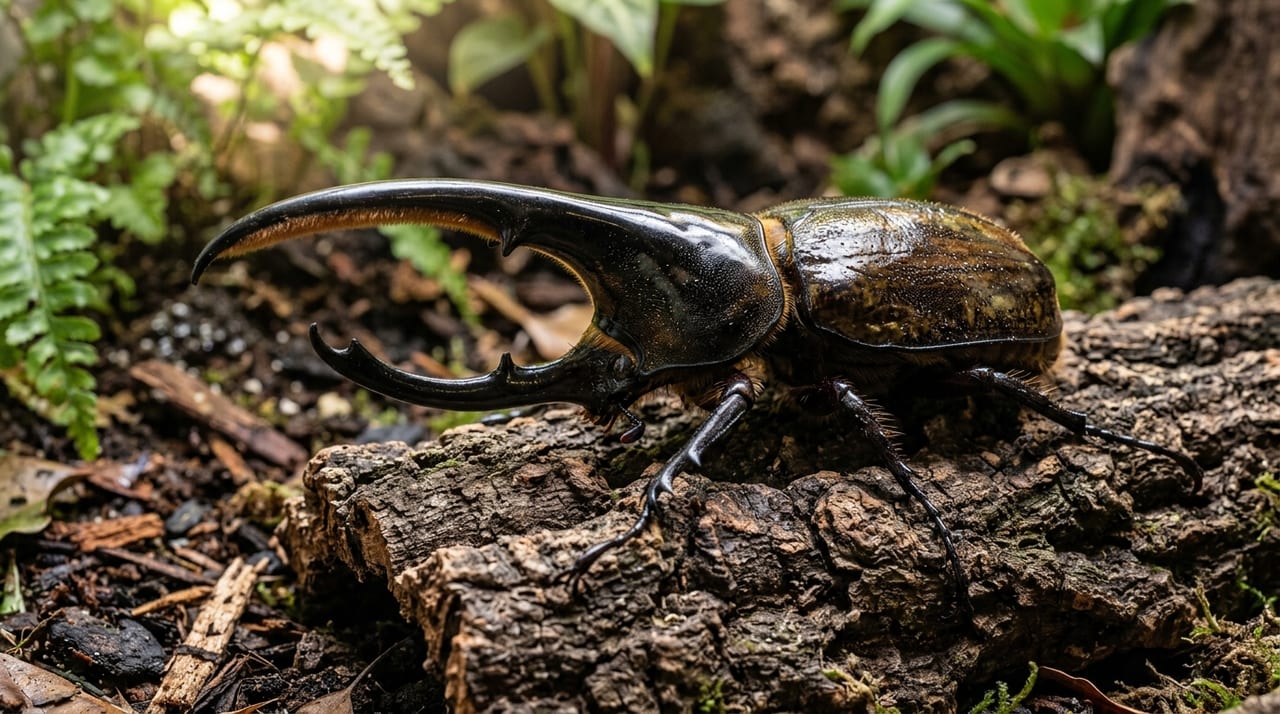
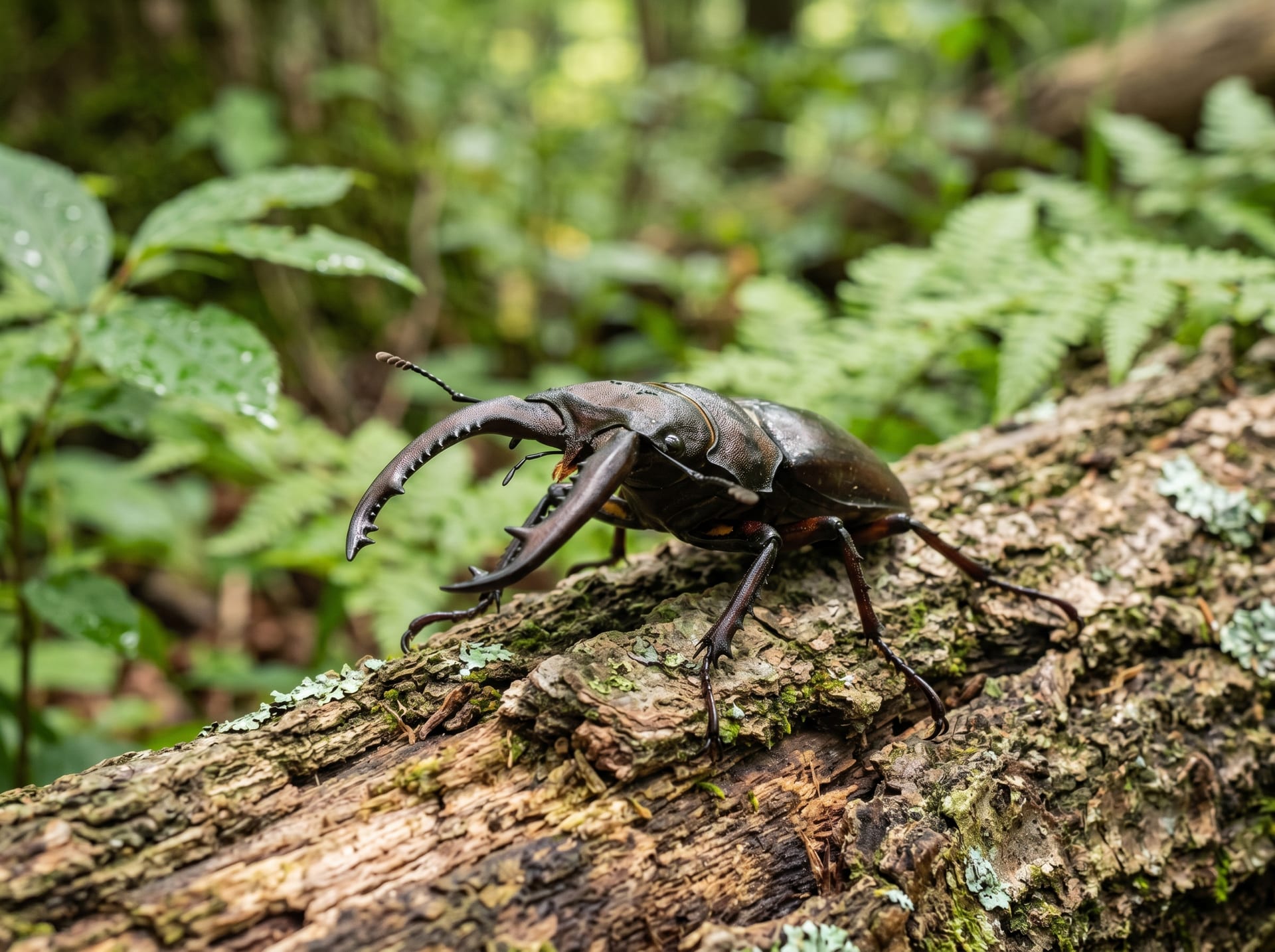
The Giraffa Horn Beetle (Prosopocoilus giraffa) is widely known among insect enthusiasts as the stag beetle with the world's longest mandibles. Males often have mandibles that exceed their body length, and their impressive appearance continues to captivate collectors worldwide. This article provides practical guidance covering everything from basic characteristics of the Giraffa Horn Beetle to larval management, adult maintenance, and breeding methods.
Basic Information and Subspecies of the Giraffa Horn Beetle
The Giraffa Horn Beetle is a large stag beetle widely distributed across Southeast Asia (Indonesia, Malaysia, Thailand, the Philippines, and others). Males typically reach 65–110 mm in body length, with large specimens exceeding 110 mm when including the mandibles.
The following are recognized subspecies:
ssp. giraffa (Java origin): Individuals tend to develop particularly long mandibles
ssp. bolinaoensis (Luzon, Philippines): Slightly smaller with a tendency toward darkened mandibles
ssp. elphingtoni (India origin): Body color tends toward reddish tones
ssp. lacordairei (Thailand/Malay Peninsula): Individuals tend to grow relatively large
The characteristic feature of the Giraffa Horn Beetle is the length of its mandibles in proportion to body size. As the body grows larger, the mandible ratio increases dramatically—a phenomenon known as "allometry." Major-morph (large-jawed) and minor-morph (small to medium-jawed) individuals show markedly different mandible shapes, sometimes appearing to be different species entirely.
Basic Data for the Giraffa Horn Beetle
Item
Details
Body Length (Males)
65–110 mm (large specimens exceed this including mandibles)
✍️
BreederDirect Editorial
The BreederDirect editorial team specializes in care information for animals, covering veterinary care and breeding to deliver beginner-friendly guides.
Find Insects on BreederDirect
Buy directly from verified breeders
Browse Related Listings
Find Insects listings related to this article on BreederDirect. Buy directly from verified breeders.
Giraffa Horn Beetle larvae prefer fermented substrate. While rearing in fungal medium is possible, fermented substrate is generally considered more stable due to better digestive efficiency.
Substrate Selection
"Fully mature substrate" or "secondary fermented substrate" is recommended. Always aerate the substrate, and allow it to sit for 1–2 days before use to stabilize temperature and moisture. Moisture content should be approximately 50–60%, gauged by the substrate holding together when squeezed.
Container Size and Change Intervals
First and second instar larvae should be housed in 1.1–1.5 L bottles; when third instar is reached, transfer to larger 3–5 L containers. For specimens targeting maximum size, 8–10 L or larger containers are effective.
Change substrate every 3–4 months, observing larval condition and waste accumulation. With stable temperatures, larval growth becomes easier to monitor.
Temperature Management
The optimal temperature range for larvae is 22–26°C. Above 30°C, larvae may weaken; summer care requires special attention. Below 18°C in winter, growth becomes extremely slow; heating should be considered.
Adult Care Environment and Lifespan
With proper environmental setup, adult Giraffa Horn Beetles can be maintained for relatively extended periods.
Enclosure and Environmental Setup
Enclosure size: Plastic container (medium to large) at least 30 cm wide
Substrate: Approximately 5 cm of insect substrate
Perch: Essential (allows males to right themselves if they tip over)
Hiding spots: Bark pieces or cork bark
Maintain temperatures of 24–28°C and humidity of 50–70%.
Food and Feeding Method
Commercial high-protein jelly is the standard. Change food every 2–3 days; remove moldy or degraded jelly immediately. Banana and apple can be offered, but require careful management due to spoilage risk.
Lifespan Guidelines
After eclosion, adults do not begin feeding for a certain period (approximately 2–3 months). Following feeding initiation, males typically live 3–6 months and females 5–8 months. Under optimal conditions, some individuals can be maintained for nearly a year.
Breeding and Egg-Laying Setup Construction
Successful breeding of Giraffa Horn Beetles depends on properly constructing an egg-laying container.
Pairing Method
Pair mature (at least 1–2 months post-feeding) males and females. In hand-pairing, males may clamp females with their mandibles; allow them to meet naturally while supervised, confirm mating, then separate.
Egg-Laying Setup Components
Container: Medium-sized or larger with mite-prevention features
Substrate: Pack high-grade fermented substrate firmly 10–15 cm from the bottom; loosely layer 5–10 cm on top
Egg-laying wood: Not strictly necessary, but inclusion can encourage female confidence in laying
Temperature: Approximately 25–28°C
When females begin laying, you can observe them burrowing through the substrate. Excavation typically occurs 4–6 weeks after setup.
Larval Excavation and Management
After excavation, place larvae individually in the substrate containers described above. Initially house young larvae in small bottles, upgrading container size as they grow.
Tips for Raising Large Specimens
The main appeal of the Giraffa Horn Beetle is its impressive mandibles. To raise large specimens, observe the following:
Adequate larval nutrition: Use high-quality fully mature substrate and regularly replace it with fresh material. When larvae show yellow coloration (late third instar to pre-pupation stage), avoid substrate changes to allow pupation chamber construction.
Consistent temperature management: Sudden temperature fluctuations stress larvae. Maintaining a stable environment supports steady growth.
Sufficient container capacity: Larval growth requires space. Small containers restrict development, often resulting in undersized adults.
Important Notes on Giraffa Horn Beetle Care
As a Southeast Asian invasive species, strict adherence to the following prevents establishment in Japan:
Never release captive individuals into the wild
Dispose of dead specimens appropriately
At import, follow applicable laws (Invasive Species Act, etc.) and rear only legally obtained specimens
Additionally, males' large mandibles can lacerate human skin; handle with care. Beginners should wear leather gloves.
Summary
The Giraffa Horn Beetle is relatively easy to breed and, with proper care from larva to adult, can be raised reliably. Its uniquely long mandibles offer the full rewarding experience of insect breeding. Taking on reproduction opens doors to producing large specimens and managing bloodlines, providing entry into higher-level insect breeding. At Br-choku, you can purchase Giraffa Horn Beetle larvae and adults directly from domestic breeders with careful rearing practices. Enjoy insect keeping, starting with trusted breeders.