Gar Fish (Alligator Gar, Spotted Gar) Care Guide | Large Aquariums, Feeding, and Legal Regulations for Ancient Fish
How to care for North American ancient fish gar (alligator gar, spotted gar, and others). Explanation of large aquarium requirements, air breathing mechanism (swim bladder) and management, carnivorous feeding plans, difficulties with tankmates, regulations under the Invasive Alien Species Act, and detailed information on legal breeding methods.
Key Takeaways
How to care for North American ancient fish gar (alligator gar, spotted gar, and others). Explanation of large aquarium requirements, air breathing mechanism (swim bladder) and management, carnivorous feeding plans, difficulties with tankmates, regulations under the Invasive Alien Species Act, and detailed information on legal breeding methods.
Related Species
What Kind of Fish is a Gar?
Gar fish are an ancient fish group inhabiting rivers and lakes of North and Central America, and are one of the "living fossils" that have maintained an appearance nearly identical to the present day since the Cretaceous period (approximately 100 million years ago).
They have characteristic elongated snouts (beak-like mouths), hard diamond-shaped scales (ganoid scales) covering their entire bodies, and swim bladders that can directly breathe air (primitive lungs). The behavior of surfacing to breathe air is a normal physiological function.
Main Species
| Species | Max Length | Features |
|---|---|---|
| Alligator Gar (Atractosteus spatula) | Over 3m | Largest species, short wide snout, invasive alien species in Japan (breeding prohibited) |
| Spotted Gar (Lepisosteus oculatus) | 60–90cm | Spotted body pattern, relatively compact |
| Longnose Gar (Lepisosteus osseus) | 90–180cm | Elongated snout, most popular |
| Florida Gar (Lepisosteus platyrhincus) | 60–90cm | Similar to Spotted Gar |
| Shortnose Gar (Lepisosteus platostomus) | 60–90cm | Relatively small |
Japanese Legal Regulations (Required Reading Before Breeding)
The Alligator Gar was designated as an invasive alien species starting June 2023.
Existing captive individuals have transition measures in place, but new imports, purchases, and breeding are prohibited. The act of releasing them into rivers out of pity is also illegal and subject to penalties (individuals: up to 3 million yen fine/up to 3 years imprisonment).
If you are already breeding Alligator Gar:
- Registration with the Ministry of the Environment is required
- Transfer and resale are also prohibited
- Choose to either continue breeding or transfer to a designated receiving facility
Spotted Gar, Longnose Gar, Florida Gar, and other species are currently not designated as invasive alien species, but please confirm the latest information as legal changes are possible.
Required Breeding Equipment
Tank Size
Gar fish grow quickly, with juveniles becoming large in just a few years.
| Fish Length | Minimum Tank Size |
|---|---|
| 30cm or less (juvenile) | 120cm tank (180L or more) |
| 30–60cm | 180cm tank (500L or more) |
| 60–90cm (adult Spotted Gar) | 240cm tank (1000L or more) |
Before purchasing, confirm that you can acquire a tank size that can be maintained in the medium to long term. Releasing them into rivers because "they grew too large" is illegal and constitutes ecological destruction.
Filtration Equipment
Because they eat large amounts and excrete large amounts, oversized filtration is essential.
- Multiple top filters or external filter + sub-filter
- Aim for 5–10 times the tank volume per hour flow rate
- Weekly water changes of 2 or more are required until biological filtration bacteria establish (1–2 months)
Water Quality and Temperature
| Parameter | Target Value |
|---|---|
| Temperature | 22–28°C (24–26°C optimal) |
| pH | 6.5–7.5 (slightly acidic to neutral) |
| Hardness | Wide range acceptable, but moderate (10–15 dGH) is ideal |
| Dissolved Oxygen | Ensure water surface agitation for oxygen supply |
Air-Breathing Considerations: Gars need to breathe air at the water surface. The tank cover must have a ventilated structure (metal mesh, etc.), and ensure an air layer of 5cm or more between the water surface and the cover. Surfacing to breathe is normal, but if it's too frequent (every few minutes), suspect low dissolved oxygen.
Feeding
Gar fish are carnivorous and naturally chase live fish.
Main Foods and Transition
| Food Type | Features |
|---|---|
| Goldfish, small tropical fish (live food) | Juveniles often only respond to moving food |
| Frozen smelt (wakasagi) | Excellent as staple food, good value |
| Frozen shrimp | High palatability, use as supplemental food |
| Artificial pellets (large fish pellets) | Best cost-effectiveness if acclimated |
Training to Transition from Live Food:
- Show thawed frozen fish moved with tweezers
- Once it bites, gradually reduce the frequency of twitching movements
- Drop near water surface → gradually transition to eating just from drifting
Feeding Frequency and Amount
- Juvenile period (30cm or less): Small amount daily (equivalent to 3–5% of body length)
- Adult period (30cm or more): 2–3 times weekly (until belly rounds)
- Avoid overfeeding as digestion is slow
- Remove uneaten food immediately (causes water quality deterioration)
Tankmates
Consider all fish that fit in their mouth as prey for gar fish.
- Mixing with fish smaller than their mouth size is dangerous
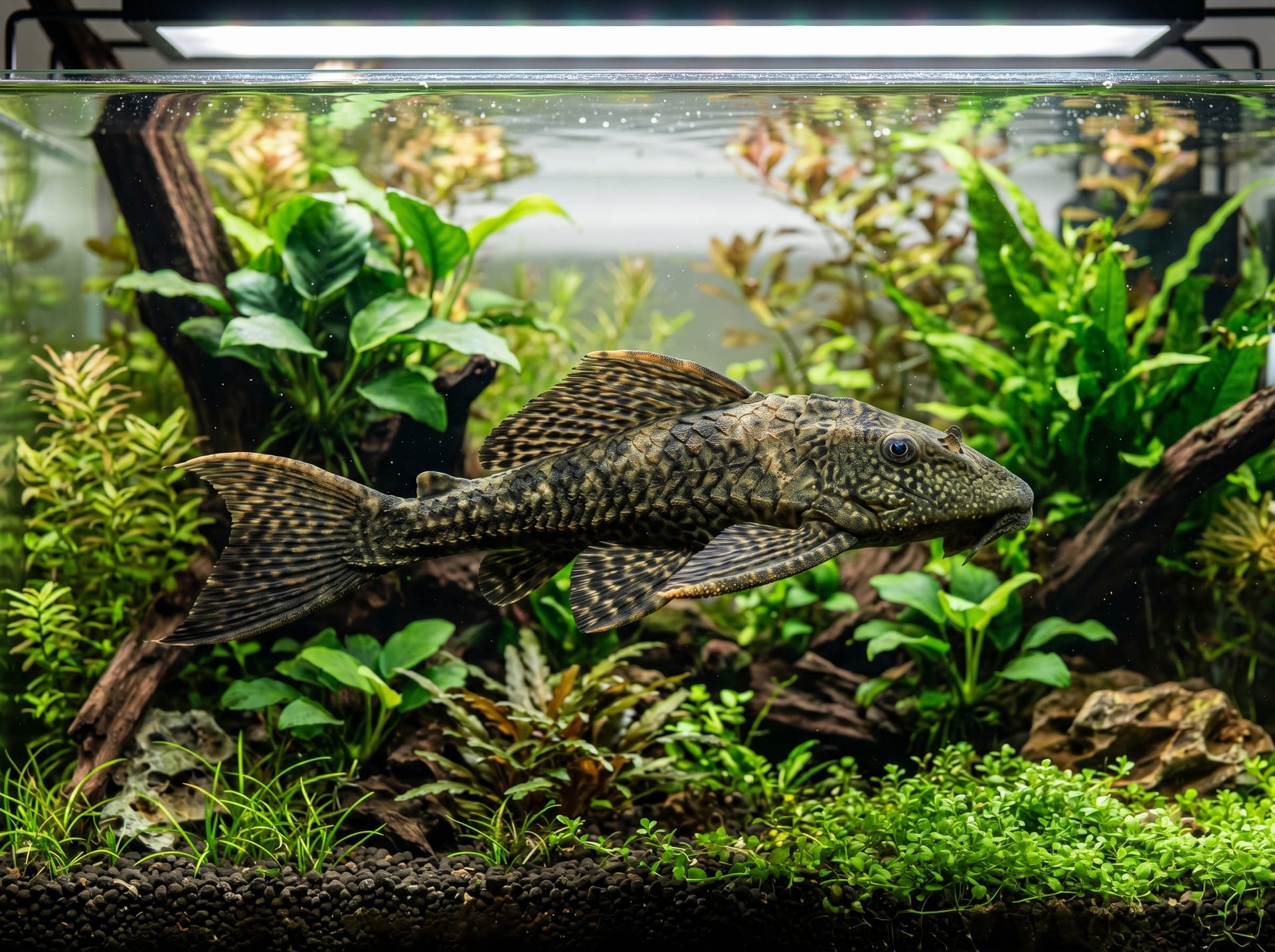
- Relatively few issues with same-sized large fish (plecos, large catfish, etc.)
- Intraspecific tankmates (multiple individuals) are possible in the fry stage, but territorial fights develop as they grow
- If keeping tankmates, provide a large tank and many hiding places
Health Management
Checking Air Breathing
Normal breathing consists of several to a dozen water surface breathing episodes per day. Frequent breathing 10 or more times per hour indicates low dissolved oxygen or illness. Strengthen aeration and perform water changes.
Checking Scales and Injuries
The hard scales are relatively durable, but they can catch on filter intakes or tank corners and become damaged. Missing scales can become entry points for infection, so use commercially available fish medicine (New Green F, etc.) on wounds early.
White Spot Disease and Body Surface Abnormalities
Like other tropical fish, they are susceptible to white spot disease (Ichthyophthirius). Establish a quarantine period (2–4 weeks) after introduction and confirm no issues before starting tankmates.
Summary
Gar fish are attractive for the dignity of "living fossils" continuing from tens of millions of years ago and their ornamental value with their alligator-like faces. However, before beginning to breed them, you must understand the reality of large size, large excretion volume, and legal regulations (especially for Alligator Gar).
If you choose Spotted Gar or Longnose Gar, long-term breeding is possible with a proper large tank (180–240cm) and powerful filtration equipment. Welcome them with the resolve of a responsible breeder to care for them until the end.