Can Deep-Sea Fish Really Be Kept at Home?
To answer honestly to the question "I want to keep deep-sea fish in a home aquarium," the reality is "while there are documented cases with limited species, most truly deep-sea fish are extremely difficult." Though the definition of "deep sea" is ambiguous, fish living at depths of 200 meters or deeper are generally called deep-sea fish. Deep-sea environments present extreme conditions like the following, and whether they can be reproduced in a home aquarium depends on the specific conditions.
| Environmental Factor | Deep-Sea Conditions | Reproduction in Home Aquarium |
|---|
| Water Temperature | 2–6°C | Possible |
| Water Pressure | Dozens to hundreds of atmospheres | Physically impossible |
| Light | Near-total darkness with little penetration | Possible |
The issue of water pressure is not straightforward. Many deep-sea fish accumulate high-pressure gas in their swim bladders, and rapid decompression poses the risk of body expansion and rupture. Even at aquariums, examples of successful long-term husbandry of true deep-sea fish (such as Thaumatichthys species and anglerfish relatives) are extremely rare worldwide. In this article, I will clarify the reality of fish commonly called "deep-sea fish" and the scope of what general hobbyists can realistically attempt.
"Deep-Sea Fish" Are Common Names, but They're Actually Shallow-Water Fish
Devil Stonefish (Synanceia verrucosa) is sometimes discussed with the image of a deep-sea fish, but it is actually a shallow-water fish lurking in rocky reefs and sandy substrates at depths of around 3–30 meters. It is known for having some of the world's most potent venomous spines, and handling with bare hands is strictly forbidden. Husbandry itself is relatively straightforward, and documented cases exist when the following conditions are met.
- Large tank (90 cm or larger recommended)
- Moderate water flow
- Carnivorous diet (frozen shrimp or fish fillets)
However, envenomation from the venomous spines causes intense pain and can be life-threatening in some cases, so keepers must exercise constant high-level care.
Rattail fish (Grenadier) relatives inhabit a wide depth range from 200 to over 2000 meters, though some species live in relatively shallower areas. Their bodies are fragile and easily damaged during collection and transport, and even aquariums have few successful long-term husbandry records. Home aquarium husbandry is not realistic.
Practical Options for Home Keeping: Cold-Water Fish from Deep Areas
Rather than attempting true deep-sea fish, a more realistic approach is to focus on "cold-water fish collected from deeper areas." Species inhabiting cold-water zones at depths of around 50–150 meters experience relatively less decompression damage and can sometimes be kept if low water temperature is maintained.
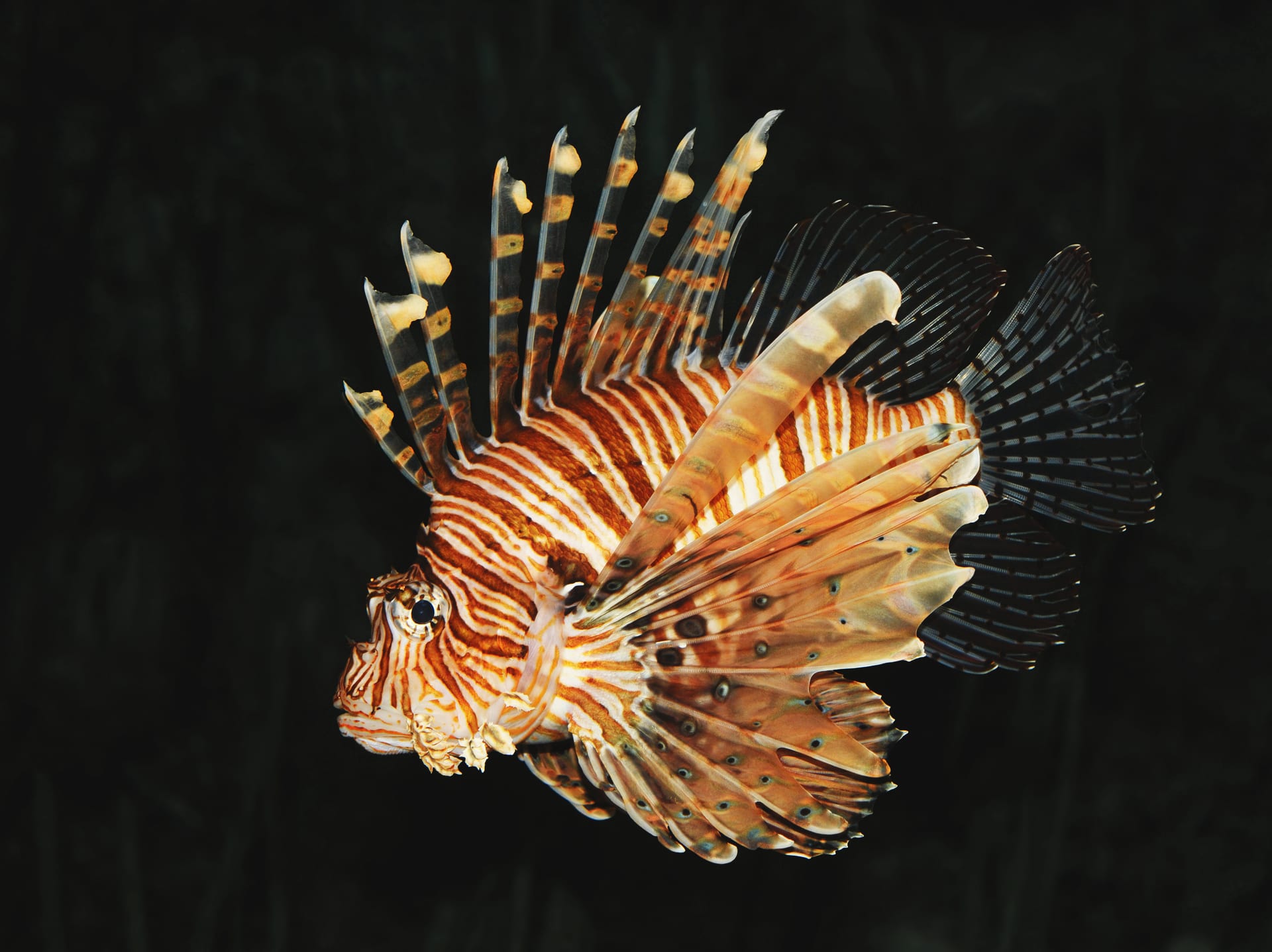
Among scorpionfish and rockfish relatives (shallow-water species), some species prefer relatively low temperatures (around 18–22°C), and there are documented cases among hobbyists who keep these rocky-reef benthic fish. Red Lionfish (Pterois volitans) is a venomous fish inhabiting depths of roughly 1–50 meters and is popular with marine aquarists for its striking appearance, but handling its venomous spines also requires careful attention.
A chiller is essential for temperature management. Maintaining temperatures below 20°C in summer requires equipment costs and electricity expenses, so consider whether you can maintain these conditions year-round before purchasing.
Partially Reproducing Deep-Sea Conditions: Darkness and Low Temperature
Of the two major characteristics of the deep sea—"darkness" and "low temperature"—darkness is relatively easy to reproduce. Some keepers manage tanks in near-total darkness, but balancing aesthetic value with proper husbandry requires careful consideration. A technique of using dim red LED lighting only at night for observation is sometimes recommended as a method to observe fish while minimizing stress.
Maintaining low temperature is a significant mechanical challenge. Aquarium chillers have high upfront costs (tens of thousands to over 100,000 yen) and ongoing maintenance expenses. If water temperature is unstable, immune function drops and infection risk rises sharply, so selecting reliable equipment is critical.
For fish species like rattails and devil stonefishes that are difficult to obtain at typical pet shops, purchasing directly from breeders or collectors is sometimes realistic. BreederDirect is an online marketplace where individuals and breeders can trade rare organisms, including saltwater fish. By checking listings, you may be able to obtain fish from trusted sellers along with husbandry know-how.
Before purchasing, it is important to confirm the "required water temperature, tank size, and feeding methods" with the seller and compare them with your own equipment. Regarding venomous fish, please make your decision after ensuring you have sufficient knowledge and appropriate equipment from the perspectives of legal regulations and safety management.
Conclusion on Deep-Sea Fish Keeping: Enjoying Within Your Knowledge and Equipment Capabilities
Long-term home husbandry of true deep-sea fish, at this point, has extremely limited documented success cases worldwide and cannot be recommended for general hobbyists. On the other hand, among the categories of "deep-area fish," "cold-water fish," and "rocky-reef benthic fish," there are species that knowledgeable keepers with appropriate equipment can enjoy.
If you desire to keep deep-sea fish, a realistic approach is to start with easier saltwater fish, build experience, and progress gradually. The better you develop your tank environment, the wider range of species you can attempt. BreederDirect has saltwater fish listed at various difficulty levels, so use these as reference when selecting species suited to your skill level.
How to Safely Channel Your Interest in Deep-Sea Fish
Interest in deep-sea life is a highly valuable form of curiosity. Rather than forcing yourself to bring home difficult-to-keep species, taking a gradual approach like the following allows you to deepen your understanding and technique regarding deep-sea fish over the long term.
- Visit aquarium deep-sea exhibits
- Read books and research papers about deep-sea organisms
- Gain husbandry experience starting with more readily available deep-area fish species
In the aquarium hobby, the order of "creating an environment you can maintain first, then acquiring the fish" rather than "keeping whatever fish you want" often produces the best results for both the fish and the keeper.