The Science of Holobiont Symbiosis Between Zooxanthellae and Corals | Understanding Bleaching, Recovery, and Stress Response | ブリちょく
Coral| ✍️ BreederDirect Editorial
The Science of Holobiont Symbiosis Between Zooxanthellae and Corals | Understanding Bleaching, Recovery, and Stress Response
A deep exploration of the symbiotic relationship between zooxanthellae and corals that sustains coral life. Covers the concept of corals as holobionts, the nutrition and photosynthesis provided by zooxanthellae, the mechanics of bleaching, differences among symbiotic clades, and optimization of symbiosis in captive systems.
Key Takeaways
A deep exploration of the symbiotic relationship between zooxanthellae and corals that sustains coral life. Covers the concept of corals as holobionts, the nutrition and photosynthesis provided by zooxanthellae, the mechanics of bleaching, differences among symbiotic clades, and optimization of symbiosis in captive systems.
Corals as a "Community of Organisms"—What is a Holobiont?
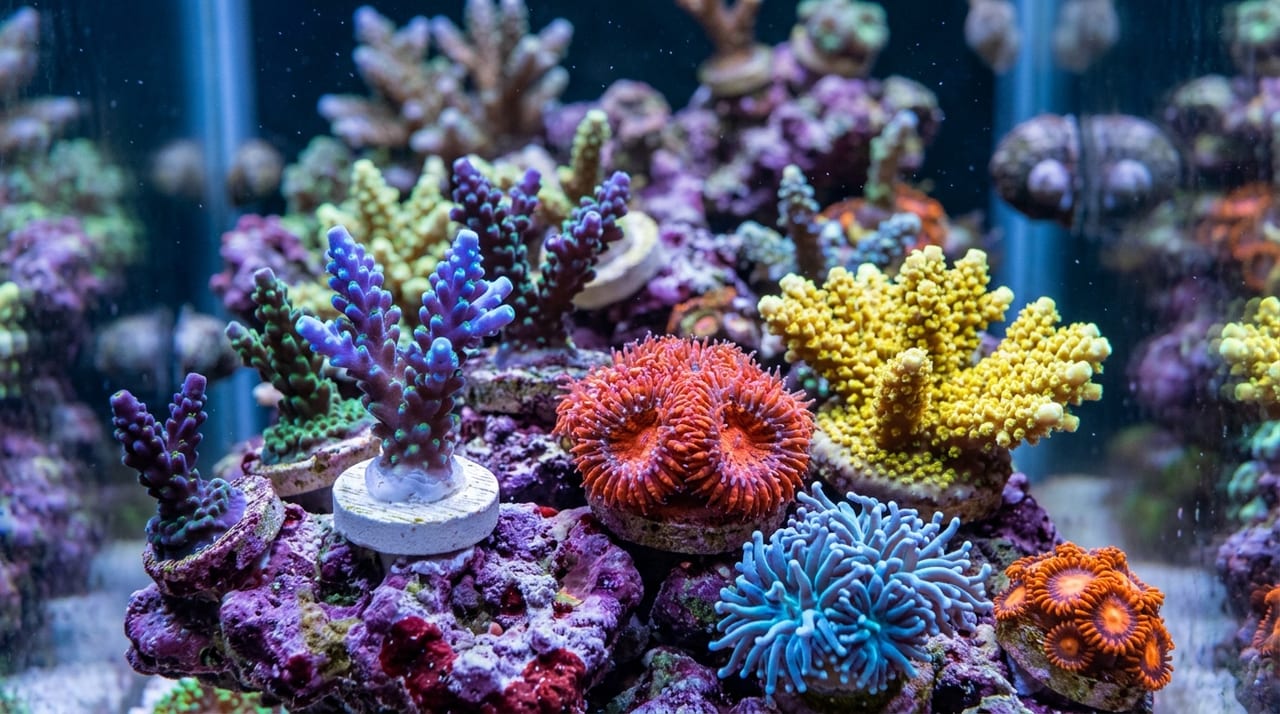
The secret to a coral's beautiful coloration and vitality lies in its symbiotic relationship with countless microorganisms living within its tissue. Modern biology recognizes the coral polyp and all microorganisms living within and on its surface—zooxanthellae, bacteria, archaea, viruses, and fungi—as a single unified life system, called a holobiont.
The holobiont concept offers profound insights for coral husbandry in practice. When an aquarist maintains water quality and lighting conditions, they are affecting not just the coral polyp itself, but the entire community of millions of symbiotic microorganisms.
The Identity and Role of Zooxanthellae (Symbiodiniaceae)
Zooxanthellae belong formally to the dinoflagellate family Symbiodiniaceae, single-celled algae that were once considered a single species (Symbiodinium microadriaticum), but are now known to comprise at least 9 genera (clades A through I).
Coral polyp tissue hosts 1 to 2 million zooxanthellae cells per square centimeter, with their photosynthetic products (glucose, glycerol, and amino acids) providing 60 to 90% of the coral's energy budget. The reason coral reefs flourish in nutrient-poor tropical waters is thanks to this remarkable internal photosynthetic system.
Major Clades and Their Characteristics
Clade
Representative Genus
Characteristics
A
Symbiodinium
High temperature tolerance, pioneer type, post-bleaching recovery symbiont
C
✍️
BreederDirect Editorial
The BreederDirect editorial team specializes in care information for animals, covering veterinary care and breeding to deliver beginner-friendly guides.
Find Coral on BreederDirect
Buy directly from verified breeders
Browse Related Listings
Find Coral listings related to this article on BreederDirect. Buy directly from verified breeders.
Most diverse, primary symbiont in temperate to tropical regions
D
Durusdinium
High heat tolerance, adapted to stress environments
F
Fugacium
Abundant in soft corals and some LPS
From a bleaching-tolerance perspective, multiple studies show that corals hosting clade D zooxanthellae are often more resilient to heat stress. "Super Coral" breeding programs are researching the promotion of clade D establishment and artificial substitution toward heat-resistant clades—a process called "shuffling."
The Mechanism of Bleaching—Symbiosis Collapse
Bleaching is the phenomenon in which zooxanthellae are expelled or lost from coral tissue. The polyp itself is not dead; the translucent state resulting from loss of symbiotic algae appears "white."
The primary triggers for bleaching include:
1. Elevated Water Temperature
The leading cause of bleaching. When water temperature exceeds a coral's tolerance threshold (typically 27–29°C for most species) by 1–2°C and persists for weeks, the zooxanthellae's photosynthetic system (PSII) degrades, generating harmful reactive oxygen species (ROS). The polyp expels the zooxanthellae to protect itself.
2. Low Water Temperature
Less common than thermal stress, but rapid temperature drops (such as cold water shock during water changes) can also trigger bleaching.
3. Light Stress
Excessive UV or high PAR values—especially in combination with elevated temperatures—cause photoinhibition and ROS accumulation. The "photobleaching" observed after abruptly switching to high-output LEDs falls into this category.
4. Reduced Salinity, Poor Water Quality, and Disease
Rapid drops in salinity from heavy rain, pesticide runoff, and bacterial infections can all induce bleaching.
Recovery from Bleaching—Reestablishing Symbiosis
Whether a bleached coral survives depends heavily on the duration of stress and the recovery environment. Once stress is removed, symbiosis is reestablished through the following process:
The polyp takes up free-living zooxanthellae (FZC) from the water column or zooxanthellae settled on the substrate
A "shuffling" event may occur, where more thermally tolerant clades preferentially establish
The newly established zooxanthellae multiply and brown coloration gradually returns to the tissue
Recovery typically requires 4–8 weeks. During this period, providing cooler temperatures, moderate light, and minimal organic feeding supports polyps that are energy-depleted.
Maintaining Holobiont Health in Captive Systems
Viewing corals as holobionts leads to the following management principles:
Temperature stability is paramount
To minimize bleaching risk, maintain temperature fluctuations within ±0.5°C. Implement precise control with aquarium chillers and heaters, and regularly calibrate thermostats.
Appropriate PAR management and acclimation
When introducing new corals, place them first in a low-light zone, then gradually increase to target PAR levels over 2–4 weeks (SPS: 200–400 PAR, LPS: 50–200 PAR). Abrupt light changes cause photobleaching.
Maintain optimal nutrient ranges
In extremely low-nutrient (ULNS) environments, zooxanthellae density drops excessively, leaving corals undernourished. Maintaining trace levels around NO₃ 1–5 ppm and PO₄ 0.05–0.1 ppm is recommended for optimal symbiotic balance.
Probiotics and marine microbiome utilization
Recently gaining attention, probiotic additions like Coral Biome (beneficial bacterial cocktails) may enhance microbiome diversity in the holobiont and increase pathogen resistance, as emerging research suggests.
Conclusion—"Nurturing Corals" Means Nurturing a Symbiotic System
Understanding holobiont symbiosis with zooxanthellae provides a scientific basis for daily reef tank management decisions: bleaching prevention, recovery support, feeding protocols, and light management. Corals in aquariums are not solitary organisms but live through an intricate partnership with millions of microorganisms.
As more breeders embrace a holobiont perspective, the health and long-term survival rates of corals distributed through br-choku will improve, benefiting both customers and coral reef conservation worldwide.