Coral Tank Flow Design Guide — Pump Selection & Placement Techniques
Designing water flow for coral tanks: pump types, flow patterns for SPS/LPS/soft corals, eliminating dead spots, and placement strategies.
Key Takeaways
Designing water flow for coral tanks: pump types, flow patterns for SPS/LPS/soft corals, eliminating dead spots, and placement strategies.
Related Species
Water flow is equally as important as lighting in coral husbandry. Proper water flow promotes nutrient delivery and waste removal from corals, significantly influencing their growth and health. However, too much or too little causes problems, and optimal flow patterns differ by coral type. This article provides practical guidance on designing water flow for coral tanks.
Why Water Flow Is Critical for Corals
In natural oceans, waves and currents are constant, and corals live permanently amid water movement. Flow serves multiple vital functions. First, it delivers seawater containing microscopic plankton and organic matter to coral polyps. Second, it washes away mucus and waste from coral surfaces, maintaining tissue health. Mucus accumulation becomes a breeding ground for pathogens, making regular flow-based flushing essential. Third, flow facilitates gas exchange -- carrying away oxygen produced by zooxanthellae photosynthesis and supplying fresh CO2. Without adequate flow, a "boundary layer" of stagnant water forms around corals, inhibiting growth.
Types of Flow Pumps and Selection
Flow pumps are broadly divided into AC (alternating current) and DC (direct current) types. AC pumps are affordable and durable but lack flow adjustment. DC pumps offer adjustable flow rates, with many products featuring random mode (automatically varying flow) and pulse mode, creating more natural flow patterns. DC pumps are overwhelmingly recommended for coral tanks. Leading manufacturers include Maxspect, EcoTech Marine (VorTech series), AI (Nero), AQAMAI, and Jebao. Select pump capacity based on tank volume -- a general guideline is 20-50x the total water volume per hour. A 60L tank needs a pump delivering 1,200-3,000 L/hour. Note that this refers to actual in-tank flow, not maximum pump output.
Flow Requirements for SPS, LPS, and Soft Corals
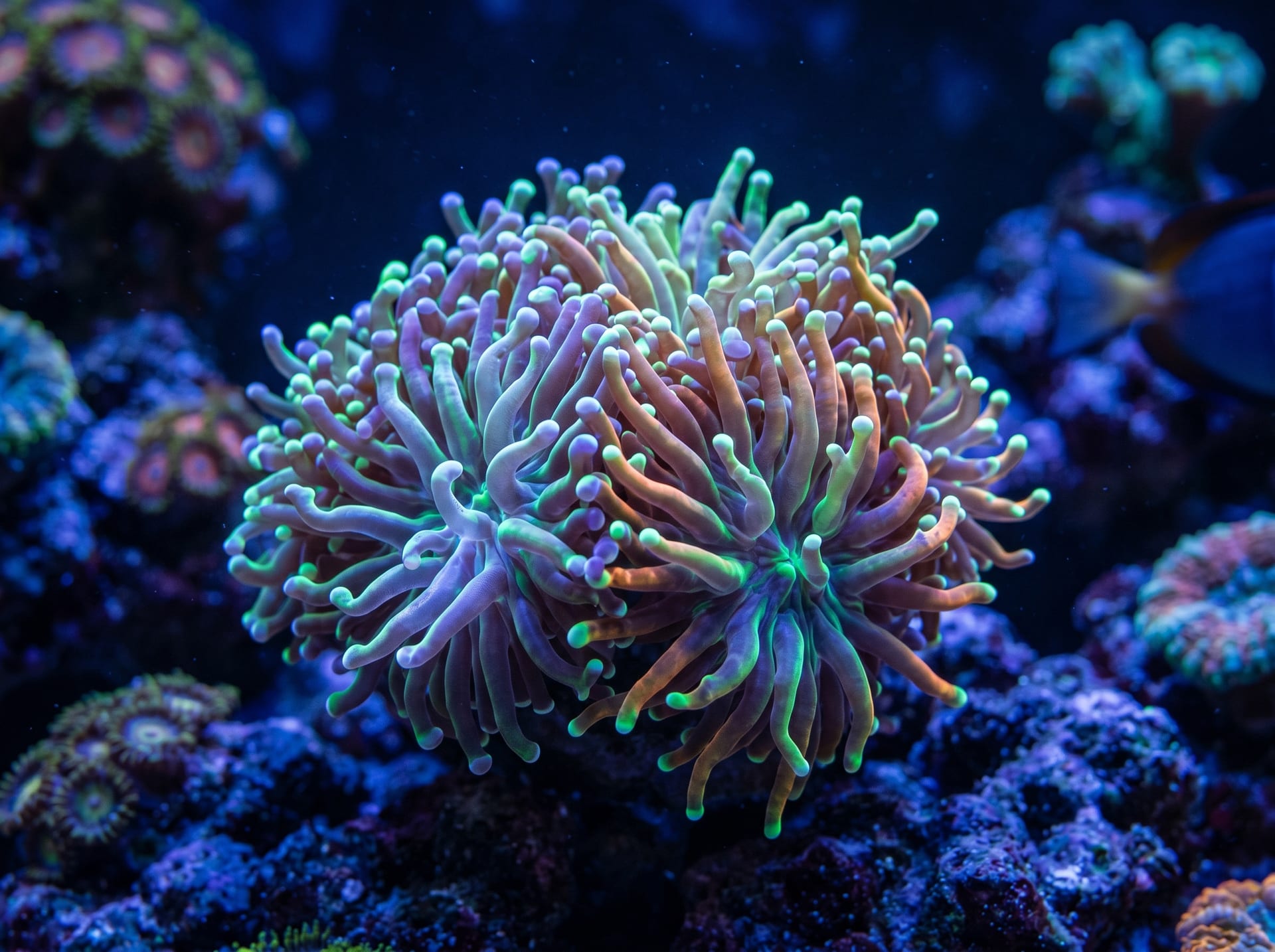
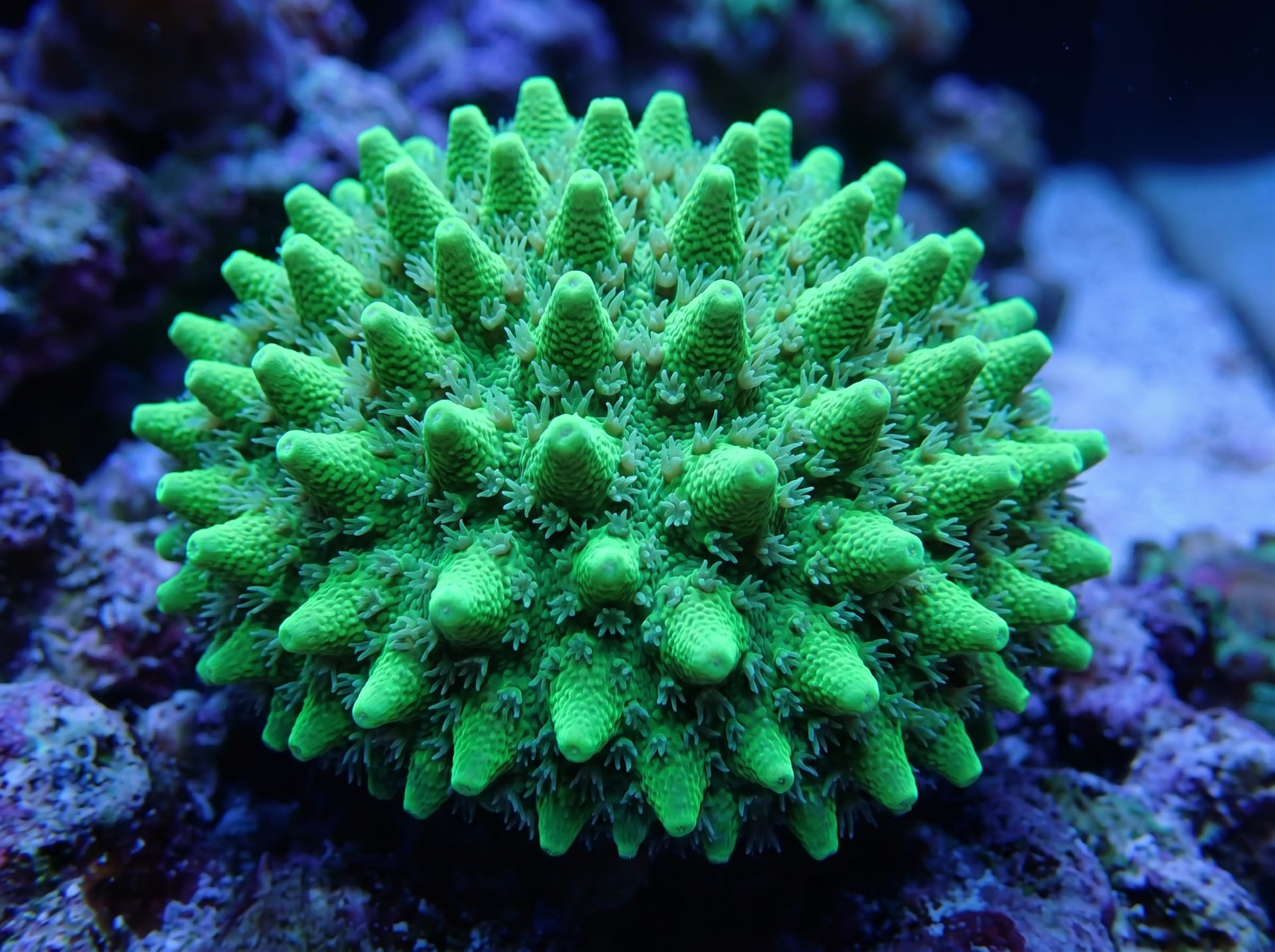
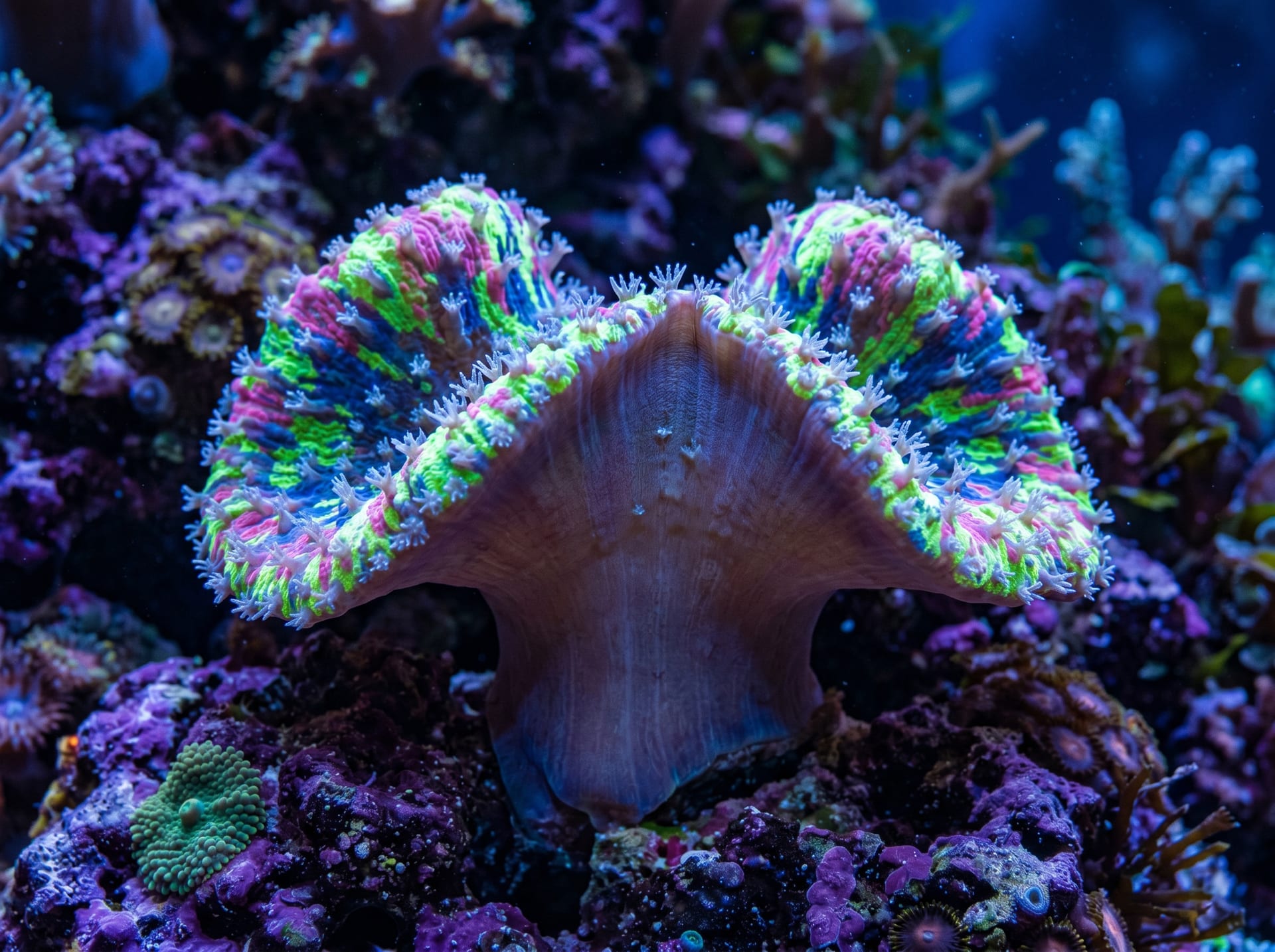
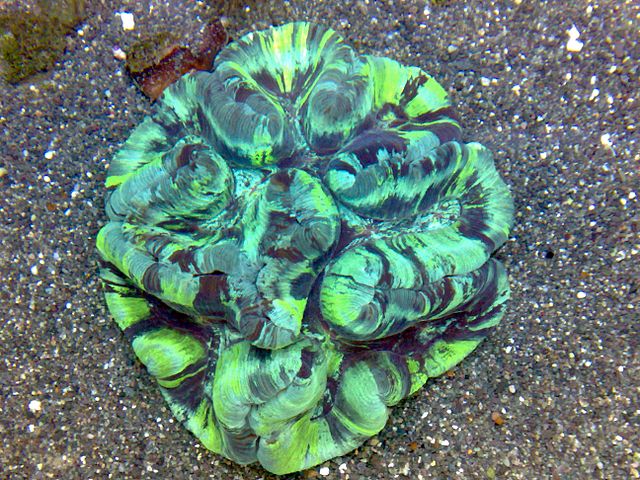
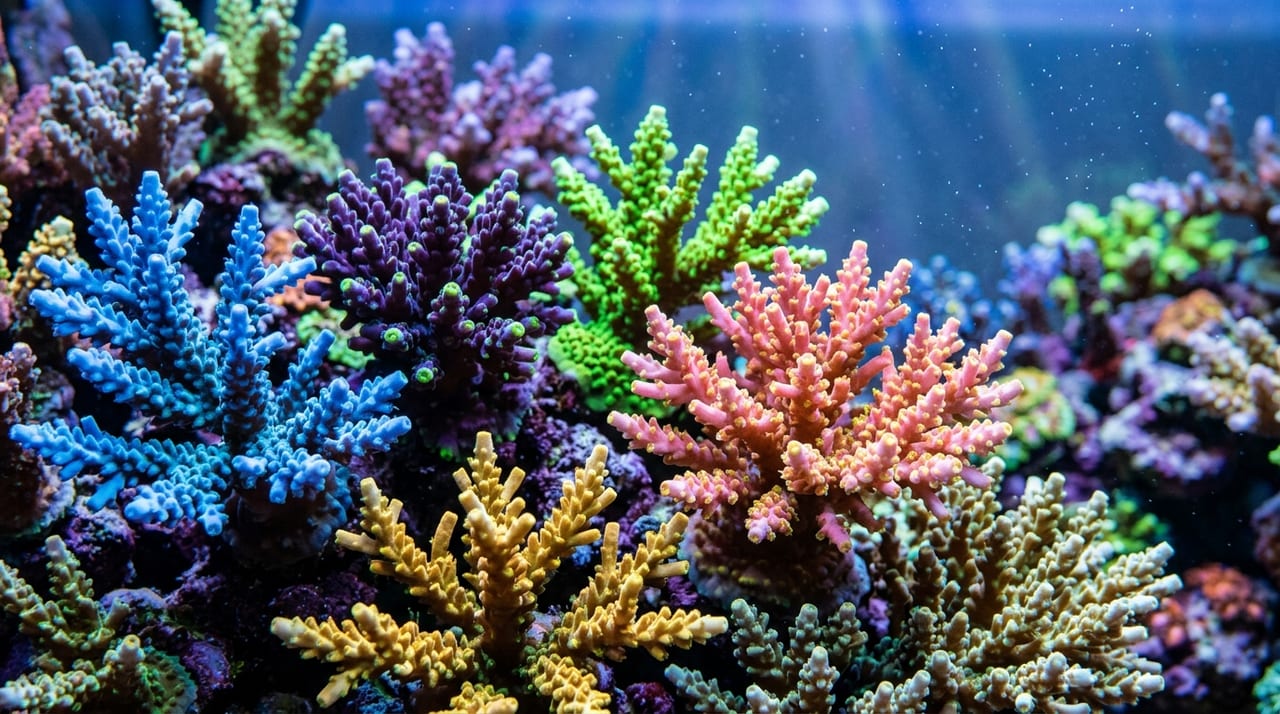
Different coral types prefer dramatically different flow levels. SPS (Acropora, Montipora, etc.) prefer the strongest flow with random, turbulent patterns. Irregular flow that frequently changes direction, mimicking natural reef crests, promotes SPS growth. LPS (Torch coral, Brain coral, Favia, etc.) prefer moderate, gentle flow. LPS have fleshy polyps that cannot fully extend in strong currents. Gently varying, moderate flow is optimal. Soft corals (Zoanthids, Leather corals, Kenya Tree, etc.) vary by species but generally do well in medium to low flow. Xenia pulsing (polyp opening and closing) becomes active with moderate flow but stops in excessive flow.