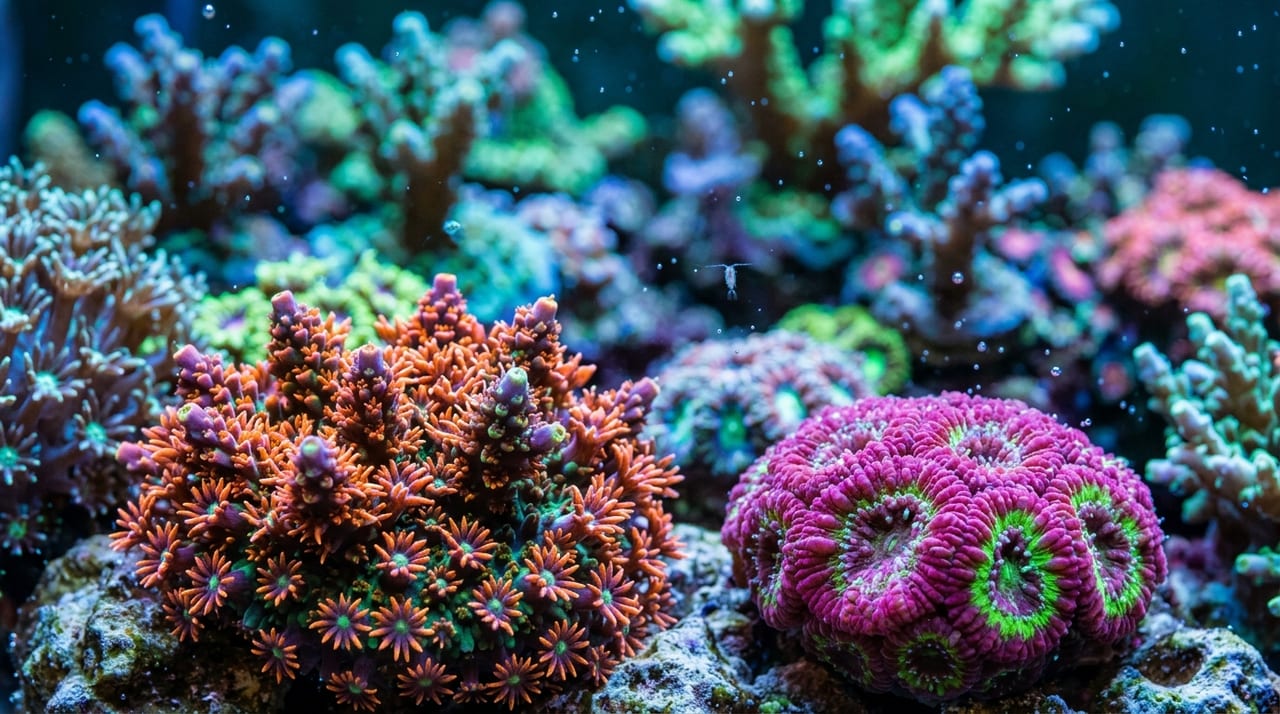
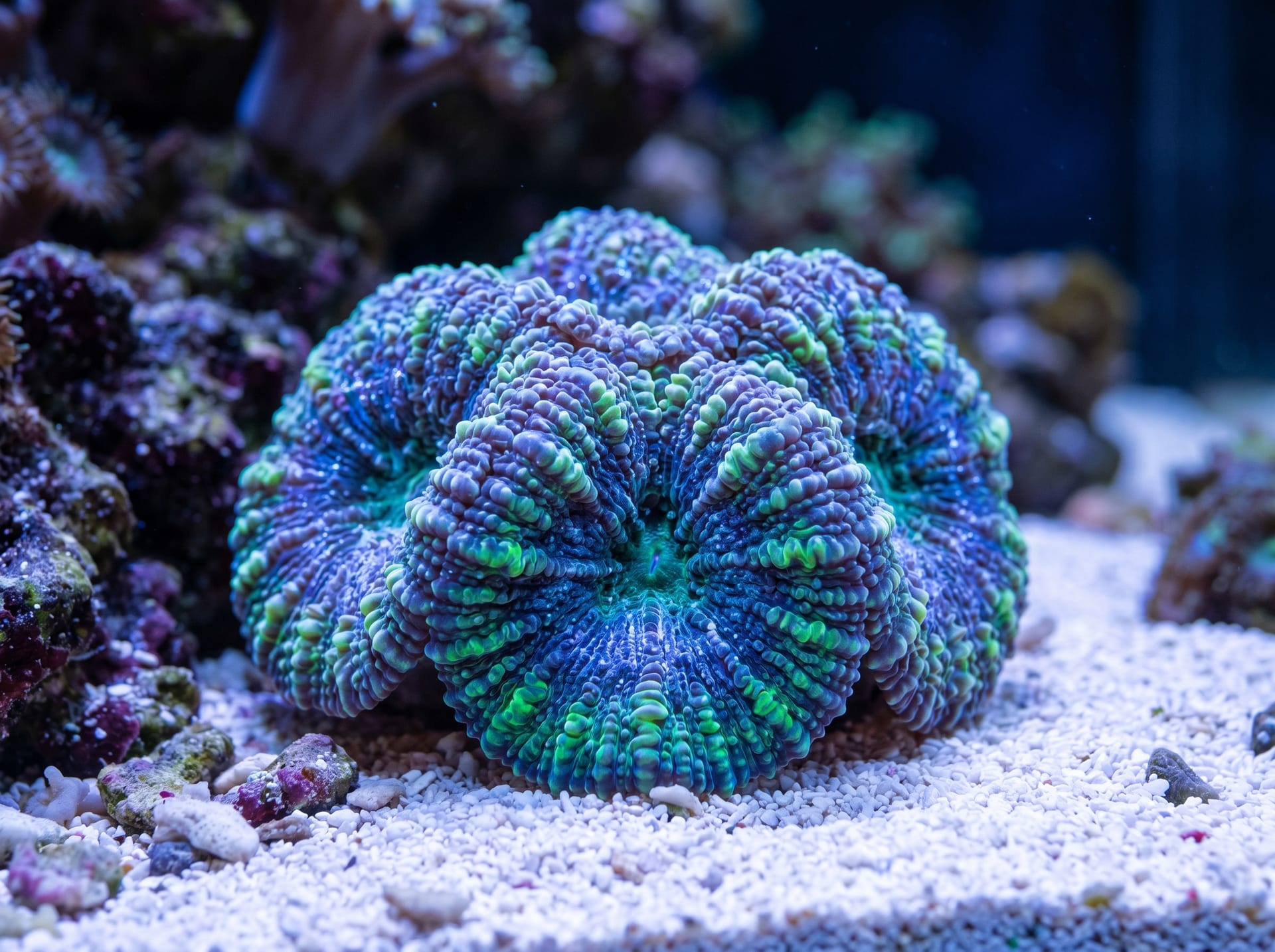
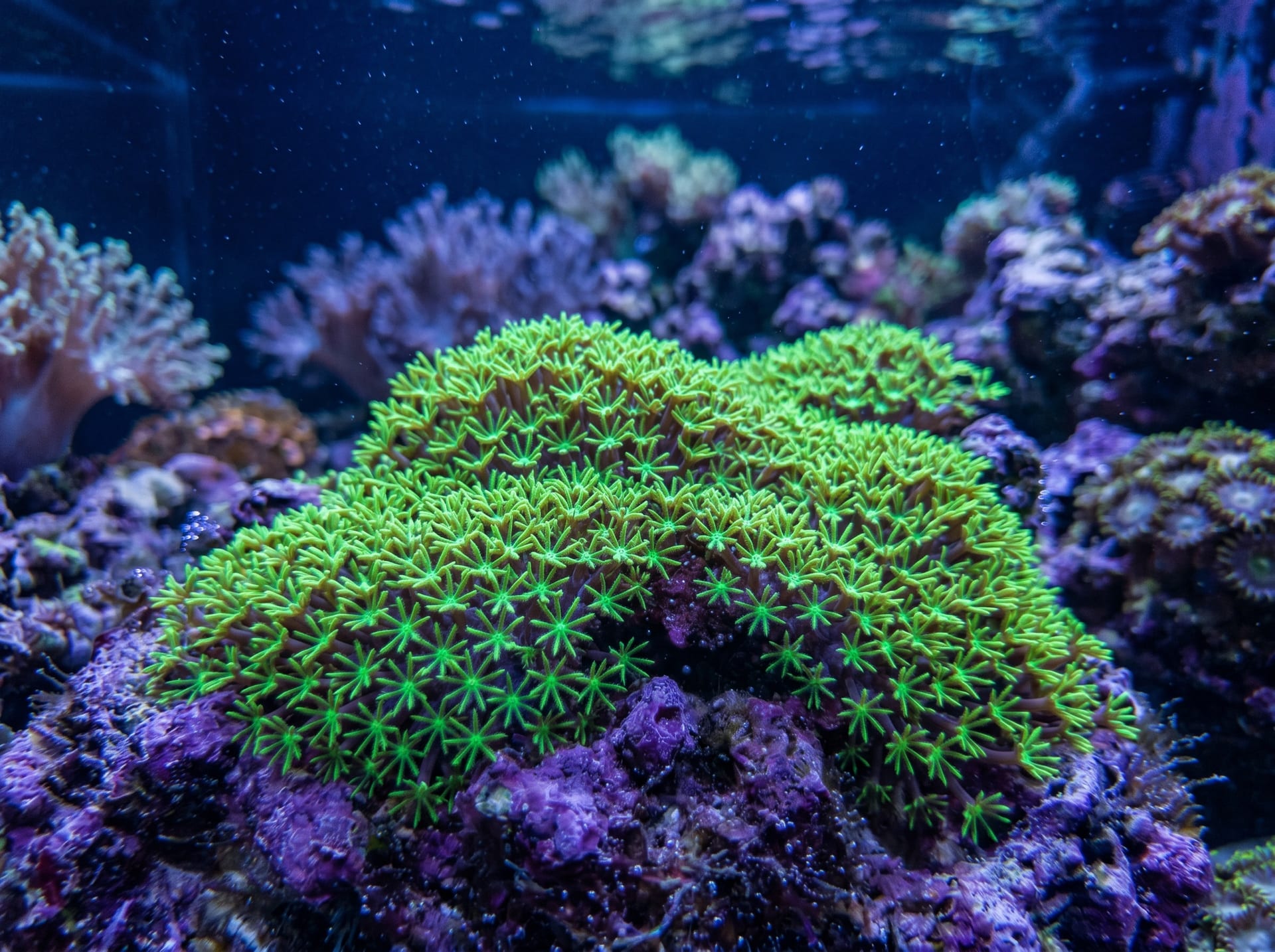
Overview of Equipment Needed for Coral Keeping
Unlike saltwater fish keeping, coral keeping requires integrated management of light, water flow, and water quality. The biggest reason beginners struggle is "choosing the wrong equipment." This guide will help you organize essential equipment to purchase from the start and optional equipment that can be added later.
---
How to Choose an Aquarium Tank
Tank Size Guidelines
For beginners, a 45–60 cm aquarium is the most manageable size.
| Tank Size | Water Volume (approx.) | Suitable Corals |
|---|
| 30 cm | ~25 L | Favites, Star Polyps (ultra-small) |
| 45 cm | ~50 L | Soft corals in general, small LPS |
| 60 cm | ~100 L | Soft corals, LPS, beginner SPS |
| 90 cm and above | 200 L+ | Serious SPS keeping |
Tanks 30 cm or smaller have too little water volume and water quality fluctuates too much, making them unsuitable for beginners. Starting with a 45–60 cm tank is recommended.
Tank Shape
- Regular (standard): Has good height and lighting efficiency
- Wide type: Offers good depth and greater layout flexibility
- All-in-one tanks: Beginner-friendly models with integrated filtration and lighting (Red Sea, ADA, etc.)
With or Without a Sump (Secondary Filtration Tank)
A sump is an auxiliary filtration tank installed below the main tank. By housing filter media, protein skimmer, and heater in the sump, you keep the main tank display area clean. In serious coral keeping, overflow tanks with sumps are standard, but beginners can also start with a closed external filter without issues.
---
How to Choose LED Lighting
Proper light intensity (PAR value) and light spectrum (wavelength) are essential for coral photosynthesis.
Light Intensity (PAR Value) Guidelines
PAR (Photosynthetically Active Radiation) is the amount of light energy that plants and corals can utilize.
| Coral Type | Recommended PAR Value Range |
|---|
| Star Polyps, Favites | 50–150 |
| Disc Corals, Caviar Corals | 100–200 |
| LPS (Porites, Branching Hammer Corals, etc.) | 150–300 |
| SPS (Acropora, etc.) | 250–500+ |
For beginner-level soft corals, lighting with a PAR of around 100–200 is sufficient.
Recommended LED Selection Tips
- Balance of Blue (around 450 nm) and White: Choose lights rich in blue wavelengths that corals utilize in their natural environment
- Dimming capability: Models with dimmable features for gradual "acclimation" (ramping up light intensity) are ideal
- Manufacturer reputation: Radion, AI (Aqua Illumination), Kessil, and Reef brand LEDs have strong reliability records
- Budget-friendly options: Budget LEDs like Viparspectra can also work well for soft corals in 60 cm tanks
Recommended Lighting Duration
8–10 hours per day is the standard. Using a timer to turn lights on and off at the same time daily is ideal. Complete darkness at night, or using a model with a dim "moonlight" feature, helps establish a natural day-night cycle.
---
How to Choose and Install Water Flow Pumps
Corals receive food (plankton and nutrients) and expel waste through water flow. Water flow that is too weak will cause them to die, while flow that is too strong will damage their tissue.
Recommended Water Flow Rates
A general guideline is 15–30 times the tank volume per hour in water flow.
- 60 L tank → 900–1,800 L/h water flow
- 100 L tank → 1,500–3,000 L/h water flow
Installation Tips
- Eliminate dead spots: Position pumps to target areas where water may stagnate (corners, tank bottom)
- Indirect water flow: Indirect flow that bounces off live rock or tank walls is best rather than directing it directly at corals
- Wave controller: Pumps with controllers that create wave-like oscillating flow replicate more natural conditions (EcoTech Marine VorTech, JABO, etc.)
---
Additives Basics (Calcium, Alkalinity, Magnesium)
Corals consume calcium, alkalinity (bicarbonate), and magnesium to build their skeleton. This consumption is especially pronounced in SPS and fast-growing LPS corals.
Target Water Quality Values
| Component | Target Value |
|---|
| Calcium (Ca) | 400–450 ppm |
| Alkalinity (KH) | 8–10 dKH |
| Magnesium (Mg) | 1,250–1,350 ppm |
Types of Dosing Methods
- 2-part dosing: Adding calcium solution and alkalinity solution separately. Beginner-friendly.
- Kalkwasser (Limewater): Mixed with top-off water to replace evaporation. Cost-effective.
- Calcium reactor: Advanced equipment that dissolves calcium media using CO2.
In small tanks with only soft corals, regular water changes (10–20% weekly) are often sufficient without additives. A practical approach is to start with water changes and consider additives only when introducing SPS corals.
---
Role of Protein Skimmer and Sump
A protein skimmer is a device that removes organic matter (proteins and oils) from saltwater using bubbles. It's especially important in coral tanks and essential for water quality stability.
- 60 L or less: Nano skimmers work well (Tunze 9001, Bubble Magus QQ1, etc.)
- 100 L or more: Mid-size skimmers are recommended
---
Equipment Checklist for Beginners Starting Out
| Equipment | Essential/Optional | Approximate Cost |
|---|
| Tank (45–60 cm) | Essential | ¥3,000–15,000 |
| LED lighting | Essential | ¥15,000–50,000 |
| Water flow pump | Essential | ¥3,000–15,000 |
| Protein skimmer | Recommended | ¥5,000–20,000 |
| Heater (25°C setting) | Essential | ¥2,000–5,000 |
| Refractometer | Essential | ¥2,000–5,000 |
| Water test kit (pH/KH/Ca/Mg) | Recommended | ¥5,000–15,000 |
| Artificial sea salt (50 L supply) |
Initial investment for a 45 cm tank is approximately ¥30,000–80,000. Costs vary significantly depending on the quality and quantity of equipment you choose.
---
Summary
When choosing equipment for coral keeping, focus on three core elements: light, water flow, and water quality. There's no need to aim for perfection from the start; the most reliable approach is to begin with hardy soft corals and gradually upgrade your setup over time. Build your ideal coral tank by identifying where equipment investment is crucial and where you can defer expenses.