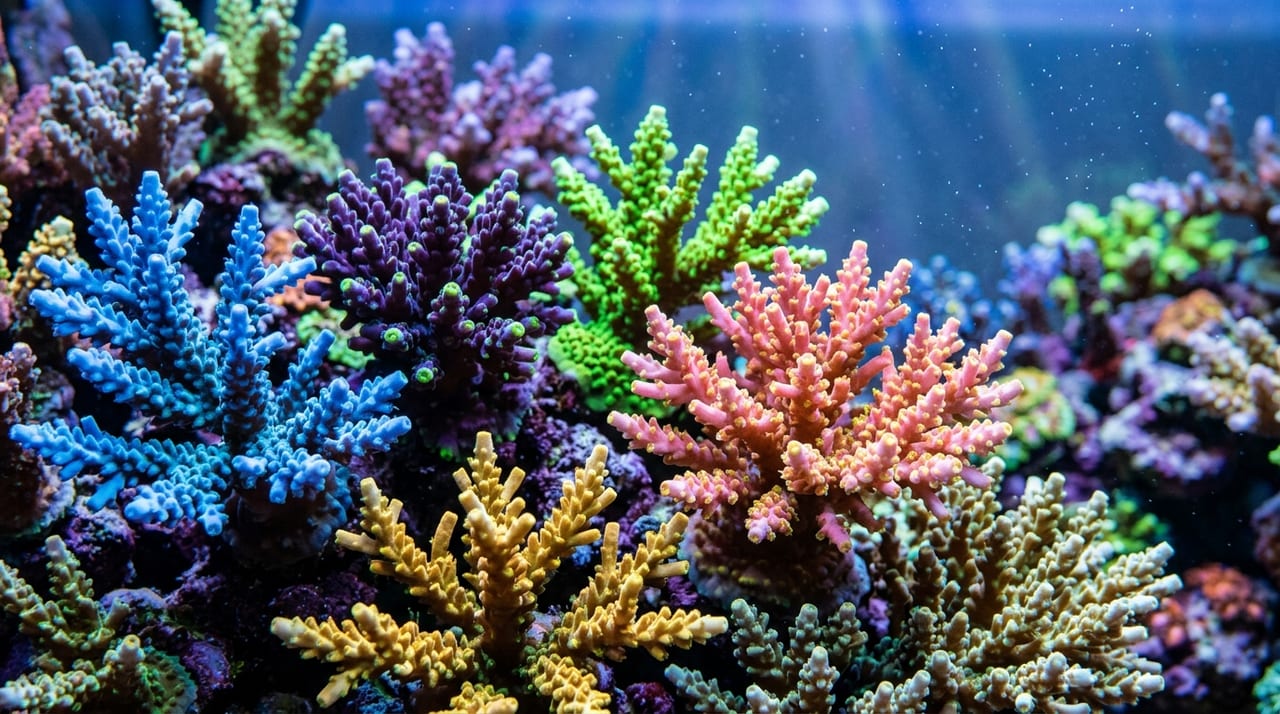
Foundational Knowledge About Additives (Dosing) in Coral Tanks
To maintain healthy corals, water quality stability is of paramount importance. In particular, KH (carbonate hardness), calcium (Ca), and magnesium (Mg) are three essential elements that corals require to form their skeletal structure. These are consumed and fluctuate over time, requiring regular replenishment.
The dosing method is widely used for this replenishment. It involves adding specialized additives to the tank in measured amounts to keep values within a stable range. While it may sound complicated, beginners can certainly master it once they understand the mechanism.
---
Target Values for the Three Essential Elements
First, before using additives, familiarize yourself with the target values you should aim for.
| Element | Target Range |
|---|
| KH (Carbonate Hardness) | 8–11 dKH |
| Calcium (Ca) | 380–440 mg/L |
| Magnesium (Mg) | 1250–1350 mg/L |
These elements maintain balance with each other. In particular, if Mg is low, Ca and KH become difficult to stabilize, so the golden rule is to first adjust Mg to the proper range before fine-tuning the others.
Test water parameters once to twice per week as a guideline. Continuing to dose without testing can lead to overdosing and actually worsen water quality.
---
Two-Part System (2-Part) Characteristics and Usage
The two-part system uses additives divided into Part A (calcium + magnesium) and Part B (bicarbonate). Representative products include those from Trition and various AB-type additives from other manufacturers.
Advantages
- Wide variety of products available and easy to obtain
- Simple dosing calculations
- Well-suited for small to medium-sized tanks
Disadvantages
- Fine-tuning Mg separately from Ca can be challenging in some cases
- Dosing volumes increase for larger tanks
Usage Steps
- Measure current KH, Ca, and Mg levels
- If any component is below the target value, refer to the product label's conversion table to calculate the deficit
- Add Part A and Part B at different locations and different times (mixing directly causes cloudiness and precipitation)
- Retest the next day to confirm changes
KH Supplementation Calculation Example
If you want to raise KH in a 200L tank from 8 dKH to a target of 10 dKH, the amount varies by product, but a general guideline is approximately 1–1.5 mL/100L per dKH increase. For example: 200L × 2 dKH × 1.2 mL = approximately 480 mL as a reference (always check your product label).
---
Three-Part System (3-Part) Characteristics and Usage
The three-part system independently manages KH, Ca, and Mg using three separate components. Well-known products include Brightwell Aquatics' "Reef Code A+B+Mg" and D-D products.
Advantages
- All three elements can be fine-tuned individually
- Dosing amounts for each component can be flexibly adjusted to match your tank's consumption pattern
- Especially well-suited for serious aquariums with large numbers of SPS (small polyp stony) corals
Disadvantages
- Managing three solutions requires more effort until you become familiar with the process
- Cost is slightly higher
Usage Tips
The cycle of testing → calculating → dosing → retesting remains the same with the three-part system. However, since each component's consumption varies depending on tank conditions, it's important to record consumption rates every one to two weeks and identify trends.
For example, if only KH drops dramatically, it's a sign you have plenty of SPS. You can respond by increasing the KH component dosage while maintaining current levels for Ca and Mg.
---
Introduction and Setup of Automatic Dosing Pumps
Once you're comfortable with manual dosing, consider adopting an automatic dosing pump. These devices automatically add specified amounts at set intervals, maintaining stable water parameters even while you're away.
Major Manufacturers and Product Examples
- Kamoer series
- GHL Doser
- Jebao dosing pumps
Setup Process
- Understanding consumption rates manually is essential
- Divide daily dosage into smaller portions
- Tubing flow rate calibration
- Continue weekly testing even after automation
---
Precautions When Dosing and Common Problems
Do not add Part A and Part B simultaneously or in the same location
In particular, adding KH and Ca solutions to the same spot creates white precipitate (calcium carbonate). Space them out in time or add them to different locations with strong water flow.
Do not cause rapid changes in parameter values
Changing KH by 3 dKH or more at once risks causing a "KH crash" in corals, leading to bleaching and death. As a guideline, limit daily changes to a maximum of 1–1.5 dKH, adjusting gradually.
Prioritize adjusting Mg first
Mg affects the stability of Ca and KH. If levels are low (1250 mg/L or below), return Mg to the proper range before adjusting other parameters.
Storage of additives
Keep additive solutions away from high temperatures and direct sunlight. KH solutions especially react with CO₂ in the air and lose effectiveness, so always cap them securely after use.
---
Summary: Testing and Record-Keeping Are the Foundation of Dosing
Dosing with additives is an important technique for taking coral keeping to the next level. Regardless of whether you choose a two-part or three-part system, the key to success is maintaining the cycle of testing → dosing → recording → retesting.
The recommended approach is to start with manual dosing to develop a sense of consumption rates, then transition to automatic dosing pumps once things stabilize. Since consumption rates differ for each tank, don't blindly follow other people's numbers—steadily build up your own tank's data. Careful management leads to beautiful coloration and healthy growth in your corals.